
The Silicon Valley Psycho: How Andrew Garfield’s ‘Artificial’ Performance Redefines the Modern Villain
In the annals of cinematic history, few performances have been as chillingly misunderstood as Anthony Perkins’ portrayal of Norman Bates in Alfred Hitchcock’s 1960 masterpiece, Psycho. Despite the film earning four Academy Award nominations—including a Best Director nod for Hitchcock and a Supporting Actress mention for Janet Leigh—Perkins was left out in the cold. It remains one of the most egregious snubs in the history of the Oscars.
Sixty-six years later, cinema is witnessing a haunting echo of that performance. In Luca Guadagnino’s dark, blistering dramedy Artificial, Andrew Garfield takes on the role of OpenAI co-founder and CEO Sam Altman. Much like Perkins, Garfield isn’t just playing a character; he is crafting a "likable monster" for the digital age. Having premiered to a rapturous reception at the New York Film Festival, the film is already being hailed as a defining work of the decade. As awards season looms, the industry is left to wonder: will the Academy finally recognize a masterclass in psychological menace, or will they repeat the history of 1960?
The Anatomy of an Obsession: The Five Days That Changed Everything
To understand the weight of Artificial, one must understand the volatility of the material. The film chronicles the true, chaotic story of November 2023, a five-day span that saw the board of OpenAI abruptly terminate Sam Altman, only to face an immediate, unprecedented mutiny from over 700 employees who threatened to quit unless he was reinstated.
Guadagnino and screenwriter Simon Rich do not treat this as a dry, corporate procedural. Instead, they frame it as a high-stakes psychological thriller—the last tangible opportunity for humanity to pull the emergency brake on the runaway train of artificial intelligence. Through a lens of dark satire, the film posits that this window of opportunity was bartered away, sacrificed on the altar of venture capital and the fragile, unchecked egos of tech moguls who have never been told "no."
The film serves as a visceral warning shot to a public currently navigating a landscape where terms like "super-intelligence" are moving from the fringes of science fiction to the mundane reality of our everyday lexicon. It is a terrifyingly intimate look at how the future of the human race was essentially negotiated in Slack channels and boardroom corridors.
The Performance: Garfield’s "Crisscross-Applesauce" Menace
The comparison between Garfield and Perkins is not one of plot, but of technique. Norman Bates survived on his ability to make the audience lean in—he was a stammering, bird-loving clerk who fussed over sandwiches. Garfield’s Altman employs a similar, disarming strategy.

Throughout Artificial, Garfield’s Altman is almost constantly seated on the floor in a "crisscross-applesauce" position, projecting an aura of childlike openness. His voice remains soft, his gaze wide and intensely fixated on his interlocutor, creating a false sense of security. Yet, in fleeting, blink-and-you-miss-it moments, the life drains from his eyes. It is a cold, calculated void that flickers in and out of existence before the other characters can register it. The audience, however, sees it clearly. By the time the credits roll, the film has meticulously laid out the clues, forcing the viewer to realize they have spent two hours in the presence of a profound, calculated monster.
A Structural Shift: Shifting the Narrative Lens
While comparisons to David Fincher’s The Social Network (2010) are inevitable, Artificial is structurally more akin to Psycho. Just as Hitchcock pulled the rug out from under the audience by killing off his lead protagonist, Marion Crane, in the first half of his film, Artificial subverts expectations by anchoring its early perspective in the eyes of Ilya Sutskever, played by Yura Borisov.
Borisov, who broke out in Sean Baker’s Anora, delivers a performance of stoic, Soviet-born clarity. As a man who can clearly see the precipice ahead, his performance provides the moral compass of the film—a turn that feels reminiscent of Mark Ruffalo in Spotlight. Because of this structural choice, Neon is strategically positioning Borisov as the film’s lead, while pushing Garfield into the Supporting Actor category. This is a brilliant, tactical move that highlights the ensemble’s collective power, including Cooper Hoffman as the bombastic board chairman Greg Brockman, and Monica Barbaro, who shines as Mira Murati, the CTO who remains the only voice of reason in an increasingly surreal environment.
The Supporting Actor Archetype: A Legacy of "Entertaining Bad Guys"
The Supporting Actor category has long favored the "charming villain"—the character with a bright smile and a sharp blade hidden behind their back. From Javier Bardem’s terrifying turn in No Country for Old Men to Heath Ledger’s iconic Joker and Christoph Waltz’s Hans Landa, the Academy has a proven track record of rewarding actors who lean into darkness.
Recent years have only solidified this trend, with Robert Downey Jr. taking home the statue for his portrayal of the vindictive Lewis Strauss in Oppenheimer, and Sean Penn winning for his chilling role in One Battle After Another. Garfield’s portrayal of Altman fits this pedigree perfectly. Furthermore, there is the undeniable "overdue" narrative. As a two-time Best Actor nominee for Hacksaw Ridge and Tick, Tick… Boom!, and following the infamous snub for his work as Eduardo Saverin in The Social Network, Garfield is perfectly positioned for a win. The industry often loves to reward an actor who has "paid his dues" with a role that finally allows them to shed their "nice guy" persona and embrace the darker, more complex side of their craft.
The Politics of Production: Why Hollywood Flinched
The production of Artificial was not without its own drama. Amazon MGM notably dropped the project in June, a decision that followed their parent company’s staggering $50 billion investment in OpenAI. This move was widely viewed as a political maneuver, a classic case of corporate interference in the arts.

However, this only adds to the film’s mystique and cultural relevance. Neon, the studio behind Parasite and Anora, has leaned into this friction. They understand that Artificial is not just a movie; it is a cultural lightning rod. They are juggling a robust slate of heavy hitters, including the Palme d’Or winner Fjord and other Cannes standouts like All of a Sudden and Clarissa, but Artificial is increasingly looking like their flagship Best Picture contender.
Implications: A Mirror to Modern Society
As we look toward the 2026 awards season, the stakes for Artificial go beyond the gold statue. The film forces a confrontation between the industry that creates the stories we consume and the technology that is currently threatening to replace the storytellers themselves.
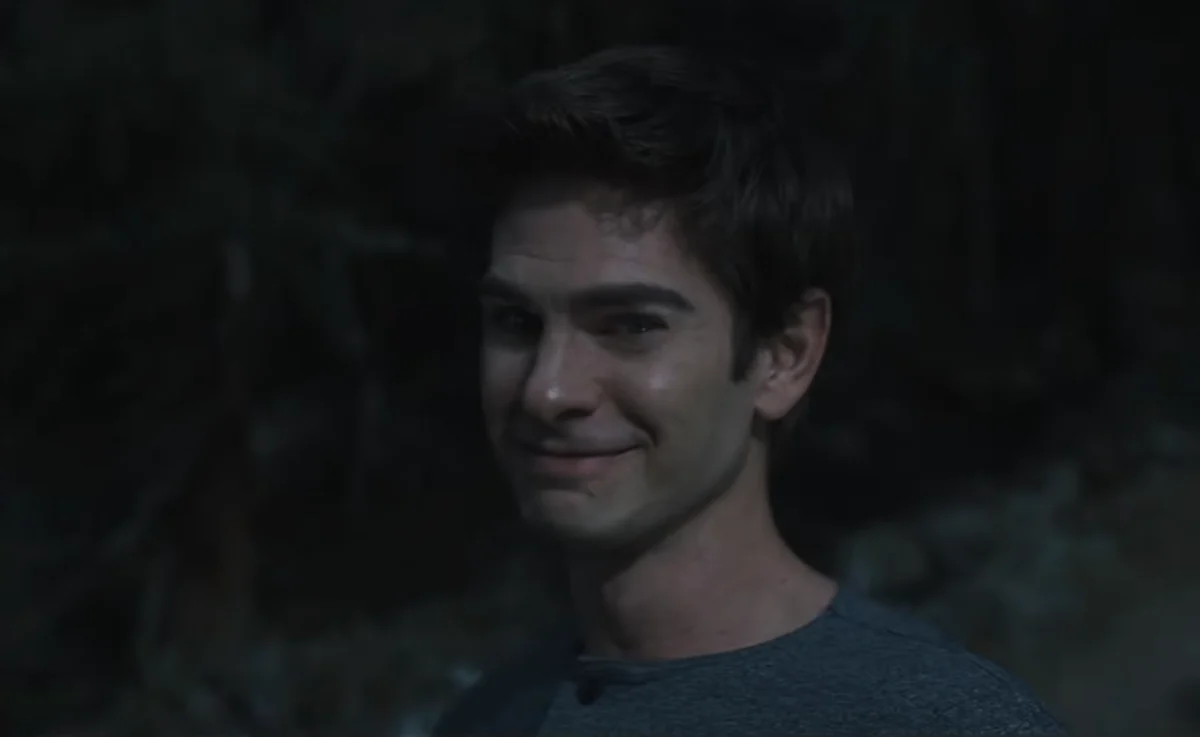
If the Academy chooses to ignore Garfield’s performance, they will be repeating the error of 1960. Psycho ended with the chilling, vacant smile of Norman Bates—a look that haunted generations of filmgoers. Artificial concludes on a similarly lingering shot of Andrew Garfield’s smile. It is a smile that acknowledges our complicity, our greed, and our inability to look away from the very things that threaten our existence.
Whether that smile will be replicated on the stage of the Dolby Theatre remains to be seen. But regardless of the outcome of the awards, the film has already succeeded in its primary goal: it has forced us to look at the "Norman Bates of Silicon Valley" and recognize that, for better or worse, we are the ones who handed him the knife.
‘Artificial’ is set to play at the BFI London Film Festival before its theatrical release on Christmas Day, with a wide expansion scheduled for January.
