
The Canon EOS R8 Mark II: Refining the Lightweight Full-Frame Hybrid Paradigm
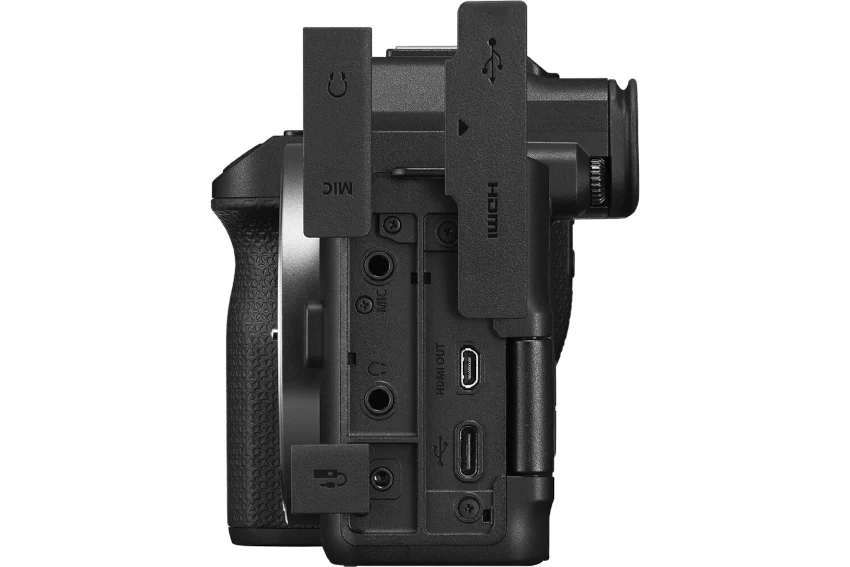
Canon has officially pulled the curtain back on the EOS R8 Mark II, a refined evolution of its highly successful entry-level full-frame platform. While the original EOS R8 was celebrated for its aggressive weight-to-performance ratio, it was often critiqued for omitting features that professional hybrid shooters deem essential. With the Mark II, Canon has systematically addressed these gaps, delivering a camera that balances the compact form factor of its predecessor with the robust feature set required for modern content creation and professional documentary work.
At its core, the R8 Mark II retains the highly capable 24.2MP full-frame sensor that defined the original model. However, the internal architecture has been overhauled to include long-awaited hardware upgrades—most notably, five-axis In-Body Image Stabilization (IBIS)—positioning the camera as a powerhouse for those who prioritize portability without sacrificing cinematic quality.
Main Facts: A Comprehensive Overview
The EOS R8 Mark II is designed for the hybrid shooter who operates in dynamic, fast-paced environments. Weighing in at just 546 grams (including battery and SD card), it holds the title of the lightest camera in the current Canon EOS lineup to feature internal stabilization.
Key technical highlights include:
- Sensor: 24.2MP Full-Frame CMOS.
- Stabilization: Five-axis IBIS providing up to 7.5 stops of correction (CIPA-rated).
- Video Capabilities: Uncropped 4K 60p recording, 10-bit internal recording, and Canon Log 3.
- Autofocus: Dual Pixel CMOS AF II with advanced subject tracking for vehicles, animals, and humans, plus the new "Register People Priority" mode.
- Physical Design: Redesigned chassis featuring a dedicated multi-controller (joystick).
- Burst Performance: 40 fps electronic shutter with a significantly expanded buffer for RAW and JPEG capture.
Chronology: The Evolution of the R8 Platform
The trajectory of the R8 series reflects Canon’s broader strategy to migrate its professional-grade technologies into smaller, more accessible bodies. When the original EOS R8 launched, it was lauded for bringing the sensor technology of the EOS R6 Mark II into a significantly more portable chassis. However, the lack of IBIS and the absence of a joystick control left a segment of the user base wanting more.

In the period leading up to the Mark II’s development, industry feedback emphasized the need for better handheld stability for video shooters and more tactile, professional-grade control layouts. The R8 Mark II is the direct result of this feedback loop. By integrating IBIS while maintaining the 546g weight, Canon has achieved an engineering milestone, essentially closing the gap between its compact entry-level cameras and its more robust, cinema-oriented offerings.
Supporting Data: Why the Upgrades Matter
The Impact of IBIS
The addition of five-axis IBIS is the headline upgrade for the Mark II. By achieving up to 7.5 stops of correction, Canon has fundamentally changed how the R8 can be deployed. For filmmakers, this means the ability to achieve gimbal-like smoothness in handheld shots, even when using prime lenses that lack their own optical stabilization. When paired with RF lenses featuring Optical IS, the "coordinated" system creates a near-tripod-like stability, which is essential for run-and-gun documentary work where tripods or gimbals are often impractical.
Video Performance and Workflow
For video production, the technical specifications are equally impressive. The inclusion of 10-bit internal recording (XF-AVC S and XF-HEVC S codecs) provides the color depth required for professional post-production. With approximately 14 stops of dynamic range when shooting in Canon Log 3, the R8 Mark II allows for sophisticated color grading that can be seamlessly matched with higher-end cinema cameras like the C70 or R5 C.
Furthermore, the "Movie Pre-Recording" function—capturing three or five seconds of footage before the shutter is pressed—is a feature borrowed from cinema-grade equipment. This capability ensures that fleeting moments, which are often lost during the latency of manually initiating a recording, are preserved.
Advanced Subject Detection
The Dual Pixel CMOS AF II system has been bolstered with "Register People Priority." This is not merely a software gimmick; it is a vital tool for event photographers and documentary filmmakers. By allowing the camera to "remember" specific individuals, the AF system can maintain focus on a subject even when they are obscured by crowds or other foreground distractions, significantly reducing the cognitive load on the operator.

Official Responses and Strategic Positioning
Canon has been clear regarding the positioning of the R8 Mark II. By intentionally omitting features such as open-gate recording, proxy movie recording, and HDMI RAW output, Canon is distinguishing the R8 line from its dedicated cinema-centric EOS R5 C or C-series cameras.
In official statements, Canon representatives have emphasized that the R8 Mark II is built to be the ultimate "B-camera" or a primary unit for independent creators. The intent is to provide a "no-compromise" image quality experience within a form factor that encourages mobility. The decision to keep the resolution at 24.2MP is a calculated move to prioritize low-light performance and readout speed—both of which are critical for the target demographic of hybrid shooters who balance high-resolution photography with high-frame-rate video.
Implications for the Industry
The release of the EOS R8 Mark II signals a shift in the entry-to-mid-level market. Historically, choosing a lighter camera body meant sacrificing stability and control. Canon is effectively ending that trade-off.
Implications for Content Creators
For the modern content creator, the R8 Mark II represents a reduction in the "kit burden." When you can achieve professional-grade stabilization, 10-bit color, and high-speed autofocus in a sub-600g body, the requirement for heavy support gear diminishes. This empowers creators to work in more discreet, unconventional spaces, potentially increasing the production value of content that would otherwise be shot on smartphones or less capable mirrorless systems.
Competitive Landscape
With a body-only price of $1,899, the R8 Mark II sits in a highly competitive bracket. It directly challenges other hybrid mirrorless cameras that often force users to choose between high-resolution stills or high-bitrate video. Canon’s strength here lies in its lens ecosystem. By providing native access to the RF mount, the R8 Mark II allows users to leverage some of the most advanced optical engineering on the market, which, when combined with the internal stabilization of the camera, creates a potent imaging system.

A New Standard for Hybrid Kits
The R8 Mark II forces a re-evaluation of what a "secondary" camera should be. In the past, secondary bodies were often stripped-down versions of primary cameras. The R8 Mark II is, in many respects, more advanced than the primary bodies many professionals have used for years. Its integration of professional features into a compact footprint suggests that the future of the professional camera bag will be significantly lighter, faster, and more versatile.
Conclusion: A Complete Platform
The EOS R8 Mark II is an evolutionary triumph. It does not reinvent the wheel, but it perfects the platform established by its predecessor. By addressing the fundamental criticisms of the original R8—namely the lack of stabilization and the need for more tactile controls—Canon has created a machine that feels complete.
For the hybrid shooter, the combination of 4K 60p, 10-bit Log recording, and industry-leading autofocus, all housed in a body that weighs barely more than a standard lens, is a compelling value proposition. While it lacks some of the extreme high-end features reserved for cinema lines, the R8 Mark II is a testament to Canon’s understanding of the modern filmmaker’s needs: high-quality output, reliable performance, and, above all, the freedom of mobility.
As the industry moves toward faster, more efficient workflows, the R8 Mark II stands as a benchmark for how manufacturers can refine their technology to meet the demands of a new generation of creators. Whether you are a solo documentary filmmaker, a high-end vlogger, or a hybrid photographer, the R8 Mark II offers a level of sophistication that ensures you are never limited by your equipment, regardless of how small that equipment may be.
The Canon EOS R8 Mark II is not just an update; it is an invitation to work differently, to move faster, and to capture more. With its $1,899 entry point, it remains an accessible yet undeniably professional tool that is set to become a staple in creative kits worldwide.
