
Guerrilla Filmmaking Evolved: Gareth Edwards Pushes Sony’s New FX5 to Its Absolute Limits Across Asia
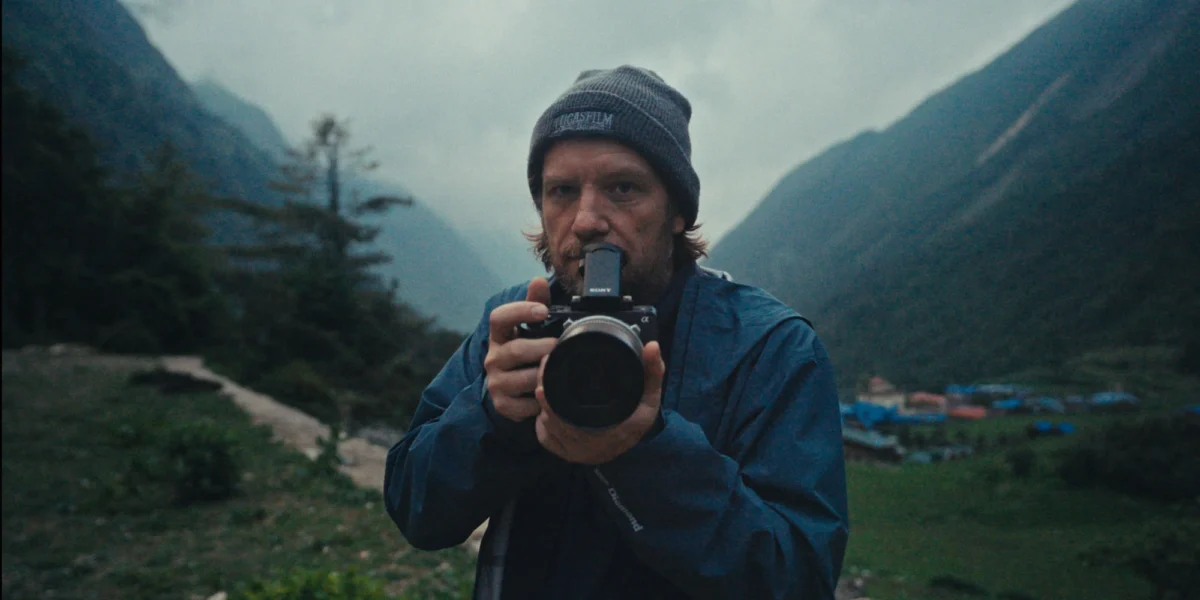
GLOBAL CINEMA PRODUCTION — The boundaries of what constitutes a high-end cinema package have shifted once again. Sony has officially announced the launch of its new compact full-frame Cinema Line camera, the FX5. Boasting 5K Open Gate acquisition, internal 16-bit X-OCN recording, and a remarkably stripped-down physical footprint, the camera represents a major evolution in run-and-gun and documentary-style filmmaking.
To test its mettle, Sony enlisted acclaimed director Gareth Edwards (The Creator, Rogue One: A Star Wars Story, Jurassic World: Rebirth) to put the FX5 through a rigorous, real-world gauntlet across Cambodia, Thailand, and Nepal. The resulting footage, captured during a grueling one-week shoot, highlights a camera built for mobility, low-light mastery, and uncompromised cinematic fidelity.
"Guerrilla filmmaking just went to the next level," Edwards remarked in an interview. "The FX5 is the run-and-gun cinema camera to beat."
Main Facts: The Anatomy of Sony’s FX5
At the heart of the Sony FX5 is a newly developed full-frame fully stacked Exmor RS CMOS image sensor, coupled with a high-speed BIONZ XR2 image processing engine and a dedicated AI processing unit. Designed specifically for creators who need theatrical-grade performance without the baggage of traditional studio rigs, the camera introduces several landmark features to Sony’s popular Cinema Line:
- Open Gate and High Frame Rates: The FX5 is the first in the FX series to offer 3:2 full-sensor Open Gate recording. It records 5K at up to 60 fps, 4K at up to 120 fps, and Full HD at up to 240 fps, alongside scan modes in 17:9, 16:9, and Super 35mm.
- Internal 16-bit X-OCN: Breaking new ground for the FX lineup, the camera records Sony’s scene-linear 16-bit X-OCN internally. Alongside the higher-bandwidth variants, it includes storage-efficient options like X-OCN C1 and C2, streamlining RAW workflows.
- Triple Base ISO & Dynamic Range: Rated at more than 15 stops of dynamic range in S-Log3, the FX5 features three Base ISO settings—800, 4000, and 12,800—supported by Dual Gain Shooting to preserve shadow detail and control noise in harsh lighting conditions.
- Compact Ergonomics: Built around a flat-top body with 5-axis optical in-body image stabilization, the system weighs very little and is powered directly from a gimbal handle, eliminating the need for bulky V-mount batteries or external RAW recorders.
Chronology: A Week Across Extremes in Southeast Asia and the Himalayas
The testing timeline for the FX5 spanned just one week, but it required navigating vastly different climates, topographies, and lighting conditions. Edwards received the camera only a week before production began, forcing a rapid turnaround for deployment.
The Route and Conditions
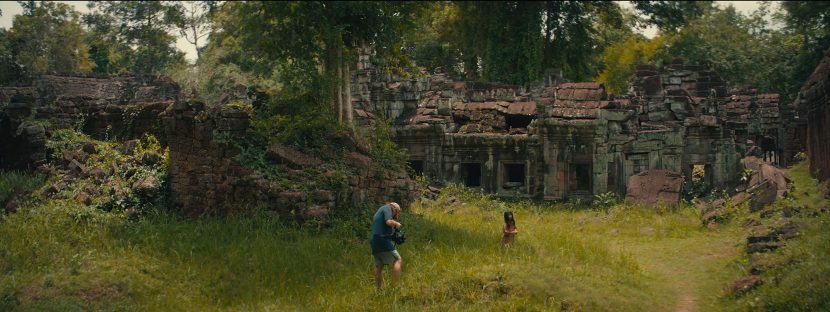
Edwards returned to landscapes he intimately explored during the 2022 pre-production and filming of The Creator, where he traversed over 80 locations across Southeast Asia using Sony’s compact FX3. For the FX5 test, Edwards and a skeleton crew traveled between modern urban environments, ancient historical temples, and high-altitude Himalayan villages.
Temperatures during the week fluctuated wildly, ranging from a humid 35°C down to a freezing -5°C. Despite the environmental extremes, the entire production package was pared down to just three unassuming bags: one for the FX5 camera body, one for a compact dolly and slider, and a third for essential accessories. Anything non-essential was deliberately left behind.
Accessing the Inaccessible
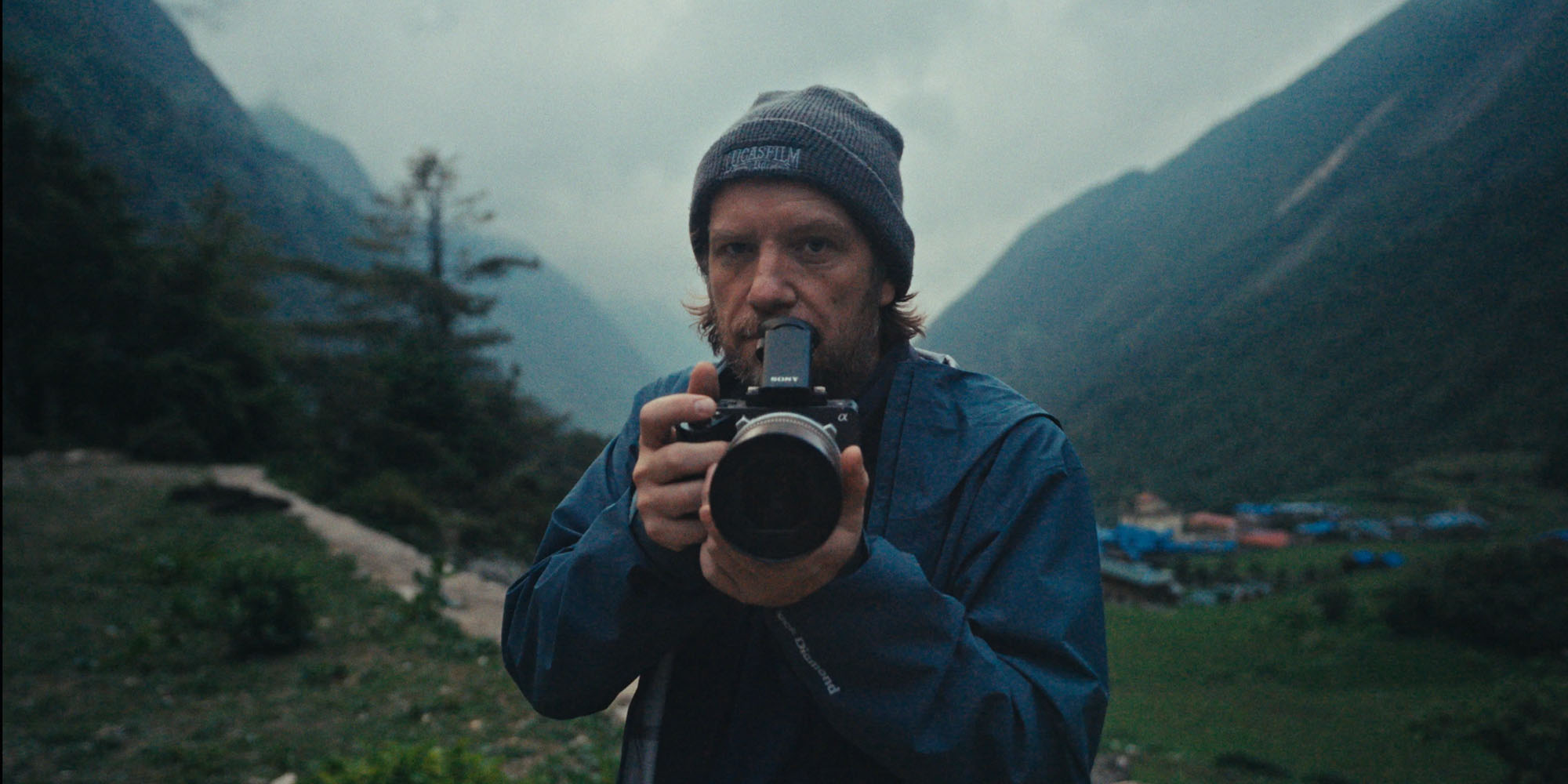
In a Himalayan mountain village, the minimalistic crew heard a temple bell and tracked it to a local Buddhist monastery. Invited inside just as a ceremony commenced, Edwards was able to document the sacred event seamlessly.
"Because it was just me and a tiny camera, nobody cared," Edwards recalled. "I took my shoes off, and I went inside… They were just in the midst of this thing, and I shot loads of different shots."
Edwards noted that attempting to capture the same sequence with a conventional, permitted film crew would have introduced insurmountable bureaucratic costs, delays, and disruptions to local life.
Supporting Data & Technical Specifications
A closer look at the FX5’s hardware and software ecosystem reveals a tool engineered for maximal efficiency on set and in post-production.
Sensor and Optical Capabilities
The stacked full-frame sensor pairs exceptionally well with vintage glass. During his test, Edwards configured the FX5 with a lightweight gimbal and a vintage 2x Japanese anamorphic lens. The camera features built-in in-camera de-squeeze for 1.3x, 1.5x, 1.6x, 1.8x, and 2x optics.
Edwards praised the lens and sensor combination for striking a balance between modern clarity and classical aesthetics: "When you finally get the focus, you get that person’s face; it’s in 5K. It’s really crisp, but the rest of it has a much more painterly feeling."
The iPhone as a Wireless Viewfinder
One of the most innovative workflow adjustments on the shoot was the complete elimination of external field monitors and video transmitters. Utilizing the camera’s built-in Wi-Fi and Sony’s Monitor & Control application, Edwards streamed the image directly to an iPhone.
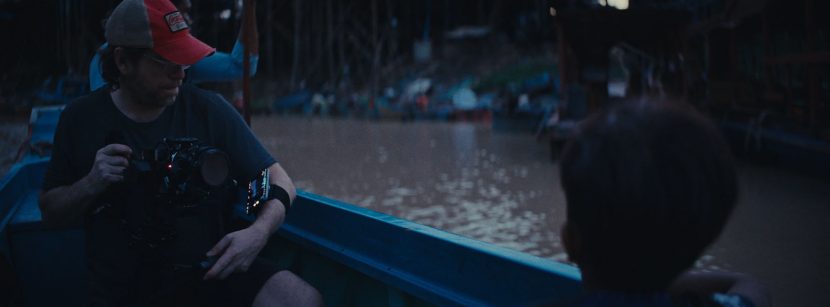
Using Apple’s MagSafe technology, Edwards could instantly snap the phone onto magnets attached to either his gimbal or a wristband, wearing it like a wristwatch during low-mode or awkward physical shots.
"The iPhone is so bright and the battery is so good, it’s better than any five-inch field monitor you could get," Edwards explained.
Power, Sensitivity, and Glass-Free Flexibility
The camera’s ISO 4000 base setting proved to be a workhorse during daylight hours. Combined with a variable ND filter, Edwards could transition seamlessly from blinding midday exterior sunlight to dim interior environments without stopping to unscrew filters or re-rig components. As daylight faded, he switched to the ISO 12,800 base setting.
"Essentially, if I could see it with my eye, I knew the camera could see it," Edwards said. "I can’t go back from ISO 12,800. I’m just not interested in cameras that can’t do it now."
Official Responses and Creator Perspectives
Industry reactions to the FX5 emphasize a shift away from over-engineered production pipelines toward agile, frictionless storytelling. Sony’s positioning of the camera as an extension of its Cinema Line directly targets the modern hybrid filmmaker who demands professional codecs without sacrificing portability.
Speaking to Yaroslav Altunin, Gareth Edwards elaborated on the psychological shift of working with such lightweight gear: "Sometimes, I’ve felt like there are little moments in the middle of a shot where you’re holding the camera, and you think to yourself, a year from now, this is going to get a major theatrical release around the whole world… And to feel like, in such a small camera, to have that same feeling, where there’s no weight to it, it feels like a TARDIS."
Edwards emphasized that the ultimate goal of the FX5’s design philosophy is deception: "You hide in plain sight. You can be shooting for a movie that gets a theatrical release, but you just look like a tourist. I think it’s going to open up lots of opportunities."
Implications for the Film Industry
The release of the Sony FX5 and its validation by a blockbuster filmmaker like Gareth Edwards carry significant implications for the future of commercial and independent filmmaking.
Democratizing High-End Production
By internalizing 16-bit X-OCN RAW and 5K Open Gate recording into a body that requires no external cages, heavy V-mount batteries, or wireless video transmitters, Sony has drastically lowered the logistical barrier to entry for high-end cinematic aesthetics. Independent filmmakers can now achieve the dynamic range, color science, and spatial resolution previously reserved for large-scale cinema cameras, all while maintaining a footprint indistinguishable from a consumer travel vlog.
Redefining the Assistant-Director and Crew Relationship
The reduction in gear directly impacts crew sizes. As directors increasingly take on operating roles—relying on smartphones as wireless viewfinders and leveraging advanced AI-assisted autofocus and pose estimation—traditional crew hierarchies on documentary and low-budget narrative shoots will continue to adapt. The ability to scout and shoot simultaneously allows for a reactive, intuitive filmmaking style that prioritizes serendipity over rigid storyboarding.
Future-Proofing via Software Updates
Sony has already laid out a robust roadmap for the FX5 ecosystem. Beyond the upcoming Catalyst Prepare 3.0 workflow integration slated for August 2026—which will handle X-OCN C1 and C2 material—Sony has announced a major version 2.0 firmware update for August 2027 or later. This anticipated update promises to bring X-OCN high-frame-rate recording at up to 240 fps, 3:2 Open Gate recording in XAVC S-I, and enhanced vertical-shooting interfaces.
Pricing and Availability
In Australia, the Sony Cinema Line FX5 (body only) is scheduled for retail availability in early August 2026, with an introductory price tag of A$7,849. Global pricing and release dates are expected to roll out concurrently.
As studios and independent creators alike look for ways to optimize budgets without sacrificing visual integrity, the FX5 arrives as a timely disruptive force, proving that big-screen magic no longer requires a truck full of gear.
