
Sigma’s Dual Vision: Bridging the Gap Between Optical Perfection and Practical Mobility
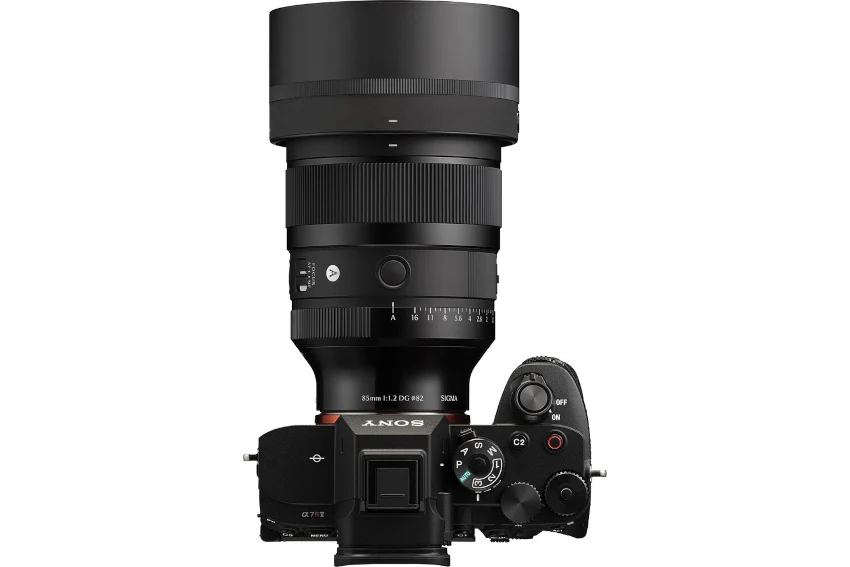
In a move that signals a strategic expansion of its full-frame optical ecosystem, Sigma Corporation has announced two high-performance lenses that cater to diametrically opposed professional needs. The launch of the 85mm F1.2 DG Art and the 20-60mm F2.8-4 DG Contemporary underscores the company’s ability to balance the high-stakes demands of cinema-grade prime performance with the agile, run-and-gun requirements of modern documentary and event videography.
Available for Sony E-mount and L-Mount camera systems starting October 6, 2026, these lenses represent a pivotal moment for mirrorless shooters, providing new creative avenues whether one is working in a controlled studio environment or navigating the unpredictable terrain of location production.
Main Facts: The New Optical Standard
Sigma’s latest release strategy reflects a sophisticated understanding of the modern hybrid shooter’s kit. By launching these two products simultaneously, the company is addressing the two most common pain points in professional cinematography: the need for "hero" visuals with extreme subject isolation and the requirement for a lightweight, versatile zoom that doesn’t compromise on the ultra-wide end.
The 85mm F1.2 DG Art
The 85mm F1.2 DG Art serves as the crown jewel of Sigma’s current prime lineup. Designed for creators who demand the "Art" series hallmark—uncompromising sharpness combined with pleasing bokeh—this lens completes a trio of ultra-fast primes alongside the existing 35mm and 50mm F1.2 variants. It is a tool of precision, built to render interviews and narrative portraits with a cinematic quality that is often difficult to replicate with standard zooms.
The 20-60mm F2.8-4 DG Contemporary
Conversely, the 20-60mm F2.8-4 DG Contemporary is an exercise in engineering efficiency. By opting for a variable aperture, Sigma has managed to squeeze a 20mm ultra-wide perspective—a focal length typically reserved for specialized glass—into a compact, sub-400g chassis. It is designed to stay on the camera body for the duration of a shoot, providing the reach needed for storytelling without the bulk of professional F2.8 constant-aperture zooms.
Chronology of Development and Release
The path to the October 2026 launch has been one of rigorous iteration. Following the successful reception of the DG Art F1.2 series, feedback from professional filmmakers highlighted a demand for an 85mm variant that did not sacrifice portability for speed. Sigma’s R&D team faced the challenge of maintaining an F1.2 aperture while keeping the lens manageable for handheld gimbal work.
- Q1 2025: Initial feasibility studies for a compact 85mm F1.2 begin, focusing on high-refractive-index glass to minimize physical length.
- Q4 2025: Design finalization for the 20-60mm "Contemporary" zoom, prioritizing a 20mm starting point over a constant aperture to differentiate the lens from the existing 24-70mm market saturation.
- Q2 2026: Prototype testing in real-world production environments, including documentary sets and high-end fashion shoots.
- October 6, 2026: Global retail availability across all major markets for both Sony E-mount and L-Mount platforms.
Supporting Data: The Technical Specs
Sigma has released detailed specifications that reveal the technical philosophy behind these two distinct glass choices.

Optical Formula and Performance
The 85mm F1.2 DG Art utilizes a complex 17-element, 12-group construction. By incorporating two Special Low Dispersion (SLD) elements, Sigma has successfully mitigated chromatic aberration—a common issue in wide-aperture primes. The 13-blade circular diaphragm ensures that highlights remain smooth and rounded, even when stopped down slightly. At 905g, it stands as the lightest autofocus 85mm F1.2 for full-frame mirrorless cameras, a significant achievement in optical engineering.
The 20-60mm F2.8-4 Contemporary relies on an 15-element, 13-group design, which includes three SLD elements and three aspherical elements. This combination is optimized for high-resolution sensors, ensuring that the 20mm wide end remains sharp corner-to-corner—a necessity for architectural and interior videography.
Focus Mechanics and Video Features
Both lenses feature the High-response Linear Actuator (HLA), which provides silent, high-speed autofocus performance. For video professionals, Sigma has specifically tuned these actuators to minimize focus breathing.
- 85mm Art: Features a dedicated de-click switch for the aperture ring, a physical lock to prevent accidental adjustments, and dual customizable AFL buttons.
- 20-60mm Contemporary: Boasts a class-leading close-focusing distance of 15.8cm (at 28mm), offering a 1:2.3 magnification ratio, effectively allowing the lens to double as a macro tool for product B-roll.
Official Responses and Strategic Rationale
In internal briefings accompanying the launch, Sigma representatives emphasized that these lenses were not developed in isolation but as direct responses to shifting industry workflows.
"The industry is moving toward smaller, faster, and more versatile setups," a Sigma spokesperson noted. "With the 85mm F1.2, we wanted to prove that you don’t need a heavy, front-loaded lens to achieve that ‘hero’ look. You need speed, you need character, and you need to be able to carry it all day."
Regarding the 20-60mm, the strategy was clear: "We looked at the standard 24-70mm zoom and asked, ‘What is missing?’ The answer was the 20mm wide angle. By sacrificing a constant aperture, we unlocked a field of view that is essential for modern vlogging, documentary filmmaking, and tight-space interior work, all while keeping the weight at a level that doesn’t strain a gimbal motor."
Implications for the Professional Filmmaker
The introduction of these lenses carries significant weight for the market landscape.

Expanding the "Run-and-Gun" Capability
The 20-60mm F2.8-4 represents a potential shift in the "standard zoom" category. For many shooters, the extra 4mm at the wide end—moving from 24mm to 20mm—is a massive functional upgrade. In small rooms or crowded event spaces, those few millimeters can be the difference between capturing the entire scene or failing to do so. By making it lightweight and weather-sealed, Sigma has created a lens that is likely to become a workhorse for news crews and corporate videographers.
The Rebirth of the Portrait Prime
The 85mm F1.2 Art is not just a lens; it is a creative statement. In an era of digital perfection, there is a renewed interest in "optical character"—the way a lens renders a background. By keeping the lens under 1kg while maintaining an F1.2 aperture, Sigma has made this "cinematic look" more accessible for handheld operators who previously would have needed a tripod or a heavy-duty rig to stabilize a lens of this class.
Compatibility and System Longevity
By launching in both L-Mount and Sony E-mount, Sigma continues to cement its role as the premier third-party lens manufacturer. For L-Mount users, who are currently benefiting from the collaborative efforts of the L-Mount Alliance (Leica, Panasonic, Sigma), these lenses provide a substantial expansion of the available ecosystem. For Sony users, the lenses offer a high-performance alternative to first-party glass, often at a more competitive price point without sacrificing the electronic communication required for modern real-time tracking autofocus.
Conclusion
Sigma’s dual announcement on October 6, 2026, is a reflection of a mature, listening company. By providing a specialist tool for the "Art" lover and a utilitarian, versatile tool for the "Contemporary" shooter, Sigma is ensuring its relevance across the entire spectrum of full-frame production.
The 85mm F1.2 DG Art ($1,599) is an investment in quality and aesthetic control, while the 20-60mm F2.8-4 DG Contemporary ($849) is an investment in speed, agility, and utility. Whether a cinematographer is looking to refine their signature look or expand their range of motion, these two lenses provide the technical foundation to push the boundaries of what is possible in modern, high-definition production. As the industry continues to evolve, tools like these will remain at the heart of the storytelling process, enabling creators to capture their vision with clarity, depth, and efficiency.
