
Beyond the Blueprint: How ‘Emergent Strategy’ is Reshaping Social Movements and Speculative Fiction
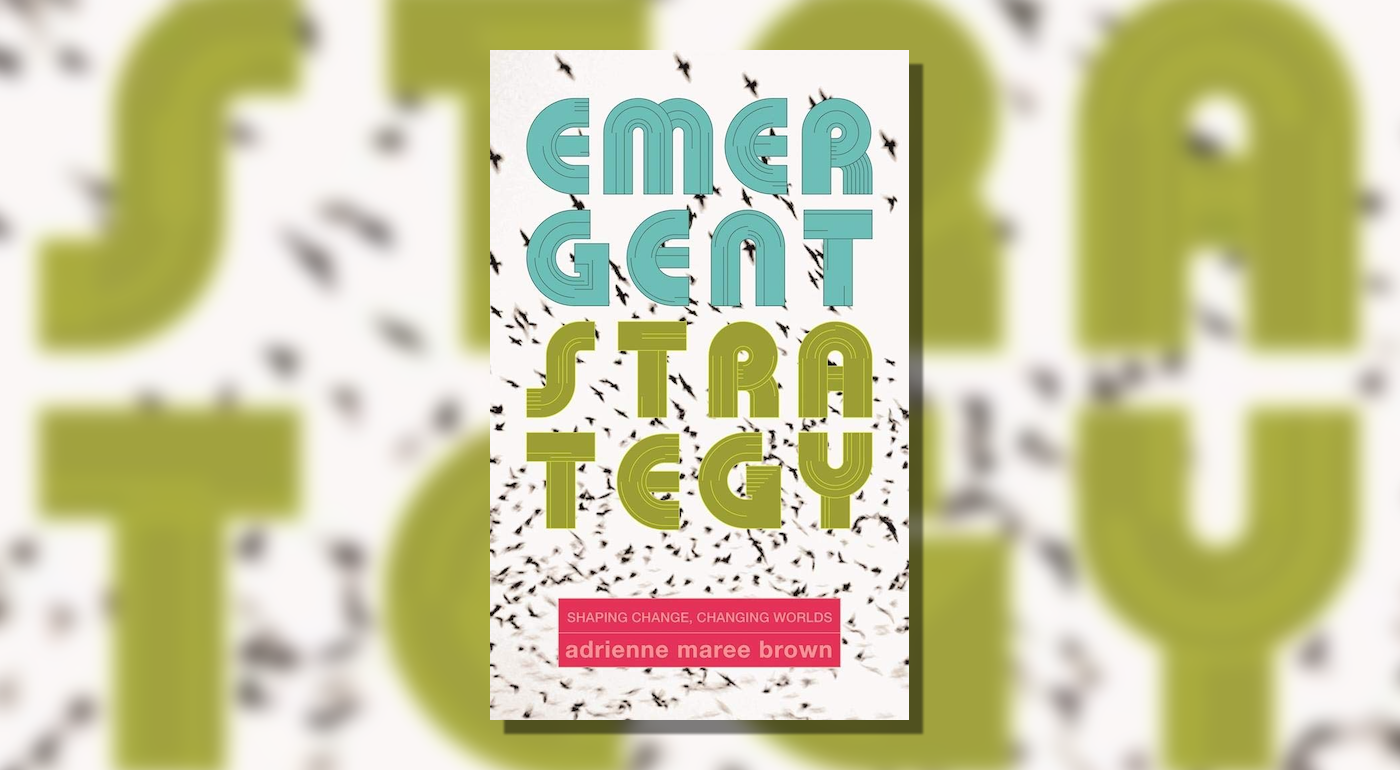
In the landscape of modern organizational theory and social activism, few texts have bridged the gap between the pragmatic and the visionary as effectively as adrienne maree brown’s Emergent Strategy: Shaping Change, Changing Worlds. While often categorized as a guide for community organizers and movement-builders, the book has quietly become a cornerstone for science fiction authors, futurists, and those tasked with facilitating complex human collaboration. By synthesizing the radical imagination of Octavia Butler with the biological principles of nature, brown provides a framework for creating social structures that are as resilient as they are equitable.
The Foundations of Emergent Strategy
Emergent Strategy defies the conventional structure of non-fiction. It is not a linear roadmap but rather a "practitioner’s guide" intended for an alternative, more hopeful universe. It functions on the premise that the way we organize locally—in our meetings, our activist collectives, and our interpersonal relationships—is a fractal of the world we wish to build.
At the heart of the text is a deep, abiding debt to Octavia Butler. Brown draws explicitly from Butler’s Parable of the Sower and Dawn, identifying the primary flaw of human civilization as the volatile combination of high intelligence and rigid, extractive hierarchy. In Dawn, this flaw leads to the necessity of species hybridization; in Emergent Strategy, brown argues that we can achieve a similar "hybridization" through the intentional study and adoption of biological systems.
The book is an invitation to biomimicry. It asks the reader to look toward the resilience of fungi, the coordination of starling murmurations, and the adaptability of dandelions to solve the "brittleness" of traditional, top-down leadership models.
Chronology of an Ideology
The evolution of these ideas did not occur in a vacuum; it is the culmination of decades of radical activism, mediation, and literary analysis.
- The Foundational Influence (20th Century): The seeds were planted in the 1990s through the speculative literature of Octavia Butler, who challenged the inevitability of human self-destruction through her Earthseed philosophy.
- The Activist Pivot (2000s–2010s): Brown and her contemporaries began applying these literary themes to real-world grassroots movements. As social media and global connectivity shifted the speed of organizing, activists found that rigid, hierarchical structures were failing to respond to the rapid, fluid nature of political crises.
- Publication and Proliferation (2017): The release of Emergent Strategy codified these disparate practices. It provided a common language—terms like "fractal," "intentional adaptation," and "biomimicry"—for activists and organizers across the United States.
- Modern Integration (2020–Present): The text has moved beyond pure activism, becoming a staple in organizational development, creative writing workshops, and the broader solarpunk movement, which seeks to design hopeful, sustainable futures.
Supporting Data: Nature as Organizational Model
The efficacy of brown’s model relies on its empirical connection to the natural world. The book’s core arguments are reinforced by scientific phenomena that challenge the human obsession with centralized control.
The Mycelial Network
Mycelium—the underground, thread-like network of fungi—is presented as the ultimate model for non-hierarchical organization. As biologist Merlin Sheldrake has documented, these networks trade nutrients and information across entire ecosystems. In a human context, brown posits that the most important work is often the "hidden" connection—the relationships built beneath the surface of a visible protest or a flashy product launch. When these networks are strong, the "fruiting body" of an organization (the project or event) becomes a natural, healthy outgrowth of that foundation.
Starling Murmurations
The "starling" model provides a solution to the "loudest voice in the room" phenomenon that frequently plagues anarchist and consensus-based groups. In a murmuration, no single bird acts as the leader. Instead, each bird responds to the movement of its immediate neighbors, creating a collective, shifting shape that is far more agile than any individual could orchestrate. Brown argues that if human organizations prioritize "in-the-moment" communication over rigid, pre-planned agendas, they become significantly more resilient to environmental shifts.

Official Responses and Philosophical Critique
The reception of Emergent Strategy has been largely defined by its intersectional approach to mediation. Critics and practitioners alike have noted that the book’s greatest strength is its refusal to romanticize "leaderless" spaces. Brown openly acknowledges that simply removing a formal hierarchy in a society scarred by systemic racism and sexism does not result in equality; it often results in the emergence of informal, unaccountable hierarchies.
In response, brown advocates for "intentional structure." This has been met with praise by professional facilitators who operate in the corporate world, such as J. Elise Keith, author of Where the Action Is. While Keith’s focus is on corporate efficiency and Brown’s is on social survival, there is an emerging synthesis: the idea that meetings should be goal-oriented but also "poetic," allowing for the full humanity of the participants to surface. This combination allows for a "goal-focused organization that also attends to the cues that bring problems, solutions, and anxieties to the surface."
Implications for Future-Building
The implications of Emergent Strategy extend far beyond the boardroom or the picket line. For the speculative fiction community, the book serves as a "seed bank" for worldbuilding.
1. The Death of the Static Utopia
Traditional utopias in literature are often depicted as stagnant, "end-of-history" scenarios where nothing left can be improved. Brown challenges this by defining utopia as a dynamic, evolving process. In her view, a truly compelling future must allow for continued growth, innovation, and, most importantly, the presence of multiple, conflicting belief systems living in a state of interdependence. This "dynamic utopia" provides a new blueprint for science fiction writers who wish to move beyond the "dystopia-as-warning" trope.
2. The Architecture of Religion
Science fiction often struggles to depict the emergence of belief systems that feel authentic. Brown’s analysis of the Earthseed movement suggests that religions are not necessarily "invented" by prophets but emerge from the collective survival strategies of groups in crisis. Writers can use this to create more grounded, sociological depictions of faith in their future societies, where belief is a tool for survival rather than a mere plot device.
3. Resilience Through Biomimicry
For writers constructing rebel cells, starship crews, or post-collapse societies, the book offers a set of behavioral templates. What would a society look like if it were organized like a mycelial network? How would a military conflict change if a unit operated like a flock of birds, capable of splitting and reforming in response to threat? These are not just aesthetic choices; they are structural changes that dictate the plot’s tension and the group’s success.
Conclusion: Toward a New Organizational Literacy
Emergent Strategy is more than a book; it is an exercise in changing the way we perceive human agency. By arguing that we are all "shaping change" in every interaction, brown removes the paralysis that often comes with the scale of modern global problems.
For the activist, the implication is clear: start small, build deep, and stay adaptable. For the writer, the invitation is equally compelling: imagine a future where humanity has finally learned that its greatest strength lies not in its command of hierarchy, but in its capacity to mimic the profound, interconnected wisdom of the natural world. As we look toward an uncertain future, the lessons of the dandelion and the starling may prove to be the most vital survival tools in our collective repertoire.
