
A Quarter-Century of Sound: Apple’s Nostalgic Easter Egg Celebrates the iPod’s 25th Anniversary
It is a milestone that marks the definitive turning point in modern digital culture: 25 years ago, Steve Jobs walked onto a stage, pulled a sleek, white device from his pocket, and promised to change the music industry forever. He delivered "1,000 songs in your pocket." Today, that original iPod—a device that transformed the way humanity consumes media—is being honored by Apple not through a press release or a high-budget keynote, but through a charming, interactive digital tribute hidden deep within the architecture of the Apple Music website.
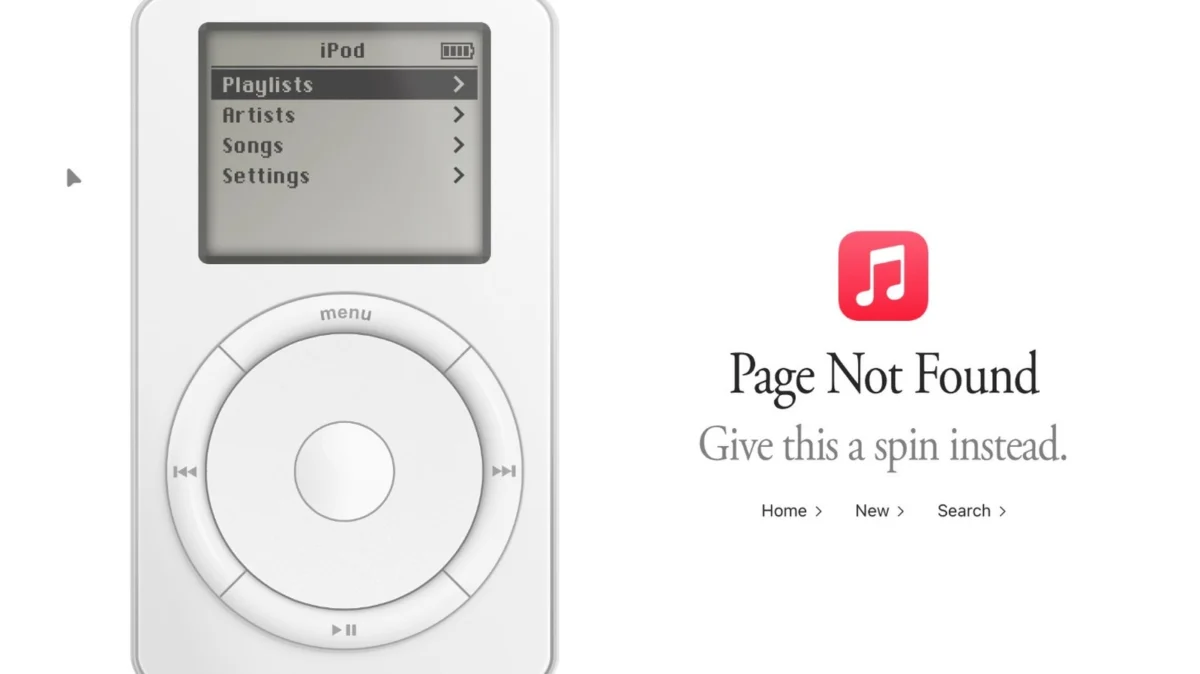
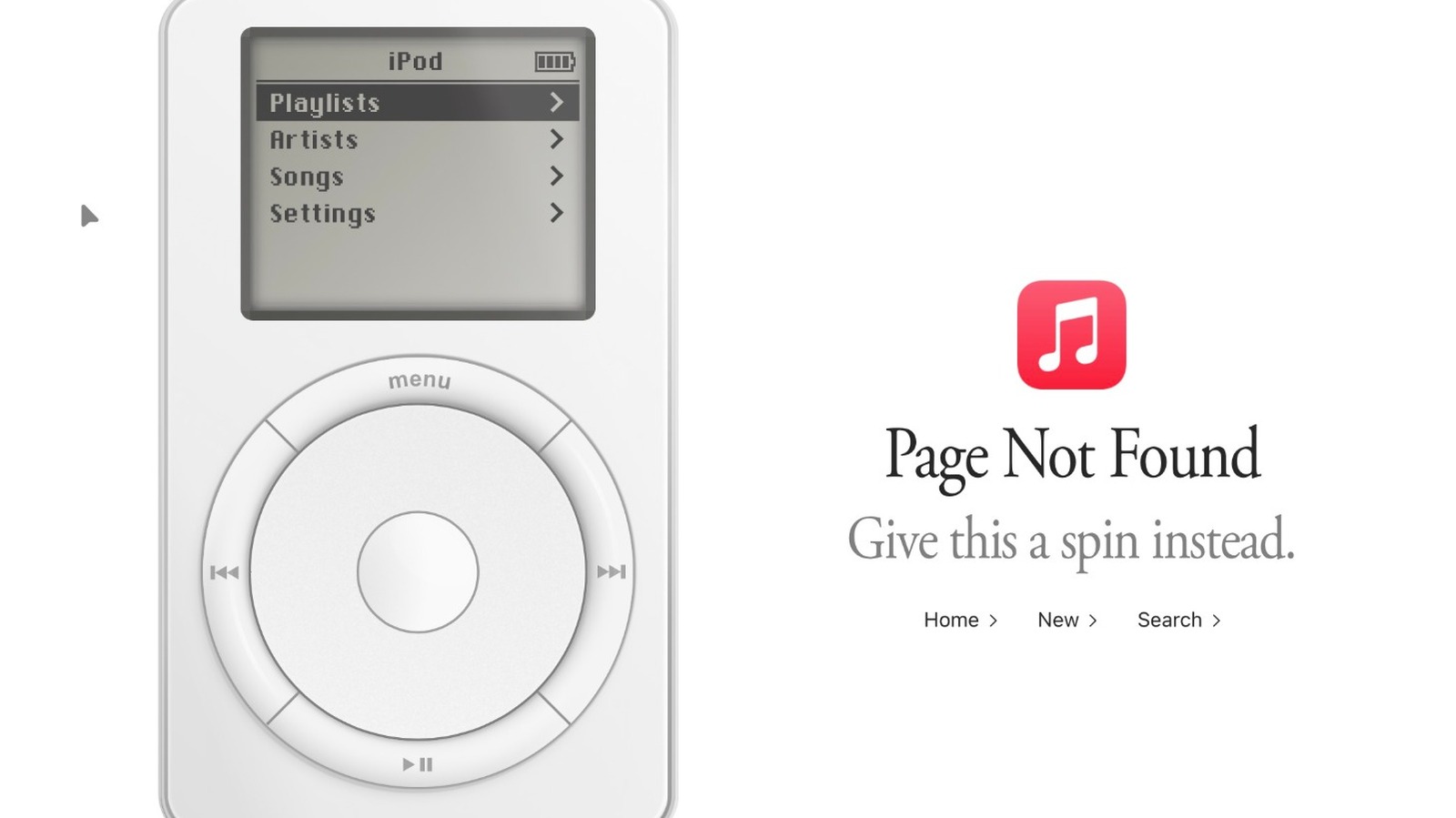
For those feeling the weight of the years, this anniversary serves as a poignant reminder of how far we have traveled since 2001. To commemorate the occasion, Apple has deployed a hidden, fully functional virtual replica of the first-generation iPod that appears whenever a user encounters a "404 Page Not Found" error on the Apple Music domain.
The Digital Relic: A Deep Dive into the Easter Egg
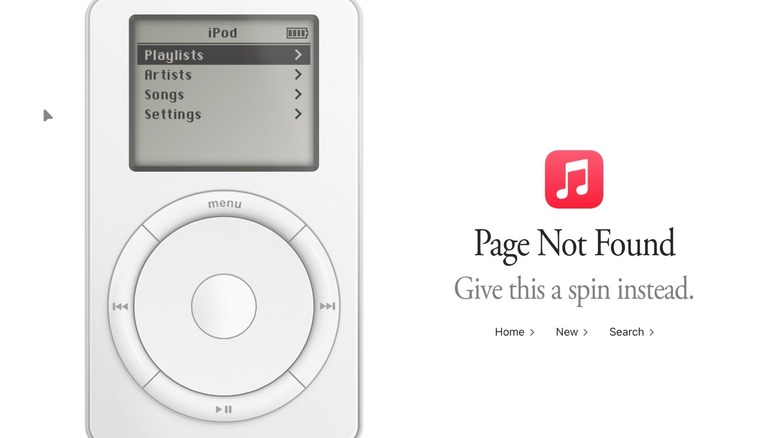
The Easter egg is a masterclass in skeuomorphic design, mirroring the aesthetic that defined the early 2000s tech landscape. When a user navigates to a broken link on the Apple Music portal, they are greeted by the standard "page not found" notification. However, sitting directly beneath this mundane error message is a beckoning prompt: "Give this a spin instead."
Upon interaction, a high-fidelity, virtual representation of the original iPod appears. It is not a static image, but a fully interactive experience. Users can manipulate the iconic click wheel, navigate through menus—Playlists, Artists, Songs, and Settings—and even listen to 90-second snippets of a curated library containing 1,029 songs.
The curation of the music is perhaps the most delightful aspect of this tribute. It serves as a time capsule of the early 2000s, featuring quintessential tracks from artists like Eminem, Blink-182, and the Baha Men. The experience is best enjoyed on a mobile device or tablet, where the touch-screen interface mimics the physical sensation of the click wheel with surprising accuracy.
Perhaps most impressively, Apple has included the legendary Brick game. On the original 2001 device, Brick was a hidden gem accessible only by holding the center button on the "About" screen for several seconds. In this virtual tribute, the game is fully playable, allowing a new generation to experience the addictive, block-breaking simplicity that kept commuters entertained for thousands of miles during the mid-2000s.
A Chronology of the iPod Revolution
To understand why this digital Easter egg carries such emotional weight, one must look at the timeline of the iPod’s ascent.
- October 23, 2001: Steve Jobs introduces the first iPod. It features a 5GB hard drive and the revolutionary click wheel. Critics were initially skeptical, with many questioning the $399 price tag and the proprietary nature of the device.
- 2002–2003: Apple expands the iPod to Windows users and launches the iTunes Music Store, fundamentally shifting the music industry from physical CDs to digital, single-track downloads.
- 2004: The iPod Mini is released, proving that form factor and color variations could turn a utility device into a fashion accessory.
- 2005: The iPod Nano and the iPod Shuffle are introduced, diversifying the line into distinct tiers of portability and price.
- 2007: The iPod Touch is unveiled, signaling the transition toward the iPhone-centric era. The iPod begins its slow migration from a standalone device to an integrated component of Apple’s broader ecosystem.
- 2022: Apple officially discontinues the iPod Touch, marking the end of the line for the dedicated music player.
Supporting Data: The Impact on Consumer Technology
The significance of the iPod extends far beyond music. It was the "Trojan Horse" that allowed Apple to enter the living rooms and pockets of millions of consumers, eventually paving the way for the iPhone.
In 2001, the portable music market was dominated by bulky, unreliable CD players and finicky, low-capacity flash players. The iPod’s 5GB hard drive was a massive technical achievement, allowing for the storage of roughly 1,000 songs encoded at 160kbps. By 2007, Apple had sold over 100 million iPods, a number that would eventually climb to over 450 million by the time the product line was phased out.
The device also fostered a shift in the music economy. Before the iPod, music consumption was largely an "album-based" experience. The ability to shuffle tracks and create personalized playlists encouraged "track-based" consumption, a precursor to the algorithmic recommendation engines that drive modern services like Spotify and, indeed, Apple Music itself.
Industry Implications and Corporate Strategy
Why would a multi-trillion-dollar corporation devote development resources to a 404 page? The answer lies in brand identity. Apple’s marketing has always relied heavily on nostalgia as a bridge between its legacy and its future. By allowing users to "play" with the past, Apple reinforces the narrative that their current technology—Apple Music—is the natural evolution of that 2001 breakthrough.
From a design perspective, the virtual iPod is a clever homage to "skeuomorphism"—a design philosophy where digital elements mimic their real-world counterparts. While Apple moved toward "flat" design during the Jony Ive era (the mid-2010s), the company recognizes that its current user base is increasingly composed of Millennials and Gen Z individuals who view the original iPod as a piece of "vintage" retro-tech.
Furthermore, the Easter egg is a low-friction engagement tool. By not requiring an active subscription to interact with the virtual iPod, Apple is effectively creating a viral moment that invites users—regardless of their current streaming habits—to interact with the Apple Music brand.
Reflections on a Bygone Era
The 25th-anniversary celebration is not just about the hardware; it is about the tactility of music. In the age of infinite streaming, where millions of songs are available at a tap, the physical constraint of the original iPod—the limited capacity, the mechanical click wheel, the 90-second previews—feels oddly liberating.
The inclusion of Brick and the specific selection of music from 2001 highlights a specific cultural moment where the barrier to entry for digital media was high, but the reward was a deeply personal relationship with one’s own library.
As we look back at the quarter-century since the iPod’s debut, it is clear that while the hardware has become obsolete, the philosophy remains embedded in every Apple product. The iPod proved that technology could be intuitive, beautiful, and essential. This latest digital tribute, tucked away in the corners of the internet, is a gentle, playful nod from Apple to the device that started it all.
Whether you are a long-time enthusiast who remembers the heft of the original "scroll wheel" model or a younger user discovering the interface for the first time, the virtual iPod serves as a reminder that even in the world of high-speed cloud computing, there is still room for a little bit of magic, a little bit of mystery, and a lot of nostalgia. So, if you find yourself wandering onto a broken page on the Apple Music site, take a moment. Dust off that virtual click wheel, play a round of Brick, and remember the device that taught the world how to listen to the future.
