
The Crunch of "Brand New Day": Inside the VFX Marathon of Marvel’s Latest Blockbuster
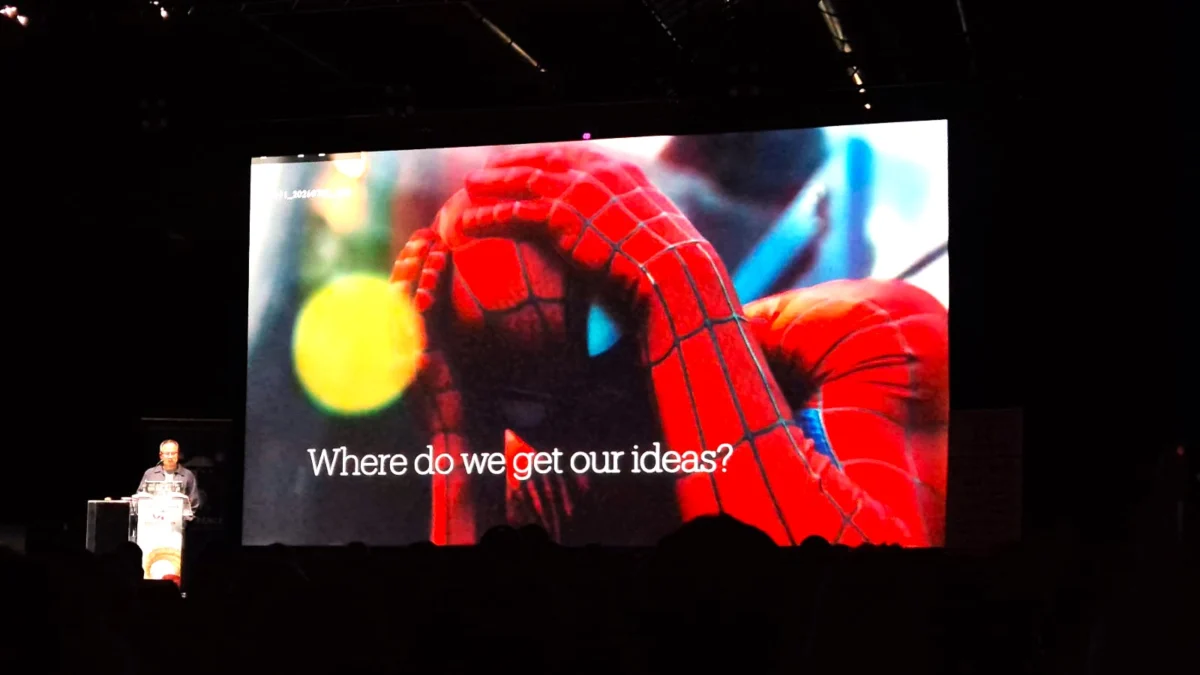
The modern visual effects industry is often defined by a quiet, high-stakes battle against the clock. Nowhere was this more evident than in the production of the latest Marvel and Sony collaboration, Spider-Man: Brand New Day. At the recent VIEW Conference in Turin, VFX supervisor Jerome Chen pulled back the curtain on a post-production cycle that pushed the limits of human endurance and technical ingenuity, revealing a project that delivered nearly 2,000 VFX shots in a staggering 24-week window.
For Chen, the statistics of Brand New Day are a sobering reflection of the current state of blockbuster filmmaking. During the peak of the crunch, his team delivered 445 shots in a single week—a figure that Chen noted with irony, as it nearly equals the total shot count of his first feature film as a supervisor in 1999, which took two full years to complete.
The Chronology of a High-Speed Production
The logistical odyssey of Brand New Day began long before the cameras rolled. In December 2024, Chen embarked on a scouting trip to New York City, tasked with capturing the essence of the Big Apple even before a final script was firmly in place. Director Destin Daniel Cretton had a clear, ambitious vision: he wanted a "grounded, street-level" Spider-Man, a film where the city of New York functioned as a primary character rather than a mere backdrop.
However, the realities of international film production meant that the majority of the shooting would take place in the United Kingdom. Pinewood Studios, along with various locations in London and Glasgow, were tasked with doubling for the bustling streets of Manhattan. Working alongside production designer Charles Wood, the team developed a restrained color palette, ensuring that the grit of the city remained the focus, with vibrant, saturated colors reserved only for the most emotionally resonant beats of the narrative.
The post-production phase that followed was a masterclass in compressed scheduling. Approximately three-quarters of the film’s total VFX work was delivered during the final six weeks of the process. This "sprint to the finish" created an environment of immense intensity, requiring a level of coordination that many in the industry would consider impossible.
Engineering "New York" in the United Kingdom
Creating an authentic New York City atmosphere using British architecture required a surgical approach to digital environment design. Rather than recreating every skyscraper from scratch, Chen and his team developed a "recipe" of specific visual cues that instantly register as New York to the human eye.
"We just found basically a recipe of a half dozen or so things that tell you that it’s New York," Chen explained. This included the meticulous digital placement of hanging traffic signals, scaffolding, water towers, and the specific geometry of power lines. Even the mundane details, such as the yellow curb markings common in the U.K., had to be digitally erased and replaced with American-style street infrastructure.
The technical assignments were often disproportionate to the simplicity of the script. In one instance, a brief line of action—Spider-Man engaging with a tank—blossomed into an 11-shot, 52-second sequence requiring massive digital coordination. Because the production timeline left no room for elaborate pre-visualizations, the team reverted to analog ingenuity, using physical tabletop models to map out how a vehicle should realistically crash through a building.
Furthermore, to bring audiences closer to the character, the team employed a compact camera rig mounted on Tom Holland’s helmet. By capturing the actor’s performance from inches away and adding a blurry red "mask interior" in post-production, the team achieved an intimacy that traditional wide shots could not capture. "Sometimes the easiest tricks are the most effective," Chen noted.
Redefining the Hulk: A Study in Details
One of the most significant challenges for the VFX team was the introduction of a new iteration of Mark Ruffalo’s Hulk. In Brand New Day, the character appears in a more savage, telepathically controlled state, necessitating a complete overhaul of the CGI model.
Chen consulted extensively with Marvel Studios president Kevin Feige to ensure the character’s evolution remained consistent with the broader MCU. The team adjusted everything from muscular definition and body fat percentage to the very specific nuances of the Hulk’s biology. They lengthened his arms, shifted his hair color toward a grayer, more weathered palette, and, in a moment of obsessive detail, focused on the character’s toenails—a feature Chen joked had likely never been scrutinized in the history of the franchise.
The character’s emotional state was signaled through subtle shifts in lighting and anatomy. Most notably, the team changed the Hulk’s eye color from a standard green to brown during moments where the character regains his humanity. To aid the actors and camera crews on set, the production utilized full-scale, 10-foot physical stand-ins, allowing the team to understand how the gargantuan figure occupied physical space.
The Creative Trade-Off: Time vs. Perfection
The climax of the film, involving an energy wave generated by Jean Grey, remains a point of contention for Chen. Initially, he fought against the use of the "rainbow-like" chromatic aberration effects seen in previous superhero films, hoping to pioneer a new visual language. However, with only five weeks remaining and the pressure of the deadline mounting, Chen ultimately conceded to the established visual style.
"I thought it was the weakest part of the film," Chen admitted candidly. "I wish we had come up with something better."
This sentiment underscores a central thesis of Chen’s presentation: that the quality of VFX is frequently a byproduct of the available time, not the inherent talent of the artists involved. He argues that when audiences see a visual effect that feels "off," it is rarely due to a lack of skill; it is a symptom of a production that has run out of runway. He advises supervisors struggling with "decision fatigue" to prioritize the cohesion of a sequence over the perfection of individual frames.
Industry Implications: The Double-Edged Sword of Efficiency
Perhaps the most haunting takeaway from Chen’s talk was his reflection on the industry-wide implications of his team’s speed. By successfully delivering such a massive, complex project in only 24 weeks, the team may have inadvertently set a new, dangerous precedent for the industry.
"We may have done ourselves a disfavor by actually finishing this movie in 24 weeks," Chen remarked, "because once again we’ve proven that it can be done on time."
The concern, echoed by many within the visual effects community, is that such Herculean feats of efficiency become the new baseline expectation, potentially leading to burnout and decreased quality control across the board. The pressure of these timelines is relentless, as evidenced by the film’s final hurdle: a late-stage review that identified a sweat stain under Spider-Man’s arm. Even as the primary vendors had signed off, a small team at Marvel’s Burbank office had to step in, spending 47 minutes removing the imperfection from the digital suit before the final delivery.
As the industry looks toward the future of tentpole filmmaking, the experience of Spider-Man: Brand New Day serves as both a testament to what is technically possible and a cautionary tale regarding the sustainability of current production models. For now, the film stands as a triumph of coordination—but one that leaves the industry asking whether "doing it on time" should remain the primary metric of success.
