
Beyond the Oath: John Stewart’s Transformation and the Future of the Lanterns
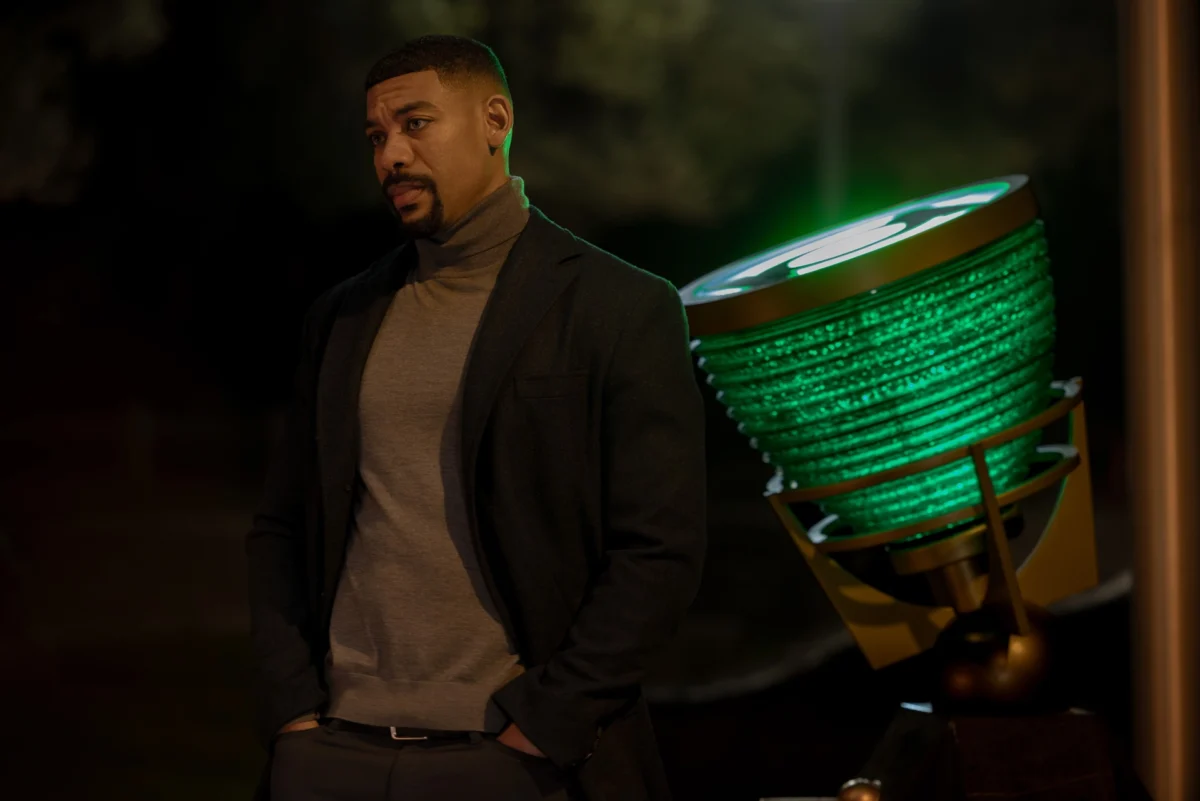
This article contains major spoilers for the season one finale of "Lanterns."
The conclusion of the inaugural season of Lanterns left audiences with a haunting, resonant image: John Stewart, one of DC Comics’ most iconic figures, standing at the precipice of a new, undefined path. As the season closed, Stewart uttered an oath that felt familiar, yet fundamentally altered: "In brightest day, in darkest night, I’ll embrace my fear, I’ll do what’s right. I choose this ring, I choose this fight in service to this lantern’s light."
This modification—a deliberate departure from the traditional Green Lantern Corps pledge—has sent shockwaves through the fandom. It raises immediate, existential questions: Is John Stewart abandoning the mantle of the Green Lantern? Is he embracing the darkness of the Yellow Lantern Corps? Or is he carving out a third path, one that balances the discipline of the Willpower-fueled ring with the raw, volatile reality of Fear? As the industry awaits word on a potential second season, the creative team has begun to peel back the layers of this pivotal moment, revealing a character journey that is as much about psychological evolution as it is about cosmic lore.
The Chronology of a Crisis
To understand the gravity of Stewart’s modified oath, one must look back at his arc throughout the season. Unlike many iterations of the character who are plucked from obscurity by a ring seeking a worthy successor, the Lanterns version of John Stewart was "interviewed" and groomed for his role. His transition from a reluctant recruit to a seasoned operative was defined by skepticism and an intimate knowledge of the institution he serves.
Throughout the series, Stewart’s relationship with the Green Lantern Corps was strained by institutional corruption and the moral ambiguity of his assignments. The turning point occurred when Stewart opted to utilize a ring powered by a source tied to Sinestro’s lantern. This choice was not a whim; it was a tactical necessity born of desperation. By the time he reached the season finale, his connection to the standard Green Lantern power battery had been severed or, at the very least, complicated. His final lines were not a betrayal of the mission, but a redefinition of the soldier tasked with carrying it out.
Decoding the Oath: A Shift in Ideology
The traditional Green Lantern oath emphasizes willpower, the exclusion of fear, and the unyielding service to the Corps. Stewart’s version—"I’ll embrace my fear, I’ll do what’s right"—serves as a direct antithesis to the dogmatic training of the Corps.
In the lore of the DC Universe, the emotional spectrum is defined by the colors of the light. Green represents willpower, while yellow, the color of the Sinestro Corps, represents fear. For decades, the two have been diametrically opposed. By incorporating the concept of "embracing fear" into his oath, Stewart is essentially acknowledging the psychological shadow that the Green Lanterns have long sought to suppress.
Psychologically, this suggests a more integrated, perhaps more human, hero. He is no longer relying solely on the "will" to ignore his anxieties; he is using his awareness of fear as a tool for discernment and caution. This creates a nuance in his character that separates him from his peers. He is no longer a tool of the Guardians; he is an individual using a tool of his own design.
Insights from the Architects: Tom King and Chris Mundy
The creative team behind Lanterns has been careful not to categorize Stewart’s choice in binary terms. Tom King, a pivotal voice in the show’s development, provided a candid look at the character’s status during recent interviews.
"What we see at the end is that John is not 100% a Green Lantern anymore," King stated. "He has a Lantern that has a bit of yellow in it, has a bit of fear in it. It’s an unsanctioned Lantern, as Guy says. He’s not saying the same oath as every other Green Lantern because he’s not like every other Green Lantern."
King’s perspective clarifies that this isn’t necessarily a "fall from grace" or a transition into villainy. Instead, it is an acknowledgment of impurity. The "yellow" represents the trauma and the dangers he has faced, which he refuses to ignore. By acknowledging the fear, he arguably becomes more capable of controlling it, rather than letting it control him.
Showrunner Chris Mundy expanded on this from a thematic perspective, shifting the focus from the technical mechanics of the rings to the character’s personal journey. "John’s path was not the normal path," Mundy explained. "He was having to choose this thing, then he decided not to do it, and then decided that he needed to do it on his own terms… We wanted the oath to be true to the original and respectful of the original, but we also wanted to tweak it to talk about the themes that we talked about, and fear."
Mundy’s comments suggest that the change is more about autonomy than alignment. John Stewart is a character who has spent his life being told who to be and what to fear. By changing the words, he is claiming agency over his own internal landscape.
Implications for the Future of the DCU
The implications of this creative decision ripple far beyond the final scene of the show. With James Gunn and Peter Safran overseeing the new DCU, every narrative choice is being scrutinized for how it fits into the broader, interconnected "Man of Tomorrow" era.
If Lanterns returns for a second season, the show will likely explore the fallout of Stewart’s "unsanctioned" status. Will he be hunted by the Green Lantern Corps for using a ring that contains the influence of their greatest enemy? Will he find himself in the position of a mediator between the Corps and the encroaching forces of fear?
Furthermore, there is the question of the "Yellow" influence. In comic book history, characters who attempt to wield fear without succumbing to the corruption of the Yellow Light often face severe psychological trials. Stewart’s willingness to "embrace" his fear could lead him down a path of isolation, or it could lead to the creation of a new, neutral faction of space-faring protectors—a concept that has been toyed with in the comics but never fully realized on screen.
Thematic Resonance in Modern Superhero Media
It is worth noting that Lanterns is arriving during a shift in how audiences consume superhero narratives. The era of the "unflinching, perfect hero" is waning. Modern audiences are increasingly drawn to characters who struggle with their own psychological limitations. John Stewart’s modification of the oath is a mirror to this trend. By admitting to fear, he is arguably becoming a more effective protector, as he is no longer blinded by the hubris that often defines the Green Lantern Corps.
The show has positioned itself as a noir-inspired, procedural mystery, and this shift in the oath is the perfect thematic conclusion to that style of storytelling. The mysteries weren’t just about cosmic crimes; they were about the internal mysteries of the men and women who hold the rings.
Final Thoughts: The Man, Not the Ring
As the dust settles on the first season, the mystery of the modified oath remains the show’s most compelling hook. Whether it leads to a full-blown war between colors or a personal quest for redemption, the choice of words reinforces a simple truth: John Stewart is not merely an agent of the Corps. He is a man who has looked into the darkness, acknowledged his own fear, and decided that he is the one who will define what "right" truly means.
For now, the audience is left in the same state of uncertainty as Stewart himself. Will he be accepted back into the fold? Or is he destined to become the first of a new, perhaps necessary, breed of hero—one who operates in the grey spaces between the spectrums of light? Whatever James Gunn and the team at DC have in store, the final oath of John Stewart has ensured that the future of Lanterns will be anything but standard. It is a bold, challenging, and deeply personal conclusion to a season that has successfully redefined one of the most important heroes in the DC pantheon.
