
The Sword and Sorcery Stumble: Re-evaluating the Legacy of 1985’s Red Sonja
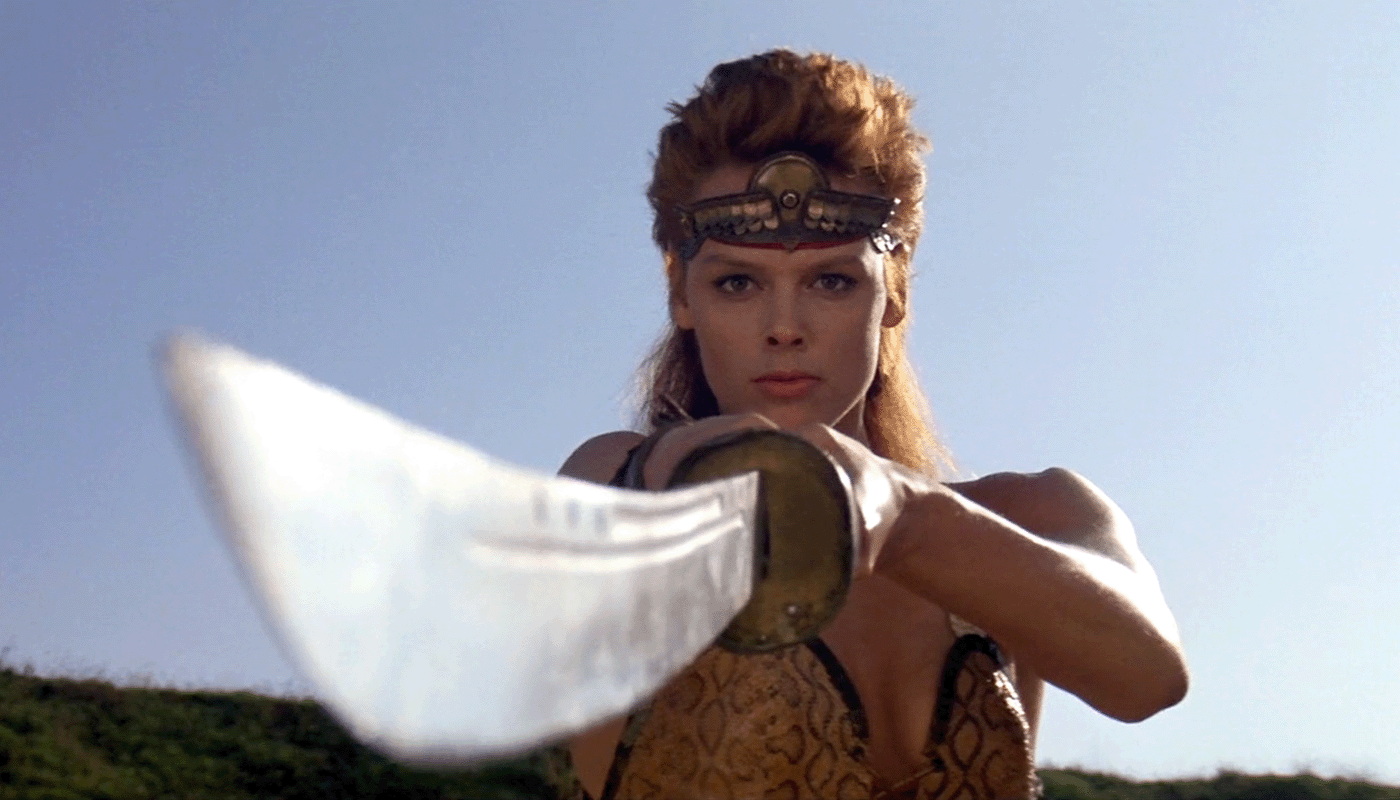
In the pantheon of 1980s fantasy cinema, few eras are as distinct or as polarizing as the decade’s brief obsession with "Sword and Sorcery." It was a time when practical effects, sweeping orchestral scores, and high-concept, low-polish world-building defined the genre. While the 1990s largely abandoned the high-fantasy aesthetic in favor of gritty realism or irony, and the 2000s ushered in the polished, CGI-heavy spectacles of the Lord of the Rings era, the 1980s stood apart as a "Wild West" for fantasy storytelling.
Within this decade, producer Dino De Laurentiis sought to capitalize on the success of Robert E. Howard’s pulp fiction universe. Following the breakout success of Conan the Barbarian (1981) and the campier, more experimental Conan the Destroyer (1984), the studio aimed to complete a loose trilogy. The final entry, 1985’s Red Sonja, was intended to be the jewel in the crown. Instead, it became the cautionary tale that effectively shuttered the franchise.
The Production Chronology and Narrative Framework
Red Sonja arrived in theaters at a moment when the public’s appetite for muscular fantasy was beginning to wane. The film’s narrative follows the eponymous heroine (Brigitte Nielsen in her silver-screen debut), whose life is shattered when her village is razed by the forces of the tyrannical Queen Gedren (Sandahl Bergman). After surviving a brutal sexual assault and left for dead, Sonja is visited by a mysterious spirit—a classic, if underdeveloped, trope—that bestows upon her the strength required to exact her vengeance.
Years later, the plot centers on the "Talisman," an ancient, world-creating orb that Queen Gedren intends to use to subjugate the populace. When Gedren’s soldiers massacre the priestesses protecting the relic—including Sonja’s sister, Varna—the stage is set for a quest. Along the way, Sonja encounters the mercenary Kalidor (Arnold Schwarzenegger), who, due to legal complexities regarding the Conan brand, is ostensibly a different character but functionally serves as a stand-in for the Cimmerian. Joined by the young, imperious Prince Tarn (Ernie Reyes Jr.) and his loyal bodyguard, Falkon (Paul L. Smith), the band of heroes infiltrates Gedren’s fortress to destroy the Talisman in a climactic sequence that mirrors the "One Ring" destruction in The Lord of the Rings.
Supporting Data: Box Office and Critical Reception
The financial and critical performance of Red Sonja remains a subject of intense debate among genre enthusiasts. Produced on a budget of $17.9 million—a significant sum for the time—the film pulled in a dismal $6.9 million at the domestic box office. The failure was so profound that it did not merely end the Conan cycle; it stalled the development of a planned third film for decades.
Critically, the film was savaged upon release. It was criticized for its thin plotting, wooden dialogue, and, most damningly, its inability to capture the visceral, dark majesty of John Milius’s 1981 original Conan. Even Arnold Schwarzenegger, a man rarely prone to public disparagement of his own projects, famously quipped that Red Sonja was "the worst film I have ever made," allegedly using it as a punishment for his children: "If you don’t behave, you’ll be forced to watch Red Sonja ten times."
Official Responses and Creative Departures
The production was plagued by a fundamental misunderstanding of the source material. While Howard’s original Red Sonja stories featured a complex, formidable protagonist, the film adaptation strips away much of her agency.
One of the most glaring creative failures occurs in the opening minutes. The film attempts to establish motivation through a voiceover that references the protagonist’s assault, explicitly linking it to the fact that she was "disgusted" by the Queen’s advances. By conflating the antagonist’s sexual orientation with her villainy—only to discard the thread entirely—the film creates a moral and tonal dissonance from which it never recovers. Furthermore, where Conan’s strength is earned through years of enslavement and combat training, Sonja’s abilities are simply granted to her by a spectral entity. This narrative choice, perhaps unintentional, undermines the very concept of female empowerment the film claims to promote.
The Performance Paradox: A Study in Contrast
Despite the film’s widespread failure, it offers a fascinating look at the performance landscape of the mid-80s.
The Underutilized Lead
Brigitte Nielsen brings a physical presence to the role, but the script offers her little in the way of character development. She is frequently relegated to the background while Schwarzenegger’s Kalidor steps in to resolve the most dangerous conflicts. It is a frustrating reversal, especially when one recalls that Sandahl Bergman, who plays the antagonist Gedren here, provided one of the most compelling and physically capable performances as Valeria in the original Conan. In Red Sonja, her talent is stifled by a script that lacks the nuance of her previous roles.
A Surprising Comedy Duo
The film finds its only genuine success in the performances of Ernie Reyes Jr. and Paul L. Smith. Reyes, a martial artist with genuine charisma, plays the spoiled, entitled Prince Tarn with a self-awareness that suggests he knows exactly what kind of movie he is in. Beside him, Paul L. Smith—whose resume includes the menacing Beast Rabban in Dune—delivers a performance of warmth and genuine humanity. His portrayal of Falkon is a rare bright spot; he is a character defined by his loyalty, wit, and martial prowess, and he is refreshingly never treated as the punchline for his size. In a film otherwise defined by regressive tropes, the rapport between these two provides a necessary injection of life.
Implications: The Legacy of a "Red-Headed Stepchild"
What does Red Sonja mean to the history of cinema? Its legacy is that of a "red-headed stepchild"—a film that tried to replicate the formula of its predecessors but lacked the soul to make it work. It exists as a time capsule of 1980s excess, featuring everything from "BDSM Rockette" costumes to an iconic red mullet that defied the laws of physics.
Its influence, however, remains undeniable. The film helped launch the careers of both Nielsen and Reyes Jr., and it stands as a testament to the risks of adapting pulp literature without fully understanding the underlying ethos of the characters. Even the 2025 remake, which sought to reboot the concept for a modern audience, suggests that the character of Red Sonja remains a difficult puzzle for filmmakers to solve.
Final Reflections
Was Red Sonja a "lost gem"? The consensus remains a firm "no." However, it is an essential piece of the 1980s fantasy puzzle. It represents the point where the genre’s tropes began to cannibalize themselves, moving from the mythic, grounded grit of early Howard adaptations to a more cartoonish, hollow imitation.
For the modern viewer, the film serves as a reminder that visual flair—the puppeted mechanical eels, the volcanic lairs, and the elaborate costumes—cannot compensate for a lack of narrative heart. As we look back on the "80s Fantasy Film Club," Red Sonja acts as a bridge between the genre’s high-water marks and the eventual decline that defined the early 90s. It is a film that failed, but in its failure, it defined exactly what the genre needed to change if it ever hoped to return to the glory of the screen.
As we move forward, we must ask: did the industry learn from these missteps? The answer is likely as complex as the Talisman itself. But for now, we leave the volcanic pits of Gedren’s castle behind, preparing for the next installment in our exploration of 80s fantasy, where we turn our attention to the saxophone-playing, neon-soaked world of The Lost Boys.
