
The Foldable Frontier: Apple’s iPhone Duo vs. The Motorola Razr Ultra
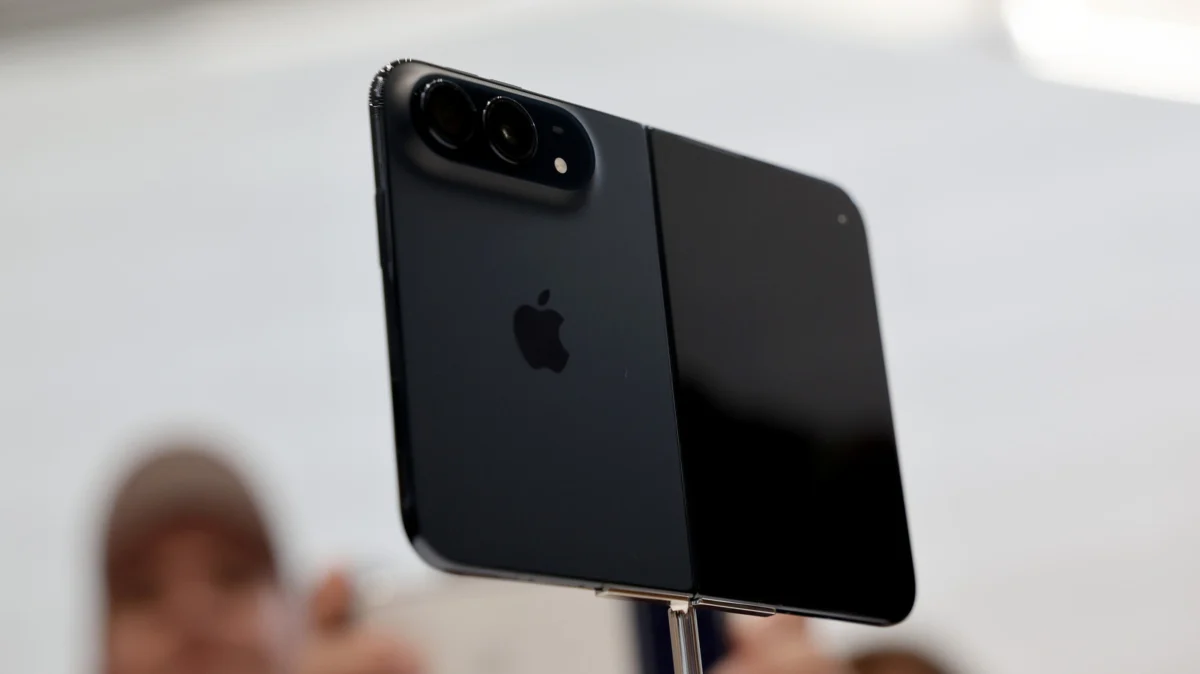
Not all foldables are created equal. As the smartphone industry matures, the promise of the "foldable future"—a vision once relegated to the realm of science fiction—has solidified into a tangible, albeit polarizing, market reality. With the impending arrival of the Apple iPhone Duo, the landscape is shifting from a niche enthusiast playground to a high-stakes arena of competing philosophies.
It is no secret that Apple is late to the foldable party, a position that has become the company’s trademark strategy. While critics often mistake this cautious approach for a lack of innovation, history paints a different picture. From the iPod to the Apple Watch, Apple rarely seeks to be first; it seeks to be best. By allowing rivals like Samsung and Motorola to navigate the "bleeding edge" of early hardware failures and software growing pains, Apple has once again waited for the technology to ripen before introducing its own iteration. The iPhone Duo, arriving October 23, is the culmination of this strategy.
However, the foldable market is no longer in its infancy. Motorola, a veteran of the category, has iterated through several generations of its Razr line, with the 2026 Razr Ultra standing as a refined, competitive flagship. As consumers weigh a $2,000 investment in the Apple ecosystem against a $1,500 alternative that offers total platform freedom, the decision is far more complex than a simple spec-sheet comparison.
A Chronology of the Foldable Evolution
The trajectory of the foldable phone is a story of shifting form factors and engineering compromises.
- 2019–2021: The Experimental Phase. This period was defined by the first generation of Samsung Galaxy Z Folds and the original Motorola Razr reboot. These devices were fragile, expensive, and suffered from visible screen creasing and unreliable hinges.
- 2022–2024: The Refinement Phase. Manufacturers focused on durability, introducing IP-rated water resistance and "teardrop" hinges that allowed for a flatter fold. This era saw the emergence of the "flip" phone (the clamshell) as a fashion-forward, pocketable accessory.
- 2025–2026: The Maturity Phase. The current market, represented by the Motorola Razr Ultra, has achieved a level of polish that makes these devices viable for general consumers. Simultaneously, Apple’s entry marks the "mainstream validation" of the category.
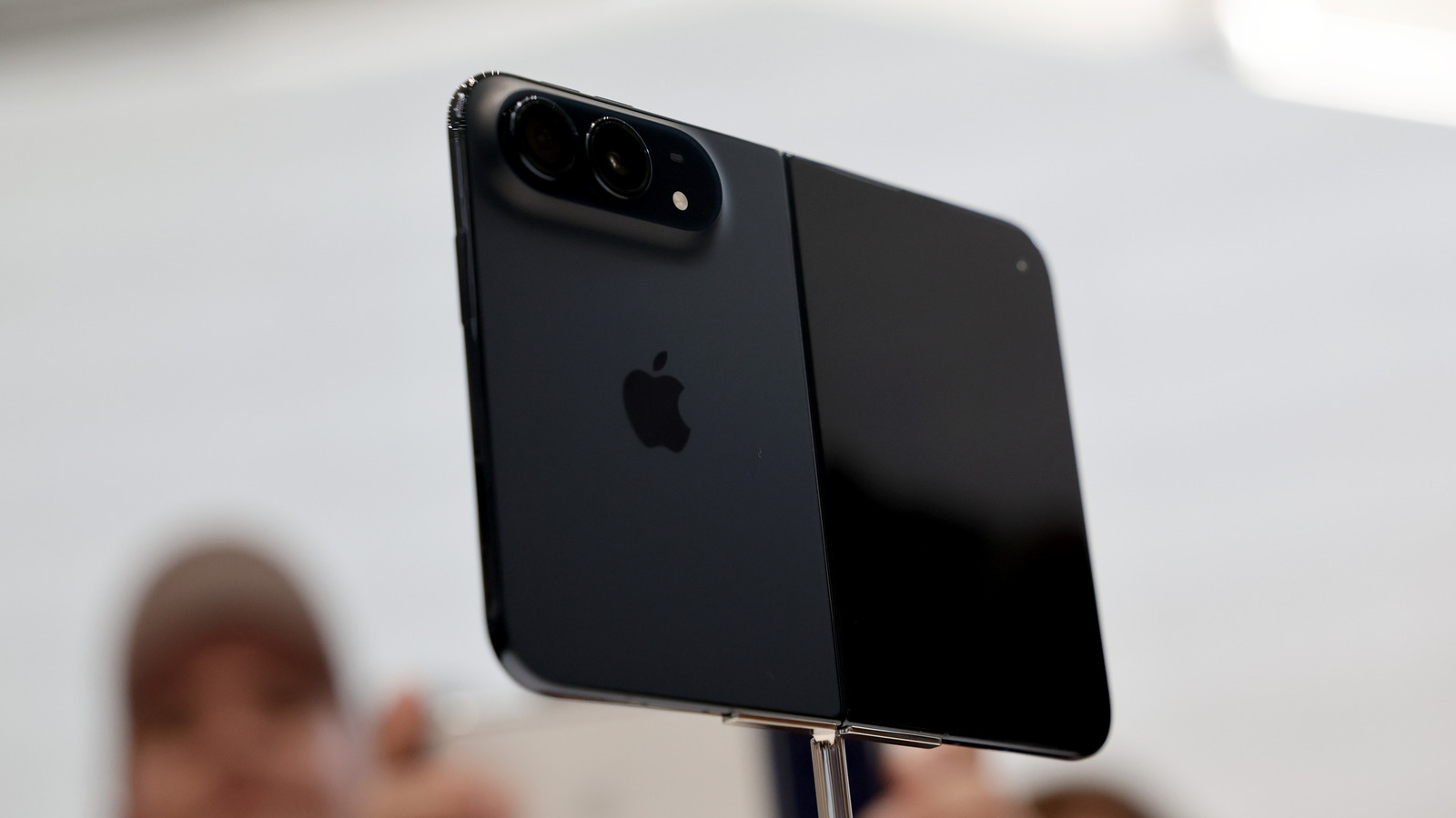
The iPhone Duo represents Apple’s answer to this evolution. Unlike the "candybar" approach of the Razr, the Duo adopts a "passport" layout—a book-style foldable that prioritizes screen real estate for multitasking.
The Battle of Form Factors: Passports vs. Candybars
The deepest divide between the two devices is not found in their silicon, but in their intent. The Motorola Razr Ultra is a masterclass in ergonomics. When open, it presents a 7-inch display that feels like a standard smartphone, yet it collapses into a compact square that disappears into a pocket or small clutch. It is a device designed for the "minimalist" user—someone who wants the power of a smartphone without the bulk.
Conversely, the iPhone Duo is a productivity machine. When closed, it functions as a conventional iPhone, but opening the device reveals a 7.6-inch matte, high-resolution display. While it does not natively run iPadOS, it utilizes a sophisticated adaptive interface that supports split-screen multitasking, allowing users to run two applications side-by-side with fluidity. If your primary motivation for buying a foldable is to do "more"—more work, more research, more multitasking—the Duo is architecturally superior.
Supporting Data and Performance Benchmarks
While we await the final release of the iPhone Duo, preliminary leaks and the established performance of the Motorola Razr Ultra offer a clear picture of what to expect.
The Silicon Gap
The Razr Ultra is currently powered by the Snapdragon 8 Elite processor paired with 16GB of RAM. It is a formidable device, capable of handling high-end gaming and intensive video editing with ease. However, Apple’s A20 Pro chip, paired with the tightly integrated iOS ecosystem, is expected to set a new benchmark for mobile efficiency. Apple’s advantage rarely lies in raw "numbers," but in the "perceived speed" afforded by its optimization of software-to-hardware communication.
Camera Systems: Engineering vs. Megapixels
On paper, the Razr Ultra’s 50MP rear shooters appear superior to the iPhone Duo’s 48MP lenses. Yet, the industry understands that image processing, color science, and computational photography are the true differentiators. Apple’s long-standing dominance in mobile photography suggests that the Duo will produce more consistent, color-accurate, and low-light-capable images.
Interestingly, the selfie landscape is reversed. The Razr Ultra boasts a 50MP front camera, clearly designed for the "creator" demographic. The Duo, however, relies on a 12MP front sensor and a hidden under-screen camera for FaceTime. For high-quality selfies on the iPhone, Apple expects users to utilize the rear camera array while the phone is folded, a functional workflow that may feel clunky to some users compared to the Razr’s direct approach.
Official Responses and Durability Metrics
Durability remains the Achilles’ heel of the foldable category. Both companies have addressed this by utilizing hardened ceramic glass and aerospace-grade alloys for the hinge mechanisms.
- The Apple Stance: Apple has focused heavily on the "seamless" nature of the fold. Their internal testing claims the display is rated for over 300,000 folds. Crucially, the Duo boasts an IP68 rating, meaning it can withstand full submersion in water and is highly resistant to dust intrusion.
- The Motorola Perspective: The Razr Ultra holds an IP48 rating. While it shares water resistance, it remains vulnerable to fine dust particles. Motorola argues that this is a fair trade-off for a thinner, lighter hinge mechanism, though it puts the burden of care on the user.
Economic Implications and Market Strategy
The price disparity is stark. At $1,500, the Motorola Razr Ultra is expensive, but it positions itself as a "premium lifestyle device." The iPhone Duo, starting at $2,000 and scaling to $3,200 with maxed-out storage, enters the territory of ultra-luxury tech.
Apple’s pitch is that the Duo is a "two-for-one" purchase: it replaces both an iPhone Pro and an iPad Mini. Whether this holds up in practice depends on the individual’s workflow. For the professional who travels constantly, the weight savings of carrying one device instead of two might justify the "Apple Tax." For the average consumer, however, the math is harder to justify.
The Verdict: Which Path to Choose?
If you are currently entrenched in the Apple ecosystem, the iPhone Duo is the only logical choice for a foldable. It offers a seamless transition of your data, services, and accessories. If you are an Android power user, there is little reason to switch to Apple when options like the Samsung Galaxy Z Fold 8 or the Google Pixel 11 Pro Fold offer similar, if not more flexible, multitasking capabilities at a more competitive price point.
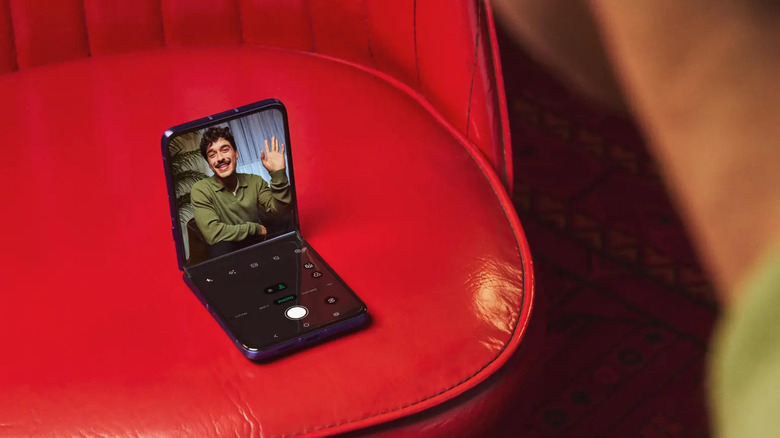
Ultimately, the choice comes down to a fundamental question: Do you need a foldable, or do you just want one? If your goal is to save space, the Razr Ultra is the superior pocket companion. If your goal is to replace your tablet and laptop for light tasks, the iPhone Duo is the superior productivity tool.
The foldable market has finally arrived at a point of maturity where the hardware is no longer the primary concern. Instead, the focus has shifted to the user experience—and in that department, Apple and Motorola are currently playing two very different, yet equally compelling, games.
