
Canon Unleashes Major Firmware Overhaul for Cinema EOS Lineup: New Exposure Tools, Cine-Servo Support, and Workflow Upgrades
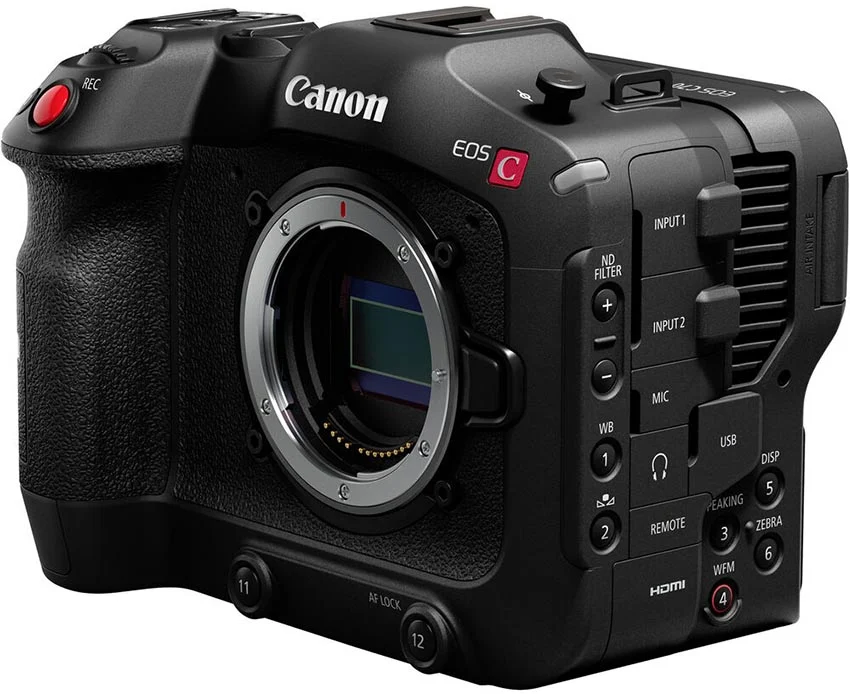
In a sweeping software rollout that underscores its ongoing commitment to post-launch product development, Canon has released a substantial slate of firmware updates for its Cinema EOS ecosystem. This latest wave of updates delivers advanced imaging tools, enhanced production capabilities, and expanded lens compatibility across several of the manufacturer’s most popular cinema cameras, most notably the EOS C80 and EOS C400.
By bringing high-end exposure management tools and seamless integration with top-tier glass to a wider range of bodies, Canon is effectively bridging the performance gap between its compact mirrorless-style cinema solutions and its heavy-duty broadcast production workhorses.
The newly released firmware applies to multiple models across the lineup, including the EOS C80, EOS C400, EOS C50, EOS C70, and the hybrid EOS R5 C. For cinematographers, camera operators, and DPs, these updates offer significant quality-of-life enhancements and advanced control over challenging lighting environments, all without requiring any investment in new hardware.
Main Facts: What’s New in the Canon Cinema EOS Firmware Rollout
The latest firmware updates introduce several headline features designed to streamline high-end video production and expand creative control:
- Cinema Exposure Debut: Arriving via Firmware Version 1.0.7.1 for both the EOS C80 and EOS C400, this brand-new capture mode provides cinematographers with an innovative way to manage dynamic range by dynamically balancing highlights and shadows based on the chosen ISO sensitivity.
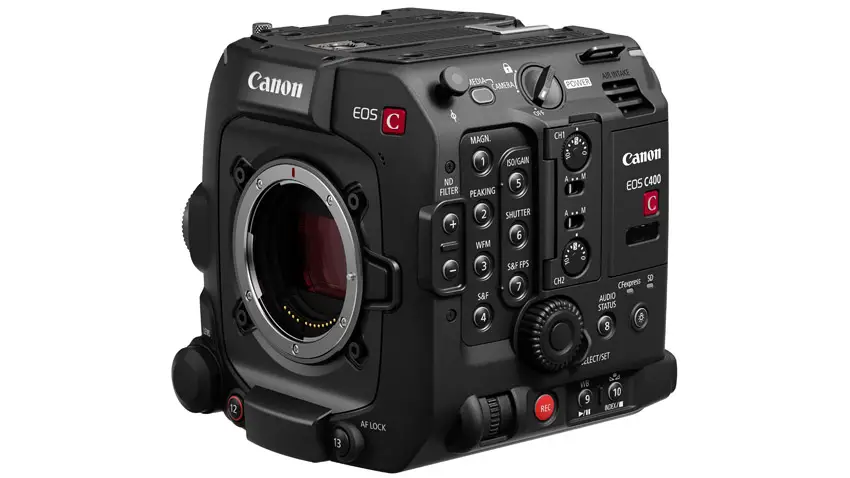
- Auto Exposure Ramping Compensation (EOS C400): Designed specifically for long-range zoom production, this feature automatically applies in-camera gain compensation as the lens zooms, preventing undesirable exposure shifts caused by variable maximum apertures.
- Expanded Cine-Servo Compatibility: Canon has dramatically broadened native support for its latest high-end CN30×40 IAS J/R1 (RF-mount) and CN30×40 IAS J/P1 (PL-mount) Cine-Servo lenses, integrating them into the workflow of the EOS C80, C400, C50, and R5 C.
- Audio and Workflow Improvements: The EOS C80 now supports S&F External Audio Output during Slow & Fast Motion recording, while the EOS R5 C receives critical fixes for FTP connections, USB smartphone recognition, and an upgraded visual level indicator.
Chronology and Release Timeline: Tracking the Updates
Canon’s staggered rollout ensures that various cameras within the Cinema EOS stable receive tailored optimizations. Here is how the firmware release timeline and version numbers break down across the lineup:
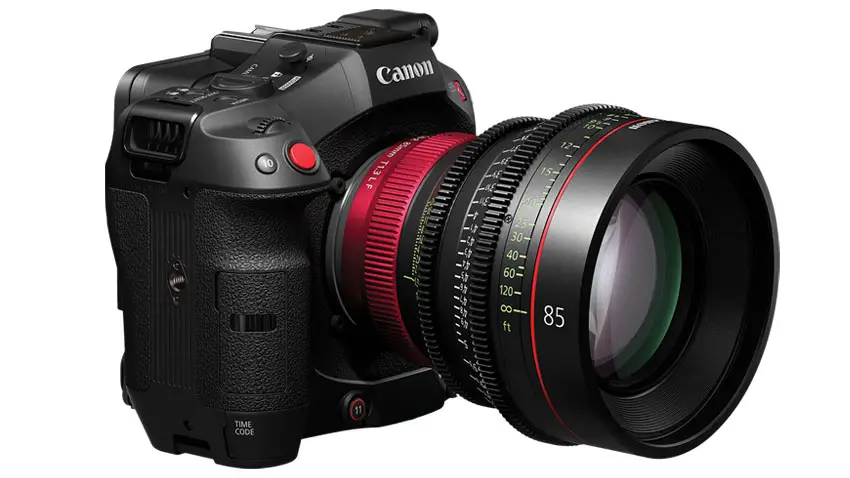
- August 19, 2026 — EOS C70 (Firmware Version 1.1.4.1): Canon quietly initialized support for the enduring workhorse C70 with a new system update, though comprehensive documentation regarding specific feature inclusions has been slower to publish compared to its siblings.
- Late Q1/Early Q2 2025 — EOS C80 & EOS C400 (Firmware Version 1.0.7.1): The core of this firmware campaign arrived for Canon’s next-generation cinema bodies. Version 1.0.7.1 unlocked the highly anticipated Cinema Exposure mode for both cameras, alongside zoom compensation tools for the C400 and external audio outputs for the C80.
- Simultaneous Rollout — EOS C50 (Firmware Version 1.0.5.1) & EOS R5 C (Firmware Version 1.1.3.1): Alongside the C80 and C400 updates, Canon pushed stability updates and critical lens-mounting profiles to the compact C50, alongside a robust bug-fix and workflow enhancement patch for the full-frame, dual-personality EOS R5 C.
Supporting Data & Technical Deep Dive: Deconstructing the New Features
To fully appreciate the impact of these updates, it is essential to examine the technical mechanics of the primary additions.
1. Cinema Exposure: Mastering Dynamic Range
Historically, managing dynamic range on digital cinema sensors required balancing standard gamma curves, log profiles (such as Canon Log 2 and Canon Log 3), and static ISO bases. The new Cinema Exposure mode—selectable via a dedicated Capture Mode setting alongside Custom Picture—gives operators a more granular approach.
By actively reallocating how the available dynamic range is distributed between the highlight roll-off and the shadow floor relative to the chosen ISO, operators can prioritize highlight retention in high-contrast exteriors or pull cleaner details out of deep shadows in dimly lit interiors. While the exact visual result remains tied to individual exposure strategies, it gives professional shooters a powerful secondary safeguard against blown highlights.
2. Auto Exposure Ramping Compensation on the EOS C400
Cinematographers working with multi-thousand-dollar cine zooms are intimately familiar with the headache of "ramping"—the natural drop in light transmission (loss of T-stops) that frequently occurs as a lens is pushed to its maximum telephoto focal length.
With Firmware 1.0.7.1, the EOS C400 now counters this automatically. By recognizing the physical zoom position of compatible lenses, the camera applies real-time gain compensation to maintain a perfectly flat exposure level from wide to tight.
Compatible Lenses Include:
- CN7×17 KAS S/E1 & T/R1
- CN10×25 IAS S/E1
- CN20×50 IAS H/E1
- CN8×15 IAS S/E1
- CN5×11 IAS T/R1
- The newly integrated CN30×40 IAS J/R1 Cine-Servo lens
3. Workflow and Usability Enhancements on the EOS R5 C
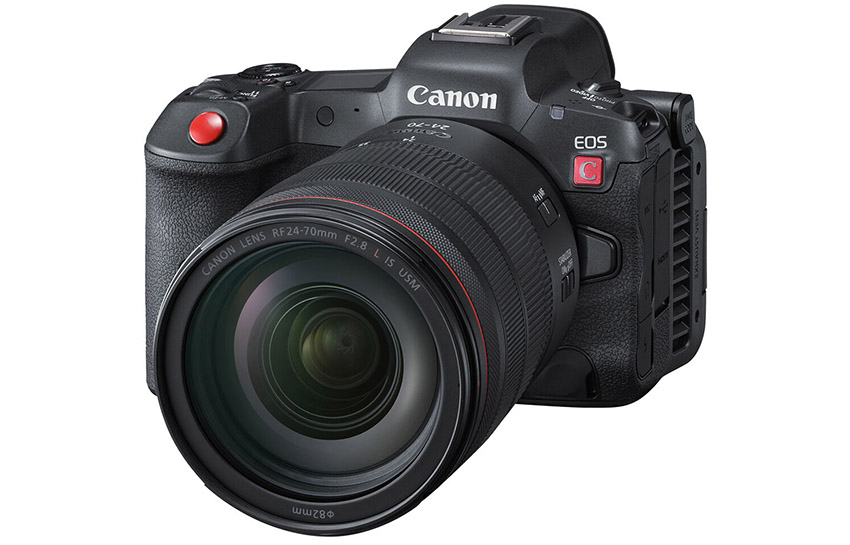
The EOS R5 C occupies a unique space as both a stills powerhouse and a raw cinema camera. Firmware version 1.1.3.1 refines this duality by addressing long-standing field gripes. The digital level indicator now changes color upon achieving absolute level, reducing setup time on gimbals and tripods. Furthermore, RAW clips played back in Media mode now benefit from proper lens correction profiles—including Distortion Aberration Correction—rendering cleaner proxies and in-camera reviews. Network administrators will also welcome the resolution of frustrating bugs that previously interrupted FTP server connections and smartphone USB handshakes.
Official Responses and Industry Perspectives
Canon’s engineering and product management teams have continuously emphasized that software-driven capability expansion is a core pillar of the Cinema EOS philosophy. By listening to feedback from broadcast crews, documentary filmmakers, and indie production houses, Canon aims to extend the active lifecycle of its camera bodies.
While direct corporate press releases frame these updates as part of a routine effort to "enhance operational stability and maximize lens versatility," industry reception has been notably enthusiastic. Rental houses and independent cinematographers have praised Canon for retroactively applying high-end exposure tools to mid-tier bodies like the EOS C80, proving that modern cinema cameras are increasingly defined as much by their computing power and firmware adaptability as by their physical silicon sensors.
Implications for Filmmakers and Production Ecosystems
The broader deployment of these firmware updates carries several strategic implications for the professional video production landscape:
- Bridging Broadcast and Cinema Workflows: By integrating heavy-duty Cine-Servo lenses like the CN30×40 onto smaller, lighter bodies such as the EOS C50, C80, and R5 C, single-operator documentary and broadcast crews gain unprecedented flexibility. A camera package can be scaled down for a handheld gimbal run and scaled up instantly for a studio tripod configuration without sacrificing lens communication or exposure automation.
- Reduced Post-Production Overhead: Features like Auto Exposure Ramping Compensation and in-camera lens distortion correction during RAW playback directly reduce the time required in color grading and post-production suites. Maintaining consistent exposure through a long zoom move saves hours of manual keyframing.
- Maximized Return on Investment: For owners of the EOS C80 and C400, receiving advanced feature sets via a free download rather than a hardware upgrade cycle significantly enhances the long-term value of their gear.
Final Thoughts
Canon’s latest round of firmware updates highlights the growing power of software development in the modern camera industry. Rather than forcing production teams to purchase entirely new hardware generations to access cutting-edge tools, Canon has thoughtfully distributed features like Cinema Exposure, Auto Exposure Ramping Compensation, and widespread Cine-Servo compatibility across the Cinema EOS family.
Whether you are operating an EOS C400 on a high-end commercial set or utilizing a compact EOS R5 C on a fast-moving documentary shoot, downloading and installing these updates—Firmware 1.0.7.1 for the C80/C400, 1.0.5.1 for the C50, and 1.1.3.1 for the R5 C—is an essential step toward optimizing your production workflow.
