
The Revolutionary Spirit of UPA: Inside Kevin Schreck’s Upcoming Documentary, ‘Animation Mavericks’
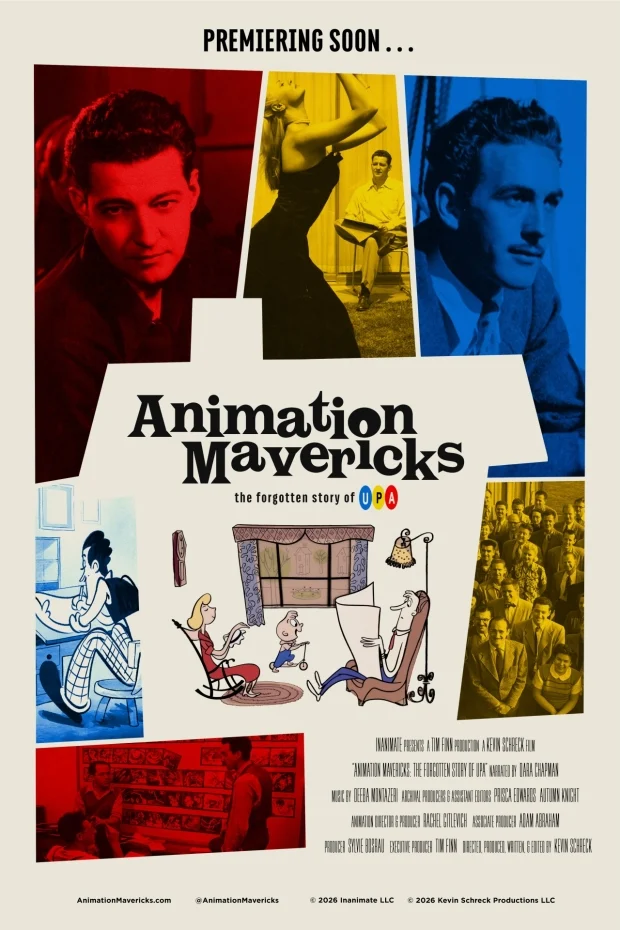
The history of American animation is often told through the monolithic lens of the "Big Studios"—the polished, realistic, and character-driven dominance of Walt Disney and Warner Bros. Yet, lurking in the shadows of this golden age was a collective of iconoclasts who dared to challenge the status quo. United Productions of America (UPA) didn’t just change how cartoons looked; they changed how the world understood the medium itself.
Now, director Kevin Schreck is set to bring this forgotten history to the forefront with his ambitious new hybrid documentary, Animation Mavericks: The Forgotten Story of UPA. Slated for a 2027 festival debut, the film promises to be a deep dive into the rise, fall, and enduring legacy of the studio that gave the world Mr. Magoo and Gerald McBoing-Boing.
The Genesis of an Iconoclast Studio
The story of UPA is inseparable from the turbulence of mid-20th-century America. Emerging from the ashes of the 1941 Disney animators’ strike, UPA was founded by artists who rejected the hyper-realistic, high-budget style that Disney had pioneered. They sought a more modern, graphic, and stylized approach—one that leaned into the possibilities of abstraction and intellectual wit rather than simple slapstick.

"Animation Mavericks marks my return to making films about cinema history for the first time in over a decade," says director Kevin Schreck. "The themes and issues that our historical characters encountered and overcame are still relevant today."
By blending traditional documentary interviews with animated re-enactments, Schreck’s film aims to recreate the electric atmosphere of UPA’s creative headquarters. It promises to peel back the curtain on the studio’s radical departure from traditional aesthetics, exploring how they managed to win Academy Awards while working with a fraction of the budget of their competitors.
A Chronology of Innovation and Political Turmoil
To understand UPA is to understand the socio-political climate of the Cold War. The studio’s trajectory was not merely a matter of creative success, but also one of political survival.

The Rise (1943–1950)
Founded by a group of disillusioned animators including Stephen Bosustow, David Hilberman, and Zachary Schwartz, UPA initially focused on training films for the military. However, they quickly pivoted to commercial and theatrical shorts. Their "less is more" philosophy—emphasizing flat backgrounds, expressive character designs, and limited animation—was a masterclass in efficiency.
The Peak (1951–1955)
This era saw UPA at its zenith. The release of Gerald McBoing-Boing (1950) was a cultural earthquake, winning an Oscar and proving that audiences were hungry for stylized, avant-garde storytelling. During this period, the studio became the gold standard for artistic expression, influencing everything from television advertising to industrial design.
The Fall (1956–1960s)
The decline of UPA was as rapid as its ascent. The studio was deeply affected by the McCarthy-era "Red Scare." Several of its key artists and writers were blacklisted, leading to a loss of the unique, collective spirit that had fueled their early success. Coupled with shifting television demands and internal management struggles, the studio eventually faded from its position of prominence.

Animation Mavericks will document this decline, examining how the same political witch hunts that tore through Hollywood dismantled the very talent pool that made UPA a beacon of artistic freedom.
Supporting Data: The Craft Behind the Documentary
Kevin Schreck is not approaching this project alone. Animation Mavericks is being produced in close cooperation with the Bosustow Estate, with Sylvie BosRau—the granddaughter of UPA co-founder Steve Bosustow—serving as a key producer. This connection grants the film an unprecedented level of access to archives, personal letters, and rare footage that have remained hidden for decades.
The production team is a powerhouse of animation and film history expertise:

- Director/Writer/Editor: Kevin Schreck (Persistence of Vision, Antarctic Voyage)
- Animation Director/Producer: Rachel Gitlevich, a veteran of the prestigious Gobelins school with 16 years of industry experience.
- Executive Producer: Tim Finn, owner of Hub Comics and a noted historian on the G.I. Joe franchise.
- Creative Support: Associate Producer Adam Abraham, Archival Producers Prisca Edwards and Autumn Knight, and Cinematographers Nathaniel Brown and Quinn Thomashow.
The film’s aesthetic is built on the same foundations as the studio it chronicles. By utilizing modern animation to re-enact historical events, the team is effectively "speaking the language" of UPA, ensuring that the documentary is as much a work of art as it is a work of journalism.
Official Responses and Creative Vision
The decision to revisit UPA after over a decade away from cinema-history documentaries reflects the personal importance of the project to Schreck. In his official statement, Schreck emphasized the relevance of the studio’s struggles to the contemporary animation industry.
"The themes of labor rights, artistic freedom, and navigating political pressures are not just historical footnotes," the production notes state. "They are recurring challenges that modern creators continue to face."

The collaboration with the Bosustow Estate ensures that the narrative remains grounded in the reality of the people who built the studio. It is not merely a dry recounting of facts, but a human-centric exploration of the personalities who risked their careers to pursue a new visual language. The inclusion of interviews with modern film historians and experts serves to bridge the gap between 1950s radicalism and 2020s sensibilities.
The Broader Implications: Why UPA Matters Today
The release of Animation Mavericks in 2027 will likely serve as a major touchstone for the animation industry. As modern animation grapples with the rise of AI, the democratization of production tools, and the ongoing struggle for labor recognition, UPA stands as the ultimate case study.
The Legacy of "Limited Animation"
Before UPA, "quality" in animation was defined by the number of frames per second. UPA argued that quality was defined by the design. This shift paved the way for the television animation boom of the 1960s, including The Flintstones, The Jetsons, and the work of Hanna-Barbera. Without UPA’s initial push, the modern landscape of episodic television animation might have looked radically different.

Labor and Collective Bargaining
The roots of UPA are inextricably tied to the 1941 Disney strike. The studio was founded by individuals who wanted to ensure that artists, not just executives, had a say in the creative process. As we witness a new era of unionization and labor negotiation in the animation and gaming sectors, the history of UPA offers a poignant look at what can be achieved—and what can be lost—when artists organize.
The Intersection of Art and Politics
The "Red Scare" decimated UPA’s staff, forcing talented individuals into exile or forcing them to work under pseudonyms. Animation Mavericks aims to restore these names to the history books. By highlighting the individuals who were targeted for their political beliefs, the documentary serves as a cautionary tale about the fragility of artistic expression in the face of ideological extremism.
Conclusion: A 2027 Milestone
With the recent release of the project’s first trailer, anticipation is already building. The combination of archival rigor and creative re-enactments positions Animation Mavericks to be a definitive entry in the canon of animation documentaries.

By reclaiming the story of UPA, Kevin Schreck is doing more than just documenting a studio; he is ensuring that the "Mavericks" who dared to think differently are finally given their due. For animation fans, historians, and anyone interested in the intersection of creativity and labor, 2027 cannot arrive soon enough. The story of UPA is a story of resilience, and in the hands of this production team, it is set to inspire a new generation of animators to push the boundaries of what is possible.
Animation Mavericks: The Forgotten Story of UPA is produced by Inanimate LLC and Kevin Schreck Productions. As the film approaches its festival debut, the industry awaits a project that promises to be as visually vibrant and intellectually challenging as the studio it honors.
