
The Heir to the Throne: Dissecting the Logic Behind the Wakanda Forever Mid-Credits Reveal
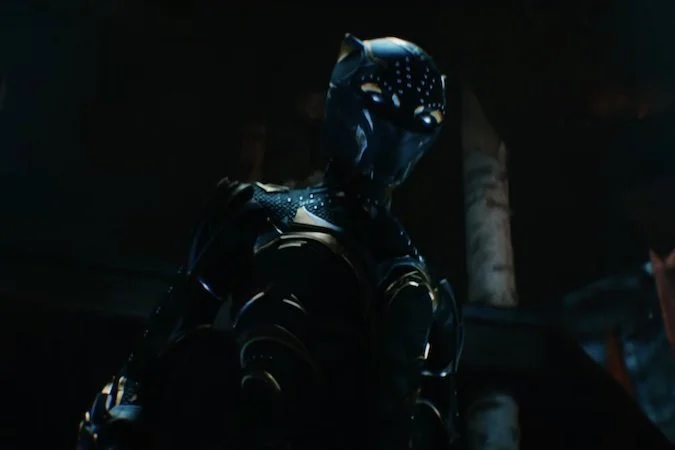
Spoiler Warning: This article contains significant plot details regarding the conclusion of Marvel Studios’ Black Panther: Wakanda Forever. If you have not yet experienced the film’s final act, proceed with caution.
The final moments of Ryan Coogler’s Black Panther: Wakanda Forever serve as an emotional crescendo for a franchise defined by both profound loss and soaring ambition. In a poignant, sun-drenched sequence in Haiti, Nakia (Lupita Nyong’o) introduces Shuri (Letitia Wright) to a young boy. The child, six-year-old Toussaint, reveals that his birth name is, in fact, T’Challa—the same as his late father, the former King of Wakanda.
For many theatergoers, the reveal was a masterstroke of storytelling, providing a sense of continuity and hope following the real-world passing of Chadwick Boseman. However, when the initial swell of emotion fades, the narrative architecture of this revelation begins to show cracks. While the scene functions perfectly as an emotional beat, it invites a barrage of logical questions that challenge the established continuity of the Marvel Cinematic Universe (MCU).
The Chronology of a Secret: How Does the Math Work?
To understand the controversy surrounding T’Challa’s son, one must first map out the turbulent timeline of the post-2018 MCU. The internal logic of Wakanda Forever hinges on the chaotic period initiated by Thanos’s "Snap" in Avengers: Infinity War.
The Snap and the Five-Year Gap
T’Challa was among the 50% of the population dusted in 2018. He remained absent until the events of Avengers: Endgame in 2023. During this five-year period, the world—and Wakanda—was in a state of mourning and reconstruction. Shuri was also among the vanished, leaving the leadership of Wakanda in the hands of Queen Ramonda and the surviving council.
If we assume the child was conceived shortly after the events of the first Black Panther (2018), he would have been born during the "Blip" period. This provides a convenient narrative excuse for why T’Challa wasn’t present; he was quite literally non-existent. Nakia’s decision to move to Haiti and raise the child in seclusion becomes, in this light, a survival mechanism. Seeking a life away from the heavy mantle of the throne in a place where the ghosts of the past were less pervasive is a human, understandable choice.
The Return and the Final Year
Upon the restoration of the population in 2023, T’Challa returned, only to fall victim to a mysterious, terminal illness shortly thereafter. The timeline remains tight: T’Challa had roughly one year between his resurrection and his death. In this window, he apparently chose to keep his son’s existence hidden from his closest confidante—his sister, Shuri. It is this specific narrative choice that serves as the primary point of contention for fans and critics alike.
Supporting Data: The Case Against Secrecy
The core issue with the film’s climax is not necessarily the existence of the heir, but the profound silence surrounding him. In a family as tight-knit and technologically advanced as the royal house of Wakanda, the lack of communication feels like a narrative contrivance designed solely for a "gotcha" moment.
The Shuri Factor
Shuri is characterized as the most brilliant mind in the MCU, a woman who relies on data, connectivity, and truth. She shares an unbreakable bond with her brother. The suggestion that T’Challa, Ramonda, and Nakia all conspired to keep the existence of the next-in-line to the throne from her for years—even after she returned from the Blip—strains credulity.
Even if one argues that the chaos of the Blip prevented communication, the post-Endgame world allowed for a period of relative stability. During the months Shuri spent attempting to synthesize a cure for her brother’s illness, she was arguably in the most vulnerable state of her life. Why would her mother, the Queen, withhold the existence of a nephew who could have served as a source of solace or a symbol of the future for a grieving nation?
The "Tabloid" Defense
Nakia explains to Shuri that she sequestered the boy in Haiti to protect him from the pressures of the Wakandan court and the burden of succession. While this mirrors real-world royalty attempting to provide a "normal" upbringing for children, it ignores the reality of Wakandan security.
Wakanda possesses technology capable of cloaking entire nations and monitoring global threats with satellite precision. If they truly wanted to protect the child, they could have done so within the borders of Wakanda—perhaps under the protection of the Jabari or within a secure facility in the mountains—without exposing him to the "tabloids." The choice to place him in an entirely different country, effectively isolating him from his heritage, feels less like a strategic decision and more like a screenwriting requirement.
Official Responses and Creative Intent
While Marvel Studios has not issued a formal "correction" or detailed breakdown of the timeline, the creative team behind Wakanda Forever has spoken extensively about the film’s focus on grief. Director Ryan Coogler has noted in various interviews that the film was intended to be a meditation on the stages of mourning.
From the creative perspective, the reveal is less about geopolitical logic and more about thematic resolution. By introducing a new T’Challa, the film ensures that the name—and the legacy—persists. It is a cinematic "softening of the blow." The emotional resonance of the scene is designed to outweigh the procedural inconsistencies. In the world of comic book movies, the "rule of cool" (or in this case, the "rule of heart") often supersedes strict adherence to internal, bureaucratic logic.
Implications for the Future of the Franchise
The presence of a young T’Challa, Jr. carries significant implications for the future of the MCU, regardless of the narrative potholes in his origin.
The Line of Succession
The existence of a direct male heir creates a potential conflict in the political landscape of Wakanda. With Shuri currently serving as the Black Panther and the de facto leader, the introduction of a biological heir complicates the succession line. Does this mean Shuri is merely a placeholder? Or will the MCU follow the comic book trajectory where multiple individuals hold the mantle of the Panther?
The "Next Generation" Arc
Marvel is clearly planting seeds for a younger generation of heroes (as seen with the Young Avengers setup). T’Challa, Jr. serves as a bridge to that future. Whether he is being groomed for a role in the next decade of Marvel storytelling or simply serves as a symbolic legacy character, his existence ensures that the Black Panther franchise remains anchored to the character of T’Challa long after the actor’s departure.
Conclusion: Emotional Truth vs. Narrative Consistency
Black Panther: Wakanda Forever stands as a testament to the challenge of writing through tragedy. It is a film burdened with the impossible task of saying goodbye to an icon while simultaneously building a future.
The reveal of the son is undeniably effective. It provides a tear-jerking conclusion that allows the audience to leave the theater feeling that the story of T’Challa is not entirely over. However, the film asks the audience to suspend their disbelief to a degree that occasionally undermines the intelligence of its lead characters.
In the final analysis, we are left with a common struggle in blockbuster filmmaking: the tension between a story that feels "right" in the heart and a story that makes sense in the spreadsheet. Wakanda Forever chooses the heart, and while the logic may unravel upon closer inspection, the emotional catharsis remains the film’s most enduring—and perhaps most important—legacy. Whether or not the studio addresses these plot holes in future installments, the "Toussaint" reveal remains a defining moment of this cinematic era, prioritizing the healing of the audience over the rigid adherence to established continuity.
