
Box Office Battles and Corporate Upheaval: Tom Cruise’s Digger Stumbles as Amazon’s Verity Dominates and Warner Bros. Faces a Historic Merger
Main Facts
The North American box office is currently experiencing a weekend of stark contrasts, defined by high-profile auteur risks, lucrative literary adaptations, and major corporate upheaval. Tom Cruise’s ambitious satirical drama Digger is facing a challenging theatrical launch, bringing in $1.2 million from Thursday night preview screenings across more than 3,300 domestic locations. Warner Bros. projects an opening weekend yield between $12 million and $15 million—a modest figure for a film carrying a hefty $125 million production budget.
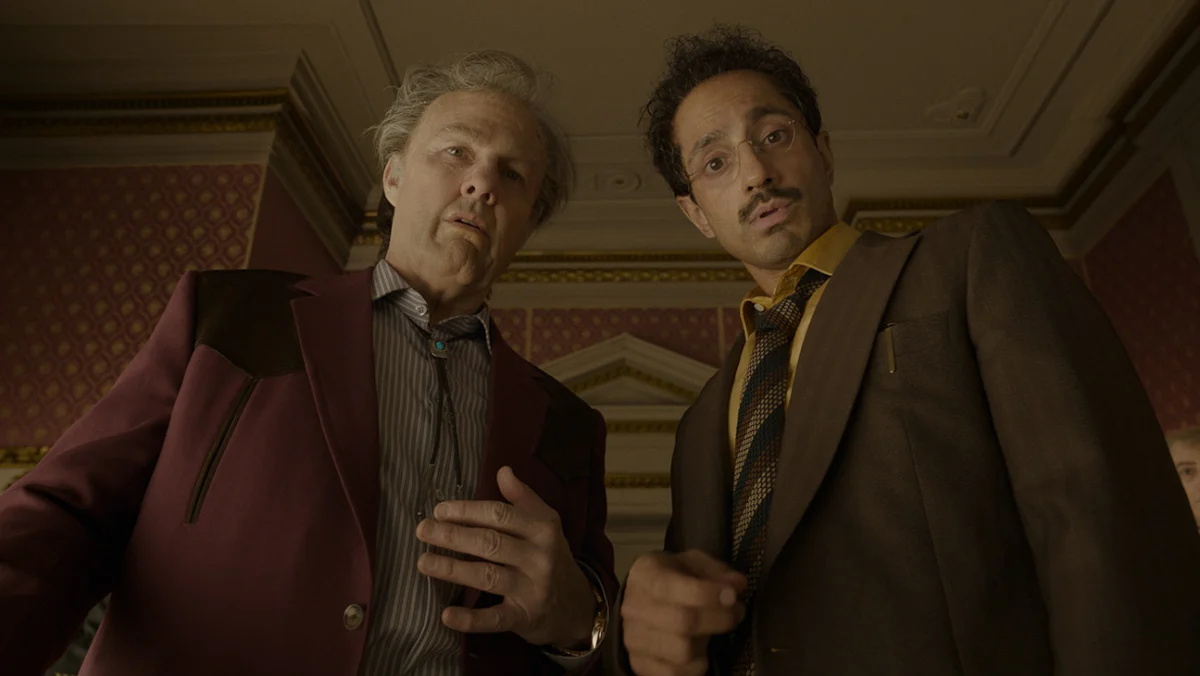
Directed by Academy Award winner Alejandro G. Iñárritu, Digger represents a significant departure from the adrenaline-fueled action franchises that have defined Cruise’s box office dominance over the last two decades. Instead, the film leans into the prestige, filmmaker-driven character studies reminiscent of earlier points in Cruise’s career, such as Rain Man, Born on the Fourth of July, and Magnolia. Co-starring Riz Ahmed, John Goodman, and Sandra Hüller, the narrative follows an audacious oil tycoon forced to grapple with the catastrophic fallout of triggering a massive natural disaster.
While Warner Bros. positioned the picture as an awards-season contender relying on organic word-of-mouth growth to find its legs, the initial critical reception has been divided. Digger currently holds a lukewarm 52 percent approval rating on Rotten Tomatoes. In his review for The Hollywood Reporter, chief film critic David Rooney remarked that the film "ultimately just prompts a worn-down shrug."
Conversely, Amazon MGM Studios is dominating the weekend charts with Verity. Helmed by filmmaker Michael Showalter and carrying a $40 million production budget, the suspenseful thriller hauled in an impressive $4.5 million in Thursday previews ahead of its Friday launch across 3,510 theaters. Industry projections indicate an opening weekend between $27 million and $30 million, easily positioning it as the weekend’s runaway domestic champion as audiences lean into the early weeks of the spooky season.
Adapted from Colleen Hoover’s bestselling novel, Verity features a star-studded cast including Anne Hathaway, Dakota Johnson, and Josh Hartnett. The plot follows a struggling writer, Lowen Ashleigh (played by Johnson), who accepts a lucrative gig to complete the remaining books of incapacitated literary icon Verity Crawford (played by Hathaway). Despite its robust commercial traction, the film has faced critical pushback, holding a challenging 39 percent Rotten Tomatoes score. THR critic Richard Lawson wrote that the movie "careens off a cliff, plummeting past so-bad-it’s-good and crashing on the rocks of agonizingly dumb."
Chronology of Events
The convergence of these theatrical releases and massive behind-the-scenes industry shifts follows a distinct timeline leading up to this pivotal October weekend:
- Pre-Production and Development: Both Digger and Verity spent years moving through development pipelines. Digger materialized as a passion project for Alejandro G. Iñárritu, who secured Tom Cruise to lead his uncompromising satirical vision, backed by Warner Bros.’ substantial $125 million commitment. Meanwhile, Amazon MGM Studios fast-tracked Verity to capitalize on the sustained, highly lucrative cinematic appetite for Colleen Hoover adaptations.
- Thursday Preview Screenings: Verity kicked off the competitive weekend frames by securing $4.5 million in Thursday night previews, establishing itself as the second-highest preview total for a Hoover adaptation. Hours later, Digger brought in a softer $1.2 million from its Thursday night domestic preview engagements.
- Theatrical Openings: Both films debuted across North American multiplexes, with Verity rolling out into 3,510 locations and Digger landing in upwards of 3,300 theaters.
- Corporate Leadership Exit Announcements: Coinciding with the theatrical rollout of Digger, news broke that Warner Bros. Motion Picture Group chiefs Michael De Luca and Pamela Abdy were officially stepping down from their executive posts.
- Upcoming Merger Finalization: The management shakeup at Warner Bros. immediately precedes the anticipated finalization of the $111 billion mega-merger between Paramount Skydance and Warner Bros., slated to close on October 6.
Supporting Data and Box Office Comparisons
To fully contextualize the current weekend box office performance, industry analysts look closely at historical precedents, budget-to-return ratios, and preview metrics.

Digger Financial Metrics
- Production Budget: $125 million
- Thursday Previews: $1.2 million
- Theater Count: 3,300+ North American locations
- Projected Opening Weekend: $12 million – $15 million
- Rotten Tomatoes Score: 52 percent
Verity and Colleen Hoover Adaptations
- Production Budget: $40 million
- Thursday Previews: $4.5 million
- Theater Count: 3,510 North American locations
- Projected Opening Weekend: $27 million – $30 million
- Rotten Tomatoes Score: 39 percent
Verity’s $4.5 million preview sum marks the second-best performance for a Colleen Hoover feature adaptation. It sits comfortably behind Sony’s 2024 cultural phenomenon It Ends With Us, which raked in $7 million in previews on its way to a massive $50 million domestic opening weekend. For further comparison, Universal’s adaptation of Hoover’s Reminders of Him pulled in $1.9 million in previews last year, translating to a $17.9 million domestic opening frame. While Verity is missing the critical darling status, its commercial tracking proves that the built-in readership base for Hoover’s bibliography remains a formidable box office driver.
Official Responses and Studio Dynamics
The dual performance of Digger and Verity plays out against a backdrop of sweeping executive changes within Hollywood’s traditional studio apparatus.
The exit of Warner Bros. film chiefs Michael De Luca and Pamela Abdy marks the end of a paradoxical era for the studio. Throughout 2025, De Luca and Abdy presided over a slate defined by critical and awards-season triumphs, highlighted by major Academy Award wins for high-profile titles such as One Battle After Another and Sinners. However, the studio’s broader narrative and financial ledger were concurrently weighed down by high-profile theatrical underperformers, most notably The Bride! and Supergirl.
As Digger struggles to find its footing out of the gate, the studio finds itself rudderless in terms of traditional leadership, bracing for an imminent paradigm shift. Studio representatives have emphasized that Digger was designed as a long-tail play, relying heavily on prestige positioning and eventual awards recognition rather than a traditional front-loaded blockbuster opening. Nonetheless, an opening frame tracking under $15 million against a $125 million cost places immense pressure on word-of-mouth endurance over the coming weeks.
Implications for the Future of Hollywood
The simultaneous occurrence of an underwhelming auteur-driven tentpole opening and a massive corporate consolidation event carries profound implications for the future of the motion picture industry.
- The Decline of Auteur Gambles for Movie Stars: Tom Cruise’s choice to step away from bulletproof action IP like Mission: Impossible to work with an uncompromising arthouse visionary like Alejandro G. Iñárritu was lauded as a bold artistic risk. However, Digger’s soft opening signals a widening disconnect between prestige cinematic art and general audience appetite at the box office. Studios may become increasingly hesitant to greenlight expensive, original, non-franchise projects, even when anchored by the world’s most bankable movie stars.
- The Paramount Skydance and Warner Bros. Merger: The impending $111 billion merger, scheduled to be finalized on October 6, is reshaping the competitive landscape. With Dana Goldberg and Josh Greenstein widely expected to step in and oversee the consolidated film operations for both studios, the industry is entering an era of hyper-consolidation. Decisions made under the previous administration—such as backing expensive bets like Digger—will likely face intense scrutiny under new corporate directives prioritizing streamlined, high-yield intellectual property.
- The Resiliency of Built-In Audiences: While Verity was heavily panned by critics—drawing harsh indictments regarding its narrative plausibility—its robust $27 million to $30 million opening projections underscore the unrelenting commercial power of pre-sold literary IP. Studios continue to find reliable profits in translating viral page-turners to the screen, proving that target demographic enthusiasm often overrides negative critical consensus during opening weekends.
Ultimately, as the dust settles on this transitional October weekend, Hollywood stands at a crossroads. The balance between corporate survival through mega-mergers, the changing guard of studio executives, and the ongoing gamble of theatrical distribution will dictate how studios greenlight and market major motion pictures for years to come.
