
Summer Blockbusters, Star Wars Stability, and Spec Scripts: Inside Hollywood’s Current Creative Crisis
As the summer movie season kicks off with the theatrical release of The Mandalorian and Grogu and looks ahead to its autumn finale with Christopher Nolan’s The Odyssey, the entertainment industry finds itself at a fascinating crossroads. From high-stakes franchise management to the enduring power of a well-crafted spec script, Hollywood is currently wrestling with questions of audience engagement, narrative structure, and the delicate art of executive leadership.
This comprehensive breakdown explores the critical reception of summer’s biggest bookends, the shifting landscape at Lucasfilm, and a deep-dive analysis of Sam Raimi’s latest thriller, Send Help.
Main Facts: The Summer Box Office Bookends and Industry Shifts
The 2026 summer box office is framed by two major cinematic events: Lucasfilm’s high-profile expansion of its television universe onto the big screen with The Mandalorian and Grogu, and Christopher Nolan’s historical-mythological epic, The Odyssey.
Both films entered the public consciousness facing distinct forms of digital skepticism. For The Mandalorian and Grogu, the critique centers on narrative necessity: Is this a story worth telling on a cinematic scale? For The Odyssey, the questions are aesthetic and structural: Does the adaptation of a post-adventure epic translate to modern blockbuster pacing, and do the trailers live up to Nolan’s pedigree?
Parallel to these theatrical rollouts, structural changes at the executive level continue to ripple through major studios. Most notably, leadership shifts at Disney and Lucasfilm—transitioning authority to veterans like Dave Filoni alongside broader corporate oversight by Disney CEO Josh D’Amaro—have sparked intense debate among industry analysts and fandoms alike regarding the future viability of legacy intellectual properties.
Chronology: A Timeline of Franchise Transitions and Releases
Understanding the current state of Hollywood requires examining the sequence of leadership changes and promotional rollouts that have defined the past decade:
- 2015: Lucasfilm launches a new era of Star Wars under Kathleen Kennedy with Star Wars: The Force Awakens, generating massive box office returns but exposing early fractures in overarching universe planning. Simultaneously, poorly received pre-release social media metrics for titles like Fantastic Four establish modern benchmarks for review embargo reactions.
- 2016: A parallel in sports management unfolds as the Chicago Bulls trade star player Jimmy Butler, sparking a long-term decline in franchise relevance—a cautionary tale often mirrored in corporate studio management.
- January 15, 2026: Dave Filoni assumes the top creative and operational role at Lucasfilm, initiating a new strategic phase for the Star Wars galaxy.
- March 18, 2026: Josh D’Amaro steps in as the new CEO of The Walt Disney Company, establishing a vital corporate checkpoint above the Lucasfilm hierarchy that occurred after Filoni’s promotion.
- May 2026: The Mandalorian and Grogu debuts to muted early review sentiment, setting off industry-wide discussions regarding franchise fatigue and leadership direction. Concurrently, marketing campaigns ramp up for Christopher Nolan’s late-summer release, The Odyssey.
Supporting Data: Review Metrics and Structural Analysis
In the modern era of entertainment journalism, pre-release reactions and social media metrics serve as vital barometers for studio confidence.
The Review Embargo Phenomenon
When The Mandalorian and Grogu completed its initial screenings for a curated group of critics and influencers, the absence of enthusiastic "first-wave" social media praise raised immediate red flags. Industry observers noted that even critically reviled tentpoles—such as 2015’s Fantastic Four—managed to secure roughly 50 hyperbolic affirmations ("Holy shit this was great") following their premiere events. The near-total silence surrounding Lucasfilm’s latest offering suggests a chilling effect among press circles, pointing toward projected historical lows for a Star Wars theatrical release.
The Spec Script Economy: Send Help
Away from franchise megastructures, original storytelling continues to thrive through spec scripts. Producer Zainab Azizi’s discovery of Send Help—subsequently directed by Sam Raimi—highlights the mechanics of what makes a screenplay "spec-friendly." Unlike dense fantasy epics such as Dune or historical dramas like The Brutalist, which require immense cognitive overhead and extensive world-building exposition, high-concept thrillers operate with streamlined efficiency.
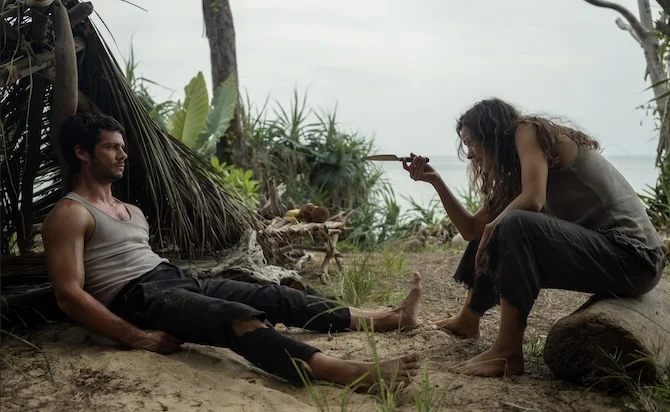
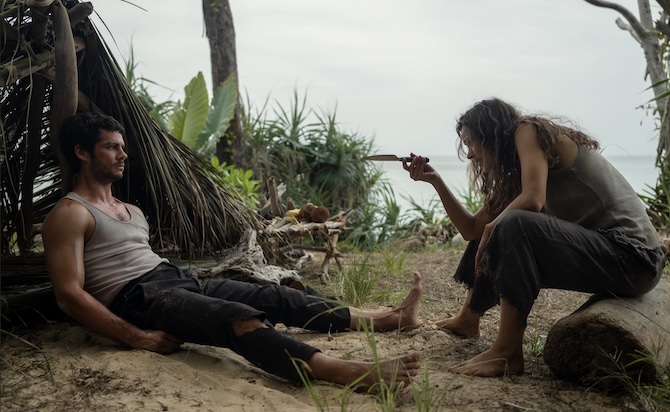
Send Help utilizes a tight two-character setup: an abrasive corporate CEO (Bradley) who crash-lands on a deserted island alongside an eccentric accountant (Linda) whom he intended to fire just prior to the trip. The narrative inverts their corporate hierarchy, turning the subordinate into the survival authority. Despite logical hurdles in the script—such as Bradley utilizing a heavy rock-hammer for shelter construction while agonizing over Linda possessing a single survival knife—the film succeeds by prioritizing interpersonal chemistry over airtight logistical plotting.
Official Responses and Industry Commentary
While studio executives rarely comment directly on pre-release anxiety or fan pushback, creative leads have been vocal about their long-term visions.
Dave Filoni, stepping into his expanded leadership role at Lucasfilm, has participated in extensive press rounds detailing a comprehensive game plan for the next phase of Star Wars storytelling. Filoni’s encyclopedic knowledge of the Star Wars mythos—spanning decades of animated series, novels, and deep-lore expansions—has been cited by supporters as the ultimate corrective to previous eras of management.
However, industry critics raise valid concerns regarding the transition from television lore-master to feature-film executive. While producers like Kathleen Kennedy faced frequent fan criticism for occasionally misinterpreting core mythos elements, her commercial track record included multi-billion-dollar global juggernauts and decades of foundational Hollywood producing experience. Commentators argue that deep lore expertise does not automatically translate to structural screenwriting acumen or macro-level franchise stewardship.
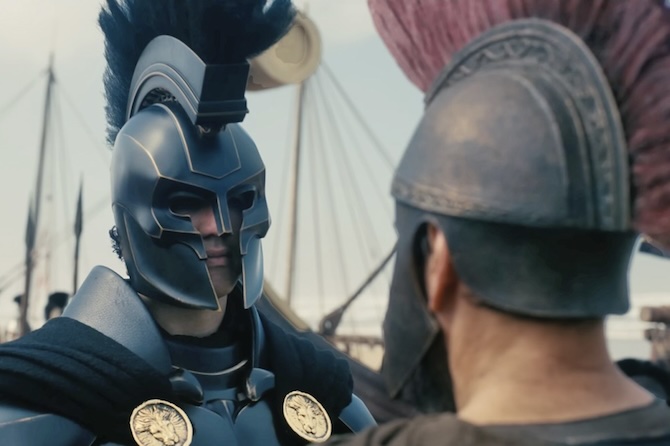
Regarding Christopher Nolan’s The Odyssey, marketing teams have maintained a measured approach. Despite internet murmurings regarding "mid" trailer drops that lack iconic, mind-bending visual hooks, insiders note that Nolan is historically conservative with his promotional footage. Epic mythological touchstones—including the Lotus Eaters, the seductive Sirens, Circe’s menagerie, and the monstrous perils of Scylla and Charybdis—remain largely under wraps, ensuring that the film’s narrative payoffs are preserved for theatrical audiences.
Implications: What This Means for the Future of Hollywood
The convergence of these events signals a broader reckoning for major studios navigating the mid-2020s marketplace.
1. The Franchise Sustainability Crisis
The potential underperformance of The Mandalorian and Grogu carries severe institutional consequences. Because Dave Filoni was installed as head of Lucasfilm just two months before Josh D’Amaro took the reins as Disney CEO, the new corporate leadership did not handpick the current creative regime. Should Mando underperform at the box office, D’Amaro is positioned to enact sweeping structural reforms at Lucasfilm. Without strategic course corrections, the once-untouchable Star Wars brand risks drifting into cultural irrelevance, mirroring the prolonged sports franchise decline seen in organizations plagued by misaligned ownership and short-sighted management.
2. Mythos vs. Craft in Executive Leadership
The industry-wide debate over Filoni’s promotion highlights a recurring tension in modern Hollywood: the trade-off between encyclopedic fandom and foundational filmmaking craft. As franchises demand multi-platform continuity, studios increasingly turn to gatekeepers who know the lore inside and out. Yet, as critics point out, structural storytelling—understanding dramatic irony, pacing, and narrative momentum—remains the bedrock of cinematic success.
3. The Resurgence of High-Concept Originality
Conversely, the theatrical success and critical fascination surrounding projects like Send Help demonstrate that audiences and filmmakers still crave streamlined, high-concept narratives. The triumph of spec-friendly thrillers serves as a reminder to emerging screenwriters: while world-building and dense mythology have their place, clarity of concept, ironies of character dynamics, and palpable interpersonal chemistry will always capture the industry’s imagination.
As the summer box office unfolds, the dual trajectories of Hollywood’s tentpole behemoths and its scrappy original thrillers will offer a definitive masterclass in what makes modern entertainment survive, thrive, or falter.
