
Cooke Optics Expands Versatility with Official Nikon Z Mount Integration for SP3 and AP3 Lenses
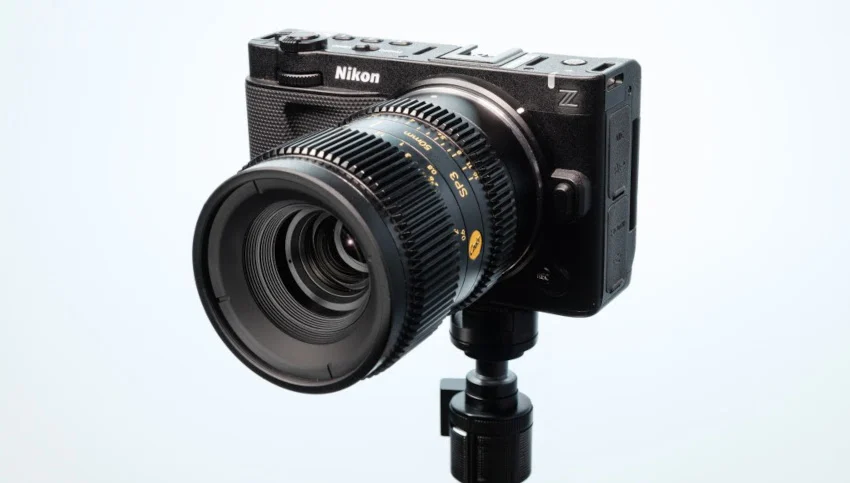
As the traditional boundarylines separating high-end cinema production equipment from modern mirrorless camera ecosystems continue to dissolve, lens manufacturers are adapting to meet the demands of mobile, agile filmmakers. In a significant development for cinematographers utilizing Nikon’s rapidly expanding professional video ecosystem, legendary optics manufacturer Cooke Optics has officially announced the addition of native Nikon Z mount support for its acclaimed SP3 spherical prime and AP3 1.5x anamorphic lens lineups.
Facilitated through a direct licensing agreement with Nikon, this move eliminates the need for third-party mount adapters, allowing users to seamlessly attach Cooke’s high-performance, compact cinema glass directly to Nikon Z-mount camera bodies. The new Z-mount options are officially scheduled to begin shipping in August 2026, further broadening an already robust, modular ecosystem designed to future-proof investments in professional cinematography.
Main Facts
The core of this announcement centers on native compatibility, modular manufacturing, and the fusion of legendary cinematic aesthetics with lightweight modern camera architecture.
- Direct Licensing Agreement: Cooke Optics has partnered directly with Nikon to engineer authentic, factory-approved Z-mount architecture for its lens families.
- Impacted Series: The integration applies to both the SP3 spherical prime family and the AP3 1.5x anamorphic lens series.
- Elimination of Third-Party Adapters: Native mounting ensures zero play, reliable electronic communication where applicable, and a sturdier physical connection than improvised or universal adapters.
- Interchangeable Rear-Mount Ecosystem: Nikon Z now joins Sony E, Canon RF, Leica L, and Leica M as part of Cooke’s modular mount framework.
- Promotional Launch Incentives: Cooke is offering a complimentary second mount with eligible new purchases of SP3 and AP3 lens sets, while existing owners can acquire additional mounts separately.
- Global Shipping Date: Deliveries for the new Nikon Z variants are slated to commence globally in August 2026.
Chronology of the SP3 and AP3 Ecosystem
To fully understand the strategic value of the Nikon Z mount announcement, it is necessary to trace the developmental timeline of Cooke’s compact cinema lens strategy.
The Genesis of the SP3 Line (Late 2023 – 2024)
Cooke Optics entered the dedicated mirrorless cinema market with the introduction of the SP3 series. While heavily inspired by the historic heritage and visual rendering of Cooke’s legendary Speed Panchro lenses, the SP3 family was built from the ground up as a completely modern optical and mechanical design. Crafted specifically for full-frame mirrorless cameras, the series launched with an initial focal length lineup designed to balance cinematic rendering with a minimal footprint.
Expansion into Anamorphic Territories (2025)
Building on the success of the SP3 spherical primes, Cooke recognized a burgeoning demand for compact anamorphic glass. The introduction of the AP3 series brought true anamorphic characteristics—specifically a 1.5x squeeze factor—into a lightweight, full-frame package. This allowed independent filmmakers and documentary crews to achieve classic widescreen cinematic distortion and flaring without being weighed down by heavy, traditional 2x anamorphic cinema builds.
The Modular Mount Strategy
From the outset, Cooke engineered both the SP3 and AP3 series with an interchangeable rear-mount system. Rather than forcing cinematographers to purchase entirely separate sets of lenses when switching camera platforms, Cooke allowed users to swap out the mechanical back-ends of the lenses. Over time, the company rolled out support for Sony E, Canon RF, L-mount, and M-mount systems.
The Nikon Z Integration (March 2026 – August 2026)
Following heightened adoption of Nikon’s high-end video-capable mirrorless bodies—such as the Z9, Z8, and specialized cinema-focused rigs—Cooke negotiated its licensing agreement with Nikon. Announced in early 2026 with a scheduled shipping date of August 2026, the Nikon Z mount completes a comprehensive multi-platform strategy that ensures Cooke glass can follow creators regardless of their preferred camera body brand.
Supporting Data and Technical Specifications
The appeal of the SP3 and AP3 lines lies in their unique intersection of compact physical dimensions and uncompromising optical performance. A breakdown of the technical specifications highlights why native Nikon Z compatibility is a major win for mirrorless shooters.
Cooke SP3 Spherical Primes Overview
The SP3 series currently comprises six distinct focal lengths, making it a comprehensive toolkit for narrative, documentary, and commercial productions.
| Focal Length | Maximum Aperture | Image Circle | Weight / Form Factor |
|---|---|---|---|
| 18mm | T2.4 | Full Frame | Compact, lightweight manual cinema build |
| 25mm | T2.4 | Full Frame | Uniform gear positions for fast swaps |
| 32mm | T2.4 | Full Frame | Optimized for gimbals, drones, and handheld |
| 50mm | T2.4 | Full Frame | Classic standard focal length rendering |
| 75mm | T2.4 | Full Frame | Flattering portrait and telephoto compression |
| 100mm | T2.4 | Full Frame | Tight framing with minimal optical breathing |
Every lens in the SP3 range shares a consistent T2.4 maximum aperture, uniform gear ring placements, and closely matched weight and dimensions. This standardization allows camera operators to swap lenses on gimbals, steadicams, or motor-driven follow-focus rigs without recalibrating their entire accessory layout.
Cooke AP3 1.5x Anamorphic Primes Overview
For productions seeking an organic widescreen look with distinct oval bokeh and horizontal light streaks, the AP3 series provides an alternative to bulky legacy anamorphic systems.

- Focal Lengths: 35mm, 50mm, and 85mm.
- Squeeze Factor: 1.5x (offering an ideal balance between ultra-wide cinematic framing and manageable post-production crop ratios compared to traditional 2x anamorphic lenses).
- Aperture: Uniform T2.4 maximum aperture across all three focal lengths.
- Design Philosophy: Engineered specifically to retain the signature "Cooke Look"—characterized by gentle sharpness, smooth fall-off, and pleasing skin tones—while maintaining a form factor compatible with smaller mirrorless camera builds.
Official Responses and Industry Perspectives
While formal press releases from optics manufacturers often lean heavily into marketing language, industry reactions to Cooke’s mount expansion strategy point toward a deeper shift in how cinematographers approach gear acquisitions.
Industry analysts and working cinematographers have long criticized the proprietary nature of high-end cinema lenses. Historically, purchasing a set of PL-mount or LPL-mount cinema primes meant locking oneself into a specific ecosystem. If a production house transitioned from one camera manufacturer to another, the financial penalty of offloading old glass and buying new glass could be devastating.
Cooke’s official stance regarding the interchangeable mount ecosystem emphasizes longevity and adaptability. By enabling the rear mount to be user-swappable or serviced easily, Cooke positions its lenses not as single-use accessories tied to a fading camera generation, but as long-term optical investments.
In official communications accompanying the announcement, Cooke representatives highlighted that the inclusion of Nikon Z support is a direct response to feedback from commercial and narrative filmmakers who have embraced Nikon’s aggressive push into professional cinema production. With Nikon steadily winning over high-end content creators through robust internal RAW recording formats, advanced autofocus technology, and open firmware updates, bridging the gap with Cooke’s premium optical engineering was a natural next step.
Implications for Filmmakers and Production Workflows
The introduction of native Nikon Z-mount capability for the SP3 and AP3 series carries several profound implications for independent filmmakers, rental houses, and owner-operators.
1. Enhanced Rig Stability and Balance
Using third-party adapters on mirrorless cameras often introduces mechanical tolerance issues, slight wobble, or unwanted torque on the lens mount, particularly when using heavy follow-focus motors. Native Nikon Z mounting guarantees a secure, rigid connection between the camera body and the lens. This is especially vital when operating on dynamic camera stabilization platforms such as motorized gimbals, vehicle rigs, and lightweight steady-cams where balance is paramount.
2. Preserving the "Cooke Look" on Nikon Bodies
Nikon cameras are celebrated for their exceptional color science and clean sensor readouts. Pairing these high-resolution sensors with Cooke optics introduces the celebrated "Cooke Look"—a visual signature historically reserved for major Hollywood productions utilizing high-end cine cameras. Cinematographers shooting on Nikon Z8 or Z9 systems can now capture organic dimensionality, subtle contrast curves, and sublime skin tones without the harsh, clinical sharpness often associated with consumer photographic glass.
3. Investment Protection and Multi-Platform Flexibility
For freelance cinematographers who frequently rent or switch camera bodies depending on client demands, the modularity of the SP3 and AP3 systems is a financial lifesaver. A shooter can own a set of SP3 lenses configured with Sony E mounts today, switch them to Canon RF mounts for a specific project next month, and adapt them to Nikon Z mounts later in the year—all without replacing the core glass. Furthermore, Cooke’s promotion of including a complimentary second mount with new purchases lowers the barrier to entry for multi-system shooters.
4. Growth of the Nikon Z Cinema Ecosystem
For years, Nikon lagged behind Sony and Canon in the dedicated digital cinema space. However, recent technological advancements and strategic acquisitions (such as Nikon’s acquisition of RED Digital Cinema) have signaled a serious commitment to the moving image. Cooke’s official support for the Z mount serves as an industry validation of Nikon’s platform as a viable, professional-grade cinema tool.
Conclusion
The integration of Nikon Z mount support into Cooke Optics’ SP3 and AP3 lens lineups underscores a broader, highly welcome trend in modern filmmaking: equipment is becoming more modular, adaptable, and cross-compatible. By refusing to tie their premium cinematic optics to a single camera manufacturer, Cooke has provided creators with a future-proof toolkit that bridges the gap between high-end cinematic heritage and the agile nature of mirrorless production.
As these new native Z-mount lenses begin shipping in August 2026, cinematographers operating within the Nikon ecosystem will have unprecedented access to classic cinematic rendering without the compromises of mechanical adapters. For owner-operators and production houses navigating a rapidly shifting technological landscape, Cooke’s expanding mount strategy ensures that great glass remains a permanent asset, no matter which camera body is mounted to the front.
