
From Crocodiles to House Hippos: A Deep Dive into the National Film Board of Canada’s Cultural Legacy
For nearly nine decades, the National Film Board of Canada (NFB) has stood as a bastion of artistic expression, historical record, and, occasionally, the source of our most persistent national myths. Founded in 1939 with a mandate to interpret Canada to Canadians and the world, the NFB has evolved from a wartime propaganda arm into a digital-age powerhouse, housing over 43,000 works that capture the nuance of the Canadian experience.
Yet, a recent re-watch of one of the board’s most iconic shorts, The Rise and Fall of the Great Lakes (1968), serves as a reminder that the NFB’s reach extends far beyond mere documentation. It challenges our perception of the past—and occasionally, our understanding of what creatures might have once called our northern landscapes home.
The NFB: A Titan of Canadian Cinema
The NFB is an anomaly in the global media landscape. Operating as a public producer and distributor, it has managed to maintain a level of creative autonomy that has resulted in an astonishing output: an average of 500 works per year over its 87-year history. While critics of government-funded arts programs often cite the “bureaucratic inefficiency” argument—frequently invoking the ghosts of Friedrich Hayek or Milton Friedman—the NFB’s track record renders such critiques largely obsolete.
With over 5,000 awards to its credit, the NFB has proven that state-sponsored art can indeed compete with, and often surpass, the commercial output of private studios. Its digital archives, which now host approximately 18,000 works, serve as a living museum of Canadian identity. From the whimsical animation of The Cat Came Back and The Big Snit to the quintessential Canadian charm of The Sweater and Log Driver’s Waltz, the NFB offers a profound catalogue of domestic storytelling. These films, often short enough to be consumed over a standard dinner, balance historical weight with an accessible, often nostalgic, aesthetic.
Chronology of a Cultural Institution
- 1939: The National Film Board is established, tasked with providing a distinctly Canadian perspective during the onset of World War II.
- 1968: The release of The Rise and Fall of the Great Lakes, a landmark short film that combines geology, humor, and surrealist time-travel to explain the transformation of the North American landscape.
- 1999: The “House Hippo” commercial is released as part of the Hinterland Who’s Who parody series, effectively becoming a formative cultural touchstone for a generation of Canadian children.
- 2019: MediaSmarts releases a sequel to the House Hippo campaign, modernizing the lesson on digital literacy for the social media age.
The Eemian Crocodile: A Geological Mystery
The catalyst for this cultural excavation was a specific scene in The Rise and Fall of the Great Lakes. The film follows a canoeist whose journey becomes a temporal odyssey through the geological history of the Great Lakes. At the 4:27 mark, the viewer is treated to a vivid, if surreal, representation of the Eemian interglacial period—a warm interval roughly 125,000 years ago.
The canoeist finds himself in a lake populated by none other than crocodiles. To the casual observer, this seems like a filmmaker’s hallucination. However, the science holds a surprising degree of validity. During the Eemian interglacial, the climate was significantly warmer than it is today. While the idea of a Canadian crocodile seems absurd in our current frost-bitten reality, paleontological evidence suggests that warmer historical periods allowed reptilian species to range much further north than their modern descendants.
This revelation underscores the NFB’s ability to weave scientific inquiry into entertainment. It forces the viewer to confront the fluidity of our environment. The realization that crocodiles were, at one point, part of the Canadian fauna—and that we missed them by a mere geological blink of an eye—is both humbling and, to the imaginative mind, slightly melancholic.
The Myth of the House Hippo: Data and Digital Literacy
If the presence of ancient crocodiles in Canada is a factual curiosity, the existence of the "House Hippo" is perhaps the most beloved piece of national misinformation.
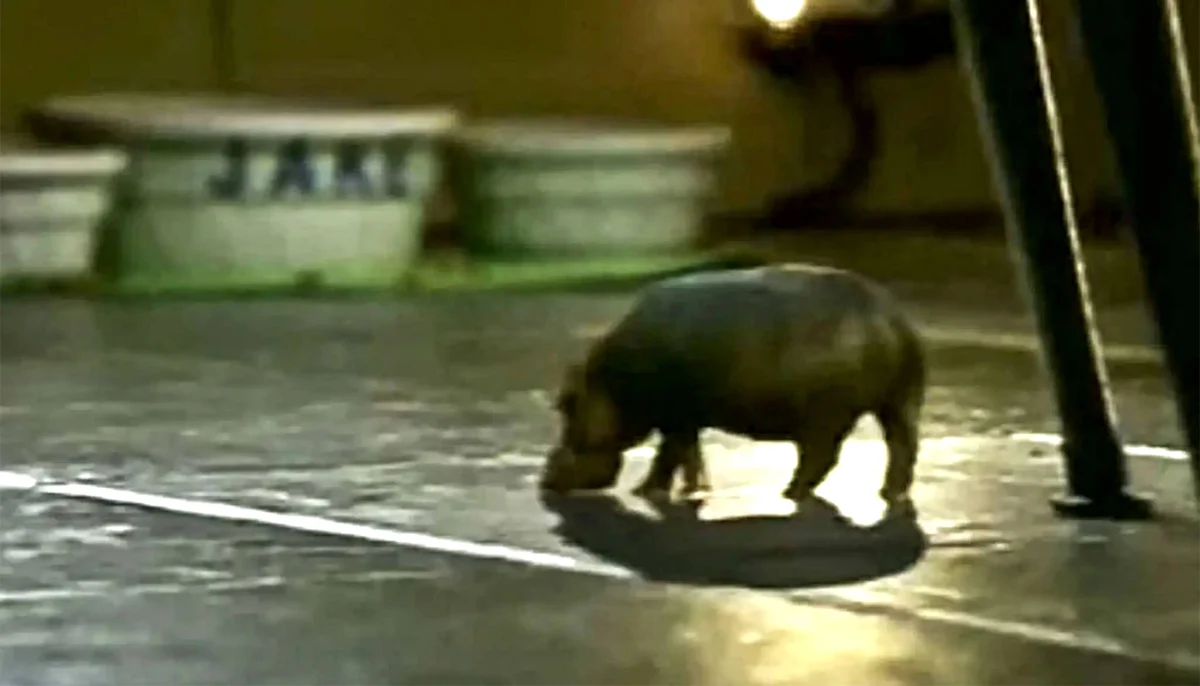
In 1999, the Concerned Children’s Advertisers (CCA) produced a public service announcement (PSA) that mimicked the aesthetic of the NFB’s Hinterland Who’s Who series. The spot depicted a miniature hippopotamus living in a cozy, domestic setting, complete with a bed made of mittens and a diet of peanut butter toast. The ad was a masterpiece of practical effects and tone, convincing thousands of Canadian children that these gentle, tiny creatures were hiding in their own homes.
The Educational Intent
It is crucial to note that the House Hippo was never intended to be a hoax. Its purpose was to serve as a litmus test for media literacy. The PSA explicitly cautioned children to be skeptical of what they see on television—a lesson that has only become more urgent in the age of deepfakes and algorithmic misinformation.
The 2019 follow-up by MediaSmarts, which featured a modernized House Hippo, acknowledged the legacy of the original. By that point, the House Hippo had transitioned from an educational tool into a meme—a symbol of the innocence lost in the transition from analog television to the wild, unregulated landscape of the internet.
Official Responses and the State of Media Literacy
When asked about the persistence of the House Hippo legend, educational experts and media historians point to the success of the original campaign. While the NFB did not produce the PSA, its collaboration with Environment Canada on the Hinterland Who’s Who series provided the cultural shorthand necessary for the CCA to pull off such an effective, yet benign, deception.
The "official" stance on the House Hippo remains one of ironic reverence. It is a cautionary tale that succeeded too well. Today, the House Hippo is frequently cited in journalism workshops as an example of how compelling narratives can override critical thinking.
Implications for the Future
The juxtaposition of the ancient, fossilized crocodiles of the Eemian period and the digital, ephemeral House Hippo offers a unique lens through which to view the Canadian psyche. We are a nation that is intimately connected to our landscape—to the shifting ice, the retreating glaciers, and the long-lost reptiles of our deep past—yet we are equally preoccupied with the myths we construct within our own living rooms.
The implications for the NFB and similar institutions are clear: in an era of information overload, the role of the public broadcaster is not just to archive the past, but to provide the tools for deciphering the present. Whether it is through the preservation of classic shorts that teach us about geological time, or the continued support of media literacy campaigns that warn us against the "House Hippos" of the internet, the mandate remains relevant.
As we look toward the future, the NFB’s archive of 18,000+ works remains our most reliable anchor. It is a record of who we were, who we thought we were, and who we might yet become. And while we may not have the crocodiles of the Eemian to greet us at the shoreline, we at least have the comfort of a well-told story, a piece of Canadian history, and perhaps, if we’re lucky, a bit of peanut butter toast for the creatures of our own imagination.
Summary of Key Findings
- The NFB’s Longevity: Nearly 90 years of continuous operation have resulted in a massive, accessible public archive.
- Geological Context: The inclusion of crocodiles in The Rise and Fall of the Great Lakes highlights a genuine, albeit distant, period of Canadian environmental history.
- Media Literacy: The "House Hippo" PSA serves as a critical historical case study in the efficacy of media literacy education, illustrating the bridge between 20th-century broadcast standards and 21st-century digital verification.
- Cultural Continuity: Through its archives, the NFB continues to function as the primary repository for the evolution of Canadian identity, bridging the gap between scientific reality and public myth.
