
Beyond the Buzzword: How Top Brands Are Trading Empty Promises for Visible Action and Real Value
NEW YORK — In an era defined by fleeting digital trends, hyper-fragmented audiences, and a growing skepticism toward corporate messaging, modern marketing leaders are facing a stark reality: consumers no longer care what a brand says—they care deeply about what it does.
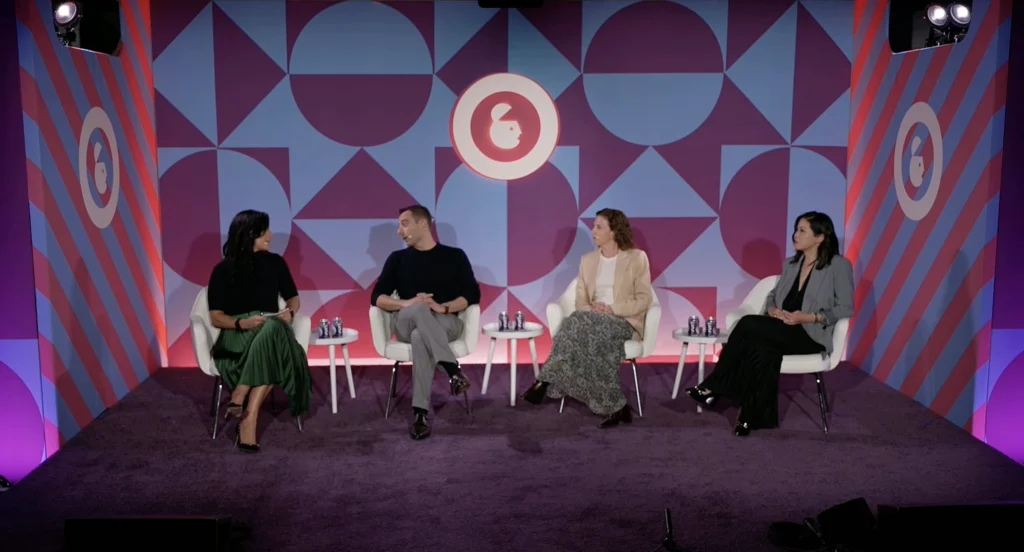
This was the central thesis of a high-profile panel discussion at Advertising Week New York, where top marketing executives from industry giants including The Hershey Company, LinkedIn, and e.l.f. Beauty converged to dissect the shifting paradigms of brand relevance. The consensus among the leadership panel was unambiguous: corporate credibility cannot be bought with clever ad spends or manufactured slogans. Instead, it must be meticulously earned through visible, tangible action—delivering genuine utility, fulfilling promises, executing strategic partnerships, and thoughtfully participating in cultural conversations.
As consumer loyalty becomes increasingly difficult to secure and even harder to maintain, the panel explored the playbook modern enterprises must adopt to transition from being merely recognizable to becoming actively chosen.
Main Facts: The New Currency of Consumer Trust
The modern marketplace is experiencing a profound trust deficit. Traditional advertising channels are frequently met with cynicism, and consumers—particularly younger demographics—possess an acute radar for inauthenticity, corporate greenwashing, and superficial purpose-driven campaigns.
During the Advertising Week panel, marketing leaders underscored several core shifts redefining the industry:
- Action Over Rhetoric: Credibility is derived from demonstrable actions rather than marketing copy. Brands must provide tangible value to their audiences before asking for trust or loyalty in return.
- The Legacy Brand Trap: Household name recognition does not automatically translate to active consumer consideration. Legacy giants must constantly innovate to prevent familiarity from breeding passivity.
- Purpose Requires Consistency: Stated corporate values are meaningless unless they are actively backed by internal behavior, operational consistency, and transparent accountability.
- Strategic Value in Partnerships: Brand collaborations must offer unique, complementary value to both parties rather than serving as generic co-branding exercises.
- Contributing vs. Chasing Culture: Rather than frantically chasing viral trends, enduring brands focus on what they can uniquely add to cultural dialogues or how they can actively shape broader narratives.
Chronology: The Evolution of Modern Brand Relevance
To understand how marketing strategy has arrived at this juncture, it is helpful to examine the historical trajectory of brand-consumer relationships over the past few decades, culminating in the insights shared at this year’s Advertising Week New York.
Era 1: The Broadcast Monopoly (Late 20th Century)
For decades, brand relevance was largely a function of share-of-voice. Armed with substantial advertising budgets, companies could dominate television, print, and radio airwaves. Familiarity bred trust; if a consumer saw a product advertised consistently, they were statistically far more likely to purchase it. During this era, passive brand recognition was often sufficient to sustain market leadership.
Era 2: The Digital Disruption and the Attention Economy (Early 2000s–2010s)
The rise of the internet, search engines, and social media fractured the media landscape. Consumers gained the power to block ads, research alternatives instantly, and voice complaints publicly. Brands rushed to digital platforms, often treating social media as just another broadcast channel. This period saw the birth of "content marketing," where brands realized they needed to offer more than just promotional material—they needed to entertain and inform.
Era 3: The Authenticity Reckoning (Late 2010s–Present)
As social consciousness grew and digital communities matured, consumers began demanding moral and ethical alignment from the corporations they supported. This gave rise to the "purpose-driven" brand movement. However, it also introduced a dangerous corporate trap: "purpose washing," where brands adopted social causes as marketing tactics without internal substance.
The panel at Advertising Week New York represents the current maturation of this era. Today’s marketing leaders recognize that consumers have developed a sophisticated immunity to hollow purpose claims. Relevance now requires structural transparency, operational alignment, and a "value-first" approach to every consumer touchpoint.
Supporting Data and Case Studies: How Industry Leaders Are Executing
Theory is essential, but execution defines market leaders. During the panel, executives shared real-world methodologies and case studies illustrating how their respective companies put these principles into practice.
The Hershey Company: Overcoming the Legacy Brand Paradox
For Stacy Tappitt, Chief Growth and Marketing Officer at The Hershey Company, the challenge of relevance takes on a unique dimension when managing legacy portfolios. Hershey oversees a massive ecosystem of 90 brands, each operating at different stages of consumer lifecycle maturity.
"You can be loved but not chosen actively," Tappitt noted during the discussion, highlighting the dangerous gap between brand nostalgia and active purchase intent. For a household name like Hershey, the primary objective is avoiding consumer complacency. "It’s about being top of mind and being relevant every single day."
To combat this passivity, Hershey leverages strategic partnerships designed to introduce its products to new consumption occasions and younger demographics. Tappitt pointed to Reese’s recent collaborations with Oreo and The Nitro Bar. The partnership with The Nitro Bar yielded a Reese’s pumpkin latte, successfully capturing younger consumers while inserting the legacy candy brand into morning routines and modern recipe culture.
LinkedIn: Prioritizing Value Before Trust
For professional networking platform LinkedIn, establishing credibility relies heavily on democratizing data and reframing conventional narratives about professional success.
Paolo Provinciale, Vice President of Marketing at LinkedIn, articulated the platform’s core philosophy: "It’s not what you say, but actually the way you show up. Provide value to your audience before actually asking for that credibility and trust back."
LinkedIn operationalizes this philosophy through its dedicated economic graph team, which tracks global hiring, labor, and skills trends. By publishing actionable economic research, LinkedIn provides tangible utility to its members, enterprises, and policymakers alike.
Furthermore, LinkedIn uses its platform to challenge linear definitions of career success. By highlighting professionals whose career paths deviated from traditional trajectories—embracing zigzags, career pivots, and setbacks—the company builds deep resonance with modern workers navigating economic uncertainty. In partnerships, LinkedIn has collaborated with unexpected cultural figures, such as former accountant-turned-DJ John Summit and NFL player Fernando Mendoza, who famously utilized an "Open to Work" banner on the platform while waiting for the NFL draft. These stories normalize the realities of professional navigation.
e.l.f. Beauty: "Zero Distance" Culture and Cultural Shaping
Lori Lamb, Chief Brand Officer at e.l.f. Beauty, emphasized that external credibility is entirely dependent on internal alignment. For e.l.f., brand values are not merely marketing talking points; they are operational mandates.
"It’s also the consistency of playing [out] values, so not just delivering values, but standing behind your values," Lamb stated. To ensure this alignment, e.l.f. maintains a unique "zero distance" internal culture designed to bridge gaps across organizational layers, ensuring employees at all levels are closely connected to core brand decisions and ethical commitments.
When it comes to external partnerships, e.l.f. avoids cookie-cutter co-branding. Lamb noted that community conversations deeply inform their collaborative efforts, such as their innovative product-combining partnership with fellow beauty brand Bubble. e.l.f. consistently seeks out collaborations where both participants make a distinct, irreplaceable contribution.
Official Responses and Strategic Perspectives
The panel discussion provided a masterclass in modern executive communications, offering direct guidance on how brands should navigate crisis management, cultural trends, and consumer skepticism.
On Joining Cultural Conversations
When discussing how brands should react to fast-moving cultural moments, LinkedIn’s Paolo Provinciale warned against reactive scrambling.
"The overarching rule is not to ask yourself how can I jump into the conversation, but what can I add to the conversation."
Echoing this sentiment, e.l.f.’s Lori Lamb explained how her brand approaches trends from a position of authority rather than imitation:
"We’re not chasing trends, but we’re shaping the way that the narratives are built."
Lamb also issued a stark warning to her industry peers regarding the weaponization of corporate purpose: purpose rapidly degrades into an empty platitude the moment it becomes decoupled from tangible action.
On Transparency, Mistakes, and Crisis Management
In an age where social media can amplify consumer criticism or misinformation within minutes, brand vulnerability is inevitable. Stacy Tappitt of Hershey outlined a pragmatic framework for managing brand missteps and public scrutiny. She noted that Hershey proactively drafts content to address anticipated consumer questions, building agile response mechanisms.
However, when a brand inevitably stumbles, Tappitt argued against defensiveness or deflection:
"You own up to a mistake. You’re transparent about it. You try to make it right, and you live to fight another day."
Ultimately, Tappitt summarized, corporate credibility is not sustained by immaculate perfection, but by transparent, accountable actions when things go wrong.
Implications: The Future of Brand Building
The insights delivered at Advertising Week New York point toward a permanent structural evolution in the marketing industry. The era of the omnipotent corporate megaphone is officially over. As consumers demand higher standards of utility, transparency, and ethical consistency, the implications for brand strategists are profound:
- The Death of Vanity Metrics: Impressions, reach, and passive brand awareness will increasingly take a backseat to metrics measuring active utility, community sentiment, and long-term trust equity.
- Operational-Marketing Integration: CMOs can no longer operate in a silo separate from corporate operations, product development, and human resources. Because brand values must be visible in corporate behavior, marketing leadership must work in lockstep with internal culture-builders.
- The Rise of Collaborative Ecosystems: Standalone promotional campaigns are giving way to deeply integrated, values-aligned partnerships that generate authentic cultural capital and practical consumer benefits.
- Radical Accountability: In an interconnected digital economy where misinformation spreads instantly and consumer cynicism runs high, brands must embrace radical transparency. Owning mistakes quickly and transparently will become the defining differentiator between enduring market leaders and transient brands that fade into obscurity.
Ultimately, the message from New York was clear: brands that wish to thrive in the years ahead must stop asking what culture can do for their bottom line, and instead focus entirely on what they can authentically do for culture.
