
The Evolution of Field Reporting: Transforming Wireless Transmitters into Professional Handheld Microphones
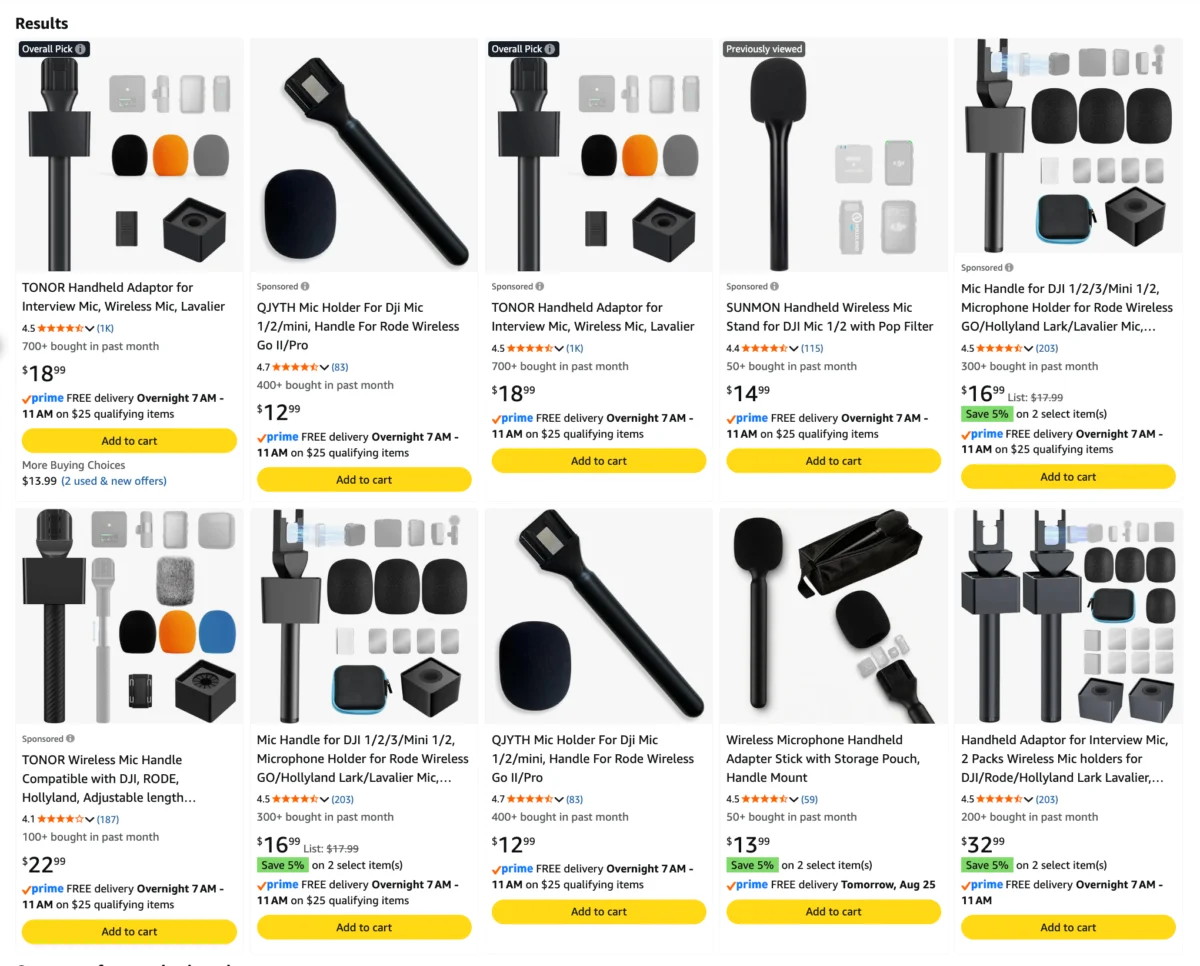
In the fast-paced world of digital journalism and field production, the ability to adapt equipment on the fly is not merely a convenience—it is a necessity. Over the past few years, the landscape of mobile audio has been revolutionized by the proliferation of compact, wireless lavalier transmitters. While these units are exceptional for lapel-mounted dialogue, they often leave creators wanting when the need for a traditional "man-on-the-street" interview arises.
Enter the "Lav Mic Handle": a deceptively simple accessory that is quietly changing how independent journalists, content creators, and podcasters conduct field interviews. By bridging the gap between ultra-compact transmitters and professional handheld aesthetics, these handles have become an essential tool in the modern production kit.
Main Facts: What is a Lav Mic Handle?
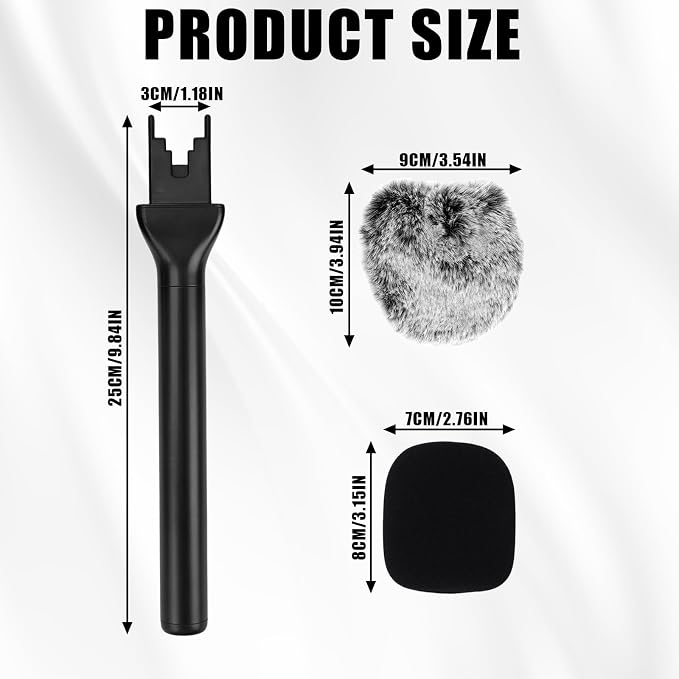
It is crucial to clarify that a lavalier handle is not a microphone in itself. It contains no transducers, no circuitry, and no signal processing capability. Instead, it serves as a structural housing—a chassis designed to accommodate the rectangular or square bodies of popular wireless transmitters, such as those from DJI, RØDE, Hollyland, or Saramonic.
By sliding a wireless transmitter into this handle, a user effectively converts a discreet lapel unit into a recognizable, professional-looking handheld microphone. These handles typically feature a hollow cavity for the transmitter, a foam windscreen to mitigate plosives and wind noise, and, in some cases, a mounting point for a "mic flag" (the square or triangular cube used to display station branding).
The Chronology: From Niche Accessory to Market Staple
The concept of the transmitter handle gained mainstream traction when major audio manufacturers recognized a shift in how their products were being used.
The RØDE Influence
The first significant entry into this market was the RØDE Interview GO. Priced at approximately US$29, it provided a stable, ergonomic grip for the RØDE Wireless GO series. This legitimized the concept, proving that creators were willing to pay for a dedicated mount that provided the "authority" of a handheld microphone. Shortly thereafter, RØDE expanded the ecosystem with the Interview Micro, a smaller, more streamlined iteration, maintaining the same price point and solidifying the company’s hold on the professional-consumer segment.
The Rise of Generic Alternatives
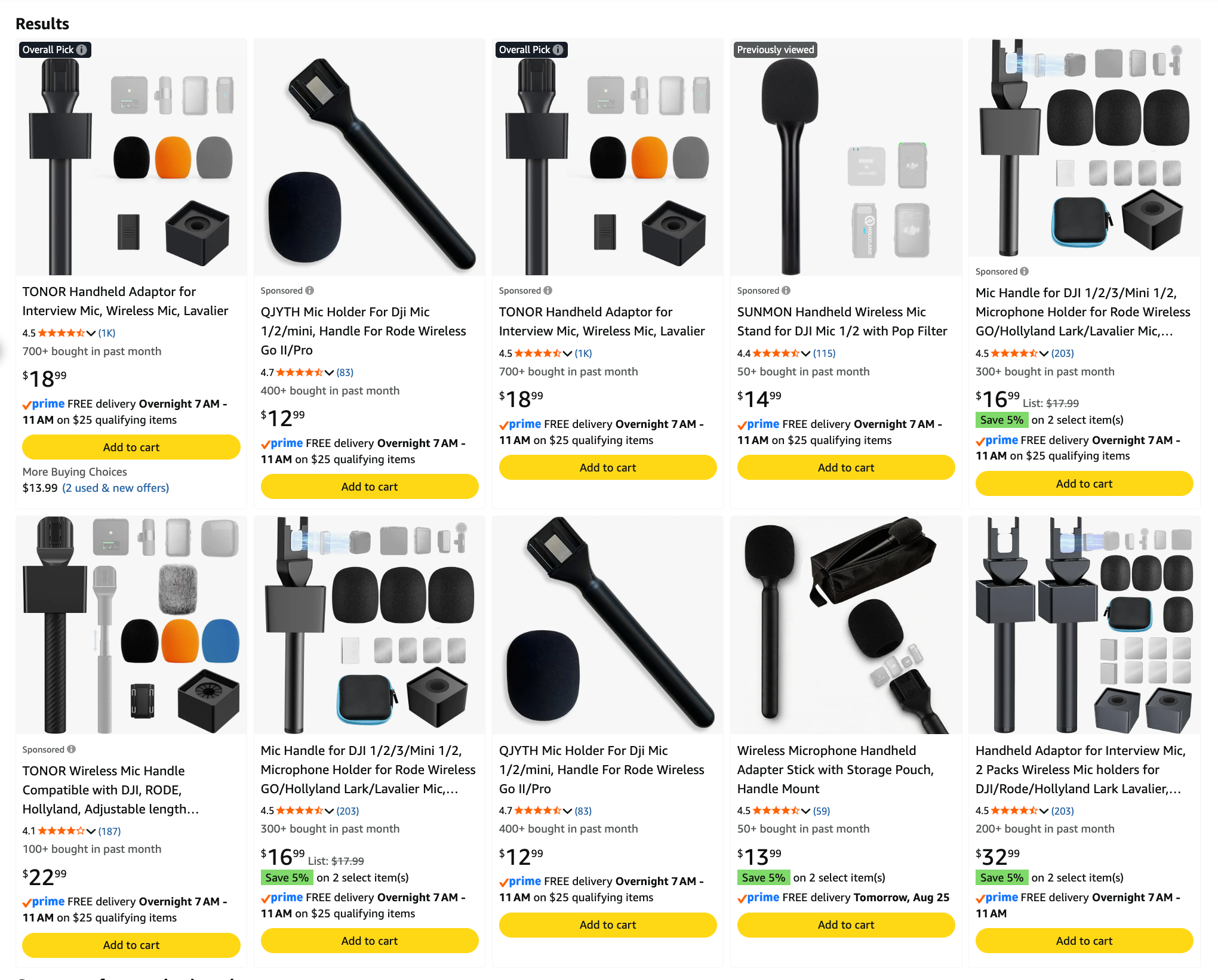
As the patent landscape for these simple mechanical devices remained relatively open, the market saw an influx of third-party manufacturers. Today, a spectrum of options exists, with prices starting as low as US$12. These generic handles, such as the Fukaisu Y37009, have democratized the accessory. While they lack the premium branding of a major audio house, they offer identical functionality: a secure fit, an ergonomic grip, and a windscreen mount.
Supporting Data: Examining the Fukaisu Y37009
To understand the utility of these budget-friendly tools, one must look at the real-world application of a typical unit. The Fukaisu Y37009 serves as a perfect case study for the modern independent producer.
Priced under US$12, the unit arrives as a plastic chassis designed for durability and ease of use. It includes two unbranded windscreens. For a journalist or podcaster, this is a significant value proposition. If a creator wants to brand their production, they can easily swap the generic foam for a custom-printed windscreen.
During a recent deployment at the 40th Hispanic Theatre Festival in Miami, the Fukaisu handle was put to the test. When tasked with capturing high-quality audio for CapicúaFM following a theatrical performance, the setup proved seamless. By pairing the handle with a compact wireless transmitter, the user achieved a professional presence that encouraged interview subjects to speak clearly, while ensuring the audio signal remained crisp and free from the interference often associated with handheld mics held too far from the source.
The Aesthetic and Functional Debate: Windscreens vs. Mic Flags
A common point of contention among veteran field reporters is the choice between using a traditional mic flag (a hard plastic cube) and a branded windscreen.
The Case for Branded Windscreens
Modern preference is shifting toward branded windscreens. A custom-printed foam cover serves two purposes: it acts as a wind-diffuser and provides high-visibility branding. Unlike a rigid mic flag, which can add significant weight and change the center of gravity of a lightweight handle, a branded windscreen keeps the setup balanced and aerodynamic.
The Nostalgia of the Mic Flag
Despite the practical advantages of foam, some creators cling to the traditional mic flag. It is a visual shorthand for broadcast journalism, harkening back to the era of large-diaphragm dynamic microphones. While some handles come equipped with a slot for a cube, the weight distribution can be cumbersome. However, for those conducting interviews where the "look" of the equipment is as important as the audio quality, the cube remains a staple of industry tradition.
Implications for the Future of Field Production
The democratization of these handles has profound implications for the audio industry.
Lowering the Barrier to Entry
When professional-grade audio can be captured with a total investment of under US$200 (including the transmitter and handle), the barrier to entry for high-quality journalism is effectively removed. Small-scale news outlets and independent podcasters can now produce content that matches the visual and sonic quality of large networks.
Professional Confidence
There is a psychological component to the microphone handle that cannot be overlooked. When an interviewer holds a proper handheld microphone, the interviewee instinctively knows how to behave. They speak closer to the source, project their voices more clearly, and treat the interaction with more gravitas. Using a "naked" transmitter often leads to awkward positioning, as the subject is unsure where to focus their voice. The handle restores the natural rhythm of the interview.
Compatibility and Customization
The modularity of these handles means that as technology evolves, the handles remain relevant. Because they are essentially physical housings, they are largely "future-proof." As long as manufacturers keep the form factor of their wireless transmitters roughly similar, these handles will continue to be a standard tool in the kit.
Official Responses and Industry Outlook
While manufacturers of the transmitters themselves (such as DJI or RØDE) often produce their own handles, they have remained largely quiet regarding the third-party ecosystem. This silence is telling; they recognize that third-party handles increase the utility of their primary products. By allowing a user to turn a lavalier mic into a handheld, these companies see an increase in the adoption of their wireless systems for field work.
Industry analysts note that as the "Creator Economy" continues to mature, the demand for modular, field-ready gear will only grow. We are likely to see more "hybrid" accessories—handles that include built-in charging, integrated low-cut filters, or even improved mounting systems for smartphones, effectively turning a smartphone into a full-scale mobile broadcast unit.
Conclusion
The evolution of the wireless transmitter handle is a testament to the ingenuity of the modern production community. What began as a proprietary, single-brand accessory has blossomed into a vibrant market of affordable, functional, and highly effective tools.
For the professional, the ability to transition from a hidden, discreet lavalier setup to an authoritative, professional-looking handheld interview kit within seconds is a game-changer. As we move forward, the "Lav Mic Handle" will likely remain a fixture in every gear bag, proving that sometimes, the most effective solutions are the simplest ones. Whether you are covering a local festival, recording a podcast on the move, or conducting high-stakes field interviews, the humble handle ensures that your audio is not only heard—it is seen.
FTC Disclosure: This article was produced independently. The author purchased the Fukaisu Y37009 and associated branding materials using personal funds. No sponsorships, affiliate agreements, or NFR (Not for Resale) units were utilized in the creation of this report. Some manufacturers mentioned may have professional relationships with the author regarding translation or consulting, but those relationships do not influence the technical assessments provided here. All opinions expressed are those of the author.
