
Down to the Wire: How a Netflix Documentary and Last-Minute Advocacy Finally Secured Leonard Peltier’s Freedom
With a mere 16 minutes left in Joe Biden’s presidency, supporters of Native American activist Leonard Peltier were bracing for disappointment. As the outgoing commander-in-chief took his seat at the inauguration of Donald Trump on January 20, 2025, no official word on clemency had been issued. For nearly five decades, Peltier had remained locked inside a federal prison, his name synonymous with one of the most polarizing and contested legal battles in modern American history.
Then, abruptly, an announcement materialized on the White House website. President Biden had commuted Peltier’s sentence, granting a dramatic, eleventh-hour reprieve to the 80-year-old activist.
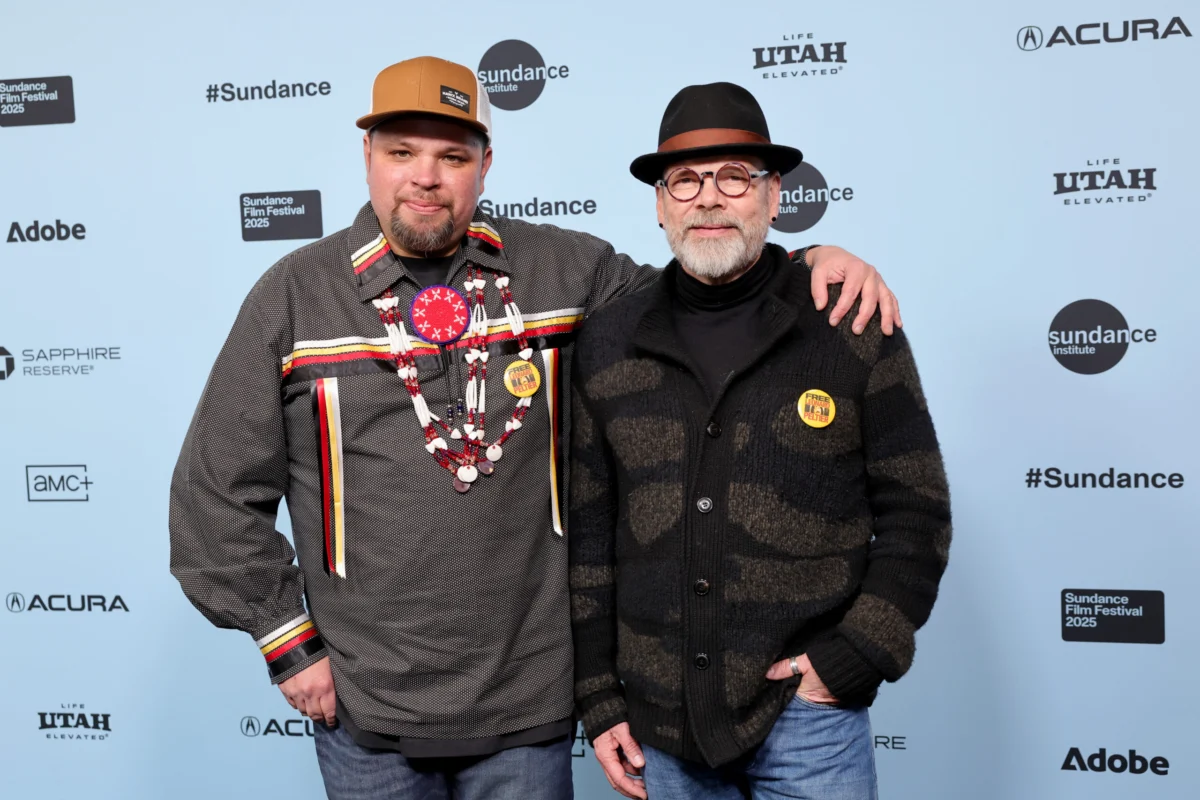
This tense, emotional countdown serves as the climax of Free Leonard Peltier, a powerful new documentary directed by Jesse Short Bull and David France, now streaming on Netflix. Yet the film is far more than a passive recording of history. Months before its release, the project served as a catalytic tool, shifting public policy discussions and helping build the critical momentum required to pry open the administration’s tightly guarded door.

Main Facts: The Case, the Conviction, and the Climax
Leonard Peltier, a prominent member of the American Indian Movement (AIM), was convicted in 1977 for the 1975 fatal shootings of FBI agents Jack Coler and Ronald Williams during a violent shootout on the Pine Ridge Indian Reservation in South Dakota. Sentenced to two consecutive life terms, Peltier has maintained his innocence for nearly 50 years.
The documentary aggressively interrogates the integrity of Peltier’s trial, highlighting systemic flaws that plagued the prosecution from its inception. These included coerced affidavits extracted from a witness who had never met him—documents subsequently used to secure his extradition from Canada—and a trial environment where Peltier was barred from mounting a self-defense claim. Ironically, that exact legal strategy successfully secured the acquittals of two of his co-defendants.
While the Federal Bureau of Prisons consistently barred filmmakers from conducting fresh interviews with Peltier—muzzling him publicly since the early 1990s—co-directors Short Bull and France meticulously curated an extensive archive. They pieced together a comprehensive master interview from historical footage, revealing a resilient, charismatic figure whose spirit remained unbroken despite decades behind bars.

Chronology of a Miracle: From Capitol Hill to a Florida Prison Gate
The path to Peltier’s commutation was a high-stakes, unpredictable gauntlet. Co-director David France estimated that just weeks before the announcement, the likelihood of the Biden administration acting on the case hovered below 30 percent.
- Early December 2024: Seven weeks before the end of the presidential term, filmmakers screened a rough cut of Free Leonard Peltier for lawmakers and congressional staffers on Capitol Hill. Moving past stacks of dense legal documents, the raw, unvarnished human narrative galvanized viewers, pushing policymakers into rapid advocacy.
- January 20, 2025 (Inauguration Day): As the clock ticked down, anxiety peaked. David France waited anxiously outside the federal prison in Florida, while Jesse Short Bull monitored developments from South Dakota. With minutes remaining in the administration, the official commutation notice flashed on the White House website before the page vanished forever to make way for the incoming administration.
- February 18, 2025: Peltier walked out of prison, returning home to Belcourt, North Dakota, where he serves the remainder of his commuted sentence under terms restricting him from traveling more than 100 miles without official approval. Director David France greeted Peltier at the tarmac, witnessing a homecoming scene where thousands of supporters braved brutal 35-below-zero temperatures to welcome him back.
Supporting Data and Behind-the-Scenes Insights
The production of Free Leonard Peltier was fraught with institutional and cultural friction. The Federal Bureau of Prisons flatly and repeatedly denied access to Peltier without explanation, a continuation of decades of administrative silence. Furthermore, the shadow of the FBI cast apprehension over the production team.
"The team was concerned, especially our Indigenous team members," France notes. "The FBI is alive in Indian country, and the fear of the FBI is genuine in Indian country. But we pressed forward."

Securing rare archival material required unprecedented coordination. Producer Bird Runningwater, who spent two decades managing Indigenous programs for Sundance, admitted that even he was stunned by the recovered footage—materials so extensive they could have easily populated a multi-part docuseries on the American Indian Movement. Instead, the filmmakers chose to narrow their lens tightly onto Peltier’s character, his motivations, and his personal ordeal.
Despite the gravity of his situation, Peltier’s personal reaction to his freedom was characteristically understated. When finally informed of his commutation over the phone, his response was a laconic, "Cool."
Recalling a visit with Peltier just 24 hours prior, France shared, "I said, ‘Some people say it’s going to happen, some people say it’s not going to happen.’ He goes, ‘Don’t worry, don’t worry… I’ve been let down by five presidents. Five administrations have promised to get me out, and they haven’t. This one might be no different, and I’ll just keep trying.’"

Official Responses and Tribal Perspectives
The reaction to the commutation highlighted deep-seated complexities in the relationship between the federal government and Native American nations.
Producer Jhane Myers expressed gratitude toward President Biden, particularly noting the historic significance of the administration taking accountability for the federal Indian boarding school system. However, local tribal leaders and veterans of tribal governance remain cautiously pragmatic.
Jesse Short Bull, drawing from his background working within tribal government, observed that optimism in Indian country is routinely tempered by historical disappointments. "People get optimistic, but they know that they might get the short end of the stick," Short Bull reflected. "Two steps forward, two steps back. But I really appreciate Biden’s administration working with the Oglala Sioux Tribe."

David France echoed the sentiment that systemic institutional change requires far more than symbolic gestures. "I think so much more has to happen than just apologies," France argued, pointing to Short Bull’s previous film, Lakota Nation vs. United States, as a vital historical reckoning. Together, these cinematic works challenge global audiences to confront the systematic destruction of Indigenous culture and evaluate the heavy price of cultural reconstruction.
Broader Implications for Justice and Activism
The release of Leonard Peltier and the cultural impact of Free Leonard Peltier underscore the potent intersection of documentary filmmaking and political advocacy. While the directors are quick to deflect praise—insisting that the true victory belongs to the relentless coalition of grassroots advocates who fought for decades—the film proved to be the tipping point. When traditional legal appeals stalled, the unvarnished visual storytelling bridged an empathy gap that conventional legal briefs simply could not cross.
As Peltier adjusts to life in North Dakota, surrounded by community members and loved ones who waited nearly half a century for his return, his story stands as a monumental testament to endurance. Free Leonard Peltier is currently streaming on Netflix, serving as both an archival masterclass and an urgent reminder of the cost of systemic injustice in America.
