
The Vanishing Point: Why Cinema Fails the Woman in Her Late Thirties
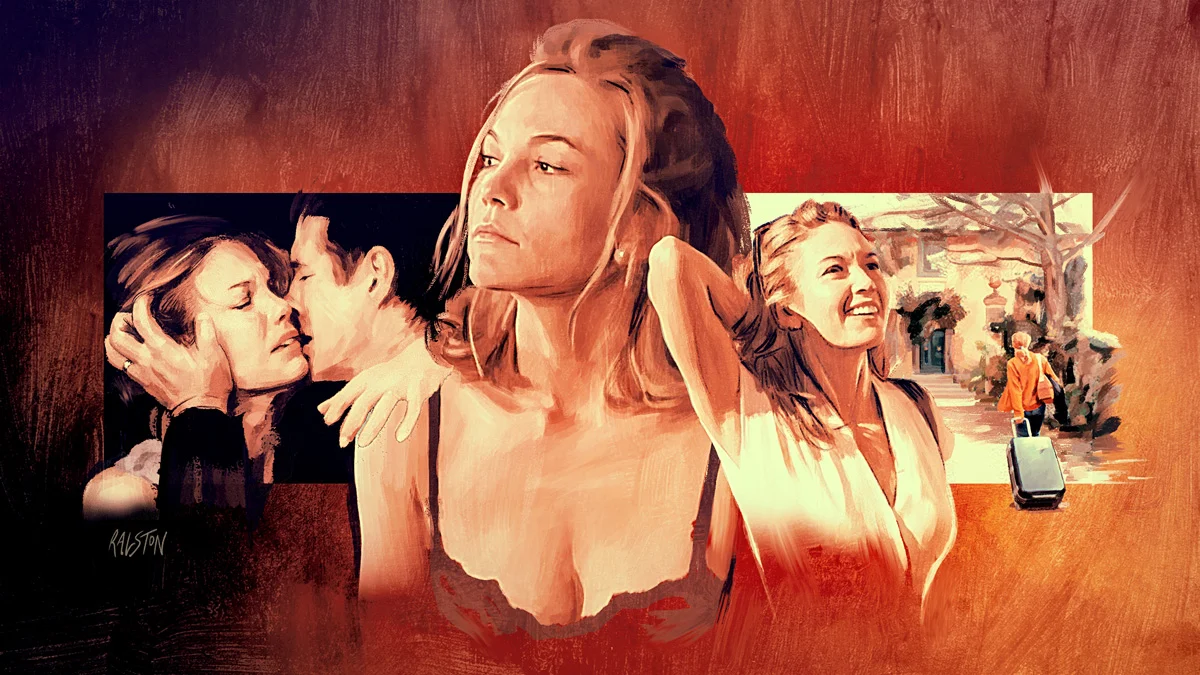
At 37, approaching 38, a woman finds herself standing on a threshold that the film industry seems determined to ignore. It is a period of profound internal recalibration—a "hormonal hold and release" that strips away the anxieties of youth, leaving behind a version of the self that is sharper, more selective, and decidedly more resilient. Yet, as women reach this peak of self-actualization, they often find themselves erased from the cultural record. In the landscape of modern cinema, the woman in her late thirties is frequently sidelined, infantilized, or treated as a cautionary tale.
This absence is not merely an artistic oversight; it is a systematic failure to document the most transformative years of a woman’s life. By examining the career of Diane Lane—specifically her dual turns in 2002’s Unfaithful and 2003’s Under the Tuscan Sun—we can map the divergent paths of this demographic: the impulse to destroy one’s life versus the labor of building it anew.
The Cultural Vacuum: Why Women Disappear from the Screen
The trajectory of female representation in film typically follows a rigid, binary arc. We are inundated with stories of teenage ingenues or young women navigating the turbulence of early adulthood. Then, a black hole opens. Women in their late thirties—the years of maximum intellectual and emotional maturity—are rarely the protagonists of their own thriving narratives.
When they do appear, they are often cast as mothers of rebellious teenagers, "infantilized messes," or archetypal "psychopaths" poised on the edge of a breakdown. The industry, still dominated by male perspectives, seems to fear or resent this demographic. Perhaps it is because a woman who has reached a state of "out-of-fucks" indifference is inherently untameable. To spotlight the metamorphosis of a woman in her late thirties would be to reset the audience’s understanding of the world, challenging the tired tropes that equate youth with value and stability with stagnation.
Chronology of Two Lives: The Lane Archetypes
In the early 2000s, Diane Lane provided a rare, dual-lens view of this specific age group. Though filmed only a year apart, Unfaithful and Under the Tuscan Sun function as mirror images of the female psyche in transition.
Unfaithful: The Impulse to Destabilize
Directed by Adrian Lyne, Unfaithful captures the "privileged impulse" of Connie, a woman living in a grey-scale Westchester suburb. Connie is the quintessential "ideal" woman—ordered, feminine, and deeply embedded in a domestic life that is comfortable but stagnant. When she strikes up an affair with a mysterious rare-book dealer, the film acts as a study in the volatility of mid-life longing.
The affair is not a simple betrayal; it is an act of existential rebellion. Connie’s thrill stems from the fact that she is finally being seen as an object of desire, untethered from her roles as mother or wife. However, the film serves as a brutal warning: the destruction of the status quo through infidelity leads only to tragedy. The "mahogany-colored" heat of her affair results in the murder of her lover by her husband, Ed, and the permanent scarring of her domestic life. For the viewer, Connie’s story serves as a reminder that the answer to boredom need not be destruction.
Under the Tuscan Sun: The Labor of Reconstruction
Conversely, Under the Tuscan Sun offers the restorative counterpart to Unfaithful. When Frances Mayes’ life collapses—her husband leaves her, and she loses her home—she does not seek a destructive escape. Instead, she moves to Italy and embarks on the painstaking, physical labor of renovating a dilapidated villa.
Unlike Connie, who seeks validation through external desire, Frances learns to "live spherically," as the film’s character Katherine suggests. She builds a community, hires local labor, and finds beauty in the mundane. The lesson here is profound: happiness is not something you are "given" by a partner; it is something you cultivate through effort, friendship, and the refusal to let a heartbreak dictate the remainder of your story.
Supporting Data: The Statistics of Visibility
While qualitative analysis of these films highlights the thematic divide, the quantitative reality of the industry remains stark. According to research from the Geena Davis Institute on Gender in Media, the "age-gap" for women in lead roles remains significant compared to their male counterparts. While men are frequently cast as protagonists well into their 50s and 60s, female protagonists see a precipitous drop-off after age 35.
This is not a reflection of audience demand, but a product of studio-level gatekeeping. The "serums and procedures" sold to women to "reverse" their age are mirrored in the casting suites of Hollywood, where the fear of "dissipating value" dictates that women must either remain in a state of ageless amber or disappear until they are old enough to play the grandmother.
Industry Perspectives: The Fear of the Unseen
Industry insiders, speaking on condition of anonymity, often suggest that the lack of stories for women in their late thirties is driven by a fear of the "complexity" of the demographic. "A woman who is self-actualized, financially stable, and sexually autonomous is a difficult lead character for a conventional, plot-driven studio film," notes one veteran screenwriter. "She doesn’t need to be saved, and she doesn’t need a man to complete her journey. That lack of ‘need’ scares executives who rely on traditional tension-and-resolution models."
This "fear" is also a form of erasure. By refusing to document the middle-aged transition, the industry denies women the cultural template necessary to understand their own lives. Without art to normalize the shift in priorities, many women fear that their internal changes—the fading of certain ambitions, the rise of new, quieter desires—are signs of failure rather than evolution.
Implications: Building the House
The implications of this cultural absence are far-reaching. When women do not see their lived experiences reflected in art, they are forced to navigate their thirties without a roadmap. They are left to wonder if the "disruptions" they feel are the end of the road, rather than the beginning of a new chapter.
As the narrative of the "vanishing woman" persists, the necessity for stories that portray women as thriving, rather than just surviving, becomes urgent. We need more Frances Mayes—women who build houses, both literal and metaphorical—and fewer characters defined solely by their proximity to a man.
Ultimately, the lesson of these two films is a powerful one: the "butter-yellow wood" of mid-life is a place where you can choose to either burn your life down or build a new one from the debris. It is time for cinema to catch up to the reality that for many women, the late thirties are not a "vanishing point," but the moment the real story finally begins. As Frances Mayes reflects at the end of her journey, "Unthinkably good things can happen, even late in the game." It is a lesson the film industry would do well to learn.
