
The Future of Fright: Ti West and Apple Redefine Immersive Horror with ‘Remnants’
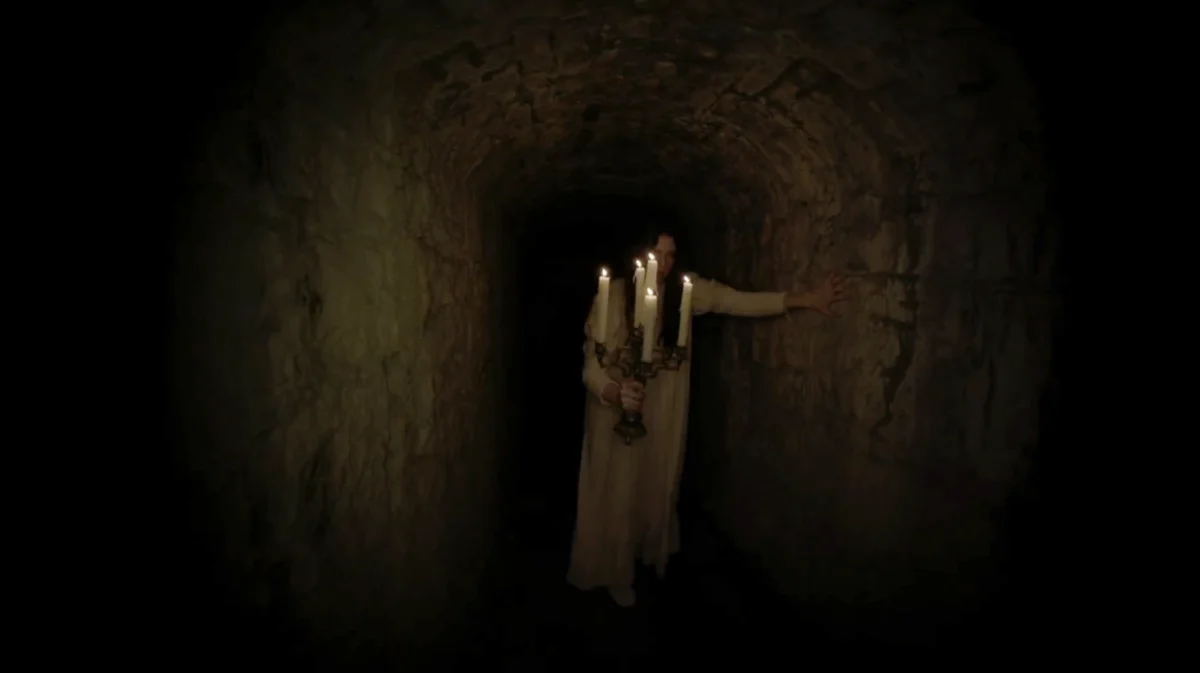
In the evolving landscape of digital entertainment, the boundary between the viewer and the viewed is rapidly dissolving. This evolution reaches a chilling new milestone on October 16, as acclaimed filmmaker Ti West—the visionary behind the X trilogy and The House of the Devil—unveils his latest project, Remnants. This 27-minute ghost story is not merely a film; it is Apple’s first foray into truly immersive horror, designed exclusively for the Apple Vision Pro headset. By transporting audiences directly into the decaying, spectral hallways of Woldmere Castle, West is challenging the conventions of traditional cinema and pioneering a new grammar for the horror genre.
Main Facts: Stepping Into the Nightmare
Remnants represents a significant departure from the static frame of traditional cinematography. Directed and written by Ti West, the project utilizes the high-fidelity spatial capabilities of the Apple Vision Pro to place the audience at the center of a haunted narrative.
The premise is deceptively simple: viewers are invited to explore the dark, forgotten corners of Woldmere Castle, a structure steeped in secrets and spectral manifestations. Unlike a standard movie where the camera dictates the focal point, Remnants allows the viewer to physically turn their head and interact with the environment, creating a sense of presence that 2D screens cannot replicate. The project is confirmed to be a 27-minute experience, a duration that West has carefully calibrated to maintain the intensity of a high-stakes horror sequence without the fatigue often associated with prolonged virtual reality exposure.
The Chronology of a Visionary: From ‘The Innkeepers’ to ‘Remnants’
Ti West’s career has been defined by a deep respect for horror tradition combined with a persistent desire to experiment with pacing and atmosphere. To understand the significance of Remnants, one must look at the trajectory of his filmography.
In his early works, such as The House of the Devil (2009) and The Innkeepers (2011), West established himself as a master of the "slow burn." He understands that horror is not merely about the jump scare, but about the spatial relationship between the protagonist and their environment. By utilizing long, tracking shots and meticulous production design, he forced audiences to scan the screen for threats, effectively training them for the immersive experience he would eventually craft in Remnants.
Following his critically acclaimed X trilogy, which revitalized the slasher genre by rooting it in character-driven narratives, West’s pivot to immersive technology feels like a natural progression. The transition from the 1970s-inspired aesthetics of X and Pearl to the cutting-edge spatial computing of the Vision Pro highlights West’s adaptability. While he has other high-profile projects in the pipeline—most notably the upcoming Ebenezer starring Johnny Depp—Remnants serves as a technological proof-of-concept for the future of Apple’s entertainment division.
Supporting Data: The Psychology of Spatial Horror
Why is Remnants being heralded as a potential game-changer? The answer lies in the physiological impact of immersive media. Traditional film relies on the "fourth wall," a psychological barrier that keeps the viewer safe in their seat. When that wall is dismantled through spatial computing, the brain’s response to fear changes.
Studies in immersive media suggest that "presence"—the subjective feeling of being in a virtual space—increases the intensity of emotional responses. When a door creaks behind the viewer in a 2D film, the viewer observes the character’s reaction. In Remnants, the sound is spatialized, triggering an instinctive, localized reaction. The viewer is no longer watching a haunted castle; they are trespassing in one.
Apple’s promotional strategy for Remnants has leaned heavily into this psychological component. The recently released "Reaction Trailer" features real-time footage of viewers experiencing the film. Their flinches, nervous laughter, and physical attempts to pull away from unseen entities serve as a testament to the efficacy of the medium. By highlighting the visceral nature of the experience, Apple is effectively positioning the Vision Pro not just as a productivity tool or a movie-watching device, but as a gateway to "experiential cinema."

Official Responses and Industry Implications
The collaboration between Ti West and Apple has sparked intense industry speculation. While the exclusivity of Remnants to the Apple Vision Pro limits its immediate reach to the headset’s current user base, it serves a broader strategic purpose. Apple is attempting to cultivate a premium ecosystem where "Immersive Video" becomes the gold standard for high-end horror.
"We are moving past the era of the passive audience," notes industry analyst Marcus Thorne. "By partnering with a director like Ti West, who has a proven track record of manipulating viewer expectations, Apple is signaling that they are not just providing a screen—they are providing an architecturally controlled nightmare."
West himself has remained characteristically understated regarding the technical requirements of the film, focusing instead on the narrative possibilities. In interviews, he has emphasized that the technology is simply a "larger canvas." For West, the challenge was not learning how to use the cameras, but learning how to direct an audience that can look anywhere at any time. This shift requires a new form of "environmental storytelling," where clues, shadows, and subtle audio cues replace the traditional close-up shot to guide the viewer’s attention.
Implications for the Future of Horror
The implications of Remnants extend far beyond a 27-minute short film. If this project proves successful, it may trigger a paradigm shift in how horror franchises are developed. We could see a future where major horror releases include an "immersive expansion" or where standalone short-form immersive experiences become a standard component of theatrical marketing campaigns.
Furthermore, this move places Apple in direct competition with the gaming industry. Horror games have long held a monopoly on immersive terror, but Remnants blurs the line between a narrative film and a horror game. By stripping away the need for controller inputs and focusing entirely on cinematic pacing and atmosphere, Apple is carving out a niche that appeals to cinephiles who want the interactivity of gaming without the mechanical complexity.
However, challenges remain. The high cost of entry for the Apple Vision Pro means that for the time being, this form of horror is a luxury experience. There is also the question of endurance; can a full-length feature film sustain this level of immersion without exhausting the viewer? At 27 minutes, Remnants is perfectly timed to answer these questions without overstaying its welcome.
Conclusion: A New Frontier
As October 16 approaches, the horror community is watching closely. Remnants is more than a technical showcase; it is an experiment in human psychology. Ti West, a filmmaker who has spent his career refining the art of the scare, is now testing the limits of what happens when the screen disappears.
Whether or not the audience is ready for such a direct, unmediated encounter with the supernatural remains to be seen. But one thing is clear: the haunted castle of Woldmere is open for business, and for those who choose to step inside, the experience promises to be one of the most transformative horror events of the decade. As technology and artistry continue to collide, Remnants stands as a chilling, visionary testament to where the genre is headed: into the room with us.
