
Beyond the Brand: Why Genre-Bending Sequels Like The Exorcist III Are Cinema’s Lost Treasures
In the landscape of modern Hollywood, a sequel is rarely viewed as a creative opportunity. Instead, it is treated as a "brand extension"—a product designed to deliver the exact same dopamine hit as its predecessor, wrapped in familiar aesthetics and recycled plot beats. However, history offers a handful of fascinating outliers that suggest a different path. Some of the most visionary filmmakers have attempted to use sequels not to replicate an experience, but to transplant beloved characters into entirely new genres.
The most famous of these "what-ifs" remains the aborted vision for Airplane II. While the film we eventually received was a conventional, underwhelming disaster-movie spoof, the original concept from David Zucker, Jim Abrahams, and Jerry Zucker (ZAZ) was radical: Airplane II: The Godfather. The idea was to take the established characters of the 1980 hit and drop them into a mob-family drama. It was a bold attempt to maintain the soul of the characters while completely reinventing the sandbox in which they played.
This same creative ambition fueled William Peter Blatty when he approached the follow-up to his landmark horror masterpiece, The Exorcist. By shifting the focus from demonic possession to a meditative, supernatural police procedural, Blatty crafted a sequel that was as misunderstood as it was brilliant.
The Chronology of a Cult Classic
To understand the trajectory of The Exorcist III, one must first acknowledge the shadow cast by the original 1973 film. Directed by William Friedkin and written by Blatty, The Exorcist was more than a movie; it was a cultural phenomenon that defined the horror genre for decades. It established the "possession" template—the helpless child, the desperate family, and the ultimate theological confrontation between good and evil.
Following the critical and commercial disaster of 1977’s Exorcist II: The Heretic—a film famously disowned by Blatty—the franchise was effectively radioactive. When Blatty returned to the series, he didn’t want to make The Exorcist II: Part 2. He wanted to tell a story about Lieutenant William Kinderman, the philosophical, chain-smoking detective who had provided a grounded, human heartbeat in the original film.
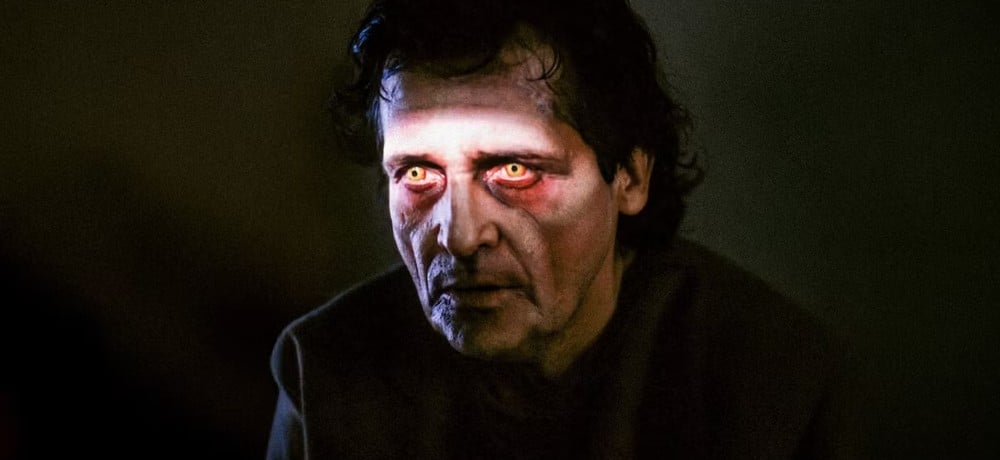
In 1983, Blatty published Legion, a novel that functioned as a direct sequel to the events of The Exorcist but abandoned the "possession" format entirely. It was a cold-blooded murder mystery set in the corridors of a psychiatric hospital, centered on a series of grisly crimes that mirrored the style of the "Gemini Killer," a murderer who had been executed years prior.
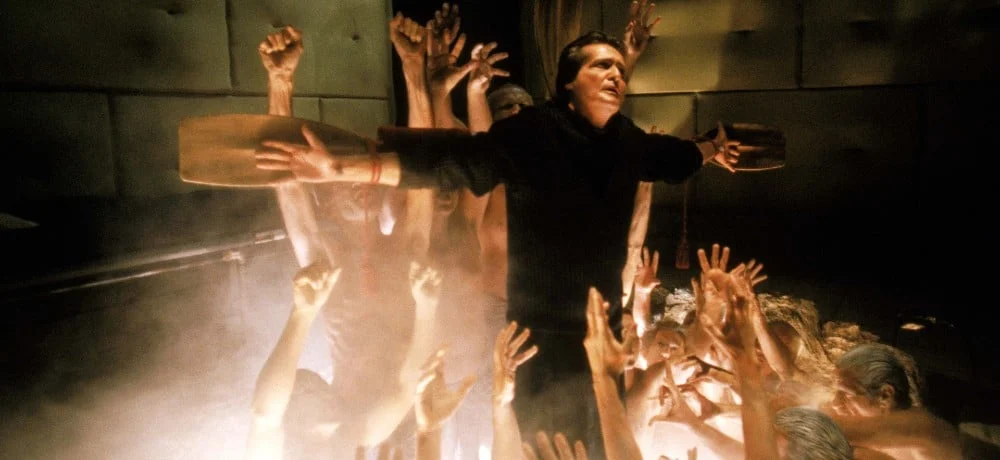
By the time the film adaptation hit theaters in 1990 under the title The Exorcist III, the project had been heavily compromised. Faced with studio pressure to ensure the film felt like an Exorcist movie, Blatty was forced to pivot. The resulting film is a fascinating, jagged hybrid: a cerebral, dialogue-heavy investigation that abruptly pivots to a supernatural exorcism in its final act.
Supporting Data: A Struggle of Expectations
The disconnect between Blatty’s vision and the market’s demand is etched into the film’s financial history. When The Exorcist III premiered on August 17, 1990, it actually performed well initially, opening at number one with $9.31 million. However, the word-of-mouth was polarizing.
Audiences expecting another Regan MacNeil-style demonic spectacle were confronted with lengthy, philosophical debates and a slow-burn detective story. The film’s second-weekend box office plummeted by over 60%. By the end of its run, it had grossed only $22.7 million domestically—significantly less than the universally panned Exorcist II: The Heretic.
The critical reception mirrored the box office woes. Reviews were starkly divided. Traditionalists lamented the lack of visceral, "shock-horror" moments, while critics who appreciated the nuance of Blatty’s writing found the final, studio-mandated exorcism sequence to be a jarring, unnecessary addition. Yet, the data tells a different story today. In the decades since, the film has undergone a massive critical reappraisal, consistently appearing on "Best Horror" lists and finding a massive cult audience that views it as the true, superior successor to the original.
Official Responses and Creative Compromises
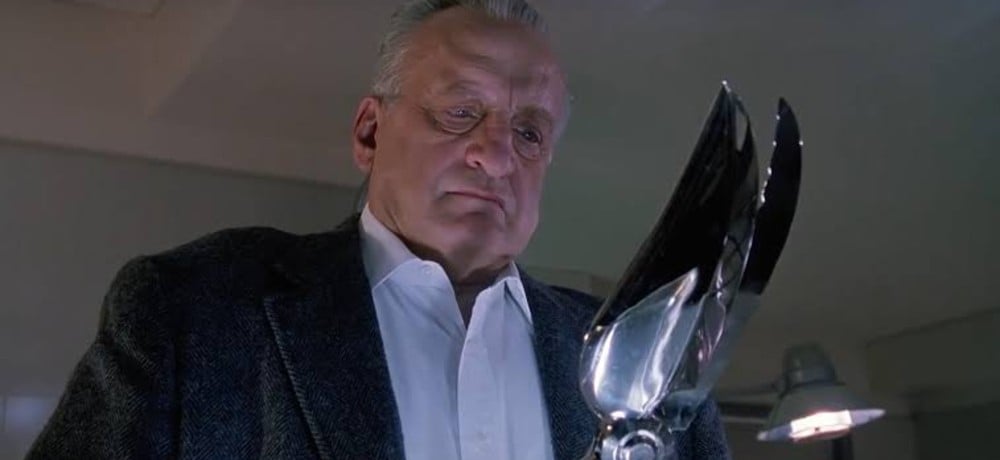
The tension behind the scenes of The Exorcist III highlights a recurring theme in the film industry: the battle between creative intent and brand management. Blatty, who both wrote and directed the film, famously debated the need for the exorcism finale. In a 1989 interview with the Los Angeles Times, Blatty admitted that he included the sequence to appease the studio, but he remained steadfast that the film’s strength lay in its atmosphere and the character of Kinderman, played with weary brilliance by George C. Scott.
The studio, Morgan Creek Productions, viewed the property through a lens of risk mitigation. They had invested heavily in a franchise name and believed that the audience would revolt if they weren’t given the specific "product" promised by the title. This is the "label" trap. By forcing a conventional climax into a non-conventional story, they inadvertently created a film that felt like two different movies stitched together.
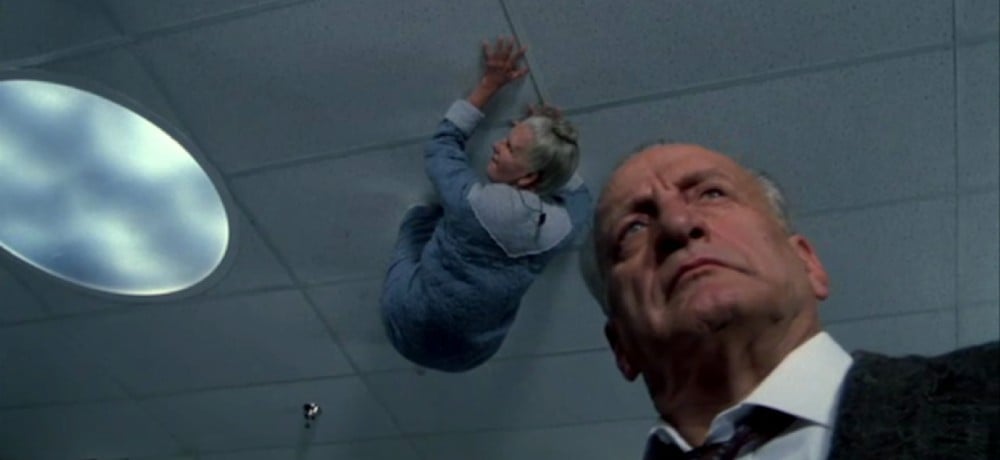
However, even with these compromises, the film produced one of the most celebrated moments in horror history: the hospital corridor jump scare. This scene serves as a masterclass in subversion. It relies on a long, static shot, minimal sound design, and the audience’s own patience. It is the antithesis of the loud, kinetic scares of the 1980s. It is a moment of pure, calculated tension—the signature of a director who understood that the most terrifying thing is not a demon, but the uncertainty of the shadows.
Implications: The Death of the Franchise?
The story of The Exorcist III serves as a cautionary tale for modern studios. When we treat franchises as rigid brands, we suffocate the very creativity that made the original film a success.
1. The "Brand Handcuffs"
When a brand becomes too large, the audience’s expectations become "creative handcuffs." If a studio makes an Alien movie, the audience demands face-huggers and chest-bursters. If a studio makes an Exorcist movie, they demand head-spinning and green pea soup. This limits the story to a surface-level aesthetic, ignoring the deeper emotional resonance—the "essence"—of the original.
2. The Emotional Promise vs. The Formula
The most successful sequels are those that honor the "emotional promise" of the original while changing the setting. Blatty succeeded in Legion not because he repeated the story of a possessed child, but because he captured the feeling of helplessness in the face of absolute, incomprehensible evil. That is the essence of The Exorcist. By translating that essence into a police procedural, he respected the audience’s intelligence.
3. Marketing vs. Longevity
The marketing of The Exorcist III prioritized the short-term goal of "selling the label." This led to a lackluster theatrical run. However, the "experience" of the film—its atmosphere, its performances, and its philosophical depth—is what granted it a decades-long life. A film that succeeds on its own terms will always outlive a film that succeeds only because it fits a demographic’s preconceived notion of a brand.
Conclusion: Lessons for Future Filmmakers
The tragedy of Airplane II: The Godfather not being made is a loss for comedy, but the existence of The Exorcist III is a victory for horror. It remains a testament to the fact that directors and writers should be encouraged to take risks with established characters.
The most faithful sequel is often the one that trusts the audience enough to take them somewhere they haven’t been before. If we continue to view franchises as unchanging labels, we will continue to get diminishing returns. But if we allow for the "genre shift"—if we allow detectives to enter the world of demons or mobsters to enter the world of aviation—we might just find that the most compelling stories are the ones that refuse to repeat themselves.
As we look toward the future of cinema, the lesson remains clear: Stop selling the label. Sell the experience. Give the audience the characters they love, but give them a story they couldn’t have predicted. That is how you turn a sequel into a classic.
