
The Monster in the Living Room: Why Rob Savage’s ‘Other Mommy’ Deserves a Second Look
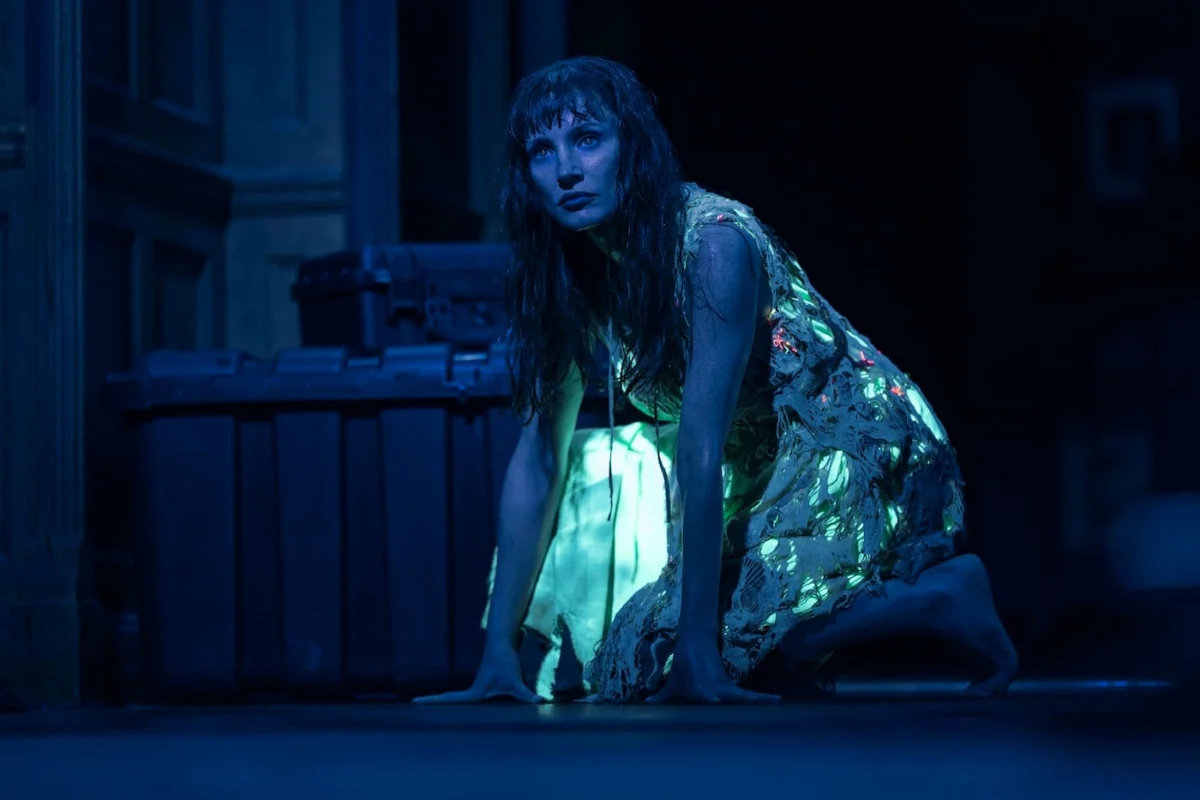
Welcome to Devil’s Advocate, a recurring series where we challenge the consensus, spotlighting horror cinema that defied expectation—for better or worse. Today, we peel back the layers of the most polarizing film of the year.
The ritual of the "Worst Of" year-end list has largely fallen by the wayside in modern horror criticism, and for good reason. Horror is, by its very nature, a subjective encounter. What registers as a harrowing masterpiece to one viewer can easily be dismissed as a hollow exercise in frustration by another. In the age of algorithmic hype, influencer-exclusive screenings, and the "trailer-for-a-trailer" marketing cycle, the gap between audience expectations and the final product has never been wider.
Nowhere is this phenomenon more evident than in Rob Savage’s Other Mommy. A film that has become a rare, paradoxical entity: a massive box-office success that has simultaneously been branded as the most disastrous horror release of the year. With a staggering 17% on Rotten Tomatoes and a D+ CinemaScore, the film has faced a level of critical vitriol usually reserved for unmitigated cinematic catastrophes. Yet, beneath the noise, a different picture emerges—one of a misunderstood, ambitious, and profoundly uncomfortable fable.
The Anatomy of a Backlash: Main Facts and Public Reception
The premise of Other Mommy, adapted from Josh Malerman’s celebrated novel Incidents Around the House, centers on the disintegration of the Martin family. The film features Jessica Chastain in a dual role—playing both the titular, spectral entity and the mother—alongside Jay Duplass as the patriarch, Russ. Their young daughter, Bela (newcomer Arabella Olivia Clark), finds her domestic life invaded by a supernatural force that seems to exist in the periphery of their home.
When the film hit theaters, the backlash was immediate and visceral. Critics labeled it "incomprehensible," "sloppy," and, most damningly, "not scary." Siddhant Adlakha, writing for Variety, captured the prevailing mood: "That’s about all that Other Mommy is to its audience too: an annoyance to be handwaved, rather than tension or meaning to be confronted at any stage."

In the theater, the reaction was equally polarized. While the film drew massive crowds, anecdotal reports from major markets described walkouts, audible groans, and, in some instances, outright booing during the credits. It is a rare horror film that provokes such an active, hostile response from its own target demographic.
Chronology of a Controversial Production
To understand the friction surrounding Other Mommy, one must look at the trajectory of its development. Rob Savage, following the breakout success of his digital-first horror experiments, was tasked with adapting Malerman’s dense, psychological source material.
- The Announcement: When it was revealed that Savage would adapt the novel, fans of Malerman’s work were optimistic. The book, known for its claustrophobic tension, seemed like a natural fit for Savage’s kinetic style.
- The Marketing Blitz: The promotional campaign leaned heavily into the "scare factor," with Savage famously promising the press that the film would contain over 50 distinct jump scares. This set a specific, perhaps impossible, bar for audiences.
- The Embargo Lift: As reviews began to surface, they focused heavily on the lack of traditional tension. The disconnect between the marketing promise of "non-stop scares" and the film’s actual, more deliberate pace created a "broken promise" narrative that poisoned the well before many even entered the theater.
- The Release: The theatrical window saw a frantic, disorienting experience for viewers. The film’s narrative structure—beginning in medias res without looking back—left many casual viewers feeling adrift, leading to the low audience scores that have defined its legacy.
Supporting Data: By the Numbers
The divide between the commercial performance and the critical reception of Other Mommy provides a fascinating study in modern film consumption.
- Rotten Tomatoes: The 17% critic score is low, but the 48% audience score suggests a segment of the population that found value where critics did not.
- CinemaScore: A D+ is a dismal grade for a wide-release horror film, indicating that the film failed to satisfy the "Saturday night crowd" that expects conventional genre beats.
- Comparative Analysis: Scream 7, released in the same calendar year, garnered a 30% critic score but held a 70% audience approval rating. This suggests that while Other Mommy struggled to connect, it did so because it challenged the audience’s expectations in a way that felt "wrong" to them, rather than simply being a poorly produced film.
Official Responses and Creative Intent
Rob Savage has remained largely quiet regarding the specific critiques of the film, though he has noted in various interviews that he sought to move away from the "standard" haunted house tropes popularized by the It franchise.
The screenwriter, Nathan Elston, made a deliberate choice to eschew the traditional "this isn’t real" second act common in supernatural horror. By forcing the audience to accept the reality of the Other Mommy within the first 15 minutes, Elston removed the comfort of the "is it a hallucination?" debate. While critics viewed this as a narrative failure—a missing piece of character development—it appears to have been a stylistic choice designed to mirror the overwhelming, non-linear trauma of a child witnessing the collapse of their parents’ marriage.

The Implications: A New Era of Genre Hybrids
Why does Other Mommy deserve a second look? The answer lies in its classification. If we view the film strictly as a "haunted house" horror movie, it undeniably fails to meet the criteria of sustained tension and "scares." However, when viewed through the lens of a dark coming-of-age fable, the film becomes something else entirely.
The Gothic Fable as a Coming-of-Age Vehicle
Much like Troy Nixey’s Don’t Be Afraid of the Dark (2010), which was also lambasted for its lack of traditional scares, Other Mommy uses supernatural elements as a metaphor for adolescent disillusionment. The monster is not just a monster; it is the manifestation of the moment a child realizes their parents are fallible, potentially dangerous, and altogether human.
The Disruption of Narrative Structure
The film’s refusal to provide a traditional "beginning, middle, and end" narrative is, for many, the source of its "incomprehensibility." Yet, this structure perfectly mimics the chaotic, disjointed nature of growing up. Bela’s emotional whiplash as she navigates the presence of the Other Mommy mirrors the internal crisis of a young person realizing that the world is hostile.
The Legacy of the "Kitchen-Sink" Approach
Savage’s approach to the film—an unclassifiable, kitchen-sink blend of Gothic horror, family drama, and surrealist imagery—represents a shift in how horror can be utilized to explore complex emotional themes. While it may not satisfy the need for a "jump-scare-a-minute" thrill ride, it offers a sophisticated, if messy, exploration of the end of innocence.
Conclusion: A Misunderstood Masterpiece?
Perhaps calling Other Mommy a masterpiece is a reach, but it is certainly not the cinematic "fart" that the public consensus has declared it to be. It is a film that demands a recalibration of the viewer’s expectations.

In a landscape where horror is often formulaic, Other Mommy stands out for its sheer refusal to play by the rules. It is a film that forces its audience to confront the "messy truths" of family, trauma, and the transition into adulthood. The monster may be gone by the time the credits roll, but the questions it raises about the fallibility of those we love will likely linger longer than any jump scare ever could.
If we look past the low scores and the vitriol, we find a film that—much like the character of Bela herself—is trying to find its footing in a world that is not quite what it seems. Sometimes, the most interesting movies are the ones that don’t quite know what they are, and in that uncertainty, they reflect the human experience far better than any polished, formulaic hit ever could.
