
Sunlight-Ready Versatility: An In-Depth Look at the New SWIT K7 7-Inch Cine Monitor
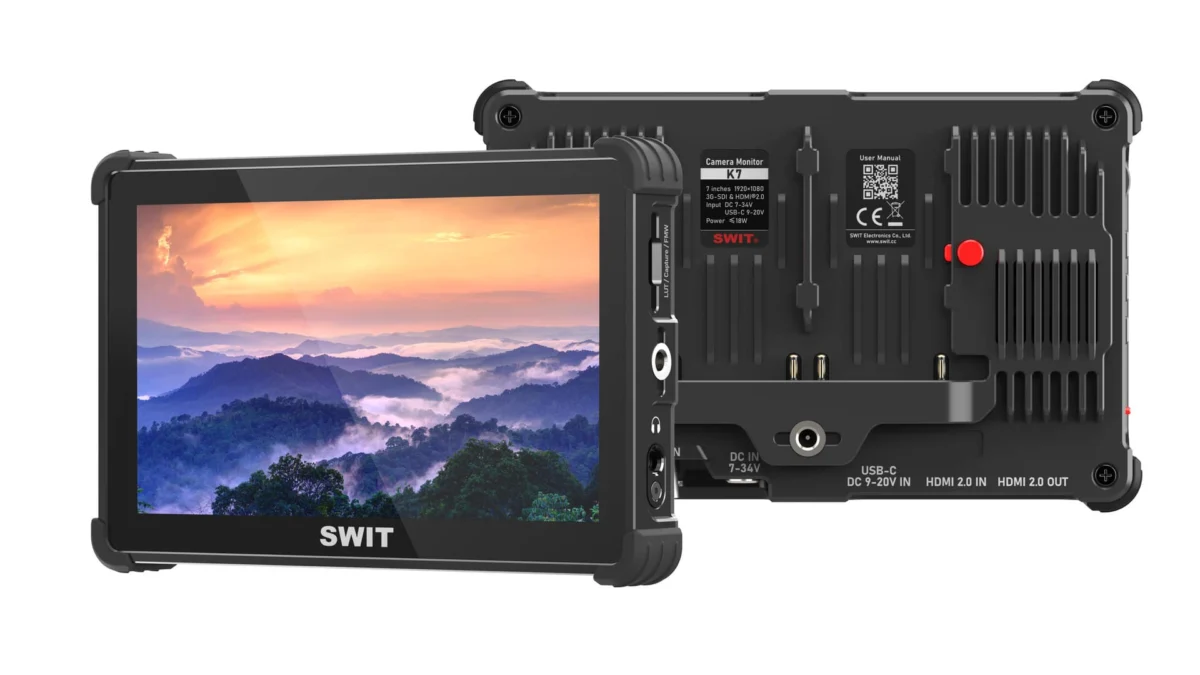
The landscape of on-set monitoring is shifting. As camera technology pushes into higher resolutions and wider dynamic ranges, the demand for monitors that can keep pace—while remaining usable under the punishing glare of direct sunlight—has reached a fever pitch. SWIT, a name long associated with robust broadcast and cinema power solutions, has officially entered the fray with the commercial release of the K7, a 7-inch touchscreen cine monitor that promises to bridge the gap between mirrorless accessibility and professional-grade SDI infrastructure.
Priced at €599, the K7 is positioned as a mid-range powerhouse. Its standout feature, an optically bonded 1920 x 1080 Full HD display capable of outputting a staggering 2800 nits of brightness, directly addresses the primary pain point for outdoor cinematographers: screen visibility.
Main Facts: The Technical Architecture of the K7
At its core, the SWIT K7 is designed to be the "Swiss Army Knife" of the camera department. Its physical construction is intentionally rugged, featuring an all-metal chassis reinforced with rubber corner guards to withstand the inevitable bumps of a fast-paced production environment.
Display Performance
The 7-inch panel utilizes optical bonding, a process that eliminates the air gap between the LCD and the protective glass. This not only increases contrast and color accuracy but significantly reduces glare. With a brightness rating of 2800 nits, the K7 is effectively "daylight viewable," allowing camera operators to pull focus and check exposure without needing a bulky sunhood in most outdoor scenarios.
Connectivity and Conversion
One of the most significant technical achievements of the K7 is its integrated signal conversion. The monitor features:
- HDMI 2.0 Input: Supports up to 4096 x 2160p60 signals.
- 3G/HD-SDI Input: Ensures compatibility with cinema-grade infrastructure.
- Built-in Conversion: The unit performs internal processing of 4K HDMI signals down to HD, outputting a clean 3G-SDI signal (up to 2048 x 1080p60).
For users shooting on mirrorless platforms like the Sony Alpha series or Canon EOS R-system, this feature is a game-changer. It allows the monitor to act as an active bridge, sending a signal downstream to larger production monitors or wireless video transmitters without the need for an external, battery-draining HDMI-to-SDI converter.
A Chronology of Development: From Concept to Market
The journey of the K7 has been one of iterative refinement. SWIT first teased a iteration of this monitor at NAB 2023, though that early prototype was rated at 1500 nits—a respectable figure, but one that falls short of the current industry standard for high-end outdoor production.
Observers noted that the 2023 prototype appeared to face delays, with many questioning whether the product would ever reach the retail market. It appears that the time between that initial NAB appearance and the current launch was spent by SWIT’s engineering team significantly overhauling the backlight technology to hit the 2800-nit target. By delaying the release, SWIT effectively transitioned the K7 from a "good" monitor into a "best-in-class" contender for its price point. The official launch at the most recent NAB cycle solidified the K7’s place in the company’s roadmap, proving that the firm had moved past the prototype phase and into mass manufacturing.
Supporting Data: Power, Interface, and Tools
The Power Trifecta
Flexibility is the K7’s secondary hallmark. It is rare to see a monitor that handles power with such versatility:
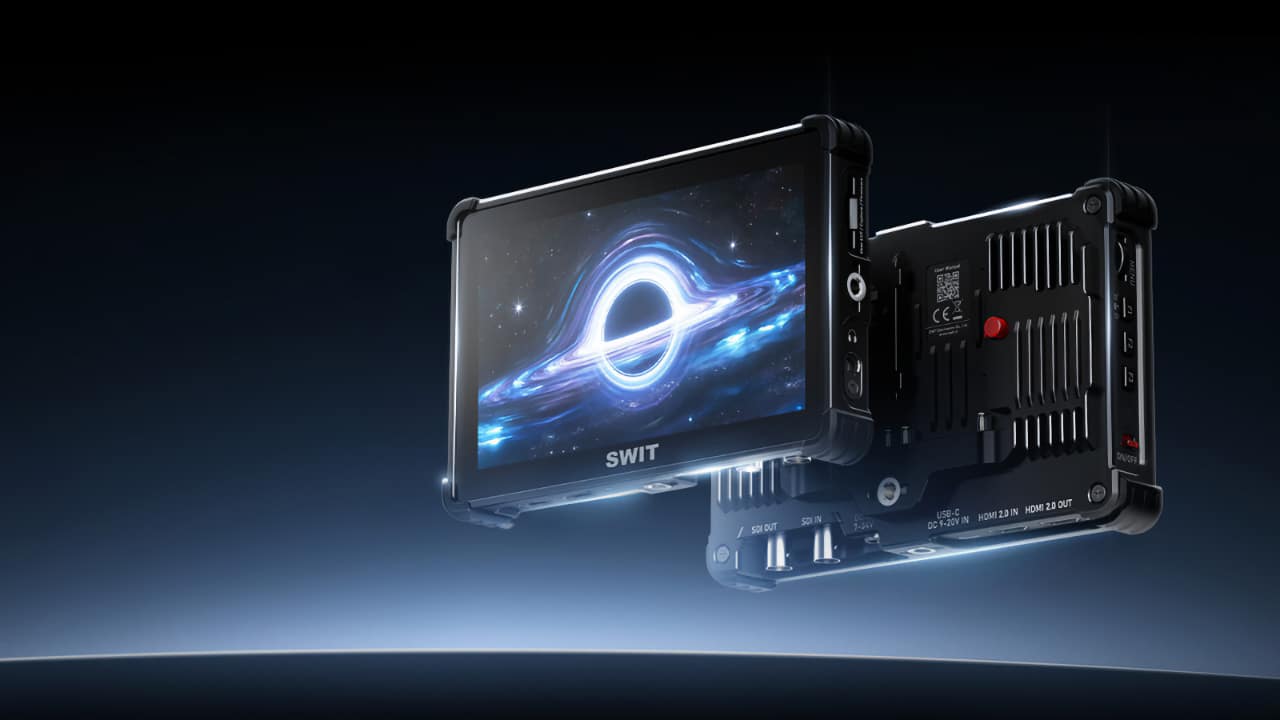
- Dual NP-F Battery Slots: These are hot-swappable, allowing for continuous operation during long shooting days. The monitor provides a real-time battery-level readout for both slots.
- 2-Pin LEMO Input: Supporting a wide voltage range of 7V to 34V DC, this is the industry standard for cinema rigs powered by V-Mount or Gold Mount bricks.
- USB-C PD: Supporting 9V to 20V inputs, this allows users to power the monitor using high-capacity power banks, making it ideal for travel, documentary, or gimbal work.
Monitoring Suite
The K7 does not skimp on software. It includes a comprehensive set of analytical tools, including:
- Custom LUT Support: Users can load their own 3D LUTs and output them over SDI/HDMI to downstream devices.
- Exposure Tools: Peaking, Zebra, False Color, Waveform, Vectorscope, and Histogram are all present and customizable.
- Creative Features: A unique frame-capture tool allows the operator to save a still image to the included 4GB SD card, which can then be overlaid with adjustable transparency—an invaluable tool for matching framing between different setups.
Ergonomics
The device weighs 575g (1.27 lbs) and measures 187 x 121 x 32 mm. Control is handled through a hybrid interface: a high-responsivity touchscreen, a physical scroll-and-enter wheel, two programmable function keys, and a dedicated touch-lock switch to prevent accidental changes during high-pressure takes.
Official Responses and Ecosystem Strategy
SWIT has been clear about its strategy: the K7 is not just a monitor; it is the center of a modular ecosystem. By pricing the base unit at €599, the company remains competitive against rivals like SmallHD or Portkeys, but they have also introduced a tiered accessory ecosystem.
The "MA-K7CAGE" monitor cage and sunhood kit, priced at €329, signals that SWIT expects these units to be used in professional, high-impact environments. Additional power solutions, such as the PA-D2L2 D-Tap to 2-pin LEMO cable (€35) and the PA-ACL2 AC adapter (€45), allow users to customize their purchase based on their specific power needs. The availability of a regulated V-mount-to-NP-F plate further underscores that this monitor is intended to live on professional cinema rigs, not just sit on top of a mirrorless camera.
Implications: What This Means for the Industry
The release of the SWIT K7 carries several implications for the mid-range cinematography market.
1. The Death of the "Converter Dongle"
The integration of HDMI-to-SDI conversion is a massive quality-of-life improvement. For years, camera assistants have dealt with the "dongle nightmare"—the tendency for external converters to lose power, overheat, or disconnect under the weight of a rig. By folding this functionality into the monitor, SWIT is essentially clearing the deck of clutter.
2. High-Brightness as the New Baseline
With 2800 nits, SWIT is setting a new floor for what a professional monitor should offer. For years, 1000 nits was the "golden standard," but in an era where HDR monitoring is becoming a requirement rather than a luxury, having a monitor that can handle harsh sunlight is essential. If other manufacturers do not follow suit, they risk being left behind as "indoor-only" solutions.
3. Democratization of Cinema Tools
At €599, the K7 is accessible to owner-operators, wedding videographers, and independent filmmakers. Historically, monitors with these specs were priced well into the four-figure range. By bringing high-end brightness and signal conversion to a sub-€600 price point, SWIT is effectively democratizing professional-grade monitoring, ensuring that the visual fidelity required for modern cinema is not restricted to top-tier production houses.
Conclusion
The SWIT K7 is a calculated, well-executed entry into a crowded market. By listening to feedback—specifically the need for high brightness and better power management—and by delivering on the promises made during its development phase, SWIT has created a monitor that is as capable as it is convenient. Whether you are operating a full-scale cinema camera or a compact mirrorless rig, the K7’s combination of rugged construction, signal versatility, and superior display performance makes it a compelling, if not essential, addition to any professional’s kit. As it stands, the K7 represents the current apex of mid-market monitoring, setting a high bar for competitors to follow in the coming year.
