
Deep Dive into the Psychedelic Practical Magic of NEON’s The Wrong Girls
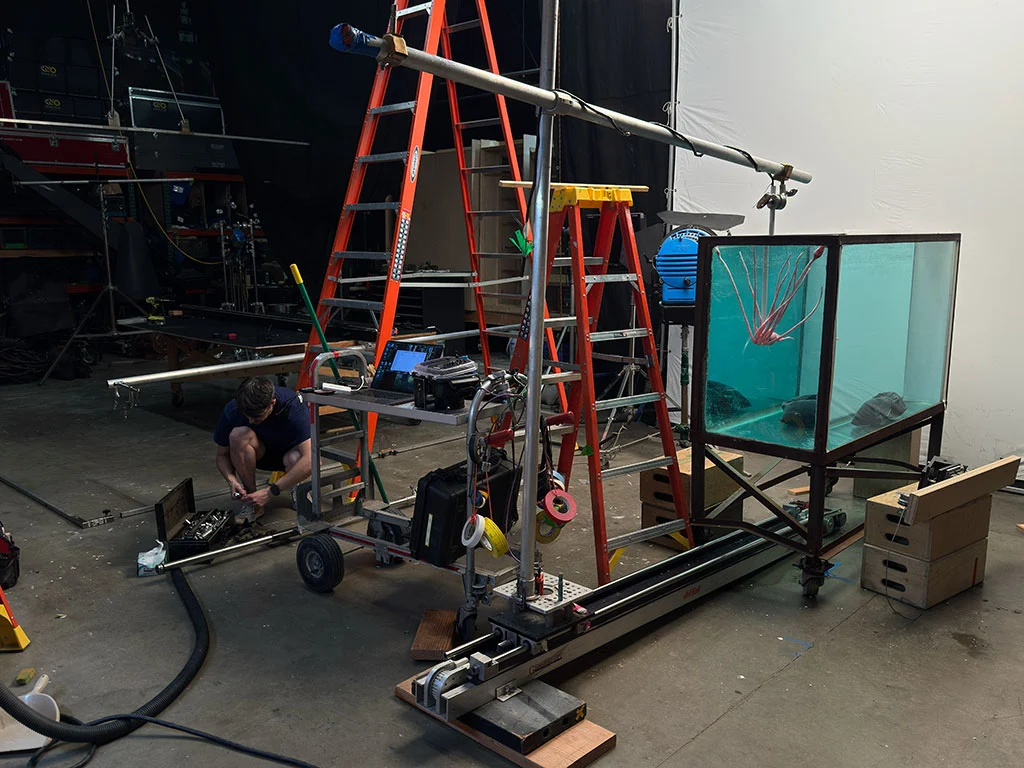
Main Facts: Practical Effects Meet Stoned Telepathy in NEON’s Newest Feature
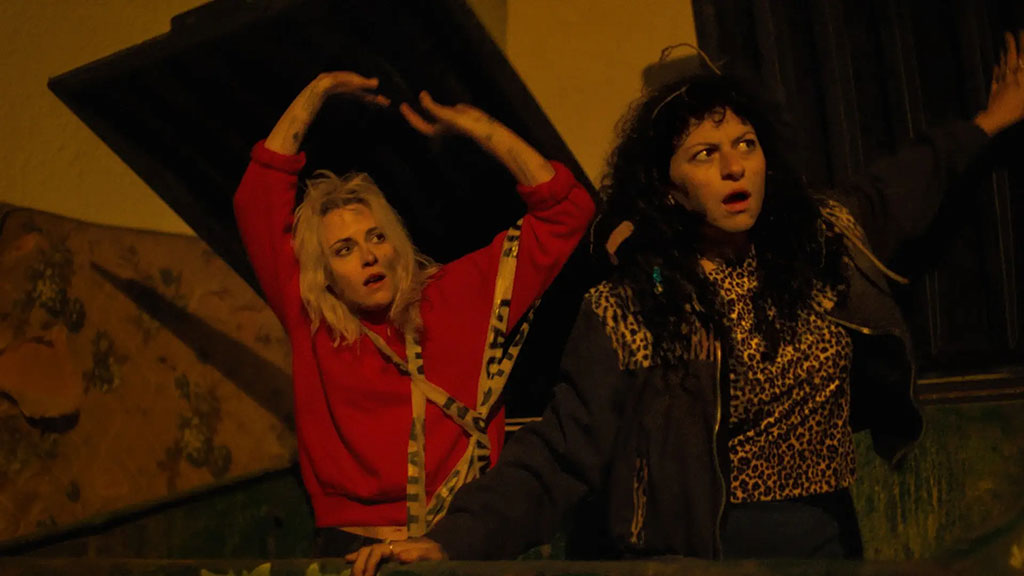
In the rapidly shifting landscape of modern cinema—where digital green screens and generative visual effects frequently dominate the post-production pipeline—director Dylan Meyer’s The Wrong Girls takes a delightfully tactile, analog detour. Released by NEON, the psychedelic stoner comedy stars Kristen Stewart and Alia Shawkat as Frankie and Molly, a pair of down-on-their-luck best friends struggling simply to make rent in an unforgiving economic climate. Their fortunes take a bizarre, life-altering turn when a case of mistaken identity lands Frankie in possession of a briefcase containing a top-secret, highly experimental hallucinogen.
Upon deciding to test the substance themselves, the duo instantly develops sudden, potent telepathic abilities. Naturally, this pharmacological awakening draws the immediate, violent ire of a shadowy crew of impeccably dressed enforcers, sending Frankie and Molly careening across the map on a manic, mind-bending chase.
Yet, beneath the comedy, the chaos, and the central performances of Stewart and Shawkat, the film relies heavily on a deeply unexpected cinematic anchor: giant, bioluminescent squids. To bring these cephalopod-driven sequences to life, Meyer tapped Special Effects Director of Photography Christopher Warren and his seasoned team at Blind Beagle VFX. Abandoning a rigid, hyper-realistic mandate in favor of a stylistic philosophy that prioritizes cool-factor and visceral impact, the production utilized an eclectic mix of miniature ocean environments, water tanks, complex motion-control rigs, practical fiber-optic puppetry, and old-school "dry-for-wet" smoke techniques.
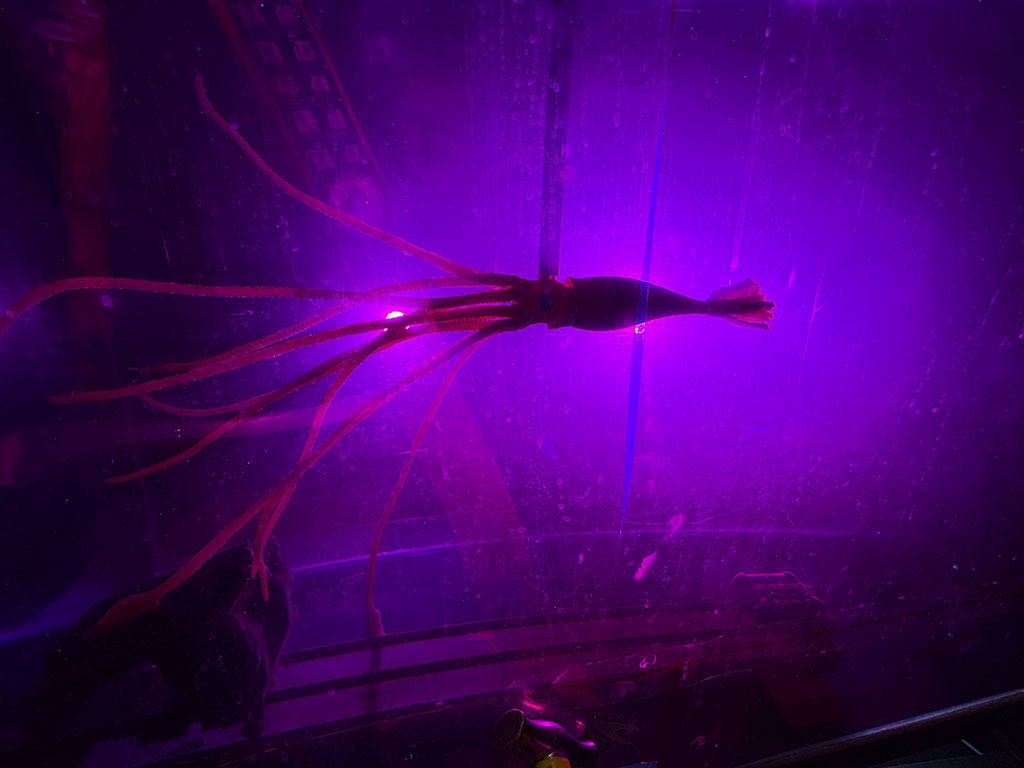
The result is a visually arresting, genre-blending cinematic cocktail that pays homage to the storied traditions of practical monster-making while fully embracing a distinctly contemporary, freewheeling sensibility.
Chronology: From Catalina Island Waters to the Miniature Soundstage
The realization of the squid sequences in The Wrong Girls did not happen overnight; it was a meticulous, multi-staged logistical and artistic endeavor that spanned weeks of physical fabrication, location shooting, and iterative stage experimentation.
Phase 1: Real-World Reference and Ocean Shooting
The journey of the film’s striking visual style began off the coast of Southern California. Special Effects DP Christopher Warren and his crew ventured into the open ocean around Catalina Island to capture raw footage of natural marine life, kelp forests, and deep-water ecosystems. Originally conceived purely as reference material to understand how natural light diffuses through saltwater, this footage proved so evocative that portions of it were integrated directly into the final cut, establishing an authentic, organic baseline for the audience before the narrative plunges into the psychedelic unknown.
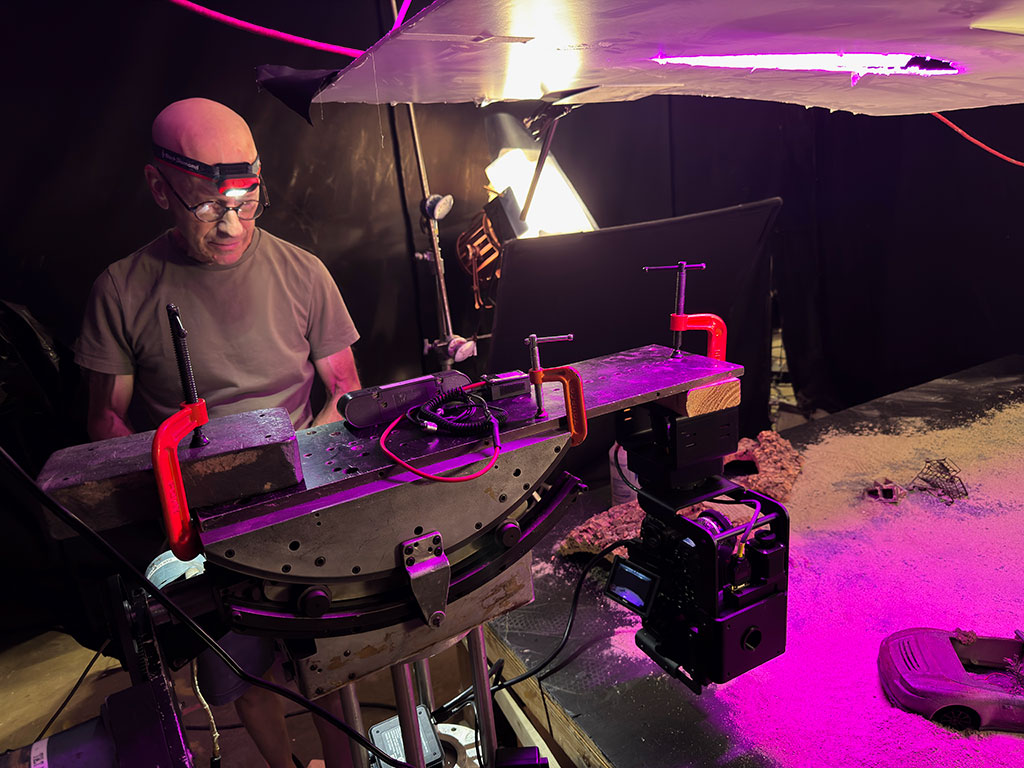
Phase 2: Fabrication and Practical Engineering
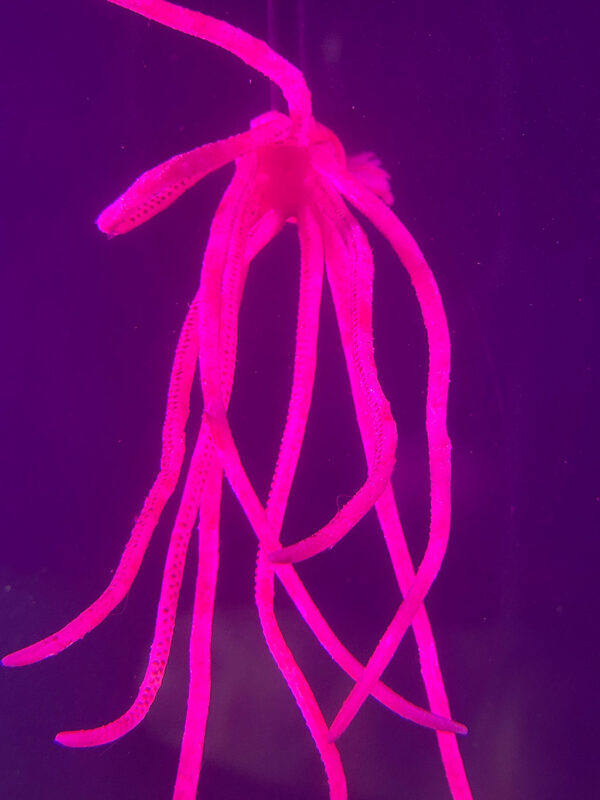
Concurrently, creature-design outfit Russell FX—led by veteran designers Josh Russell and Sierra Spence—embarked on the painstaking physical creation of the film’s cephalopods. Over several weeks, the team sculpted, molded, and assembled a collection of practical squid elements. This included both an agile, 2.5-foot-long miniature puppet (featuring a central body spanning nine to twelve inches) designated for Blind Beagle’s specialized miniature photography, and oversized, menacing tentacles built to anchor the movie’s high-stakes narrative climax. To achieve the signature alien glow demanded by the script, Russell FX threaded extensive fiber-optic cabling directly through the creature’s anatomy.
Phase 3: Miniature Set Construction and "Dry-for-Wet" Testing
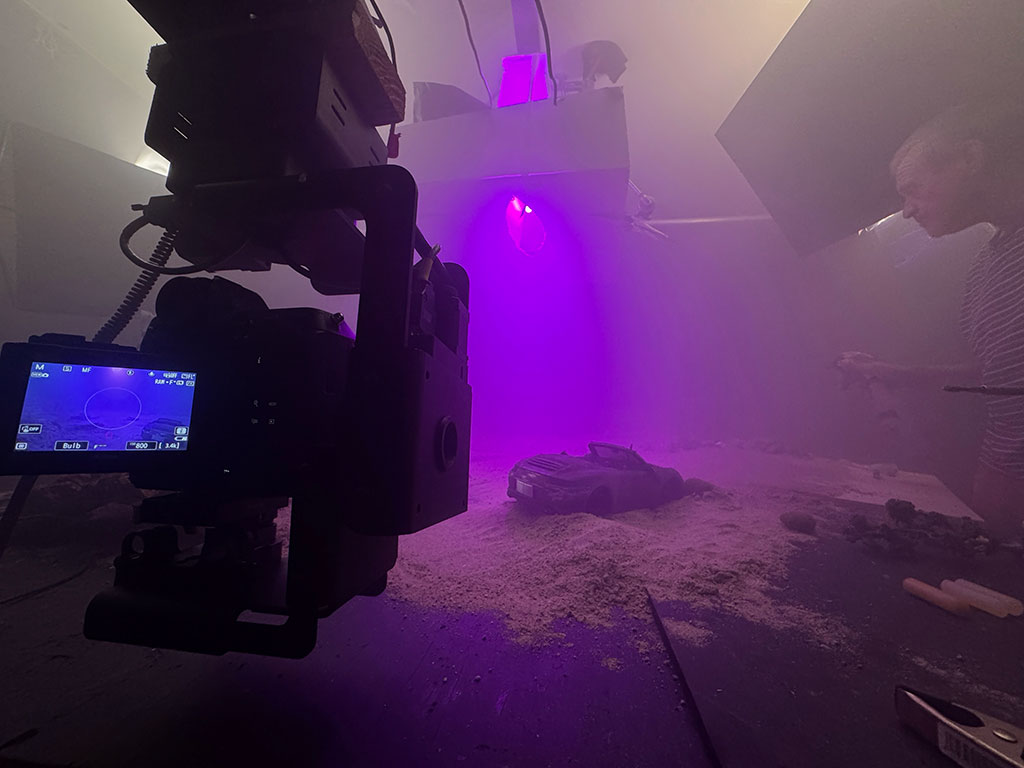
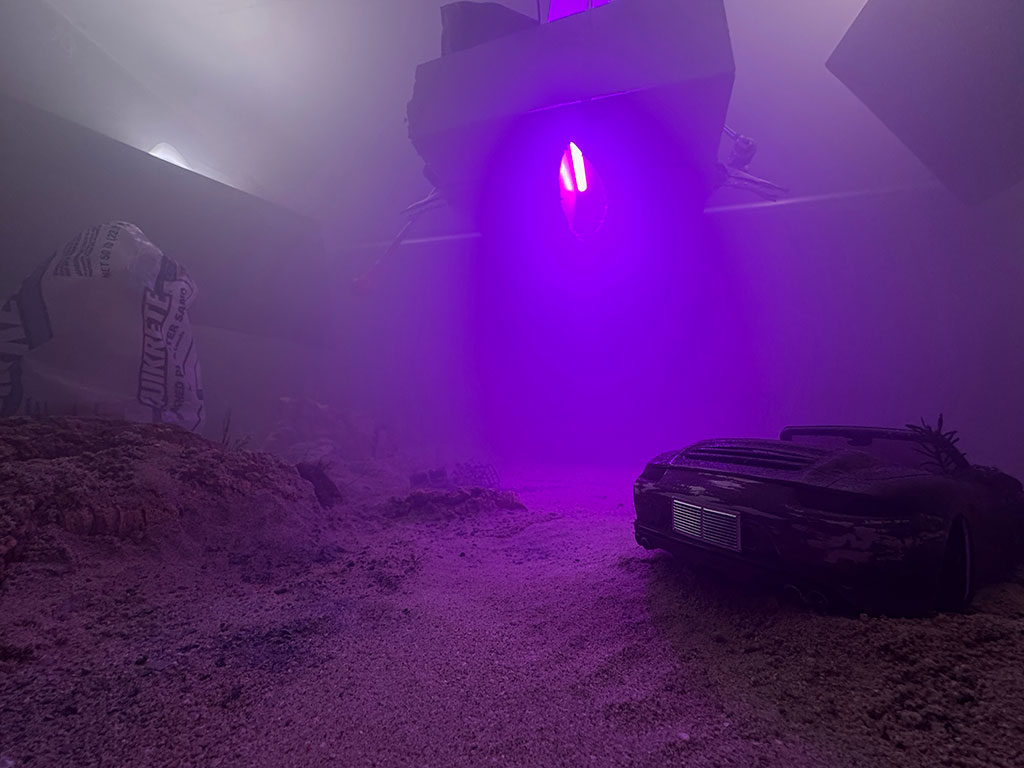
With the puppet delivered to Blind Beagle VFX, Warren and his team spent roughly a week preparing their miniature soundstage. They constructed a hyper-detailed ocean floor out of sand, miniature props (including a scaled-down Porsche resting incongruously on the seabed), and crafted kelp borders.
Because shooting extensively in a genuine underwater tank introduces monumental lighting challenges and control issues, the team relied heavily on a classic cinematic trick: dry-for-wet. By heavily smoking the soundstage environment, the team simulated the dense, murky consistency of the deep ocean. This phase required rigorous testing to ensure the atmospheric smoke maintained the correct density without shifting uncontrollably during takes, ultimately requiring formal sign-off from director Dylan Meyer.
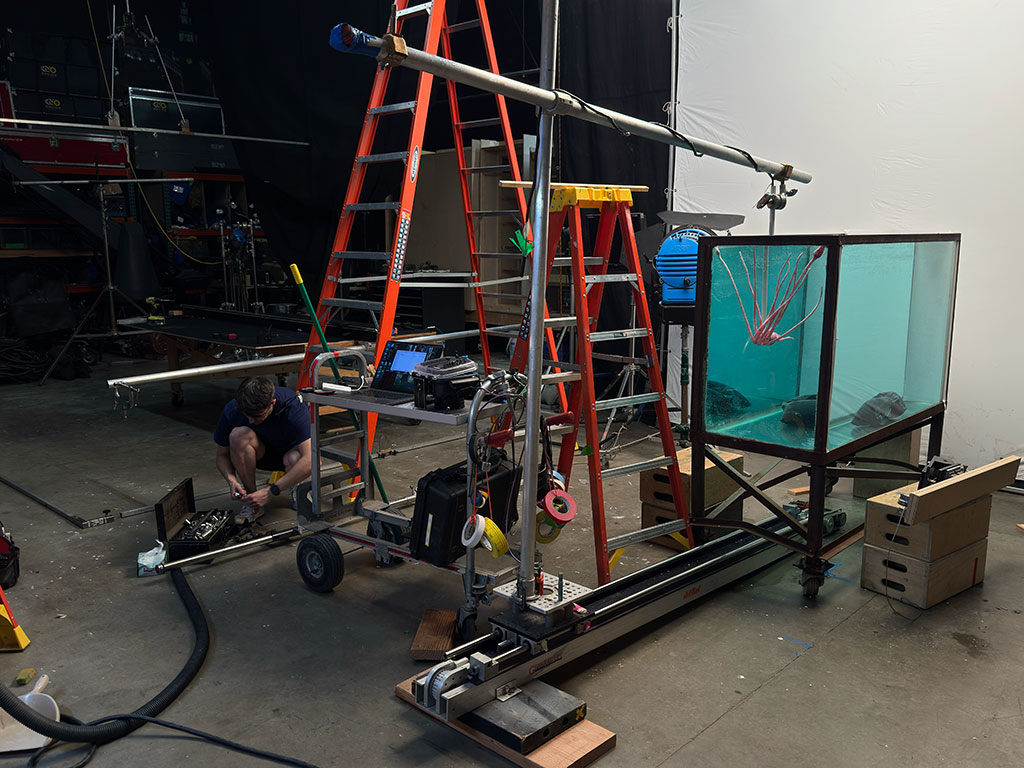
Phase 4: Motion-Control Photography and Rigging
Principal photography for the miniature and squid sequences took place over two to three dedicated days on stage. Operating under the precise camera choreography of motion-control operator Les Bernstien—whose notable credits include Foundation—the team deployed a variety of mechanical rigs.
For the film’s title sequence, the miniature squid was mounted on an overhead dolly system equipped with an extension rod. This mechanical setup allowed the camera and crew to slide the puppet backward away from the lens, halt its momentum, and rapidly reverse its trajectory toward the camera just in time to expel a burst of ink, cueing the slam of The Wrong Girls title card across the screen. For other shots, the puppet was mounted on a free-flowing rod, allowing it to "swim" fluidly across the miniature tank while internal fiber optics and external accent lighting maintained its mesmerizing bioluminescent glow.
Supporting Data: Specifications, Techniques, and Crew Dynamics
To fully appreciate the artisanal triumph of The Wrong Girls, one must examine the specific technical parameters and methodologies utilized by Blind Beagle VFX and Russell FX:
- Miniature Puppet Specifications: Measuring approximately two and a half feet in total length from mantle to tentacle tip, with a central body measuring between nine and twelve inches.
- Illumination Technology: Custom-integrated fiber-optic cabling woven throughout the puppet’s mantle and arms by Russell FX, providing internal bioluminescent glows that remained vibrant even when submerged or backlit by smoke.
- The "Dry-for-Wet" Environment: A controlled soundstage technique utilizing specialized theatrical smoke to replicate underwater turbidity, demanding precise exposure calibrations to prevent smoke dissipation from ruining continuity across takes.
- Camera and Motion Control: Led by Special Effects DP Christopher Warren and motion control operator Les Bernstien, utilizing precise, repeatable moves to ensure seamless integration between physical miniature elements and digital or live-action layers.
- Key Crew Members:
- Blind Beagle VFX: Christopher Warren, Gene Warren, Brandon Knight-Warren, Brian Bradford.
- Russell FX: Josh Russell, Sierra Spence.
- Title Sequence Composition: A three-tier visual progression moving from real-world open-ocean footage (Catalina Island kelp and marine life) to absolute blackness, transitioning seamlessly into the smoked miniature ocean floor complete with a submerged miniature Porsche and the bioluminescent squid.
Official Responses: Behind the Scenes with Christopher Warren
Reflecting on the collaborative spirit of the production, Christopher Warren was quick to highlight the refreshing creative freedom granted by director Dylan Meyer. Much like their previous collaboration on Boots Riley’s I Love Boosters, where stylistic audacity superseded rigid adherence to photorealism, Meyer’s vision for The Wrong Girls was rooted in a desire for visual panache.
"With this movie, we did not need it to be grounded in reality," Warren notes, summarizing Meyer’s artistic directive. "I think she was in that same mode of, ‘It doesn’t have to look real, it just has to be cool.’"
This philosophy extended directly to how the team approached the narrative justification for the squids. Meyer harbors a well-documented, lifelong fascination with giant squids, often waxing poetic about their mysterious, underexplored nature in the deep sea. That personal obsession organically bled into the thematic DNA of the screenplay.
"We joked about that on set a lot, about how cool they are and how unexplored they are," Warren recalls with fondness. "They are amazing creatures."
Managing the physical performance of a puppet underwater—or within a heavily smoked dry-for-wet stage—is inherently fraught with unpredictable logistical hurdles, regularly injecting levity into the workday.
"There definitely were some moments of laughter when you’re trying to get a squid to act on stage," Warren admits. Yet, he reserves his highest praise for Meyer’s directorial balance of openness and authority. "She knew what she wanted to do, but she was willing to explore. And it’s always fun when you work with a director that’s just chill and like, ‘Show me what you got,’ and then, ‘Nope, this is what I want,’ and then you go do it. It was a fun shoot. Really fun."
For Warren, whose decades in the industry have given him a masterclass in practical illusion, the ultimate test remains deceptively simple: fooling the human eye.
"When you’re trying to fool the eye, you need to play tricks on the eye," Warren reflects. "So it becomes, ‘Did we do enough to fool the audience?’"
Implications: A Return to Practical Craft in the Age of AI
As the entertainment industry marches deeper into an era dominated by hyper-accelerated digital pipelines, deepfakes, and algorithmic generation, the tactile approach championed in The Wrong Girls carries profound implications for the future of mid-budget cinema and visual effects storytelling.
By demonstrating that audiences—and visionary indie directors—still crave the organic imperfections, weight, and tangible light-interaction of physical miniatures and practical puppets, Blind Beagle VFX and Russell FX are proving that analog techniques remain fiercely relevant.
When a film marries a modern, counter-culture stoner comedy starring Kristen Stewart and Alia Shawkat with old-school, handcrafted monster-making, it creates a distinct texture that digital-only workflows struggle to replicate. The deliberate choice to smoke a room, build a miniature ocean floor, and physically manipulate a fiber-optic squid on a dolly rod injects an undeniable soul into the frame.
Ultimately, The Wrong Girls serves as a vibrant reminder that storytelling in cinema is often at its most potent when creators are willing to step away from the computer screen, embrace the unpredictable magic of the soundstage, and ask a simple, timeless question: Can we make this look cool? If Christopher Warren and Dylan Meyer’s work is any indication, the answer is a resounding, ink-spraying yes.
