
The Architecture of Immersion: Decoding the Foundational Principles of Game Design

Video games are more than mere software; they are sophisticated ecosystems of choice, consequence, and atmosphere. From the sprawling, narrative-rich landscapes of Baldur’s Gate 3 to the high-octane precision of Call of Duty, the medium relies on a rigorous, often invisible, framework known as game design. To the player, a game is an experience of discovery; to the developer, it is a calculated arrangement of rules, psychology, and technical execution. Understanding the principles of game design—the "blueprints" of interactive entertainment—reveals why certain titles capture our imagination while others fade into obscurity.
The Foundations: Defining Game Design
At its core, game design is the systematic process of defining the rules, mechanics, objectives, and sensory experiences of a virtual world. A game designer acts as both an architect and a psychologist, tasked with balancing the player’s agency against the boundaries of the programmed environment.
The primary objective is to cultivate "flow"—a psychological state where the player is fully immersed, balancing the challenge of the game with their increasing skill level. If a game is too difficult, it breeds frustration; if it is too easy, it breeds apathy. The mastery of this equilibrium is what separates a standard project from an industry-defining masterpiece.

Core Mechanics: The Heartbeat of Interaction
Every game is built upon core mechanics—the fundamental verbs that define what a player can do. In a first-person shooter, these are the act of aiming, movement, and firing. In a puzzle game, it might be the manipulation of gravity or color.
Building Upon the Core
Once the foundational mechanics are established, designers layer "secondary" or "non-core" mechanics to add depth. While core mechanics drive the primary gameplay loop, non-core mechanics—such as collecting cosmetic items in Little Nightmares 2 or crafting decorative armor in RPGs—provide flavor and personal expression.
The most successful titles use these layers to prevent repetition. By introducing environmental variables or shifting enemy behavior, developers ensure that even if the core action (shooting or jumping) remains the same, the context in which it is applied keeps the player mentally stimulated.

The Delicate Balance: Fairness vs. Frustration
One of the most persistent challenges in game design is maintaining balance. A game must feel "fair," even when it is difficult.
The Psychology of Difficulty
Cuphead serves as a prominent case study in this arena. Its gameplay requires near-perfect timing and intense memorization. For many, this could easily veer into unfairness, yet it remains beloved. Why? Because the failure is perceived as the player’s own, rather than a flaw in the game’s logic. The mechanics are precise, and the telegraphing of enemy moves is clear.
To maintain this balance, designers employ several strategies:
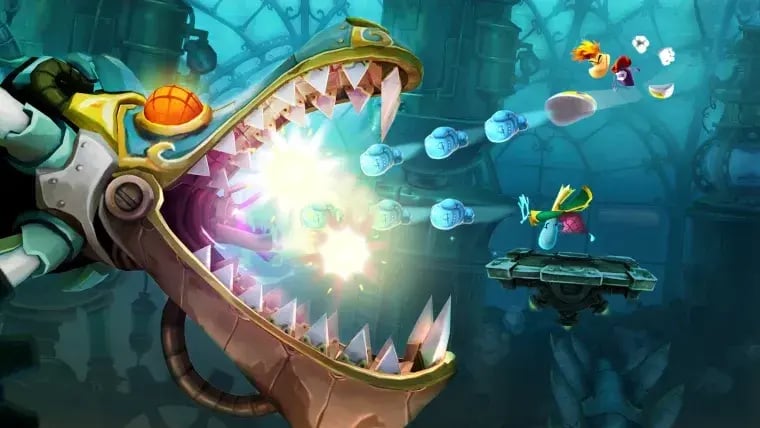
- Variable Difficulty Curves: Gradually introducing new elements so the player learns through experience rather than tutorials.
- Meaningful Choice: Allowing players to approach a problem using different strategies, such as stealth versus combat, ensuring no single path is the "only" way to succeed.
- Pacing: Inserting periods of relative calm after high-stress encounters to prevent player burnout.
Feedback Loops: Driving the Player’s Desire
If the mechanics are the heart of a game, the feedback loop is the nervous system. A feedback loop is the cycle of player action and game response.
Positive and Negative Reinforcement
A positive feedback loop rewards the player for success, creating a snowball effect. For example, in many RPGs, defeating an enemy grants experience points, which leads to leveling up, which makes it easier to defeat the next enemy. This reinforces the player’s sense of growth and mastery.
Conversely, a negative feedback loop acts as a stabilizer. It is designed to prevent a player from becoming too powerful or to assist a player who is falling behind. This could manifest as "rubber-banding" in racing games, where the trailing car receives a speed boost to keep the competition tight. Both systems are essential: one drives the player’s ambition, while the other ensures the experience remains consistently engaging.

Immersion and Environmental Storytelling
Modern narrative design has moved beyond lengthy cutscenes and dialogue trees. Today’s industry leaders emphasize "environmental storytelling"—a technique where the world itself tells the history of the game.
In The Last of Us, the environment is a narrative tool. The way nature has reclaimed post-apocalyptic urban centers, the placement of abandoned supplies, and the remnants of previous inhabitants provide clues to the world’s history without requiring a single line of spoken exposition. This "show, don’t tell" approach is crucial for modern immersion; it allows the player to inhabit the world rather than just observe it.
Supporting Data and Industry Implications
The importance of these principles is reflected in the success of the industry. According to recent market analysis, games that prioritize "player agency"—the ability for a player to make meaningful decisions—consistently see higher retention rates.

Data from major platforms suggest that titles with well-integrated feedback loops, where the player feels a sense of progression within the first fifteen minutes, have a significantly higher "day-one retention" rate. This validates the design philosophy that onboarding—the process of teaching the player the rules through play—is as critical as the end-game content.
Official Perspectives: The Professional View
Industry veterans, such as those mentoring at institutions like CG Spectrum, emphasize that game design is a collaborative, iterative discipline. The decision-making process often involves "prototyping"—the creation of "grey-box" versions of levels to test if a mechanic is fun before spending months on high-fidelity art and animation.
"The best games are not designed in a vacuum," notes a senior narrative designer. "They are tested, broken, and rebuilt until the interaction feels natural. The technology is just the vehicle; the design is the destination."

Future Directions: Where Design Goes Next
The horizon of game design is shifting toward greater integration of Artificial Intelligence and procedural generation. We are moving toward:
- Adaptive Difficulty: AI that monitors player performance in real-time to adjust enemy AI behavior or resource scarcity, ensuring the game is always perfectly tuned to the individual.
- Emergent Gameplay: Creating systems that interact with one another in ways the developers didn’t explicitly script, leading to unique player stories.
- Cross-Platform Parity: Designing mechanics that feel intuitive regardless of whether the input is a controller, a mouse and keyboard, or a VR headset.
Conclusion: The Ever-Evolving Art
The principles of game design are the bedrock of the gaming industry. By understanding the interplay of mechanics, balance, feedback, and narrative, we gain a deeper appreciation for the experiences we consume. Whether it is the subtle lighting in a horror game or the complex economy of a strategy title, every element is a testament to the meticulous planning that goes into creating interactive joy.
As technology continues to evolve, the tools available to developers will grow more powerful, but the fundamental requirement remains unchanged: the designer must respect the player’s time and intelligence. By adhering to these timeless principles, the next generation of developers will continue to build worlds that are not just played, but truly lived in.
