
The Sound of Survival: How Michael Giacchino Found the Soul of ‘Society of the Snow’
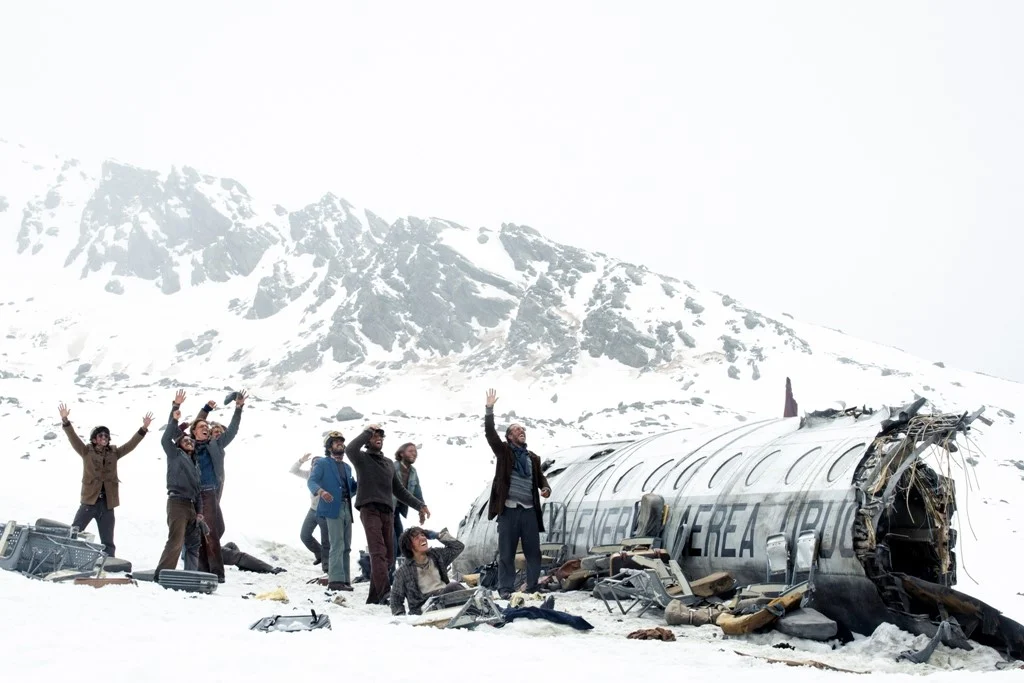
When director J.A. Bayona began the arduous process of bringing the harrowing true story of the 1972 Uruguayan Air Force Flight 571 to the screen in Society of the Snow, he knew the musical accompaniment would be as critical as the cinematography. The film, which chronicles the desperate struggle for survival of a Uruguayan rugby team stranded in the frozen, unforgiving peaks of the Andes, demanded a score that was neither overtly manipulative nor hollow. To achieve this, Bayona turned to a long-time collaborator and friend: Oscar-winning composer Michael Giacchino.
Interestingly, the partnership was never a formal certainty. Giacchino, known for his work on Up and Jurassic World: Fallen Kingdom, did not initially intend to score the project. However, their established creative shorthand—honed through years of Bayona screening rough cuts of his films for the composer—led to a spontaneous and deeply personal creative breakthrough.
A Spontaneous Spark: From Rough Cut to Creative Obsession
The transition from "friend and observer" to "lead composer" happened almost by accident. During a casual screening of an early edit of Society of the Snow, Giacchino found himself profoundly affected by the material. The sheer visceral intensity of the footage triggered an immediate, almost involuntary creative response.
"The reaction was immediate," Giacchino recalled in an interview. "I didn’t plan to do this, but the film gripped me in a way I hadn’t anticipated."

By the next morning, the gears were already turning. The conversations between Bayona and Giacchino quickly shifted from general feedback to specific technical discussions about the use of percussion and guitar to anchor the narrative’s emotional weight. Impressed by the speed and depth of the composer’s intuition, Bayona formally invited him to score the entire film. For Giacchino, who was simultaneously preparing for his directorial debut on a remake of the classic horror film Them!, this was not merely another contract; it was a profound shift in his creative process.
Chronology of the Composition: Stripping Away the Excess
The scoring process for Society of the Snow became a journey of reduction. In a departure from the grand, sweeping orchestrations often associated with survival epics, Giacchino and Bayona settled on a philosophy of "less is more."
The Early Stages: Establishing the Internal Tone
Giacchino began by immersing himself in the psychology of the survivors. He chose to treat the characters—despite their real-life counterparts being public figures—as individuals in a vacuum, focusing on their mental and physical isolation. The initial sessions were focused on finding a musical language for the "alien environment" of the Andes.
The Mid-Stage: Regional Authenticity
As the score developed, the duo leaned heavily into the cultural roots of the survivors. They incorporated the charango, a traditional Andean string instrument, alongside tambores de candombe (Uruguayan drums). These were not added for exoticism but to root the film in the identity of the young men who were far from home.

The Final Stages: The Abbey Road Sessions
The final recording, held at the legendary Abbey Road Studios in London, featured a small, tight-knit orchestra. Giacchino intentionally eschewed the use of brass, finding that the metallic, biting textures of string instruments better represented the cold, sharp reality of the mountain.
Supporting Data: Musical Motifs and Linguistic Layers
To capture the spiritual dimensions of the tragedy, Giacchino introduced a choral element that transcends traditional score-writing. Working with lyrics translated into Mapuche—the indigenous language of the region—the choir serves as a representation of "Mother Earth" and nature itself.
"The words we chose are translated as ‘Mother Earth,’ ‘Nature,’" Giacchino explained. "The place that brought them to the brink of death also helped to take care of them. These elements are used throughout, but my real focus was on the emotions of those people who, today, still live with that experience close to their hearts."
The score also utilizes experimental techniques, such as manipulating piano and guitar strings to create eerie, discordant sounds that reflect the bleakness of the glacier. Notably, Giacchino made a conscious decision not to score the actual crash or the avalanche scenes. He felt that the sound design team had already created a "horrific soundscape" that was complete unto itself; adding music would have been a distraction from the raw, auditory reality of the disaster.

Official Responses and Philosophical Implications
The weight of the subject matter—a story of death, survival, and the moral complexities of the Andes—was not lost on the production team. Giacchino emphasized that the film is not merely a chronicle of the survivors who made it home, but a memorial for those who perished.
"It’s more about the ones who didn’t make it home," Giacchino noted. "The survivors had many years to tell that story of what happened to them, and I feel like this was a chance to tell the story of those who didn’t come down. They literally gave everything they had to offer."
When the project was completed, the final test came when the actual survivors of the 1972 crash heard the music. According to Giacchino, he approached the meeting with them with significant trepidation. The relief he felt when they approved of the work was palpable. They noted that the score, much like the film itself, captured the essence of their struggle without resorting to cheap sentimentality.
Implications for Modern Scoring
The success of the Society of the Snow score underscores a growing trend in modern cinema: a move away from wall-to-wall orchestral bombast toward more minimalist, concept-driven scores that act as a character rather than a backdrop.

For Giacchino, the experience was a transformative one. "I always treat the characters, animated or live-action, as if they were real people so that the music I write comes from putting myself into their mind and soul," he said. "For this film, I felt an enormous responsibility to be as honest as I could about this traumatic experience that wasn’t just about sadness and loss. It was about waking up in an alien environment, taking one step at an excruciating time, not knowing what the next moment would bring."
The result is a score that functions as a silent witness. It captures the tension of the wait, the silence of the snow, and the quiet dignity of those who were lost. As Netflix prepares for the film’s release—arriving in select theaters on December 22, 2023, followed by a global streaming debut on January 4, 2024—the music stands as a testament to the idea that, in the face of the impossible, sometimes the most profound truth is found in the quietest notes.
The film serves as Spain’s international Oscar entry, a selection that highlights the collaborative international effort behind this production. By balancing the technical requirements of a high-budget survival thriller with the intimate, often spiritual, needs of a historical tragedy, Giacchino has crafted a career-defining piece of work—one that acknowledges the trauma of the past while providing a voice to those who could not speak for themselves.
