
The Games Continue: Mike P. Nelson Tapped to Direct Next Installment of the Billion-Dollar ‘Saw’ Franchise
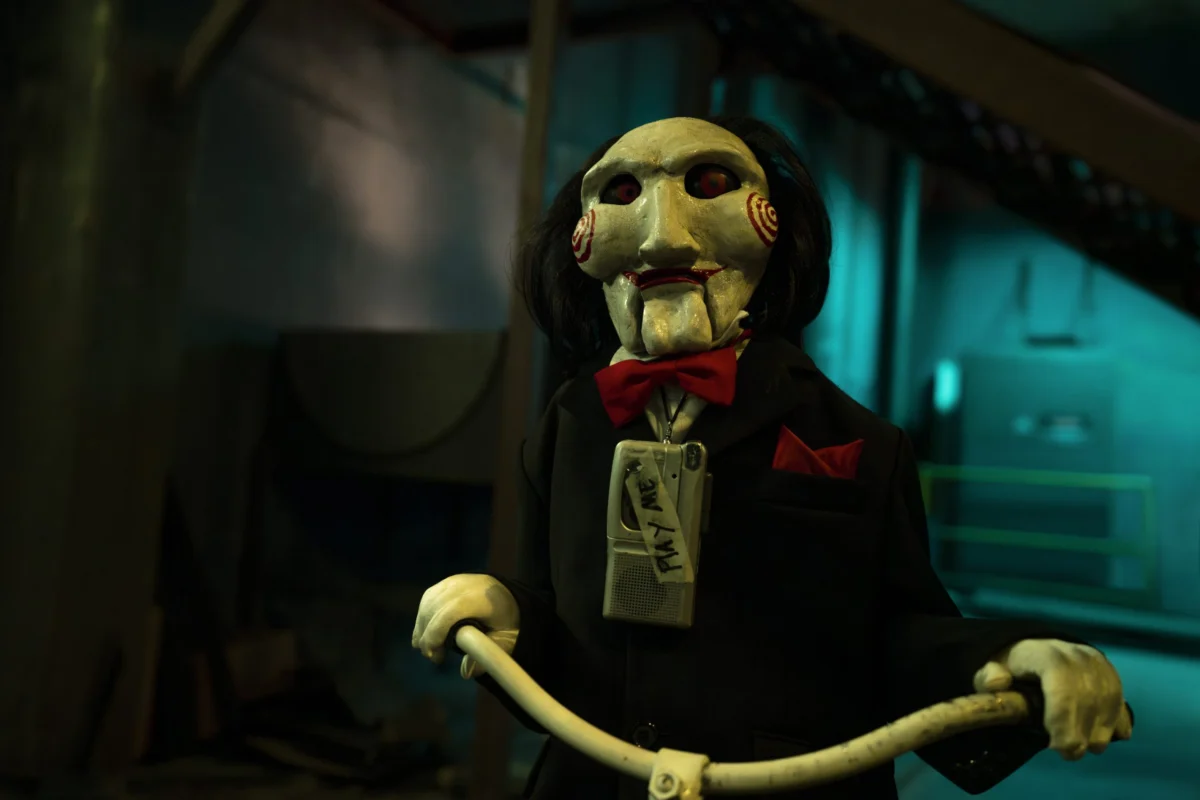
The Saw franchise, a cornerstone of modern horror cinema that redefined the "torture porn" subgenre and turned low-budget ingenuity into a global phenomenon, is preparing for its next evolution. In a major production shake-up, director Mike P. Nelson has been officially tapped to helm the next installment of the long-running series.
This transition marks a pivotal moment for the franchise, as it arrives under the renewed creative stewardship of original architect James Wan. Having regained significant creative control, Wan is shepherding the project through his production company, Atomic Monster, in partnership with Jason Blum’s Blumhouse Productions. This convergence of horror royalty signals a strategic attempt to blend the franchise’s grimy, visceral roots with the polished, high-concept production standards that have defined the current era of genre filmmaking.
The Architect and the Apprentice: A New Vision for Jigsaw
The decision to bring Mike P. Nelson into the fold follows a period of critical re-evaluation for the franchise. After the success of 2023’s Saw X—which saw the return of Tobin Bell’s iconic John Kramer and garnered some of the best reviews in the series’ history—producers were tasked with finding a filmmaker capable of balancing the franchise’s signature traps with a compelling, character-driven narrative.
Nelson, whose portfolio includes the 2021 reboot of the Wrong Turn franchise, the upcoming Fantastic Fest title Beware Boiúna, and the 2025 remake of the slasher classic Silent Night, Deadly Night, has built a reputation for gritty, atmosphere-heavy horror. His appointment suggests a desire to lean into the visceral, grounded terror that made the original 2004 film a cult classic.
"Making the original Saw was a defining experience for me, so it was essential to find a director who would honor that world," James Wan stated in an official press release. "Mike has a raw, distinctive filmmaking voice with an inventive approach to the genre, and I believe he’ll bring something truly unique and special to the franchise."
Chronology of a Franchise: From Low-Budget Miracle to Global Powerhouse
To understand the significance of this new chapter, one must look at the meteoric rise of the Saw series over the last two decades.
The Origins (2004–2010)
The original Saw (2004), directed by James Wan and written by Leigh Whannell, was produced on a shoestring budget of roughly $1.2 million. Its premise—two men waking up in a dilapidated bathroom, chained to pipes, forced to play a sadistic game for their survival—became the blueprint for the entire series. The film grossed over $100 million worldwide, launching the careers of both Wan and Whannell and establishing John Kramer, or "Jigsaw," as a pop-culture icon.
Between 2004 and 2010, the franchise released a film every single year, creating a "Saw-oween" tradition that dominated the October box office. This era focused heavily on intricate, Rube Goldberg-esque death traps and a convoluted, labyrinthine timeline that spanned multiple sequels and prequels.
The Rebirth (2017–2023)
After a seven-year hiatus following Saw 3D (2010), the franchise returned with Jigsaw (2017) and Spiral: From the Book of Saw (2021). These films attempted to modernize the franchise, with Spiral injecting a police-procedural aesthetic. However, it was the 2023 return to basics with Saw X that proved audiences still craved the emotional weight of John Kramer’s twisted morality. By placing the narrative between the events of Saw and Saw II, the film reminded audiences that at its core, Saw is a tragedy about a dying man’s obsession with the value of life.
The Creative Team Behind the Traps
The success of the upcoming installment will hinge heavily on the screenplay, which is being handled by Gregory Weidman and Geoff Tock. The duo, best known for their work on the critically acclaimed Dune: Prophecy, brings a background in high-stakes world-building and intricate plotting. This is a departure from the franchise’s typical leanings toward pure shock value, hinting that the new film may prioritize mystery and psychological depth alongside its mandatory gore.
The production is bolstered by an "all-star" team of producers. James Wan and Leigh Whannell are reuniting to ensure the film stays true to the tone they established two decades ago. Jason Blum, whose Blumhouse Productions has become the most influential horror studio in the world, brings the marketing and distribution power necessary to ensure the film reaches a modern, digitally savvy audience.
"Greg and Geoff and James have crafted such a wild script that brings the mystery of the original while exploring new insane bloody ideas that meld so well with the brutal moral compass of the franchise," Nelson noted in his statement. "Let the games begin!"
Supporting Data: Why the Franchise Remains Relevant
Despite the oversaturation of the horror market, the Saw franchise remains a billion-dollar juggernaut.
- Box Office Consistency: Even the "underperforming" entries in the series have consistently turned a profit, a testament to the franchise’s disciplined production budgets.
- The "Jigsaw" Factor: Tobin Bell’s portrayal of John Kramer is widely considered one of the most effective horror villains of the 21st century. His ability to articulate a twisted philosophy—that people must "earn" their right to live through suffering—provides the series with a thematic anchor that most slashers lack.
- The Trap Economy: The traps themselves have become a brand. Fans of the series don’t just watch for the plot; they watch for the ingenuity of the death devices, which have evolved from simple chains to complex, surgery-based horrors.
The move to involve Atomic Monster suggests a shift toward prestige horror. With the success of films like M3GAN and Talk to Me, the audience expectation for horror has shifted toward higher-quality cinematography and tighter scripts. By marrying Nelson’s raw directorial style with the industry’s top production houses, the studio is positioning this new entry as a potential bridge between the cult-classic origins and a high-end future.
Implications: Where Does the Series Go From Here?
The appointment of Mike P. Nelson carries several implications for the future of the Saw universe.
1. A Return to "Hard" Horror
Nelson’s work on Wrong Turn demonstrated an ability to craft visceral, uncomfortable environments. If the new film follows this trajectory, audiences can expect a shift away from the overly polished, sterile look of some of the mid-series sequels and a return to the gritty, industrial aesthetic that made the first film feel so claustrophobic.
2. Narrative Expansion
With Weidman and Tock writing, there is a strong possibility that the film will move beyond the "one-off trap" format. The inclusion of Dune: Prophecy writers suggests a focus on the larger Saw mythos—perhaps exploring the legacy of Jigsaw’s apprentices or the philosophical ramifications of his "work" in a world that has evolved since his death.
3. The Blumhouse Influence
Blumhouse is known for its "low-risk, high-reward" model. By placing a director with a distinct voice like Nelson at the helm, the studio is signaling a willingness to let auteurs put their stamp on the property. This could lead to a series of Saw films that feel like distinct chapters rather than a continuous, repeating loop.
Conclusion: The Final Verdict
The announcement of a new Saw movie under the guidance of Mike P. Nelson is a calculated risk that appears to be well-calculated. By respecting the legacy of Wan and Whannell while introducing fresh, genre-focused talent, the franchise is insulating itself against the creative stagnation that plagues long-running horror series.
As production ramps up, the horror community will be watching closely to see if Nelson can truly capture the lightning in a bottle that defined the original. The traps are being built, the cameras are being positioned, and the moral dilemmas are being sharpened. For Jigsaw, it seems, the game is never truly over—it is only just beginning.
