
"It’s Shocking and Depressing": Al Jardine Speaks Out Amid Growing Concern Over Beach Boys Frontman Mike Love’s Health
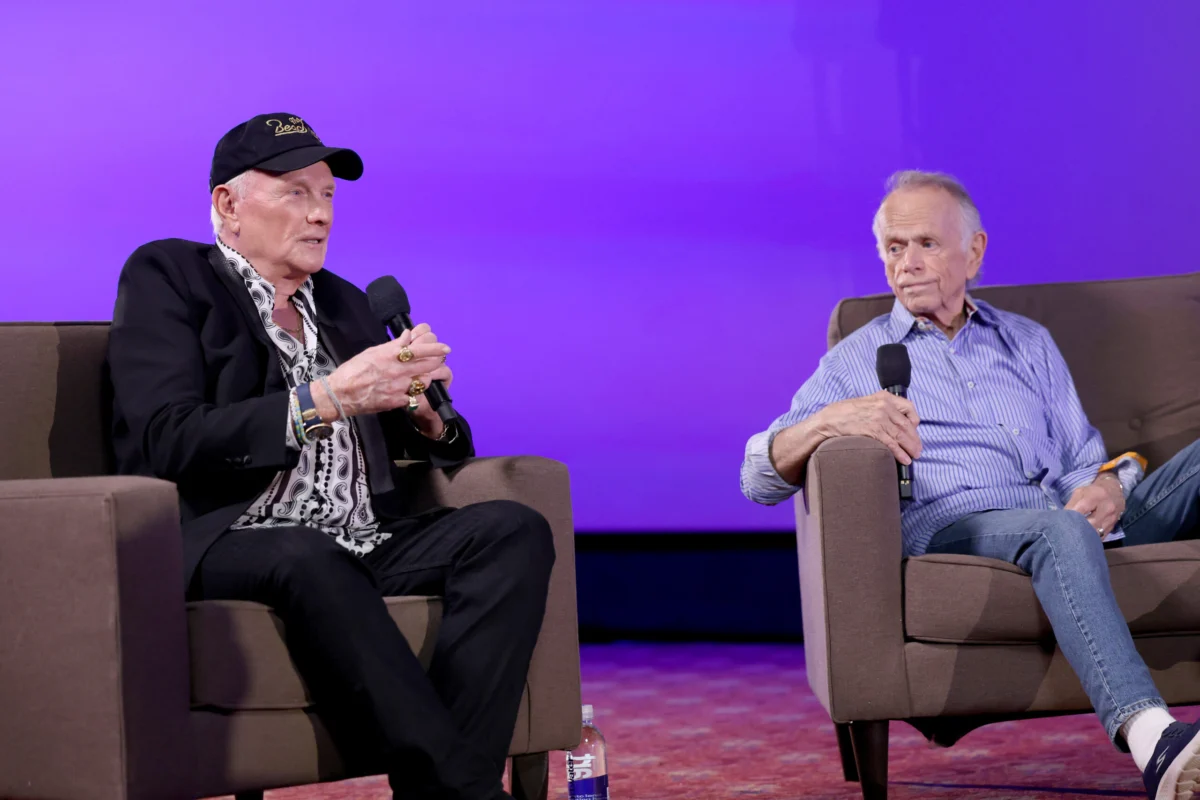
LOS ANGELES — Decades of harmony, chart-topping hits, and an enduring rivalry have not completely eroded the deep bonds forged in the surf-rock crucible of the 1960s. Recently, founding Beach Boy Al Jardine broke his silence regarding the alarming recent concert appearances of his longtime bandmate and frequent adversary, Mike Love.
Following a cascade of public anxieties sparked by actor and frequent touring guest John Stamos, alongside recent distressing footage from the stage, Jardine candidly shared his sorrow, frustration, and empathy for a man he has known for over half a century.
While Jardine and Love are not in regular communication and carry a history of well-documented creative and legal disagreements, the sight of Love struggling through recent performances deeply rattled his former bandmate. For an institution as legendary as The Beach Boys, the intersection of aging legacy acts, the physical toll of decades on the road, and the sheer psychological difficulty of walking away from the spotlight has once again taken center stage.
Main Facts: The Turning Point on Tour
The controversy surrounding Mike Love’s recent physical condition erupted over a single weekend of touring. The Beach Boys—currently operating under Love’s touring iteration of the brand—returned to the stage for their first major performances since July, excluding a localized private gig in Dana Point, California.
Fan-captured footage and eyewitness accounts from a Cincinnati concert painted a distressing picture of the 83-year-old frontman. According to reports, Love appeared significantly frail and physically compromised. Addressing the crowd ahead of the set, guest performer John Stamos openly discussed Love’s ongoing health challenges, revealing that the singer had actively rejected advice from medical professionals and loved ones to stay home and rest.
Stamos reportedly walked a visibly struggling Love to a chair positioned at center stage. Love remained seated for the duration of the performance, largely immobile aside from occasional hand gestures to accompany the music.
The following evening, the tour moved to the historic Ryman Auditorium in Nashville. There, Love addressed the audience directly, briefly acknowledging his limitations. "I’ve been going through health challenges," Love told the Nashville crowd, "but I had to make it to the Ryman."
Despite his resilience, the optics alarmed fans, industry insiders, and former bandmates alike. For Al Jardine, watching the footage felt crushing.
"It’s shocking and I was really depressed," Jardine revealed in an interview with Rolling Stone. "I had to really shake myself out of it just to get onstage. Just the optics of it were just awful, and I’m speechless."
Chronology: A History of Friction, Separation, and Recent Events
To fully understand the weight of Jardine’s comments, it is necessary to examine the complex timeline that has fractured The Beach Boys’ inner circle over the decades, as well as the rapid sequence of events leading up to this latest health crisis.
- 1961–1963 (The Formation): Al Jardine, along with cousins Brian, Dennis, and Carl Wilson, their cousin Mike Love, and neighbor David Marks, form The Beach Boys in Hawthorne, California. Jardine briefly leaves early on before returning to play rhythm guitar and sing signature high harmonies.
- Decades of Discord: Through the 1970s, 80s, and 90s, the band fractures into various legal and ideological camps. Mike Love secures the legal rights to tour under "The Beach Boys" moniker, leading to decades of separate touring entities between Love and the remaining original members.
- 2012 (The 50th Anniversary Reunion): The surviving members—Brian Wilson, Al Jardine, David Marks, Bruce Johnston, and Mike Love—temporarily bury the hatchet for a critically acclaimed 50th-anniversary studio album (That’s Why God Made the Radio) and a massive global tour. Hopes for a permanent reunion are dashed when Love abruptly ends the tour, opting to continue touring with his own selected backing band rather than the core founders.
- Early 2024 (Shifts in the Touring Lineup): Longtime keyboardist and backing vocalist Bruce Johnston quietly stops touring with Mike Love’s iteration of The Beach Boys. While official reasons are kept under wraps, insiders speculate about internal strain and aging logistics.
- July–September 2024 (The Hiatus and Return): The touring band takes a multi-month break, returning in mid-September for a private gig in Dana Point before heading to Cincinnati and Nashville.
- Mid-September 2024 (The Cincinnati and Nashville Incidents): John Stamos highlights Mike Love’s health issues on stage in Cincinnati, seating him for the performance. Al Jardine concurrently performs a separate concert in Cerritos, California, alongside David Marks and Bruce Johnston. Shortly after, Jardine’s remarks to Rolling Stone go public, bringing the issue to the forefront of the music world.
Supporting Data: The Logistics of Legacy Touring
The phenomenon of aging rock stars continuing to tour into their eighties is fraught with physical, mental, and financial complications. As baby boomer legacy acts age, the live music industry faces a delicate ethical dilemma: where is the line between celebrating a living legend and exploiting a declining physique for commercial or emotional gratification?
- Touring Demands: A standard legacy rock tour involves rigorous travel schedules, time-zone shifts, backstage stress, and the physical stamina required to project vocals and maintain stage presence for upwards of 90 minutes.
- The "Trapped" Dynamic: According to Jardine, artists who have spent 65 years on the road face an existential void when the prospect of retirement is raised. For Mike Love, music and performance are not merely a career—they are his primary identity.
- Personnel Shifts: The departure of Bruce Johnston earlier in the year signaled that even within Love’s immediate camp, the touring environment was becoming unsustainable or unappealing for veterans of the same generation. Johnston chose to align musically with Jardine and Marks, performing at venues like the Cerritos Center for the Performing Arts on the exact night Love was struggling through his set at the Ryman.
Official Responses and Perspectives: "He Doesn’t Know How Not to Do It"
The reaction to Mike Love’s condition has drawn diverse perspectives from those closest to him, highlighting the deep tragedy of an artist unable or unwilling to step away from the applause.
Al Jardine’s Assessment
Jardine expressed a mixture of profound pity and frustration regarding Love’s insistence on performing. While he firmly believes Love should no longer be on stage, he recognizes the psychological trap that lifelong entertainers fall into.
"Obviously, he’s a total pro. He wants to be onstage, but he just doesn’t know how not to do it," Jardine noted. "He doesn’t know what else to do, so I think he’s trapped… He lives for the stage, so I don’t think any amount of coercion or suggestion is going to change his mind."
Jardine contrasted Love’s current approach with his own personal boundaries regarding performance capability:
"I wouldn’t want to be put in a wheelchair and go out and attempt to… well, what we do is sing. That’s our job. That’s what we do. We sing, we’re professionals, and you can’t do that in his condition now."
Speculation on Succession
Jardine also touched upon the possibility that Love is attempting a phased transition—perhaps trying to pass the touring torch to younger family members within the band’s current lineup, such as his son Christian Love, who frequently performs with the touring entity.
"So I would think at some point, he’ll be—he’s probably trying to pass the torch, is what I’m thinking. We’ve never really talked about it, but that’s what it feels like. Maybe to his son. And him being there is a symbol."
However, Jardine questioned the staging choices made by Love’s management or team:
"It might work better if Mike were on the side, sitting in the wings, rather than that center position. I don’t know whose bright idea that was. But I really pity his situation, as we all do. It’s horrible."
John Stamos and the Inner Circle
Actor John Stamos, who has maintained a decades-long friendship and musical partnership with The Beach Boys (frequently sitting in on drums and vocals), took a protective yet revealing approach during the Cincinnati concert. By openly telling the audience about Love’s medical resistance to staying home, Stamos broke the traditional fourth wall of rock performance, signaling to fans that the situation behind the scenes had grown critical enough to warrant public transparency.
Implications: The End of an Era and the Burden of the Brand
As the dust settles on this latest chapter of Beach Boys lore, several broader implications emerge regarding the preservation of musical legacies and the physical realities of aging rock icons.
1. The Protection of Musical Legacy vs. Fan Nostalgia
Fans flock to see legacy acts hoping to recapture the youth, innocence, and pristine harmonies of 1960s Southern California. However, when the presentation shifts from an energetic celebration to a medical spectacle, it risks alienating the audience and tarnishing the memory of the group’s golden years. Al Jardine’s critique underscores a growing debate within the classic rock community: when does dedication to the fans cross the line into self-detriment?
2. The Internal Fractures Remain Unhealed
The simultaneous scheduling of concerts on opposite sides of the country—Love performing at the Ryman while Jardine, Marks, and Johnston played in Cerritos, California—highlights the enduring, unhealed schisms within The Beach Boys’ universe. Even in their twilight years, the founding members remain divided by past grievances, management philosophies, and personal differences, preventing a unified front on how to manage the band’s final chapter.
3. The Psychological Cost of Retirement
For musicians like Mike Love, retirement is frequently viewed as a precursor to decline. Having dedicated over six decades to defining the soundtrack of American pop culture, the concept of a quiet life away from the roar of the crowd is alien. As Jardine poignantly observed, “We can’t imagine life any other way.”
Whether Mike Love chooses to heed the private and public concerns of his peers and step back from the center stage remains to be seen. What is certain, however, is that the remaining architects of the California Sound are confronting the ultimate reality of time—a wave that even The Beach Boys cannot outrun.
