
The Art of the Hadouken: How ‘Street Fighter’ Blends 1993 Nostalgia with Hand-Drawn Animation
The landscape of video game adaptations has undergone a tectonic shift in recent years, moving from the critically maligned experiments of the early 2000s to the prestige-level productions of the modern era. Paramount Pictures and Legendary Entertainment are poised to push the boundaries of this genre even further with their upcoming live-action Street Fighter feature. Scheduled to hit theaters on October 16, the film is not merely a retelling of the legendary Capcom fighting game; it is a stylistic love letter to the 1990s, anchored by a unique visual conceit: the integration of traditional, hand-drawn 1990s-style anime sequences.
Main Facts: A Convergence of Mediums
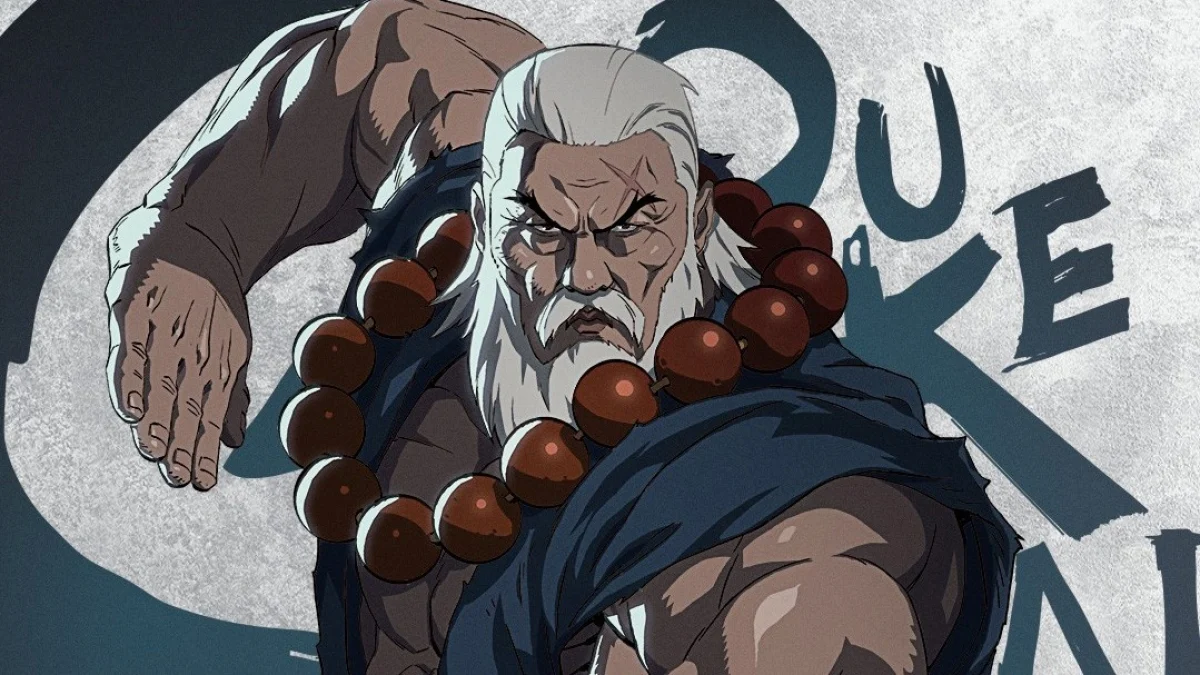
At the heart of this creative gamble is the studio Titmouse, renowned for its ability to capture kinetic energy and distinct artistic flair. The production has unveiled a "Street Fighter Hand Drawn" featurette, showcasing the original 2D animated sequences that serve as the narrative backbone for the film’s flashbacks.
These sequences serve a critical purpose in the film’s structure: they delve into the shared history of the series’ iconic protagonists, Ryu and Ken Masters. By weaving traditional animation into a live-action framework, director Kitao Sakurai (Beef, Dave) aims to bridge the gap between the franchise’s pixelated roots and the heightened cinematic reality of the 1993-set narrative.
The film boasts a star-studded cast, with Andrew Koji stepping into the role of the stoic Ryu and Noah Centineo portraying the brash Ken. The ensemble is rounded out by Callina Liang as the mysterious Chun-Li, Joe "Roman Reigns" Anoai as the formidable Akuma, David Dastmalchian as the nefarious M. Bison, Curtis "50 Cent" Jackson as Balrog, and Jason Momoa as the electrifying Blanka. Perhaps most notably, the legendary Don Lee (Train to Busan, Eternals) has been cast as Master Gouken, the martial arts mentor who shaped the destiny of both Ryu and Ken. Lee will not only portray the character in the live-action portions but will also provide the voice for the animated sequences, ensuring a seamless continuity between the two visual styles.
Chronology: From Pixel to Prestige
The journey to this iteration of Street Fighter is a decades-long evolution. The franchise, which first debuted in arcades in 1987, became a cultural juggernaut with the release of Street Fighter II in 1991. That game set the template for the modern fighting genre, establishing the archetype of characters like Ryu, Ken, and Chun-Li.
Following the lukewarm reception of previous cinematic attempts at the property, Legendary and Capcom took a measured approach to this adaptation. The decision to set the film in 1993 was a deliberate narrative choice, allowing the filmmakers to lean into the aesthetic, fashion, and cultural zeitgeist of the era that solidified Street Fighter as a global phenomenon.
The production timeline saw the script, penned by Sakurai and T.J. Fixman, based on an original story by Dalan Musson and Gary Dauberman, move through rigorous development to ensure the film honored the "World Warrior" lore. The integration of Titmouse’s animation was a strategic addition during the production phase, intended to provide visual context for the training sessions under Master Gouken that occurred years before the film’s primary conflict.

Supporting Data: The Craft of "Hand-Drawn"
The choice to utilize traditional, hand-drawn animation in an age dominated by high-fidelity CGI is a bold statement. According to the production team, the goal was to pay homage to the 1990s Japanese anime aesthetic, which served as the primary inspiration for the game’s original character designs and motion.
"Every frame was drawn by an artist," a sentiment echoed in the film’s press materials, emphasizes the labor-intensive nature of the production. By opting for traditional animation, Sakurai and his team are attempting to evoke a visceral, nostalgic reaction from longtime fans of the franchise who grew up with the Street Fighter II: The Animated Movie era.
The production metrics behind these sequences are staggering. Each frame required painstaking attention to detail, from the fluid motion of a Shoryuken to the subtle expressions of Gouken as he mentors his students. This is not merely an aesthetic flourish; it is a narrative tool used to distinguish the "legendary past" of the characters from the "gritty present" of the 1993 World Warrior Tournament.
Official Responses: A Labor of Love
Director Kitao Sakurai has been vocal about the passion driving the project. In his statement regarding the hand-drawn sequences, Sakurai noted, "Inspired by the Japanese anime that I grew up with, each frame of our animation was painstakingly drawn by hand, a true labor of love. Don Lee’s performance gives life to an iconic character, and I’m so proud of what we were able to accomplish."
This sentiment underscores the collaborative nature of the film. By involving a heavy hitter like Don Lee—a performer with significant physical presence and vocal gravitas—the filmmakers have ensured that even in 2D form, Gouken remains a looming, authoritative figure. The decision to bridge the gap between mediums via Lee’s performance suggests a deep respect for character continuity, a feature often overlooked in video game-to-film adaptations.
Paramount and Legendary have positioned this film as a cornerstone of their 2024 slate. By releasing the "Hand Drawn" featurette, they are actively managing fan expectations, pivoting the conversation away from the "live-action adaptation" stigma and toward the "cinematic expansion" of the Street Fighter universe.
Implications: The Future of Game Adaptations
The implications of this creative direction are significant for the entertainment industry. If the hybrid approach—using 2D animation to provide historical context for a live-action narrative—proves successful, it could become a new blueprint for adapting long-running video game franchises with deep lore.

1. Stylistic Versatility
The success of Street Fighter could embolden studios to experiment with visual styles that match the source material’s history rather than forcing every game into a photorealistic CGI mold. The industry is currently seeing a "prestige pivot," where adaptations like The Last of Us or Fallout are rewarded for their atmospheric fidelity. Street Fighter represents a shift toward "stylistic fidelity."
2. The Return of the "World Warrior"
For the gaming community, the film serves as a litmus test for whether the Street Fighter IP can sustain a cinematic franchise. By focusing on the 1993 setting, the film minimizes the baggage of the modern, bloated canon, focusing instead on the core conflict: the rivalry between Ryu and Ken. If this iteration resonates, expect a resurgence of competitive fighting game adaptations across the board.
3. The Human Element in Animation
By highlighting that "every frame was drawn by an artist," the film is also tapping into a broader cultural conversation regarding the value of human labor in the arts versus the increasing encroachment of AI-generated assets. By centering the human touch of Titmouse animators, the production is positioning itself as a "prestige" project, likely to be well-received by audiences who are increasingly skeptical of purely digital, soulless visual effects.
Conclusion
As October 16 approaches, the anticipation for Street Fighter continues to build. With a cast that balances mainstream appeal with fan-favorite character actors, and a visual strategy that honors the franchise’s anime roots, the production is positioning itself to be more than just a video game movie. It is a calculated, artistic endeavor designed to satisfy the nostalgia of the 1990s generation while introducing the World Warriors to a new audience.
Whether the film can maintain its balance between the grounded, gritty world of 1993 combat and the heightened, hand-drawn flashbacks remains to be seen. However, the commitment to craft—from the animation tables at Titmouse to the casting of Don Lee—suggests that for the first time in a long time, the fighters are in good hands. The path to the World Warrior Tournament is open, and for fans of Ryu, Ken, and the legendary Gouken, the wait is almost over.
