
Unearthing the Roots of Evil: Zoe Kazan’s Ambitious Reimagining of Steinbeck’s East of Eden
By Alex Billington | September 30, 2026
The literary world and the streaming landscape are bracing for a seismic event this week. On October 1, 2026, Netflix will drop its highly anticipated, seven-part limited series adaptation of John Steinbeck’s 1952 magnum opus, East of Eden. Spearheaded by actress and screenwriter Zoe Kazan, this project promises to be more than just a period drama; it is a profound, psychological excavation of the American psyche, trauma, and the eternal struggle between light and darkness.
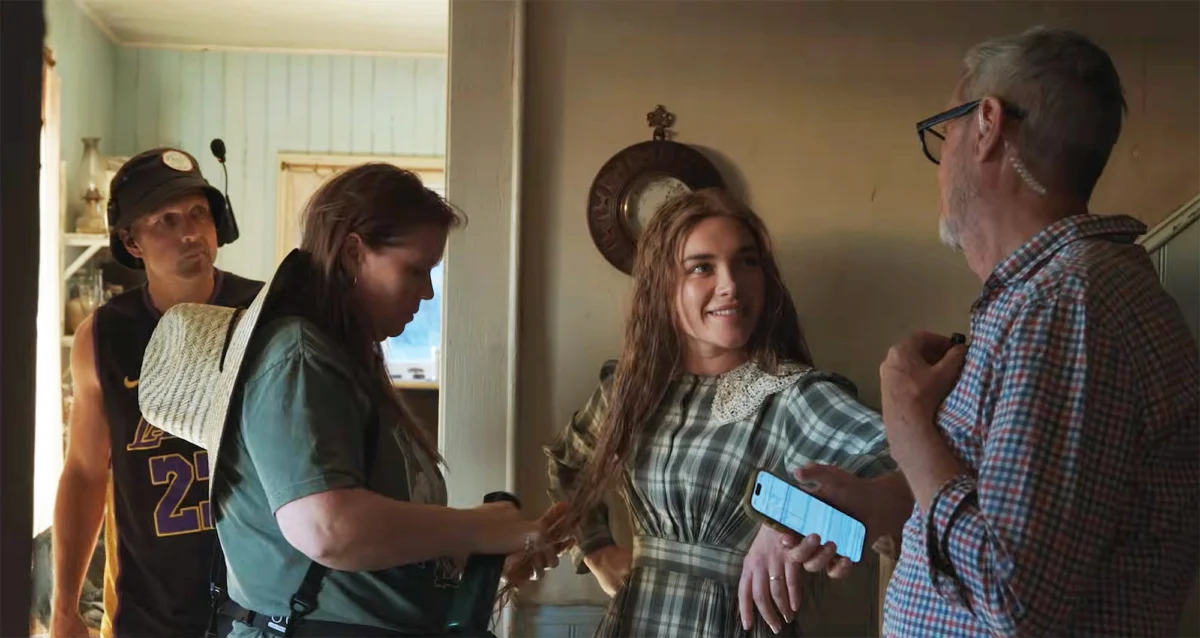
With the release of a new "making-of" featurette titled "How Zoe Kazan Reimagined a Steinbeck Classic," audiences are getting their first deep-dive look at the sheer scale and tonal complexity of this production. As the series readies for its global debut, it stands as a testament to the enduring power of Steinbeck’s prose when filtered through a modern, character-focused lens.
The Vision: A Multigenerational Saga Reborn
At the heart of this adaptation is Zoe Kazan’s singular vision. Known for her nuanced writing on projects like Ruby Sparks and Wildlife, Kazan has taken on the monumental task of distilling a sprawling, generational epic into a tight, seven-episode narrative.

In the newly released featurette, Kazan describes the challenge of translating Steinbeck’s sweeping California landscapes and internal character monologues into a visual medium. "They are huge—we have landscape, they’re epic, the story is complex," Kazan reflects. "You just get on the horse and you tackle it head-on, you just decide to dive in."
Unlike previous adaptations—most notably Elia Kazan’s 1955 film starring James Dean—this series pivots away from the singular focus on the Trask sons, instead centering its gravitational pull on the enigmatic, often misunderstood antihero, Cathy Ames. Played with chilling precision by Florence Pugh, Cathy serves as the narrative’s moral black hole, a character whose choices ripple across decades and define the existence of those around her.
Chronology: From Steinbeck’s Page to Netflix’s Screen
The journey of this adaptation has been one of careful curation and development.
- 1952: John Steinbeck publishes East of Eden, his magnum opus, which he once described as "the story of my country and the story of me."
- 1955: Elia Kazan directs the iconic feature film adaptation, cementing the story in the cinematic canon but omitting large portions of the sprawling source material.
- Early 2020s: Development begins on a new, faithful television adaptation, with Zoe Kazan and Jeb Stuart attached as showrunners.
- 2025: Production commences, with a high-profile cast announced, including Florence Pugh, Christopher Abbott, and Mike Faist.
- September 2026: Netflix releases a series of teasers and trailers, culminating in the "making-of" featurette.
- October 1, 2026: The full seven-episode series premieres on Netflix worldwide.
The production was a collaboration between Fifth Season and Anonymous Content, involving a massive logistical undertaking to capture the changing face of California from the late 19th century through the early 20th century. By grounding the show in the rapid societal shifts of that era, the producers aim to reflect the anxiety of the modern day.

Supporting Data: The Powerhouse Cast and Creative Team
The success of a literary adaptation often hinges on the strength of its ensemble, and East of Eden boasts one of the most formidable rosters in recent memory.
The Cast
- Florence Pugh as Cathy Ames: The center of the story’s moral storm.
- Christopher Abbott as Adam Trask: The patriarch whose struggle with faith and family remains the emotional core.
- Mike Faist as Charles Trask: The volatile brother representing the darker, more primal instincts of the Trask bloodline.
- Supporting Ensemble: The production is rounded out by industry titans including Hoon Lee, Tracy Letts, Ciarán Hinds, Martha Plimpton, Joseph Zada, and Joe Anders.
The Creative Engine
- Showrunners: Zoe Kazan and Jeb Stuart.
- Directors: Garth Davis and Laure de Clermont-Tonnerre, both of whom have been instrumental in establishing the series’ moody, atmospheric aesthetic.
- Executive Producers: A massive team including Pugh, Kazan, Stuart, and representatives from Anonymous Content and Fifth Season.
The production design team was tasked with creating a "portrait of one family, but also of a society that is rapidly changing," according to the showrunners. The commitment to historical accuracy—from the agrarian tools to the costuming of the early California frontier—highlights the "depth in every aspect of the filmmaking."
Official Responses: Navigating Good and Evil
The promotional materials released by Netflix emphasize the central question posed by the book: the nature of timshel—the Hebrew concept that humans have the choice to overcome sin.
"The world is so full of evil," Cathy Ames says in one of the promotional clips, justifying her withdrawal from society and her calculated, often cruel, maneuvers. This perspective forms the backbone of the series. The showrunners have explicitly stated that they did not want to make a "sanitized" version of the novel. Instead, they focused on the uncomfortable reality that "you are what you choose."

Zoe Kazan, in her role as both writer and producer, has spoken at length about the pressure of adapting a book that is considered a sacred text for many readers. By giving Cathy Ames more interiority than she has ever had on screen before, the series forces the audience to confront the "darker side of the California dream."
Implications: A New Era for Classic Literature on TV
The release of East of Eden comes at a pivotal time for streaming platforms. As audiences grow weary of endless sequels and generic IP-driven content, there is a renewed hunger for prestige adaptations of literary classics.
Why this matters:
- Reclaiming the Antihero: By focusing on Cathy Ames, the series challenges traditional patriarchal narratives that have dominated previous interpretations of Steinbeck.
- The Miniseries Format: The seven-episode structure allows for a fidelity to the source material that a two-hour film cannot match. It provides the "breathing room" required for the complex character arcs of the Trask family.
- Visual Storytelling: The collaboration between directors Garth Davis and Laure de Clermont-Tonnerre suggests a high-art approach to cinematography, moving away from "television flatness" toward a cinematic experience designed for the home.
As we look toward the premiere on October 1st, the conversation is already shifting toward the series’ potential for awards recognition and its impact on the cultural conversation regarding generational trauma. If the behind-the-scenes footage is any indication, the show is poised to be a harrowing, beautiful, and deeply intellectual addition to the Netflix library.
Final Thoughts
When asked about the difficulty of such an undertaking, Kazan noted that you simply "dive in." For the audience, the invitation is the same. Whether you are a devotee of John Steinbeck’s original novel or a newcomer drawn in by the powerhouse performance of Florence Pugh, East of Eden is shaping up to be the definitive television event of the fall season.

The series is not merely a retelling; it is a mirror held up to our current society, reflecting the same volatility, moral ambiguity, and search for redemption that Steinbeck captured over 70 years ago. As the leaves turn and the nights grow longer, East of Eden offers a dense, challenging, and ultimately rewarding journey into the heart of the American experience.
Netflix will release all seven episodes of East of Eden on October 1, 2026. Will you be watching?
