
The Uncanny Valley of Parenting: Hulu’s Phony Challenges Perception and Trust
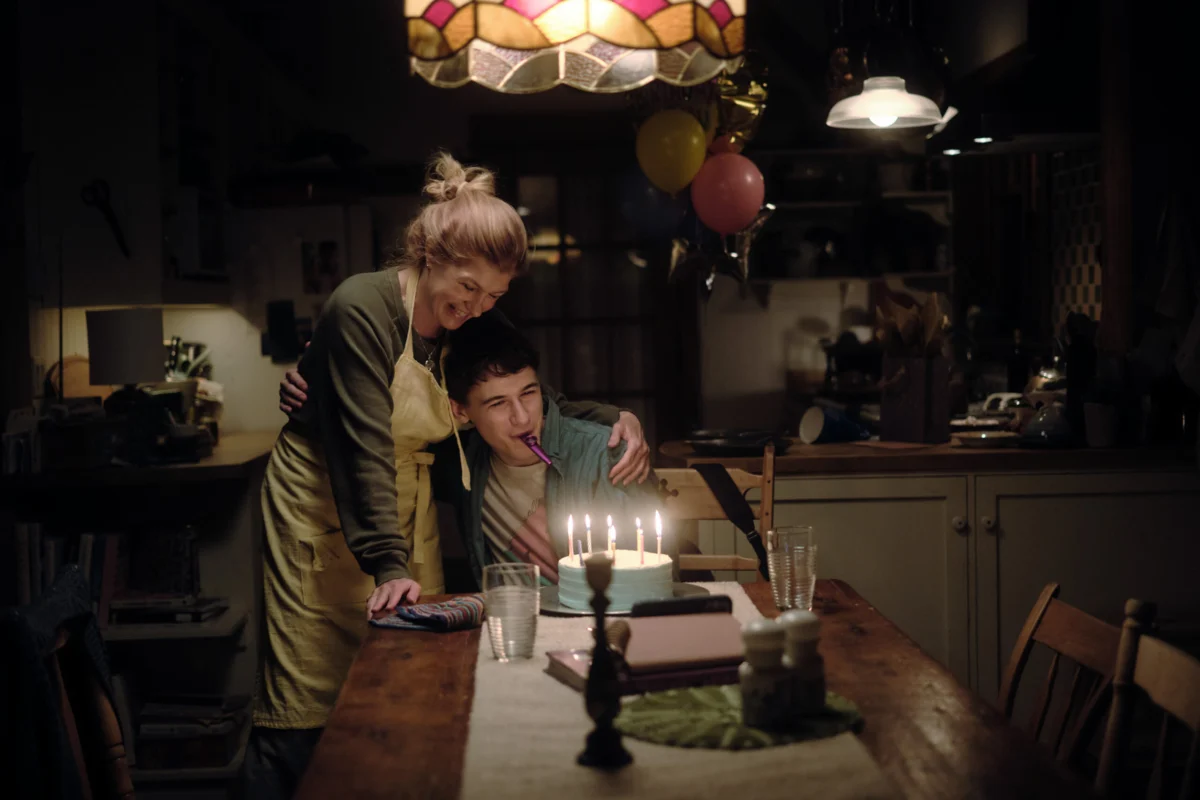
In the landscape of modern streaming, where high-concept thrillers often lean into the grim or the overly gritty, Hulu’s new comedy-mystery series Phony attempts to carve out a niche that is as surreal as it is disarmingly lighthearted. Created by Nick Paley—whose pedigree includes the whimsical Marcel the Shell with Shoes On and the frantic energy of Broad City—the series introduces a “reverse cuckoo” scenario that forces viewers to question the stability of reality through the eyes of a traumatized teenager.
However, as the series rolls out its initial episodes, critics are left in a state of suspended animation. With Hulu providing only the first half of the season for review, the show currently sits in a liminal space: caught between the psychological depth of a character study and the comedic absurdity of a suburban mystery.
The Premise: A Reality Skewed by Trauma
The narrative engine of Phony is ignited by a violent car crash in the Pacific Northwest. Sonny (played by Sam Nivola), a high-school student, wakes up after a week in a coma to find his world fundamentally altered. His mother, Ellen—portrayed by the legendary Connie Britton—has been replaced. To Sonny, the woman sitting in his kitchen and managing the local high school as its principal is not his mother. She looks different, speaks with a subtle dissonance, and lacks the specific, intimate mannerisms that define their lifelong bond.
The central question, which serves as the show’s primary hook, is whether Sonny is suffering from a post-traumatic delusion or if he is the only person in his orbit perceptive enough to identify a systemic deception. Paley leans heavily into the subjectivity of this experience during the premiere, utilizing distorted sound design and visual effects that subtly warp Britton’s features—altering her nose, eyebrows, and facial proportions—whenever the camera adopts Sonny’s perspective.
Chronology of a Disruption
To understand the gravity of the "replacement," the show provides glimpses into the pre-crash status quo. Sonny and Ellen are established as a tightly knit, if somewhat strained, unit. Ellen is a single mother navigating the complex waters of her son’s impending independence, while Sonny, a chronic people-pleaser, masks his growing pains with an upbeat, performative persona that his peers recognize as inherently "full of shit."
The narrative tension escalates rapidly:
- The Catalyst: A serious vehicular accident leads to Sonny’s week-long hospitalization.
- The Realization: Sonny wakes to find his mother, Ellen, present but “wrong.” The visual effects team reinforces his suspicion by making the viewer see the subtle, uncanny distortions in her appearance.
- The Investigation: Unable to trust his best friend or girlfriend, Sonny recruits two social outcasts—the evangelical ex-homeschooler Mallory (Grace Brennan) and the eccentric Weldon (Colter Lee).
- The Escalation: The group enlists Sharla (Meera Syal), a self-proclaimed private investigator whose primary credential is her participation in online conspiracy forums, to help unmask the woman living in Sonny’s house.
Supporting Data: The Britton Factor
A fascinating, if controversial, element of the production is the casting of Connie Britton. As a veteran of television staples like Friday Night Lights, Britton possesses a screen presence that is deeply encoded in the cultural consciousness. By intentionally obscuring her "full expressive powers" through visual effects, the show creates a meta-textual layer of discomfort.
The audience is forced to grapple with the "uncanny valley" effect. Because viewers have spent decades watching Britton’s specific micro-expressions, the subtle changes made by the production team are immediately noticeable and deeply unsettling. However, this artistic choice carries a significant risk: by handicapping the performance of such a seasoned actor, the show risks depriving itself of the emotional anchor required to make the audience truly care about the mother-son dynamic. While the absence of the "real" Ellen is a narrative plot point, it simultaneously creates an emotional vacuum that the show struggles to fill.
The Tone: Between Twin Peaks and Broad City
While the premise suggests a dark, psychological horror, Phony is decidedly lighter in tone. Paley injects the proceedings with a "benignly kooky" sensibility. The setting—a misty, forest-heavy Pacific Northwest—clearly tips its hat to the aesthetic of David Lynch’s Twin Peaks, complete with ominous wildlife shots. Yet, the show refuses to fully commit to the darkness.
The inclusion of humor, such as the characters throwing a “dead body party” upon finding a corpse in the woods, highlights Paley’s comedic roots. Sam Nivola, fresh off his own acclaimed work in The White Lotus, carries the weight of the production with a nervous, kinetic energy. His performance as Sonny provides the necessary bridge between the absurdity of his mission and the genuine fear of a child who feels he has lost his only parent to a mystery he cannot fully articulate.
Official Industry Perspective and Implications
As of the early episodes, the industry reaction remains cautious. The show’s "zippy" half-hour runtime makes for an easy binge, but the lack of a clear trajectory is a point of contention. The primary concern among critics is the lack of clarity regarding the show’s ultimate genre. Is Phony a coming-of-age allegory about the inherent distance between parents and children? Is it a satirical jab at modern conspiracy culture? Or is it a supernatural mystery that will eventually offer a concrete explanation for the "replacement" of Ellen?
By limiting the preview screeners to the first few episodes, Hulu has left the audience in a state of "awkward lull." We are past the point of simple mystery, yet we have not reached the resolution that would define the show’s success.
Key Questions for the Remaining Season:
- The "Not-Ellen" Variable: Is there an objective truth to her identity, or is she merely a reflection of Sonny’s own fracturing psyche?
- The Role of the Peers: Will the inclusion of Mallory, Weldon, and Sharla provide the necessary depth to keep the investigation grounded, or will they devolve into comic relief?
- The Emotional Stakes: Can the series survive without the full emotional resonance of its lead, Connie Britton, or will the "uncanny" premise become a gimmick that eventually wears thin?
Conclusion: A Slow-Burn Mystery
Phony is an ambitious experiment in tone and visual storytelling. It succeeds in creating a unique, slightly off-kilter world that feels distinct from other teen-centric mysteries. However, its success will ultimately depend on its ability to pivot from "mild curiosity" to "burning urgency."
For viewers, the show presents a challenge: to stick with a narrative that is currently defined by what it hides rather than what it reveals. Whether the reveal is worth the obfuscation remains to be seen. As the weekly rollout continues on Hulu, the series will need to clarify its identity—moving beyond the "reverse cuckoo" premise to offer a substantive answer to the question of what happens when we can no longer recognize the people we love the most.
Phony is currently streaming on Hulu, with new episodes releasing every Tuesday. Whether it becomes a defining mystery of the season or a curiosity of the streaming era will likely be determined in the final, unseen half of its inaugural season.
