
A Life of Portraying Truth: Léa Seydoux on Artistic Agency, Trauma, and the Evolution of Her Craft
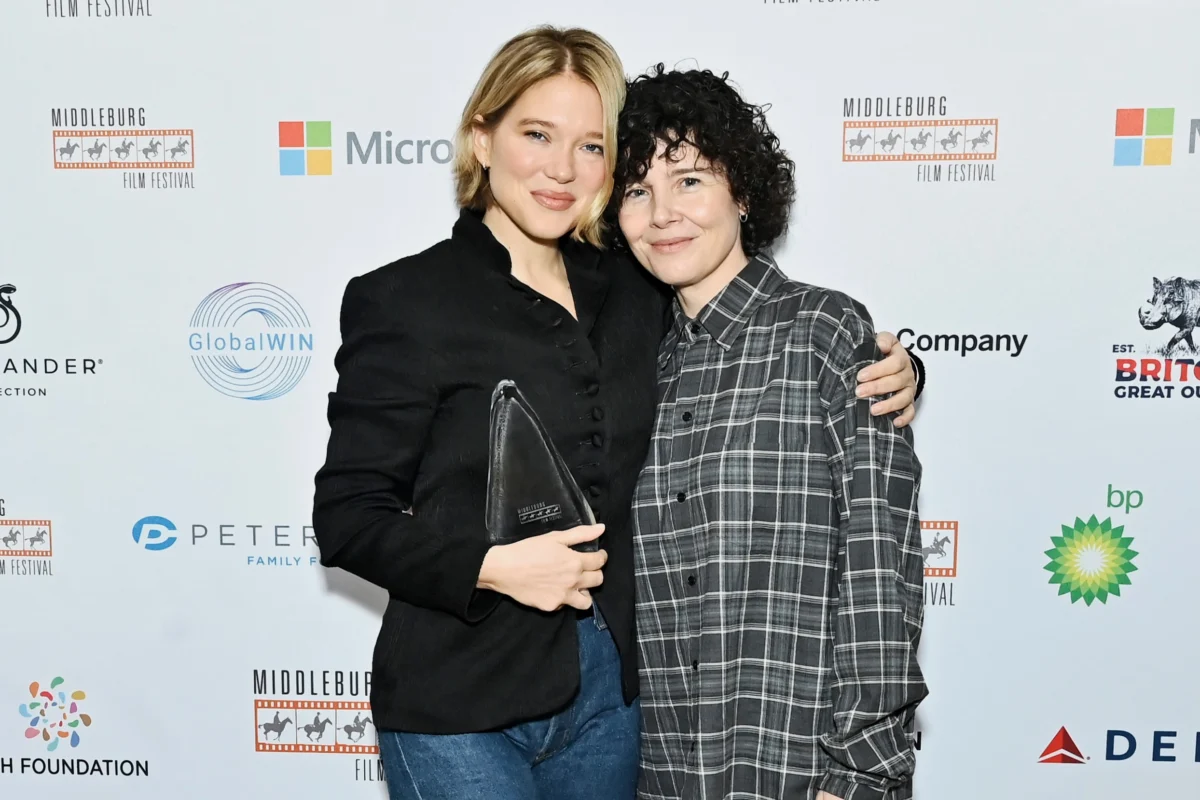
In the quiet, picturesque landscape of Middleburg, Virginia, the cinematic world recently converged to celebrate the profound career of one of France’s most versatile actors. While accepting the Middleburg Film Festival’s Achievement in Acting Award this past weekend, Léa Seydoux, now 41, offered a reflection that bridged the gap between her early life and the seasoned artist she has become. Standing before an audience of film enthusiasts, she shared a nostalgic anecdote: her first encounter with the United States was as an eight-year-old girl, sent alone to a summer camp in that very town, equipped only with the words "yes," "no," and "sorry, I don’t understand."
"I didn’t know then that I would become an actress, and that this would be my life: traveling, discovering new cultures, and exploring human nature," Seydoux remarked. Today, that exploration of human nature has become the hallmark of her career, culminating in a powerful performance in the Cannes breakout Gentle Monster. Directed by Austrian filmmaker Marie Kreutzer and distributed by Netflix, the film has firmly positioned Seydoux as a top contender in the upcoming Best Actress Oscar race.
The Genesis of Gentle Monster
The project, a searing examination of complicity and the shattering of domestic illusion, grew from a singular, disturbing seed. Marie Kreutzer was inspired by a 2020 newspaper article detailing the realities of pedophilia. The research process, she noted, was a wake-up call regarding the proximity of such darkness. "The article made it clear to me how close the perpetrators mostly are in most cases," Kreutzer explained. "It made me realize that I must certainly know not only victims of child sexual abuse but also perpetrators myself."
For Seydoux, who is a mother of two, the initial reaction to the script was one of profound hesitation. "I was a bit scared of it," she admitted. However, the intellectual rigor of the screenplay won her over. The film follows Lucy Weiss, a French pop singer living an idyllic life in the Austrian countryside with her husband and young son, only to have her world implode when her husband is accused of horrific crimes.

Seydoux describes the role as a masterclass in controlled, internal performance. "It’s a shock after another shock," she said. "It’s all these contradictions. I was able to bring a lot of different emotions that are not explainable with words."
A Performance of Language and Silence
The technical demands of Gentle Monster were substantial. Seydoux was tasked with navigating a multilingual landscape, performing in English, French, and German. The linguistic barrier served as a poignant metaphor for her character’s isolation. "I found it difficult to play the emotions with a language I don’t speak," Seydoux reflected. "There was a word I struggled to pronounce, and at some point, I burst into tears. Lucy can’t really express herself, and because she doesn’t speak the language well, she is even more isolated."
The performance is characterized by what Seydoux calls "internalized emotions." Throughout the film, she is often seen reacting in silence, relying on micro-expressions and body language to convey the visceral, agonizing process of a woman realizing the person she loves is a monster. This commitment extended to technical mastery, including piano sequences that required extensive training in Vienna.
The Weight of History: From Blue to the Present
While Gentle Monster represents the pinnacle of her current work, the conversation at Middleburg inevitably turned to the formative, yet traumatic, experience of filming Abdellatif Kechiche’s 2013 Palme d’Or winner, Blue Is the Warmest Color. Thirteen years removed from the project, Seydoux’s assessment of the production is unflinching.

The film, which propelled both Seydoux and co-star Adèle Exarchopoulos to international stardom, was shot under conditions that the actress now identifies as deeply abusive. "At the time, before the #MeToo movement, I’ve spoken about how disrespectful the director had been," she said. The process was fraught with graphic, non-consensual content. "I discovered the scenes during Cannes, which is absolutely crazy, and I didn’t have any approval on these scenes."
In an act of industry bravery, Seydoux has now revealed a previously undisclosed consequence of her advocacy: she was fired from the film’s promotional tour for speaking out against the treatment she and her co-star endured. "The producers came to me and said, ‘You better shut your mouth, because if you want to be nominated for something, if you want to do the award season, you better stop,’" she recalled. When she refused, the retaliation was swift and personal, with the director even resorting to bullying tactics, using her privileged background as a weapon to discredit her experiences.
Implications for the Industry
The contrast between the production environment of Blue Is the Warmest Color and her current collaboration with Marie Kreutzer illustrates the tectonic shift in the film industry regarding actor autonomy. Seydoux now mandates final approval on any scenes involving her body, a standard that she felt fully supported in with Kreutzer.
"When you work hand in hand with a director, as I did with Marie, she showed me the scenes," Seydoux said. "I need to have the approval of that because it’s so intimate."

This evolution in her professional life reflects a broader maturation within the industry. No longer willing to be a silent vessel for a director’s vision, Seydoux has become a vocal proponent of safe, collaborative, and ethical filmmaking. Her journey from the confused, non-English-speaking child in a Middleburg summer camp to a fiercely independent, Academy-recognized star serves as a testament to the resilience of the artistic spirit.
Artistic Legacy and Future Directions
Throughout her two-decade career, Seydoux has cultivated a filmography that defies categorization. From her work with auteurs like Wes Anderson in The Grand Budapest Hotel and Woody Allen in Midnight in Paris to the intimate, character-driven dramas of Mia Hansen-Løve, she has remained a constant force of intellectual and emotional depth.
Her recent performance in Gentle Monster is not just a bid for an Oscar; it is a declaration of her autonomy. By choosing roles that challenge both the audience and herself, she continues to push the boundaries of what it means to be an actor in the modern era. As she looks toward the future, the lessons of her past—both the triumphs of Blue and the systemic failures of the industry—remain central to her work. She has emerged not just as an actor, but as a guardian of her own narrative, ensuring that the human nature she explores on screen is matched by the integrity of the process behind the camera.
For the attendees at the Middleburg Film Festival, the takeaway was clear: Léa Seydoux is an artist who has walked through the fire, emerged on the other side, and is now using her voice to reshape the landscape of international cinema. Her story is one of reclaiming power, demanding respect, and, above all, the relentless pursuit of truth in a world that often demands silence.
