
The Night Hollywood’s Titans Took the Stage: Remembering the 1963 Bowl Phenomenon
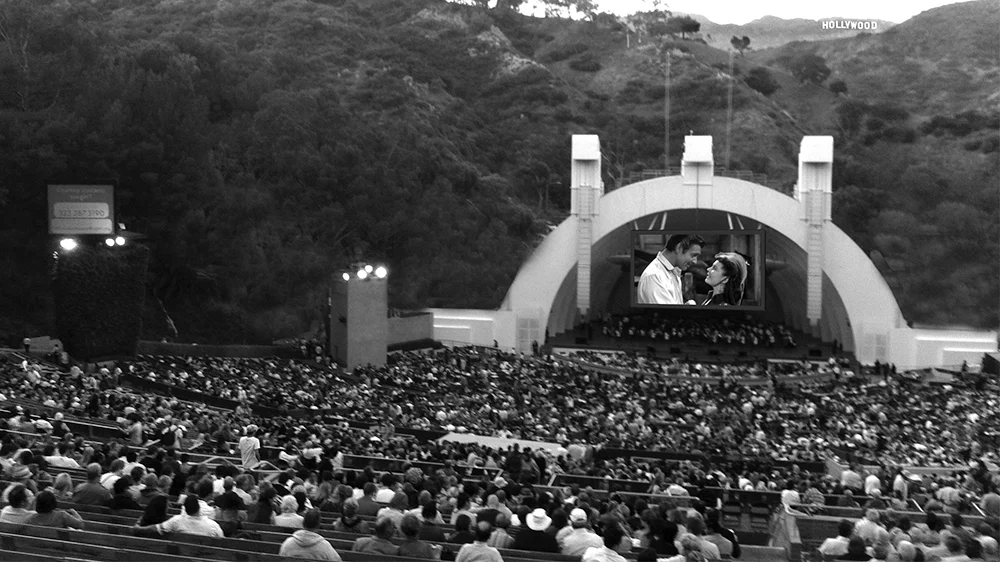
In the modern era, the “movie music” concert has become a global cultural staple. From the sweeping, live-to-picture performances of John Williams’ masterpieces to the sold-out touring retrospectives of Hans Zimmer and Danny Elfman, audiences worldwide have come to view the film score as the modern equivalent of the classical symphony. Yet, while these events are now de rigueur at major concert halls and amphitheaters, they trace their lineage back to a single, singular night of unprecedented ambition.
Fifty years ago, an extraordinary constellation of film composers—the architects of the Golden Age of Hollywood—gathered under the stars at the Hollywood Bowl. It was a night of musical alchemy that proved, for the first time on a grand scale, that the sounds of the silver screen could command the stage with as much gravitas as the works of Beethoven or Mahler.
The Night of September 25, 1963: A Gathering of Giants
The date was September 25, 1963. While it was a sweltering mid-week evening in Los Angeles, the heat did little to deter the massive crowd. An estimated 10,000 film enthusiasts and music lovers filled the iconic Hollywood Bowl to witness a spectacle that, in hindsight, serves as the "Big Bang" of the cinematic concert experience.
The program was not merely a collection of hits; it was a curated journey through the musical DNA of American cinema, conducted, in most instances, by the very men who had penned the scores. This was a rare opportunity for the public to witness the "invisible" creators of Hollywood’s emotional landscape stepping out of the recording studio and into the spotlight.
Chronology of an Unrepeatable Evening
The concert opened with the kinetic, brass-heavy urgency of Elmer Bernstein’s iconic theme from The Magnificent Seven. It set a tone of high adventure that would define the rest of the evening.
Henry Mancini, then ascending to the height of his powers, made only his second appearance at the venue. He commanded the orchestra through the smoky, melancholic textures of “Days of Wine and Roses” and the cool, driving jazz-inflected rhythms of Peter Gunn. The audience was further swept away when Alfred Newman, a titan of the studio system, took the podium. His performance of the rousing overture to How the West Was Won proved to be the emotional zenith of the evening, bringing the capacity crowd to its feet.
The event’s structure was designed to showcase the diversity of the film music craft:
- The Orchestral Suites: David Raksin and Franz Waxman unveiled new, expansive symphonic suites for their masterworks, Laura and A Place in the Sun, respectively. These arrangements transformed intimate film cues into concert-hall epics.
- The Legends: Miklos Rozsa offered the sweeping, ancient grandeur of Ben-Hur, while Bernard Herrmann—known for his prickly genius—brought the tense, psychological mastery of his North by Northwest fandango to the fore.
- The Epic Scope: Dimitri Tiomkin provided the haunting, inevitable dread of the High Noon theme, and Alex North presented music from the then-current, production-plagued epic Cleopatra.
The evening also featured moments of profound legacy. Max Steiner, the "father of film music" then at the age of 75 and nearing the end of his career, was present to witness the event. Recognizing his advancing years, Steiner ceded the baton to arranger Percy Faith, whose chart-topping version of Steiner’s A Summer Place had introduced the composer’s work to a new, younger generation of pop-music fans.
The night was anchored by MGM music director Johnny Green, who served as host and performed his own work, Raintree County. The program was further augmented by star power: Andy Williams delivered a definitive, velvet-voiced rendition of “Moon River,” while gospel legend Mahalia Jackson offered a stirring performance from The Alamo. In a touch of Hollywood levity, comedian and accomplished violinist Jack Benny provided a necessary comedic interlude, bridging the gap between high art and popular entertainment.
Behind the Curtain: Purpose and Production
The primary catalyst for this monumental event was the Composers and Lyricists Guild of America (CLGA). At the time, the CLGA was the vital collective bargaining unit representing the interests of Hollywood’s songwriters and composers—a role it would hold until the early 1980s.
The concert was designed as a high-profile fundraiser, intended to bolster the Guild’s coffers and raise awareness for the creative contributions of composers, who were often overshadowed by the directors and stars of the films they scored. Columbia Records later immortalized the event by issuing an LP titled Music From Hollywood. Despite the album’s success and the critical acclaim heaped upon the performance, the "first annual" billing proved to be a misnomer. The sheer logistical and creative challenge of reuniting such a diverse group of high-profile, busy composers meant that this specific "all-star" configuration would never again be repeated in the same capacity.
The Weight of the Legacy: Official Perspectives
Looking back on the event, the consensus among music historians and those who followed in the footsteps of the 1963 participants is one of awe. David Newman, the son of the legendary Alfred Newman and a renowned conductor of film music in his own right, has frequently noted the significance of that night.
"I doubt that there has ever been a bigger collection of top-tier composers on one stage, in one place, at one time," Newman observed in a recent retrospective. "The history of the medium is so vast, but that night represented the absolute peak of the Hollywood studio system’s musical output. It was a singular moment of recognition."
Newman suggests that the 1963 concert was not just a historical footnote, but a catalyst for the industry at large. "It just may have been this concert that paved the way for film music to be presented in concert halls around the world," he adds. "It showed that this music had a life outside of the projector. It proved that a film score could move an audience just as deeply in the silence of a concert hall as it could in the context of a narrative."
Implications: The Evolution of the Concert Hall
The impact of the 1963 Hollywood Bowl concert cannot be overstated. Before this event, the notion of "film music" as a standalone concert genre was largely dismissed by the classical establishment. By bringing together the likes of Rozsa, Steiner, and Newman, the CLGA effectively legitimized the art form, asserting that film composers were the true symphonists of the 20th century.
Today, we see the direct descendants of this event in the ubiquitous "Film Music with Live Orchestra" trend. Major orchestras in London, Berlin, and New York regularly dedicate seasons to the works of film composers. The "movie music night" has become a vital revenue stream for symphony orchestras, attracting younger demographics and bridging the gap between high culture and mass media.
Furthermore, the 1963 concert established the importance of the composer-as-conductor. By witnessing the creators themselves at the podium, the 10,000 attendees in 1963 were granted a rare, intimate look at the creative process. It humanized the music, transforming abstract melodies into personal expressions of craft.
In the final analysis, the Hollywood Bowl gathering of 1963 stands as a testament to the enduring power of the cinematic score. It was a night when the wall between the screen and the stage was dismantled. As we look at the thriving global market for live film music today, it is clear that the seeds planted on that hot September night in Los Angeles have grown into a cultural forest. The giants who stood on that stage—Bernstein, Mancini, Newman, and the rest—didn’t just perform a concert; they defined a future where the music of the movies would be recognized as one of the most vital, emotional, and enduring art forms of the modern age.
