
Revolutionizing the Small Screen: Television Academy and NATAS Announce 2026 Technology and Engineering Emmy Awards
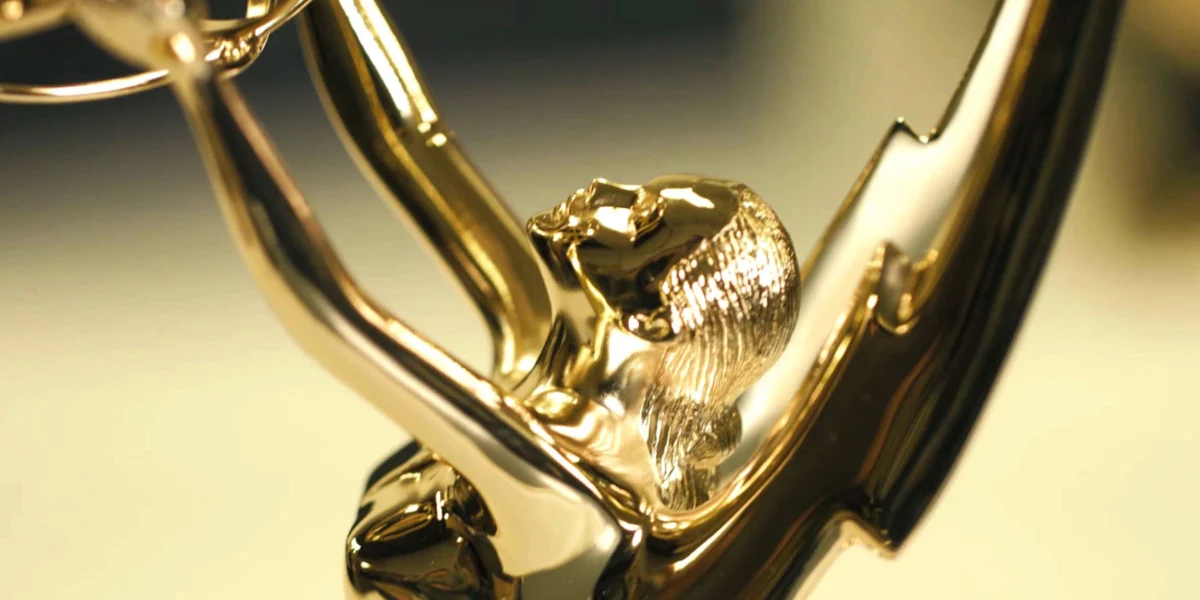
NORTH HOLLYWOOD, Calif. — The Television Academy and the National Academy of Television Arts & Sciences (NATAS) have officially unveiled the recipients of the prestigious 2026 Engineering, Science & Technology Emmy Awards. Honoring the brilliant minds, cutting-edge software architectures, and heavy-duty hardware that quietly power the modern media landscape, this year’s list spans foundational workflow codecs, generative AI post-production tools, and satellite constellations capable of broadcasting live events from the world’s most remote corners.
The formal awards gala is scheduled for Wednesday, October 14, at the Television Academy’s Saban Media Center in North Hollywood. This joint recognition arrives as both academies actively explore a formal organizational reunification, echoing a collaborative spirit last seen during the 2014 awards season.
Main Facts: Honoring the Architects of Modern Television
The Engineering, Science & Technology Emmy Awards recognize developments in engineering, science, and technology so innovative and extensive that they fundamentally alter the production, recording, transmission, or reception of television, ultimately elevating the art of visual storytelling.
This year’s top honors feature a sweeping array of technological triumphs:
- The Charles F. Jenkins Lifetime Achievement Award was awarded to Barry B. Zegel, recognizing decades of executive leadership at CBS, foundational facility design, and international telecommunications standardization.
- The Philo T. Farnsworth Corporate Achievement Award went to Chapman/Leonard Studio Equipment Inc. for over 80 years of pioneering mechanical camera support, dollies, and cranes.
- Individual and Corporate Technology Honors were granted to breakthrough developments including Adobe Premiere, Avid DNx, Accentize’s Chameleon, Hitomi’s MatchBox Glass, Snow Business USA’s Snowbase, Starlink, and ARRI’s Trinity 2.
- NATAS Technology & Engineering Awards highlighted critical group achievements in remote monitoring, FPV drone racing infrastructure, ATSC 3.0 NextGen TV deployment, AMWA NMOS, SMPTE IP standards, and AI-driven facial transformation.
Chronology and Evolution: From Analog Roots to IP-Based Workflows
The journey of television engineering has undergone staggering shifts, tracing a path from the earliest experimental demonstrations to the current era of cloud-native, generative, and IP-driven media pipelines.
- Early 20th Century Pioneers: The upcoming October ceremony will specifically honor the historical breakthroughs of Theodore Willard Case, Georges Claude (Practical Transduction), and John Logie Baird (First Demonstration of Recognizable Television).
- 1945: Ralph Chapman founds Chapman Studio Equipment, giving rise to the custom camera-support manufacturing company that would eventually merge to become Chapman/Leonard Studio Equipment Inc.
- 2014: The Television Academy and NATAS previously combined their engineering ceremonies, setting a historical precedent for joint operations that is resurfacing today amid current reunification talks.
- 2020–2024 (The Remote Production Pivot): Triggered by the COVID-19 pandemic, the live broadcast industry rapidly engineered and deployed web-based, frame-accurate remote monitoring systems. Over the next four years, these tools transitioned from emergency fixes to permanent industry standards across major networks and streaming platforms.
- Present Day (2026): Modern broadcasting stands at the intersection of generative AI, low Earth orbit (LEO) satellite communications, and ATSC 3.0 IP broadcasting—all of which are recognized in this year’s Emmy slate.
Supporting Data: Breakdown of Award Categories and Recipients
Lifetime and Corporate Achievement
- Charles F. Jenkins Lifetime Achievement Award – Barry B. Zegel: Spending his career at CBS and culminating as Senior VP and General Manager of CBS Television City, Zegel championed HD transitions, served as an ITU rapporteur, directed Olympic technical operations, and founded the Television Academy’s Science & Technology Peer Group.
- Philo T. Farnsworth Corporate Achievement Award – Chapman/Leonard Studio Equipment Inc.: Founded in 1945 and presently led by great-grandson Charles Leonard, the company has revolutionized camera movement for eight decades via innovations like the Hercules Mobile Crane, Lenny Arm, Olympian series, and the submersible Hydroscope Telescoping Crane.
Engineering, Science & Technology Emmy Awards
- Adobe Inc. (Adobe Premiere): Honored for its two-decade evolution into a premier non-linear editing system. Its format-agnostic timeline removes the need for transcoding, while native machine-learning and generative AI tools operate directly inside the edit room with transparent identification markers.
- Avid Technology (Avid DNx): Recognized for its production mezzanine codec family. Offering low-complexity intraframe compression and constant-bit-rate design, DNx delivers frame-accurate random access and predictable real-time playback across color, VFX, and audio workflows.
- Benjamin Graf / Accentize (Chameleon): An audio plug-in that utilizes neural networks to analyze location or studio-captured sound and instantly replicate its exact reverberation characteristics, simplifying ADR dialogue matching and multi-space audio integration.
- James Robinson / Hitomi (MatchBox Glass): Transforms a standard iPhone into a precision lip-sync and latency measurement instrument, eliminating the need for bulky hardware generators by capturing audio-video synchronization directly "from the glass."
- Roland Hathaway, Darcey Crownshaw, Frank Balzer, and Dean Hathaway / Snow Business USA (Snowbase): A biodegradable, eco-friendly artificial snow made from pure wood pulp cellulose. Safe for flora and fauna, it can be applied in any temperature and mimics real snow slush.
- Starlink Services, LLC (Starlink): A low-Earth orbit satellite constellation operating at roughly 550 kilometers altitude, reducing latency to ~25ms and stripping away geographical limits for live broadcasting, remote collaboration, and field contribution.
- Curt O. Schaller and Dr. Roman Foltyn (Trinity 2 Hybrid Camera Stabilizer System): Offers 360-degree rotation, low-to-high transitions, and absolute horizon stability, freeing cinematographers to achieve complex, continuous shots in tight spaces or chaotic environments.
NATAS Technology & Engineering Class of 2026
- Web-Based Frame-Accurate Remote Monitoring Systems: SipRadius, NBCU, Grass Valley, CBS Sports, Disney, Game Creek, Amazon, and Vindral.
- FPV Drone Camera Systems for Live Sports: Olympic Broadcasting Services (OBS), Proton, Wave Central, and Above Media.
- Standardization of ATSC 3.0 NextGen TV: ATSC (The Broadcast Standards Association).
- AMWA NMOS Discovery, Registration and Connection: Advanced Media Workflow Association, Sony Corporation, BBC, and Streampunk Media, LTD.
- SMPTE Hybrid Cable Format Converter and Power Injector: Telecast Fiber Systems, Bluebell Opticomm Ltd, and Multidyne Electronics Inc.
- AI-Based Face Replacement and Performance-Preserving Post-Production: Disney Research, Rising Sun Pictures, Digital Domain, and Metaphysic (Brahma AI).
Official Responses and Industry Commentary
Leadership from both academies emphasized that the convergence of necessity and ingenuity defines the current golden age of broadcast engineering.
"Television has always been shaped by those who dare to imagine what’s possible and then create the technology to make it a reality," stated Cris Abrego, chair of the Television Academy. "The recipients of our Engineering, Science & Technology Emmy Awards represent the extraordinary ingenuity and innovation that continues to propel our industry forward."
Wendy Aylsworth and Paul Debevec, co-chairs of the Television Academy’s Engineering, Science & Technology Committee, added: "These organizations have given creators greater freedom, helped teams solve complex challenges and enriched the experience of viewing audiences everywhere."
Highlighting the overarching philosophical shift in technology, Terry O’Reilly, chair of NATAS, noted: "The most meaningful technological innovations don’t simply improve television, they redefine what it can be."
Joe Inzerillo, NATAS Technology & Engineering Chair, echoed this sentiment: "This year’s crop of winners are at the intersection of necessity and ingenuity, and we are thrilled to be able to team up with the Television Academy’s committee for this exceptional night."
Implications for the Future of Media
The technologies recognized by the Academies this October signal profound structural changes across the entertainment business:
- Democratization of Remote Production: Through Starlink’s high-speed, low-latency satellite infrastructure and advanced web-based remote monitoring tools, television production is no longer tethered to traditional metropolitan studio hubs. High-end storytelling can now originate from previously inaccessible terrain.
- Artificial Intelligence Integration: The inclusion of tools like Adobe Premiere’s generative AI features and AI-based face replacement (from Metaphysic, Disney Research, and Digital Domain) proves that artificial intelligence has moved past experimental phases into daily, native production workflows—complete with industry discussions surrounding ethical use and transparent identification.
- The IP and Cloud Migration: Standards like ATSC 3.0 and AMWA NMOS/SMPTE ST 2110 illustrate an irreversible shift from baseband signals to fully IP-based, interoperable broadcast environments, promising greater efficiency, higher resolutions (UHD/HDR), and interactive consumer experiences.
Additionally, NATAS has announced the nominees for its third annual Excellence in Production Technology — Application category, which honors unique creative executions of applied science. The nominees include Good Morning America (ABC News / The Walt Disney Company), Prime Vision NFL’s Thursday Night Football (SportsMEDIA Technology – SMT), and Star Wars: Skeleton Crew (Disney+). The winner will be revealed live during the October 14 ceremony.
