
Rewinding the Past: A Critical Analysis of Posthumous and the Cinematic Anatomy of Grief
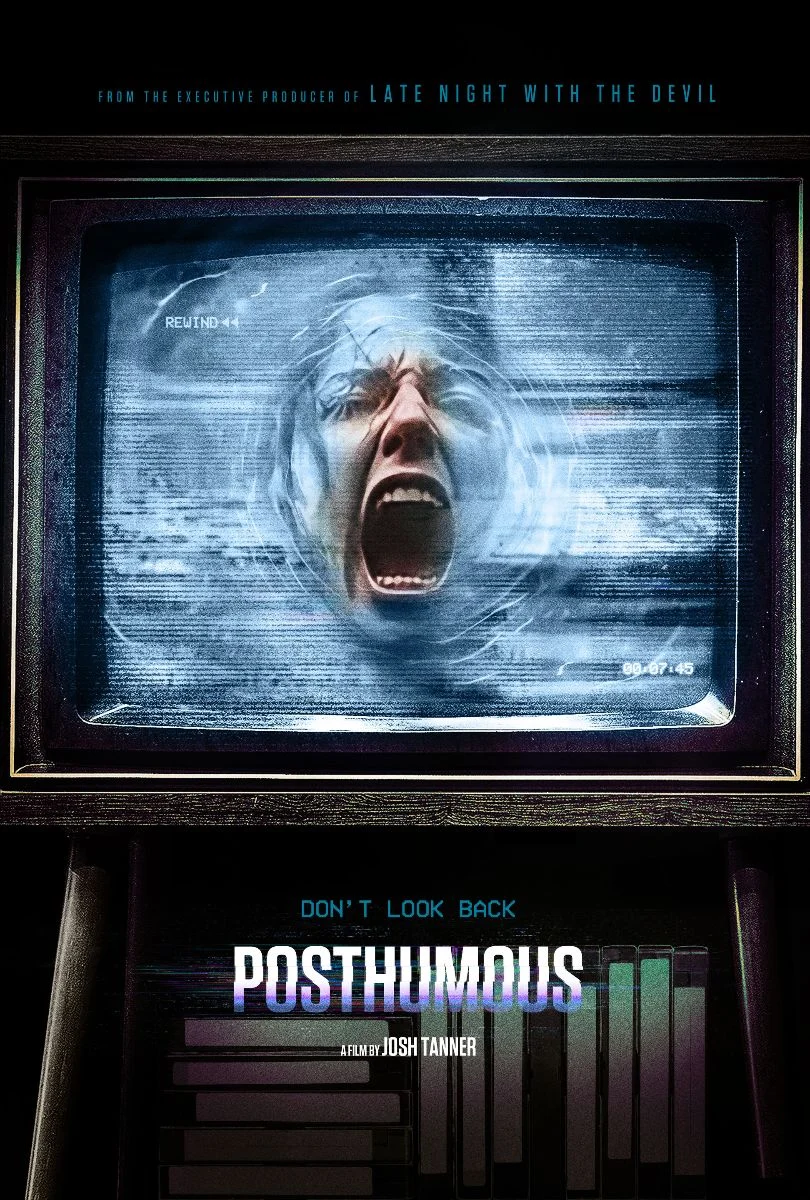
There is a distinct, visceral brand of mourning that exists solely within the erratic pulse of degraded magnetic tape. The colors bleed at the edges, the audio warbles beneath a layer of static, and a voice belonging to someone long gone persists, speaking with an eerie, detached vitality from a past frozen in time.
The psychological horror-thriller Posthumous understands this specific, haunting ache with terrifying clarity. For the vast majority of its runtime, the film transforms that melancholy into a creeping, deeply unsettling atmospheric dread. It establishes itself as a remarkably competent and emotionally resonant horror film—even if it occasionally stumbles into the classic trap of mistaking narrative excess for genuine artistic elevation.
Main Facts
- Film Posthumous
- Genres: Psychological Horror / Supernatural Thriller
- Directors/Writers: Co-written by Tanner and Jade van der Lei.
- Key Cast Members:
- Sophie Lowe as Zoe
- David Roberts as Neil (Zoe’s father)
- Kira-Che Heelan as Joanne (Zoe’s late mother)
- Core Premise: On her birthday, Zoe stays at her father’s house and watches a collection of VHS birthday messages recorded years prior by her mother, who passed away before she could raise her. These analog artifacts pull the family into a dark, supernatural mystery.
- Critical Consensus: Praised for its grounded familial performances, masterclass use of analog horror aesthetics, and genuine dread, though criticized in its third act for over-escalating and stretching past a natural narrative climax.
Chronology of Events and Narrative Progression
The narrative architecture of Posthumous is built upon a slow-burn escalation that mirrors the degradation of the media at its center.
Act I: The Birthday Archive
The film opens on an intimate, somber note. It is Zoe’s (Sophie Lowe) birthday, a milestone stripped of maternal celebration due to the tragic death of her mother, Joanne (Kira-Che Heelan), before she was old enough to form memories of her. Seeking comfort or perhaps a lingering connection, Zoe holes up in her father Neil’s (David Roberts) house.
Here, she uncovers a box of old VHS tapes—raw, unedited birthday messages recorded by Joanne across the years. Co-writers Tanner and Jade van der Lei immediately establish a melancholy tone, using the warm, humming glow of old cathode-ray tube televisions to ground the audience in domestic isolation. However, the comforting ritual quickly curdles. What begins as an innocent dive into nostalgia morphs into something profoundly wrong. The tapes start to interact with the physical space of the house, bending the rules of linear time and space, leading Zoe and Neil down a harrowing rabbit hole.
Act II: The Analog Invasion
As the supernatural elements bleed out from the television screen and into the tangible world of the house, Posthumous hits its stride. The middle act relies heavily on the friction between the family’s shared grief and the encroaching, otherworldly threat. Every warped frame of video acts as a permeable membrane—a metaphysical door left slightly ajar, daring the characters (and the audience) to look closer. The film’s dread peaks here, sustained not by cheap jump scares, but by the agonizing realization that the past cannot be safely contained once it has been disturbed.
Act III: The Over-Extension
The psychological and supernatural tension hits what feels like a natural, emotionally shattering apex as the film moves toward its conclusion. However, rather than cutting to black on a powerful, resonant note of tragedy and closure, the script continues to push forward. Additional revelations pile on top of one another, introducing escalating narrative twists that dilute the focused, intimate terror that characterized the first two acts.

Supporting Data and Production Elements
What ultimately elevates Posthumous above standard straight-to-streaming horror fare is the meticulous attention paid to its character dynamics and aesthetic execution.
The Anchor of Domestic Realism
Supernatural horror is a notoriously fragile genre; it relies entirely on the audience believing in the stakes of the characters. If the viewer does not care who is standing in the dark, the dark has no power.
Posthumous avoids this pitfall entirely through the grounded, lived-in chemistry between Sophie Lowe and David Roberts. Their father-daughter relationship does not feel manufactured simply to serve as setup for the next terror sequence. They share quiet, unspoken grief, awkward silences, and protective instincts that feel profoundly real. Consequently, a significant portion of the film’s dread stems not just from what is lurking in the shadows, but from the paralyzing fear of seeing harm come to these two people.
The Aesthetics of Decay
The visual language of Posthumous is heavily tied to the physical medium of magnetic tape. In the realm of contemporary horror, "analog horror" has become a popular subgenre, often leaning into YouTube-style found-footage aesthetics. Posthumous, however, integrates this style into a traditional narrative feature with striking polish.
The low-fidelity artifacts—tracking lines, color bleed, audio distortion, and visual static—are not merely stylistic window dressing; they are diegetic hazards. The analog look belongs strictly to the supernatural vector of the story. The filmmakers understand that our collective cultural memory associates VHS tapes with home videos, safety, and preserved memories. By corrupting that specific medium, the film weaponizes nostalgia, turning safe domestic archives into vectors of pure terror.
Official Responses and Critical Reception
The reception to Posthumous has been largely positive, marked by critical appreciation for its ambitious debut qualities balanced with constructive critiques regarding its pacing and script discipline.
Critics have widely lauded the performances of Lowe and Roberts, noting that their emotional authenticity anchors the supernatural elements. Genre reviewers have highlighted the film’s first two acts as a masterclass in atmospheric tension-building, singling out the sound design and cinematography for successfully capturing the tactile dread of analog media.

However, a recurring note in critical analyses centers on the film’s third-act fatigue. Reviewers have pointed out that the project suffers slightly from "ambitious overreach." Rather than maintaining the tight, claustrophobic focus on family trauma and localized haunting, the creators chose to expand the mythology and extend the climax. While critics generally agree that this stems from creative ambition rather than laziness or a lack of craft, it nevertheless dampens the final emotional punch of an otherwise formidable horror outing.
Implications for the Genre and the Filmmakers
The release and reception of Posthumous carry broader implications for the current landscape of psychological and supernatural horror cinema.
The Evolution of Analog Horror
For years, analog horror was largely confined to internet-based web series (such as Local 58 or The Mandela Catalogue). Posthumous represents part of a growing wave of feature-length films attempting to translate the unease of low-fi, distorted media into a traditional three-act cinematic structure. The film proves that the aesthetic carries genuine narrative weight when backed by strong emotional performances and high production values. It demonstrates that audiences are still deeply receptive to horror that preys on technological obsolescence and the uncanny nature of recorded history.
A Lesson in Cinematic Restraint
The primary takeaway from the structural choices in Posthumous is a timeless lesson for emerging filmmakers: the importance of knowing when to stop.
First-time and early-career directors often feel an immense pressure to deliver a massive, cinematic-universe-expanding finale that leaves no stone unturned. Yet, as Posthumous illustrates, some stories are at their most potent when they leave questions unanswered and emotional wounds exposed rather than neatly stitched up by an over-complicated mythology.
Tanner and van der Lei crafted a world rich with subtext, backed by exceptional performances and striking visual motifs. The horror was already there, pulsing within the magnetic strips of those forgotten tapes. Ultimately, Posthumous serves as a thrilling reminder of what happens when we look too closely into the past—and a poignant reminder that sometimes, the bravest thing a storyteller can do is simply press stop.
