
Netflix Is Set to Shatter Its Own Rules: Why K-Pop Demon Hunters 2 Will Force a Game-Changing Theatrical Release
Main Facts
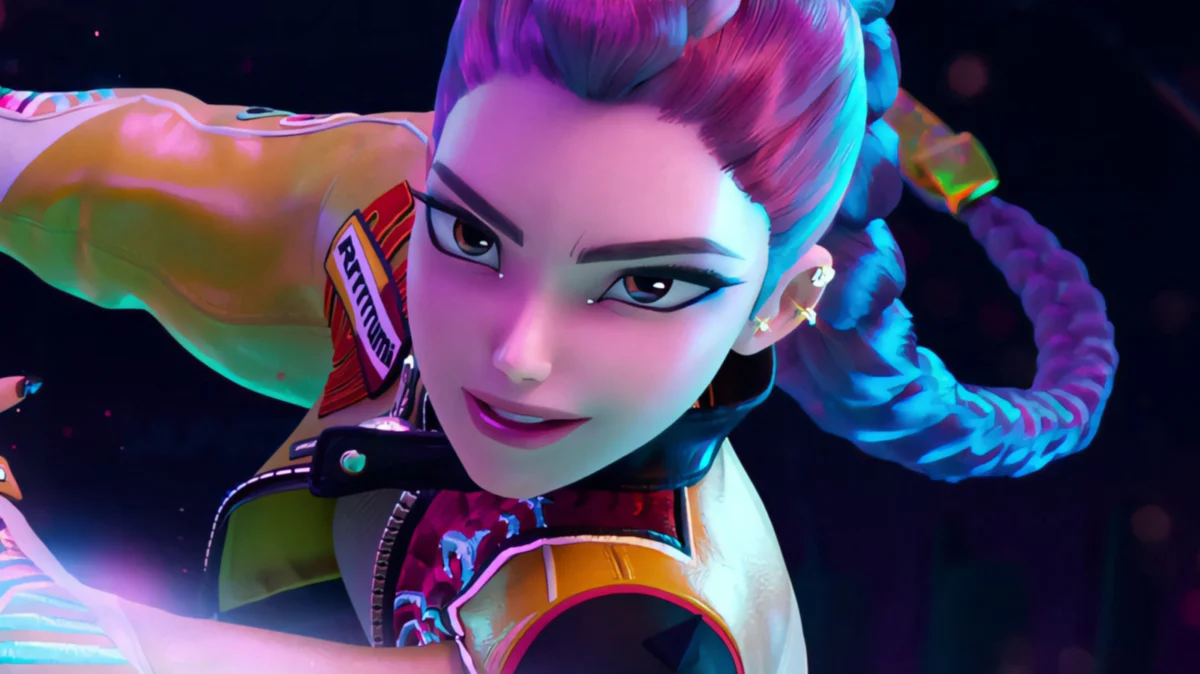
- The Blockbuster Sequel: Netflix is officially preparing a wide theatrical release for K-Pop Demon Hunters 2, marking a profound departure from its historically strict streaming-first distribution model.
- A Historic Precedent: Unlike previous token theatrical runs used merely to qualify for awards or placate high-profile creators, the upcoming sequel is expected to receive a robust theatrical rollout accompanied by publicly reported box office returns.
- The Legacy of the Original: Directed by Maggie Kang and Chris Appelhans, 2025’s K-Pop Demon Hunters began its life at Sony Pictures before being passed to Netflix. It went on to shatter internal streaming records to become the most-watched movie in the platform’s history.
- Cultural Phenomenon: Unlike background-viewing streaming hits of the past—such as Red Notice—the film achieved deep cultural penetration, driving real-world music charts, missing merchandise demand, nationwide pop-up events, and even a prestigious physical release via the Criterion Collection.
Chronology: From Sony’s Cold Feet to a Streaming Empire’s Dilemma
The journey of K-Pop Demon Hunters reads like a classic Hollywood tale of miscalculated risk and unexpected triumph.
The Early Development and Sony’s Misstep
Originally conceived and developed under the banner of Sony Pictures, the animated feature faced an uphill battle during its early production phases. Executives at Sony ultimately grew nervous regarding the film’s unique cross-genre premise—blending high-energy musical elements with supernatural action—and opted to divest themselves of the project, passing the distribution rights over to Netflix. At the time, Sony’s decision was viewed internally as a risk mitigation strategy. In hindsight, it stands as one of the most significant miscalculations in recent studio history.
The 2025 Release and Record-Breaking Dominance
When Netflix quietly dropped K-Pop Demon Hunters in 2025, the streamer anticipated a solid performance within its family and animation verticals. Instead, the film detonated across the cultural landscape. It quickly climbed to the top of the platform’s charts, shattering every internal viewership metric to become the single most-watched movie in Netflix history. Even after weeks of dominating domestic living rooms, a limited, celebratory theatrical run for a single weekend proved that audiences were hungry to experience the film on the big screen, turning what was intended as a victory lap into a box office curiosity.
The Leadership Shift and Policy Pivots
The catalyst for the sequel’s theatrical pivot came to light following structural changes within Netflix’s executive suite, notably surrounding the exit of former film chief Dan Lin. Industry reports from The Hollywood Reporter revealed that strategic shifts were underway regarding how Netflix handles its crown-jewel intellectual properties. Coupled with ongoing pressure from top-tier talent—such as Greta Gerwig (who successfully negotiated an IMAX release for her upcoming Chronicles of Narnia adaptation) and the Duffer brothers—Netflix’s rigid wall against traditional theatrical windows began to show structural cracks. K-Pop Demon Hunters 2 represents the widening of those cracks into a full-scale operational shift.
Supporting Data & Market Impact
To understand why K-Pop Demon Hunters 2 is forcing Netflix’s hand, one must examine the stark contrast between traditional streaming metrics and tangible, multi-revenue-stream franchise engagement.
| Metric / Engagement Vector | Traditional Netflix Hit (e.g., Red Notice) | K-Pop Demon Hunters (2025) |
|---|---|---|
| Viewership Longevity | High initial streams, rapid decline in public discourse | Sustained multi-week dominance, long-term cultural footprint |
| Real-World Merchandise | Minimal to non-existent retail presence | Widespread demand, pop-up shops, grassroots consumer goods |
| Musical Resonance | Standard background score or standalone single | Chart-topping real-world singles, viral social media integration |
| Physical Media Support | Rarely secures physical distribution | Secured a rare, highly coveted Criterion Collection release |
| Theatrical Strategy | 1-to-2 week token runs for awards qualification | Projected wide rollout with reported box office tracking |
The data above highlights a recurring frustration for Netflix: while movies like 2021’s Red Notice drew massive initial view counts—prompting early, unrealized plans for back-to-back sequels—they failed to maintain long-term cultural resonance or spawn lucrative ancillary markets. K-Pop Demon Hunters, conversely, behaved like a traditional Hollywood blockbuster franchise. Fans did not merely watch it; they lived it, wearing the aesthetic, streaming the music outside of the application, and demanding physical memorabilia that transcends digital licensing.
Official Responses and Industry Reactions
While Netflix executives have historically defended their platform-exclusive release model—arguing that consumer convenience and day-and-date global availability outweigh the benefits of traditional theatrical windows—the commercial reality of the upcoming sequel has elicited quiet adjustments behind closed doors.
Industry insiders note that the studio’s hand is being forced by a combination of talent relations and undeniable economics.
"When a movie reaches the cultural saturation point of K-Pop Demon Hunters, walking away from tens—if not hundreds—of millions of dollars in theatrical box office revenue begins to look less like a principled distribution stance and more like corporate negligence," said one senior theatrical distribution analyst who spoke on the condition of anonymity.
Furthermore, creators and directors who have long sparred with Netflix over the theatrical blackout rule have found powerful leverage in the upcoming sequel. Talent agencies representing top-tier filmmakers are increasingly pointing to K-Pop Demon Hunters 2 as the ultimate precedent: if an animated musical-action hybrid can command a wide, revenue-reporting theatrical release, restrictive streaming windows should no longer be treated as an immutable corporate policy.
Questions also remain regarding Sony Pictures’ stake in the project. Initial financial disclosures from the first film indicated that Sony’s earnings relative to the movie’s historic success were surprisingly modest. Industry analysts are watching closely to see whether Sony—or whichever stakeholders share in the broader ancillary ecosystem—will secure a more equitable financial arrangement from the sequel’s upcoming box office run.
Broader Implications for Hollywood and the Streaming Wars
The decision to grant K-Pop Demon Hunters 2 a wide theatrical release carries profound implications that stretch far beyond the confines of Netflix’s corporate headquarters.
1. The Redefinition of the "Streaming Movie"
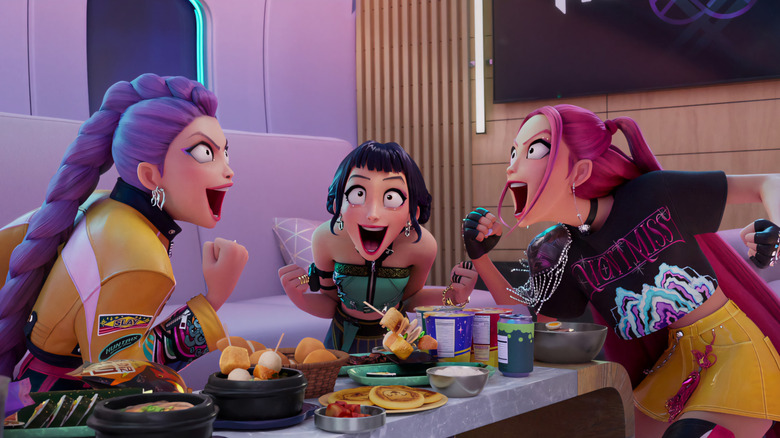
For over a decade, theatrical exhibitors and traditional studios drew a sharp line between cinematic releases and streaming content, often stigmatizing the latter as "direct-to-video" equivalents. By embracing a wide box office rollout for a tentpole sequel, Netflix is actively blurring these lines. A successful theatrical run for K-Pop Demon Hunters 2 proves that streaming-born intellectual properties can successfully transition into traditional theatrical powerhouses without cannibalizing home viewership.
2. Pressure on Competitors and Talent Retention
Netflix’s pivot threatens to disrupt the talent ecosystem across Hollywood. As top creators increasingly demand theatrical exposure as a baseline requirement for prestige projects, platforms that refuse to budge risk losing marquee directors and producers to competing studios. Netflix’s willingness to bend the rules for Greta Gerwig’s Narnia and now for K-Pop Demon Hunters 2 signals that flexibility is becoming a necessary tool for talent retention.
3. Expansion Into Omnipresent Franchises
Netflix has long coveted a homegrown, four-quadrant franchise that can rival the cinematic universes of Disney, Universal, or Warner Bros. With whispers of a live-action adaptation alongside the animated sequel, K-Pop Demon Hunters has officially graduated from a lucky acquisition to the cornerstone of Netflix’s IP strategy.
As the industry prepares for the release of K-Pop Demon Hunters 2, the event stands as a watershed moment. Whether Netflix intended to become a theatrical player or not, the sheer, undeniable gravity of its most successful universe has officially rewritten the streamer’s playbook—proving once and for all that some stories are simply too big to be contained by a television screen.
