
The Mystery of Aaron Paul’s Ghost Cameo in DC’s Clayface: What Really Happened to His Scene?
(Warning: This article contains major spoilers for the DC Universe horror film, "Clayface.")
Cinema history is filled with puzzling editorial choices, bizarre casting anomalies, and deleted scenes that leave audiences scratching their heads. However, the release of Warner Bros. and DC Studios’ new horror-centric cinematic entry, Clayface, has introduced a brand-new cinematic mystery to the table.
Near the climax of the film, a blink-and-you’ll-miss-it visual transformation occurs that has set internet film forums, Reddit boards, and box office analysts abuzz. Eagle-eyed viewers are convinced that Breaking Bad star Aaron Paul makes a surprise cameo appearance in the movie. Yet, the way the sequence plays out leaves more questions than answers—specifically regarding why an actor of Paul’s caliber would accept a dialogue-free, five-second background appearance, and what it ultimately reveals about the film’s troubled editing history.
Main Facts: The Setup and the Surprise Sighting
To understand the nature of the cameo, one must first look at the plot mechanics of Clayface, directed within the evolving landscape of the new DC Universe.
The film serves as an atmospheric, body-horror-infused origin story for the classic Batman villain. The narrative centers on protagonist Matt Hagen (played by Tom Rhys Harries), a washed-up, disfigured actor navigating the grim and unforgiving underbelly of Gotham City. Early in the film, Hagen’s life is shattered by a brutal attack orchestrated by Gotham gangsters, leaving his face horribly scarred and his career destroyed.
Desperate for a miracle, Hagen undergoes an experimental, highly classified medical procedure utilizing cutting-edge, artificial intelligence-powered nanotech. Not only does the experimental technology repair his ruined visage, but it also grants him horrifying and volatile shapeshifting abilities.
The crux of the cameo occurs near the end of the film. Hagen infiltrates a high-end, heavily guarded nightclub owned and operated by the very Gotham mobsters who ruined his life. Seeking to evade detection, sow chaos, and exact his bloody revenge, Hagen moves fluidly through the crowded dance floor, rapidly altering his physical form to mimic different individuals to confuse security and his targets.
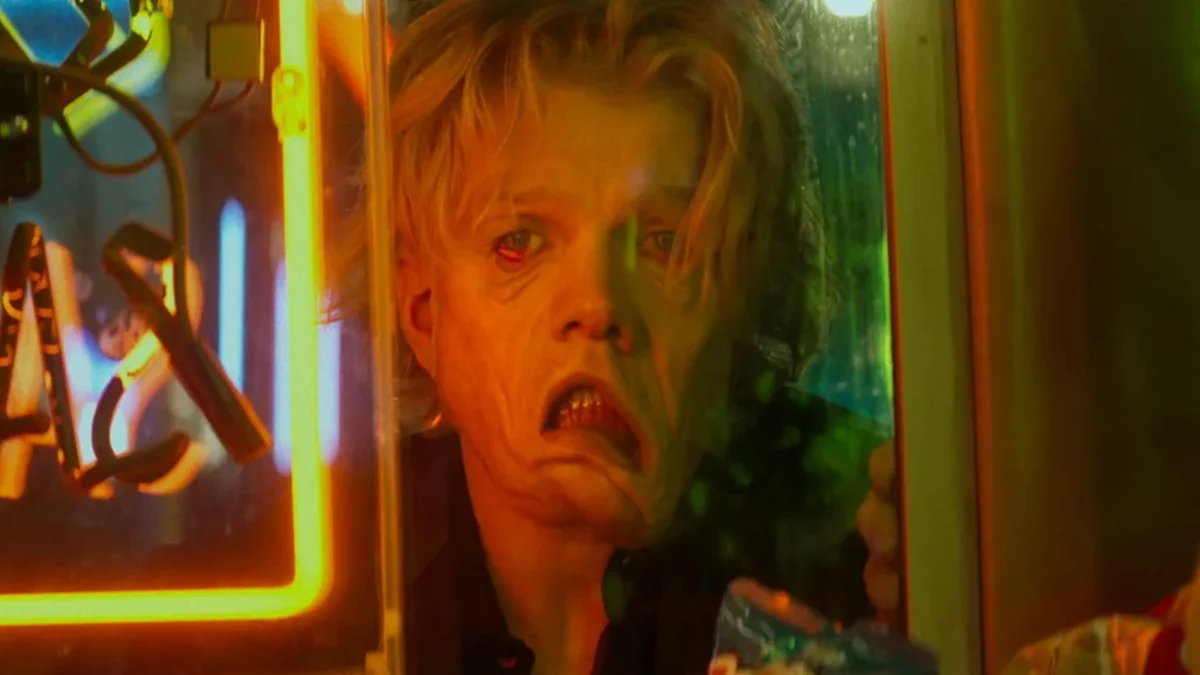
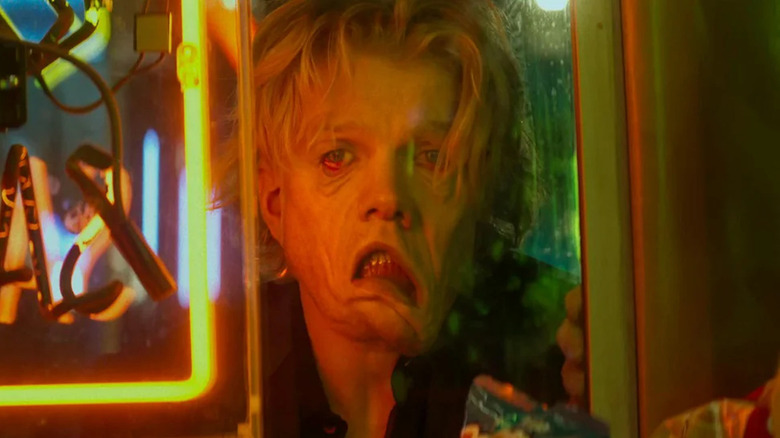
Amidst this chaotic flurry of shifting identities, Hagen briefly morphs into a man who bears an unmistakable, spitting-image resemblance to Emmy-winner Aaron Paul.
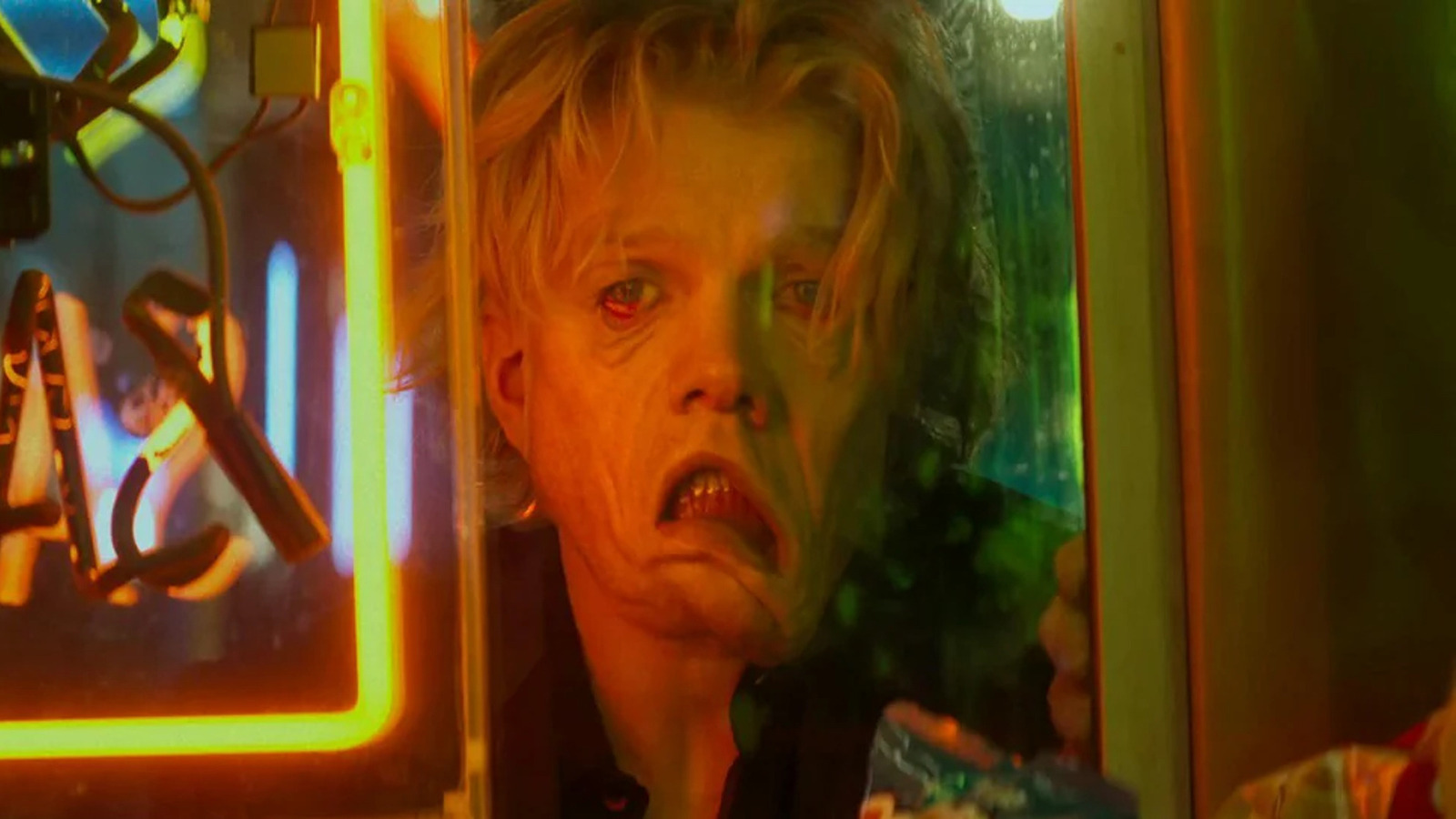
Even more intriguing, the narrative context of the scene immediately validates the face: one of the mobsters spots this specific visage across the room and visibly reacts, recognizing the face as that of Matt Hagen’s late, infamous father. The transformation lasts less than five seconds. Hagen abruptly snaps back into his own form, moves on, and the Paul lookalike vanishes from the narrative entirely. The character has zero lines of dialogue, does not speak, and never appears again.
Chronology: From Casting Rumors to the Cutting Room Floor
When the cameo flashed on screen during early theatrical screenings, many audience members dismissed it as an uncanny coincidence. “That really looked like Aaron Paul, but there’s no way they would cast Aaron Paul in such a nothing role,” many moviegoers likely told themselves.
However, a dive into pre-release production rumors and casting news paints a vastly different picture.
- Pre-Production (2024–2025): Rumors heavily circulated online that Aaron Paul had officially joined the cast of DC Studios’ Clayface in an undisclosed, minor role. At the time, trade publications and insider scoop channels noted his involvement, though DC Studios kept a tight lid on specific character details to preserve the horror-thriller’s narrative secrets.
- Principal Photography: Paul reportedly filmed scenes for the production. Given his star power and reputation for intense, character-driven performances, it was widely assumed he would play a tangible, spoken-word supporting character.
- The Theatrical Cut (October 2026): When Clayface finally hits theaters, Paul’s physical presence is reduced to a single, fleeting shapeshifting flash.
- The IMDb Clue: Further substantiating the theory that a larger storyline was excised from the film, IMDb credits list actor Seth Isaac Thomas as "Young Matt Hagen." Yet, looking closely at the theatrical cut of Clayface, there are zero flashback scenes featuring Matt Hagen as a child or exploring his childhood upbringing.
The chronology strongly suggests that a substantial narrative subplot involving Hagen’s abusive father—and featuring a major performance by Aaron Paul—was left on the cutting room floor during post-production.
Supporting Data: Unpacking the Gotham Underworld Connections
To fully appreciate why Aaron Paul’s ghost cameo matters, we must examine the character dynamics established in the script.
In Clayface, Matt Hagen’s backstory is explicitly tied to the generational trauma of Gotham’s slums. Early exposition dialogue establishes that Hagen grew up on the mean streets of the city, suffering under the thumb of an infamous, abusive father. Crucially, the elder Hagen was not just a domestic tyrant; he was a well-known figure within the Gotham underworld. This crucial piece of lore is the only reason a mobster in the nightclub scene is able to instantly recognize the father’s face when Matt momentarily shifts into it.
This narrative bridge proves that the face wasn’t chosen at random by the visual effects team. The script explicitly required Hagen to transform into his father to trigger a psychological reaction from the gangsters.
Furthermore, this is not Aaron Paul’s first near-miss with the Batman mythos. Years prior, it was revealed that Paul was actually offered—and ultimately turned down—a small, supporting role in Christopher Nolan’s critically acclaimed The Dark Knight trilogy. The fact that Paul finally entered the DC cinematic sandbox, only to have his performance filtered down to a silent, five-second visual Easter egg, adds an ironic twist to his superhero movie legacy.
Official Responses and Studio Silence
As of press time, neither Warner Bros. Pictures nor DC Studios co-heads James Gunn and Peter Safran have issued formal statements explaining the nature of Aaron Paul’s appearance in Clayface.
Director and producers have remained tight-lipped regarding the editorial mandate that led to the trimming of the film’s flashback sequences. In the modern era of superhero blockbusters and shared cinematic universes, reshoots and aggressive trimming to secure a tighter runtime or a specific PG-13/R-rated pacing are common practice.
Industry insiders suggest that Clayface, which leans heavily into psychological horror and atmospheric dread, may have originally featured a more expansive, tragic framing device involving Hagen’s familial trauma. In the interest of keeping the narrative tightly focused on Hagen’s present-day rampage through the nightclub and his descent into villainy, filmmakers likely chose to streamline the exposition, effectively lopping off the meat of Paul’s performance while keeping a solitary, visually striking nod to the original cut via the shapeshifting sequence.
Implications: What This Means for the Future of Clayface and DC’s Home Media
While a five-second silent cameo might seem like a minor footnote in a sprawling cinematic universe, it carries several notable implications for fans and the film industry at large.
1. The Inevitability of an Extended Cut or Deleted Scenes
For physical media collectors and home-video enthusiasts, the discovery of the Aaron Paul mystery is a major selling point. When Clayface eventually arrives on Digital, VOD, and 4K Ultra HD/Blu-ray, the inclusion of deleted scenes will undoubtedly be the most anticipated bonus feature. Fans will finally get definitive answers regarding whether Aaron Paul filmed full dramatic sequences as the abusive patriarch, and whether those scenes will be restored or presented as supplementary material.
2. The Dangers of Over-Editing Origin Stories
The handling of Paul’s role highlights a recurring critique of modern comic book adaptations: the over-reliance on frantic editing to quicken the pace. By removing the childhood flashbacks and the direct context of Hagen’s relationship with his father, the film trades emotional depth for immediate runtime efficiency. While Clayface has generally received favorable reviews for its creature-feature thrills and tragic undertones, restoring Paul’s performance might have given the title character an extra layer of tragic resonance.
3. Will Aaron Paul Return to the DC Universe?
Just because an actor’s live-action footage was largely cut from one film doesn’t mean their journey with a franchise is over. In the interconnected canvas of the modern DC Universe, characters can reappear through archival footage, multiverse variants, or future sequels. If Clayface warrants a sequel—given its strong opening box office and positive reception among horror fans—there remains an open door for DC Studios to formally introduce Aaron Paul in a more substantial capacity, or perhaps allow audiences to finally see the performance that was hidden in plain sight.
For now, moviegoers walking out of Clayface will continue to lean over to their friends in the theater seats, whispering: "Wait… was that really Jesse Pinkman?" As it turns out, yes, it was—even if the rest of his story is currently locked away in a studio vault.
