
Breaking the Industry Mold: How an Ambitious 186-Page Spec Script Smashed Its Way Into the Elite Top 25
In the modern entertainment landscape, the rules of screenwriting are often treated as immutable laws of physics. New writers are repeatedly told that specs must strictly adhere to the 110-page industry standard. Anything over 130 pages is routinely dismissed by attention-challenged executives who assume bloated page counts are a glaring symptom of amateurism.
Yet, every few years, an extraordinary piece of work arrives to shatter convention.
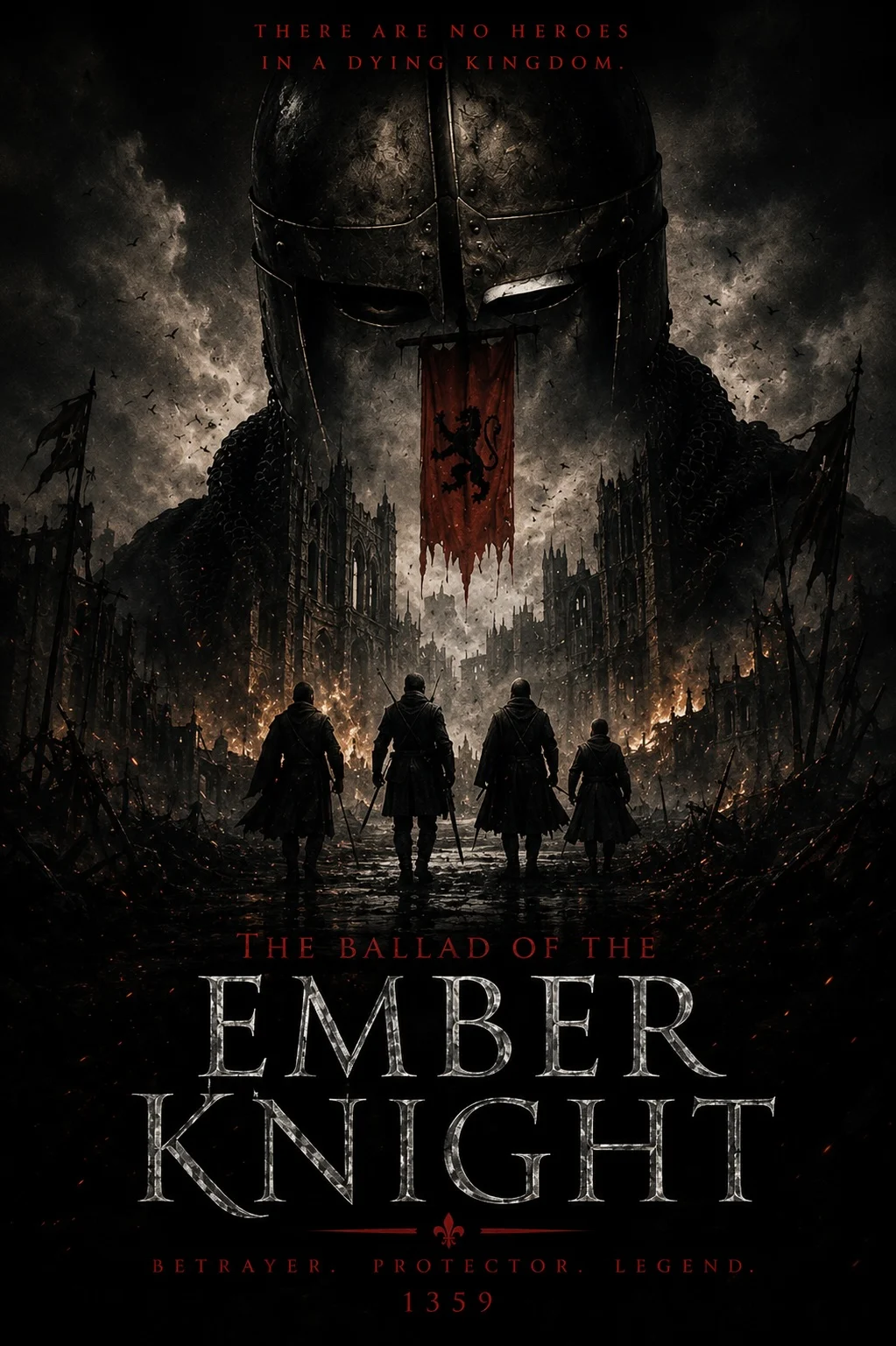
Enter The Ballad of the Ember Knight, an epic 186-page period adventure penned by writing duo Kieran and Brennan O’Dea. Set against the brutal, plague-scarred backdrop of 14th-century France, the script has achieved the seemingly impossible: bypassing the amateur circuit entirely to secure a coveted spot in the prestigious Top 25 screenplays reviewed on the industry-watching platform Scriptshadow.
Blending the grand, geographical scope of classic high fantasy with the gritty realism of historical tragedy, this sprawling epic has sparked conversations about narrative ambition, the mechanics of genuine heroism, and why Hollywood’s obsession with brevity might be missing out on masterclass storytelling.
Main Facts: Defying Conventions and Conquering the Page Count
At its core, The Ballad of the Ember Knight is a masterclass in risk-taking. Written by Kieran and Brennan O’Dea, the project spans an imposing 186 pages—a length that would instantly disqualify most unrepresented writers from consideration by traditional studio gatekeepers.
However, unlike many bloated drafts that suffer from pacing issues and meandering subplots, the O’Dea brothers utilize every single page to construct a rich, immersive world. The story follows a mysterious, disgraced knight on the run through a war-torn France, inadvertently pulled into a high-stakes escort mission to protect the rightful heir to the throne.
The script’s journey to recognition began as a "Hail Mary" consultation. Facing institutional resistance over the script’s length, the writers submitted the project for professional review. What followed was a complete subversion of expectations, transforming what critics initially feared would be a tedious, exhausting read into a riveting cinematic experience worthy of the site’s all-time Top 25 list.
Chronology of an Epic: From a War-Torn Inn to the Road to Avignon
To truly understand why The Ballad of the Ember Knight resonates so deeply, one must examine the narrative trajectory constructed by the O’Dea brothers. The journey unfolds across a dying, lawless nation torn apart by the Hundred Years’ War.
Act I: The Catalyst of Violence
The year is 1359. France is a bleak, chaotic landscape overrun by warlords, foreign invaders, and casual brutality. Our introduction to the protagonist—known initially only as "The Prisoner"—presents a broken, filthy man desperately trying to avoid notice as he flees his past.
Seeking shelter at a roadside inn, the Prisoner overhears a vile royal, Sir Jean Devar, informing the innkeeper’s young daughter, Marie, of his intention to assault her later that evening, promising to financially compensate her employer for the "inconvenience."
The Prisoner’s initial instinct is self-preservation; he wants nothing to do with a fight that could compromise his escape. But as the horrific reality of the assault unfolds upstairs, something snaps. Breaking his self-imposed code of detachment, the Prisoner storms Devar’s room and beats the royal to death.
Act II: The Disguise and the Conspiracy
The following morning, Devar’s young squire, Thomas, begs to serve the Prisoner, mistaking his lethality for knighthood. Realizing that moving through military checkpoints will be impossible as a vagrant, the Prisoner strips the dead royal and dons his uniform.
It is here that the narrative’s central irony is revealed: the man trying to hide his identity is actually Roland Chandos, the legendary "Ember Knight," formerly the king’s most trusted protector, and now widely rumored to have assassinated the king and his royal sons.
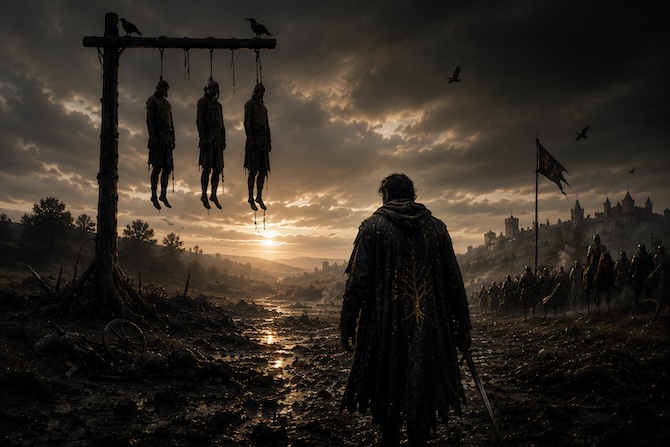
Concurrently, the audience is introduced to two unassuming monks traveling the countryside. The younger monk, Charles, is secretly the Prince of France, protected by the older monk, Bernard. When assassins ambush them, Roland steps out of the shadows to annihilate the attackers single-handedly.
Recognizing that Prince Charles will be hunted by every opportunistic faction in a destabilized Europe, Bernard offers Roland and Thomas a hefty sum to escort the young royal safely to Avignon to claim his rightful crown. Roland accepts, seeing the payment as his ticket to final disappearance, while a bizarre local hermit joins the pack to guide them through treacherous backroads.
Act III: The Internal Reckoning
As the physical journey to Avignon progresses, the narrative’s true weight settles in. The suspense is not merely whether the group will survive the gauntlet of assassins and English patrols, but the inevitable reckoning: how will Prince Charles react when he discovers his protector is the very man accused of slaughtering his family?
Supporting Data and Script Mechanics: Why the Length Works
In the realm of screenwriting, length is often equated with structural failure. If a script is long, it is typically assumed to lack focus. Yet, The Ballad of the Ember Knight succeeds precisely because it understands how to weaponize conflict.
Industry analysts frequently note that the middle sections of screenplays drag when characters lack immediate, high-stakes objectives. The O’Dea brothers avoid this pitfall by continuously subverting advantages into liabilities. For instance:
- The Disguise Liability: While stealing Sir Jean Devar’s uniform provides Roland with safe passage through checkpoints, it also saddles him with the reputation of one of the realm’s most despised monsters, repeatedly drawing unwanted aggression and forcing him into high-stakes confrontations.
- The Cost of Heroism: Amateur scripts often fail because acts of heroism carry no meaningful price. By having Roland risk his entire escape plan and hard-won anonymity to save Marie, the writers establish a massive emotional toll. The audience instantly buys into the protagonist because his righteousness costs him dearly.
Furthermore, the script successfully recaptures the primal appeal of the classic, geographical "hero’s journey"—a narrative structure largely abandoned by modern blockbuster cinema in favor of static, localized franchises like the Marvel Cinematic Universe or Harry Potter. By combining the expansive adventure mechanics of Star Wars and The Lord of the Rings with a mature, grit-and-gravel tone reminiscent of Gladiator, the O’Deas have engineered a narrative tailored specifically for an audience that grew up on classic epics and hungers for sophisticated adult storytelling.
Official Responses and Industry Implications
The critical acclaim surrounding The Ballad of the Ember Knight has ignited broader discussions within Hollywood regarding speculative script acquisitions and the viability of riskier, non-IP-driven projects.
The Streaming Horizon
Industry observers suggest that traditional major studios are unlikely to touch an unproven, 186-page historical spec due to archaic risk-aversion models and strict runtime mandates. However, streaming giants—particularly Netflix—possess the financial flexibility and structural indifference to traditional runtimes required to bring such an epic to life.
"When it comes to Netflix, running time doesn’t matter," notes critical review data. "That along with the fact that they’re flush with money makes them the best destination for this movie. So, hopefully some smart exec over at Netflix is reading this right now."
A Masterclass in Scene Development
Beyond its commercial prospects, the script has already provided a vital masterclass for working screenwriters and directors. Traditional screenwriting doctrine aggressively preaches brevity: get into scenes late, leave early, and keep the plot moving at breakneck speed.
However, The Ballad of the Ember Knight proves the immense value of milking a high-tension dramatic sequence. By allowing scenes like the slow-burn tension leading up to the rescue at the inn to breathe, the O’Dea brothers build unbearable suspense and textural depth that brisk exposition could never achieve. Directors studying the text are walking away with a profound lesson: when you strike narrative gold, do not rush past it—savor it, build it, and let the audience steep in the consequences.
Conclusion: A New Standard for Spec Scripts
The Ballad of the Ember Knight is more than just an anomaly on a script-review website; it is proof that supreme craftsmanship can override industry dogma. By delivering unforgettable characters, relentlessly escalating conflict, and a deeply resonant emotional core, Kieran and Brennan O’Dea have beaten the odds.
As this sprawling 186-page epic circulates through industry channels, it serves as an inspiring reminder to writers everywhere: if your characters are compelling, your stakes are genuine, and your storytelling is fearless, the rules are meant to be broken.
