
The Unsung Symphony of Silence: Unpacking Daniel Reis’s ‘The Gift of Room Tone’
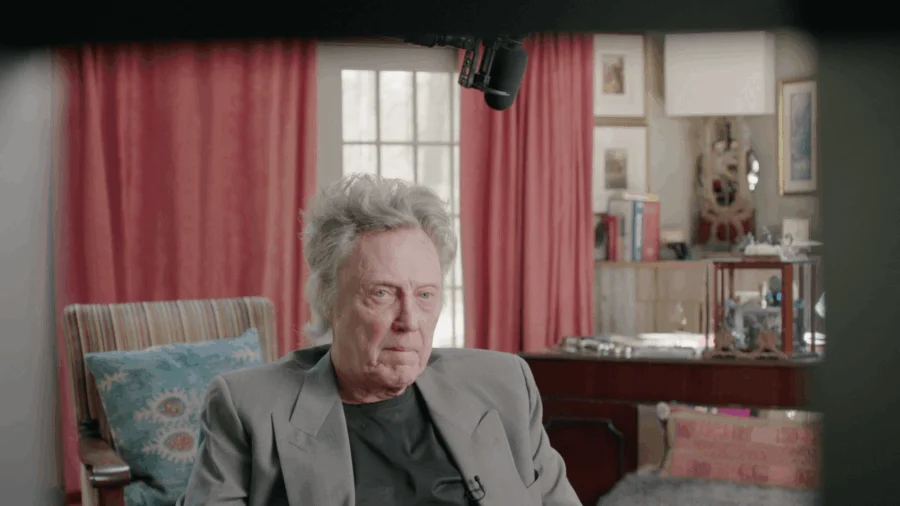
In the hyper-produced world of modern cinema, where every frame is color-graded to perfection and every decibel of sound is meticulously mixed, the most vital element often goes entirely unnoticed. It is the sound of nothing. Known in the industry as "room tone," this ambient hum of a space—the barely audible breath of a room—is the unseen mortar that holds the bricks of a film together. Recently, Criterion Collection editor Daniel Reis brought this technical necessity into the limelight with his delightful video essay, The Gift of Room Tone, a project that serves as both a love letter to the craft of filmmaking and a poignant reminder of the humanity behind the lens.
Main Facts: The Anatomy of a Technical Necessity
At its core, The Gift of Room Tone is a compilation of the "in-between" moments. When a high-profile interview concludes, directors and camera crews rarely pack up immediately. Instead, they ask their subjects—be they legendary auteurs like Martin Scorsese or enigmatic performers like Christopher Walken—to sit in silence for thirty to sixty seconds. This is the recording of the room’s unique sonic signature.
As Reis explains in his curation for The Criterion Collection, this practice is not a mere formality; it is a fundamental pillar of post-production. Without room tone, an editor’s attempt to cut together dialogue would result in a jarring, unnatural silence—a "dead air" that alerts the audience to the artificiality of the edit. By layering room tone beneath cut-together audio tracks, editors ensure that the ambient environment remains consistent, hiding the seams of the edit.
The video features a staggering array of industry icons, including Roger Deakins, Spike Lee, Bong Joon-ho, Carey Mulligan, Alfonso Cuarón, Frank Oz, and Tony Hawk. Yet, the true stars of the video are the faces of these subjects as they sit in the quiet, caught in the transition between the performance of an interview and the reality of the set.
Chronology: From Pandemic Boredom to Artistic Masterpiece
The genesis of The Gift of Room Tone is rooted in the unique stillness of early 2020. As the global pandemic brought the entertainment industry to a screeching halt, production crews and editors found themselves sidelined. For Daniel Reis, the lockdown provided an unexpected opportunity to sift through years of digital detritus.
- Pre-2020: Over years of cutting interviews for Criterion, Reis accumulated hours of "useless" footage—the tail ends of clips where the camera was still rolling but the conversation had ended.
- Early 2020: Faced with a lack of new production, Reis revisited his archives. He began to see these moments not as technical scraps, but as an intimate portrait of set life.
- Production Phase: Reis began the meticulous process of isolating these clips. He sought to maintain the integrity of the ambient sound while highlighting the naturalistic, unscripted expressions of his subjects.
- Release: The project debuted on The Criterion Collection’s Current blog, providing a sense of nostalgia for a film community that was, at the time, desperate for the return of on-set camaraderie.
Supporting Data: The Science of Sound and Perception
To understand why The Gift of Room Tone resonates so deeply, one must look at the physics of audio. Human hearing is remarkably sensitive to sudden changes in background noise. When a scene is edited, the "noise floor"—the baseline level of background sound—shifts. If an editor cuts from a shot with air conditioning hum to a shot without it, the audience perceives a "pop" or a drop in quality, even if they cannot consciously identify the cause.
The Role of Room Tone in Post-Production
- Seamless Continuity: Room tone allows editors to remove verbal tics—the "ums," "ahs," and stuttering—without the audio track dropping into a vacuum.
- Environmental Integrity: Every location has a "sonic fingerprint." A church has a different reverberation and ambient hum than a carpeted office. Room tone preserves this geographical truth.
- The Psychological Anchor: The presence of consistent sound signals to the viewer’s subconscious that they are within a continuous reality.
Reis notes that room tone is notoriously difficult to "fake." While foley artists can recreate footsteps or the rustle of fabric, the organic, chaotic, and layered ambient frequency of a specific room at a specific time is a historical record. Once a crew leaves a location, that exact sound is lost forever.
Official Responses and Industry Reception
The release of the video was met with widespread appreciation from both professionals and cinephiles. It functioned as a piece of "insider" media that democratized a complex technical process.
Industry veterans lauded the video for its honesty. For many, the sight of figures like Bong Joon-ho or Spike Lee waiting patiently in silence stripped away the "celebrity" veneer, showcasing them as participants in a collaborative process. "It’s a rare look at the quiet exhaustion and focus of our peers," noted one anonymous producer. "It reminds us that filmmaking is 90% waiting and 10% magic."
Criterion’s choice to highlight this work reflected their ongoing commitment to educating the public about the "invisible arts" of cinema—editing, sound mixing, and color grading. By elevating room tone from a technical requirement to a work of art, Reis successfully turned a mundane task into a meditation on the passage of time.
Implications: The Legacy of the "Quiet" Moment
The implications of The Gift of Room Tone extend beyond the editing suite. In an era of non-stop digital consumption, the video serves as a quiet protest against the "always-on" nature of modern media.
Preserving the Human Element
As AI and automated post-production tools begin to handle more of the "heavy lifting" in filmmaking, there is a legitimate fear that the human touch—the small pauses, the natural imperfections, and the ambient realities of a physical space—will be smoothed over by algorithms. Reis’s work reminds us that the "flaws" in a recording are often the very things that give a film its soul.
A Pandemic Time Capsule
Furthermore, the video acts as a time capsule. By compiling footage from the pre-pandemic era, it captures a world where people gathered in rooms, sat close to one another, and existed in the same physical space. The act of recording room tone requires people to be together; it is a collaborative acknowledgment that they have shared an environment. In the context of the isolation brought about by the pandemic, this simple technical act took on a profound emotional weight.
Future Perspectives
Reis’s project has sparked a broader conversation about the archival value of "outtakes." Many studios are now considering how their own "trash" folders might contain similar insights into the creative process. The project suggests that in the future, we may see more "meta-content" that focuses on the mechanics of filmmaking, as audiences become increasingly interested in the reality behind the spectacle.
Conclusion: Finding Meaning in the Void
Daniel Reis’s The Gift of Room Tone is more than a technical demonstration; it is a philosophical statement. It asks us to consider what happens when the work stops, when the performance ends, and when we are left simply to be.
For the film industry, it serves as a necessary reminder that the most essential components of our art form are often the ones we take for granted. For the viewer, it provides a rare, meditative space—a chance to sit with some of the world’s greatest creative minds in the quiet of their own presence.
In a world that demands constant noise and rapid-fire content, there is a radical beauty in the silence of a room. As we continue to navigate a landscape where the future of production remains subject to the ebbs and flows of global circumstances, we would do well to remember the lesson of room tone: that even in the empty spaces, there is a pulse, a presence, and a history worth recording. Thank you, Mr. Reis, for inviting us to listen to the silence.
