
Springfield’s Spookiest Milestone: Inside the Making of ‘Treehouse of Horror XXXVII’
Thirty-seven years of terror have turned The Simpsons’ annual "Treehouse of Horror" into a cultural institution. It is a rare television phenomenon where the audience is not only accepting of, but actively demands, a recurring departure from reality. Yet, as the show approaches its fourth decade of Halloween specials, the writers face a daunting reality: the "Simpsons did it" curse. With decades of parodies covering vampires, slashers, ghosts, and literary monsters, the writers must constantly push into uncharted territory to keep the frights—and the laughs—fresh.
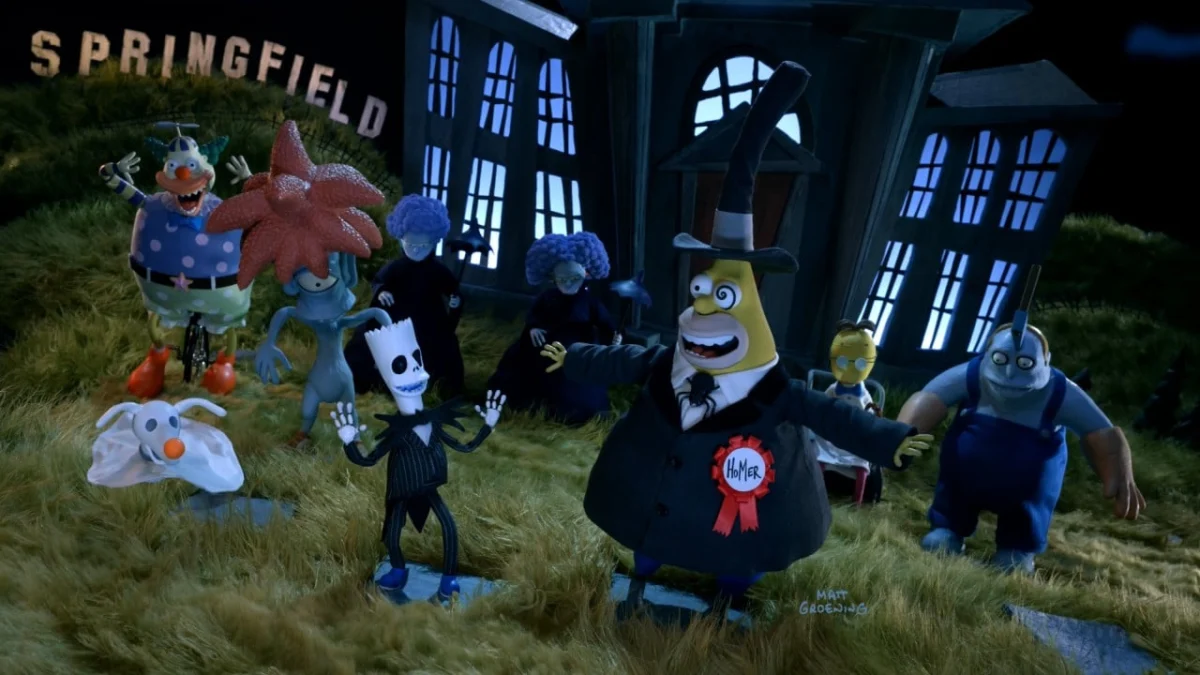
This year, the show tackles this challenge with Treehouse of Horror XXXVII, airing Sunday, October 25, at 8:00 PM ET/PT on FOX and streaming the following day on Hulu. The episode promises a return to the show’s dark, atmospheric roots while introducing a visual spectacle that fans have long clamored for: a loving, stop-motion homage to Henry Selick’s 1993 classic, The Nightmare Before Christmas.
A Legacy of Laughter and Frights: The Chronology of Development
The process of constructing a Treehouse of Horror episode is a logistical marathon. According to co-executive producer and writer Tim Long, the selection of the opening sequence is often the final piece of the puzzle.

"Everyone is always expecting a little animation treat from the Treehouse segment," Long explains. "We realized we’d never done our tip of the hat to The Nightmare Before Christmas. So, we decided we’d do the claymation open."
The decision to lean into stop-motion necessitated a partnership with the masters of the craft. Long and showrunner Matt Selman turned to Burbank’s Stoopid Buddy Stoodios, the creative powerhouse behind Robot Chicken and Crossing Swords. Co-founded by John "Harv" Harvatine IV, Seth Green, Matthew Senreich, and Eric Towner, the studio had previously collaborated with The Simpsons on various couch gags and the "Denim" segment from Treehouse of Horror XXXV.
For Harvatine, the invitation was a full-circle moment. "Selman had an idea for a Nightmare thing a few years ago," Harvatine recalls. "When we got the call three months ago, it felt like the perfect time to finally pull the trigger on it."

The production timeline for the opening segment was compressed into a frantic three-month window, divided into roughly one month each for pre-production, shooting, and post-production. During this time, a skeleton crew of 12 to 15 artists—expanding to 20 during post—worked to bridge the gap between Springfield’s 2D DNA and the tactile, three-dimensional world of stop-motion.
Technical Artistry: Translating 2D into Puppets
Translating the iconic, flat aesthetic of The Simpsons into the textured, lighting-heavy world of stop-motion presented significant hurdles. The Stoopid Buddy team, led by Harvatine, worked closely with veteran director David Silverman.
"It’s a real challenge to take the 2D stuff and twist it into stop-motion," Harvatine notes. "We didn’t want to go wild and invent original characters or sets, but we had to interpret the vision. For example, we adjusted the skin tone of the Simpsons. The classic ‘Simpsons yellow’ was too vibrant, so we shifted it toward a cooler, more muted blue tone to match the gothic, cinematic lighting style of The Nightmare Before Christmas."

The production utilized a "bait and switch" approach to traditional techniques. To save time, sets were constructed from cardboard and foam rather than the industry-standard wood and plaster. Because these sets were only intended to be on-screen for a matter of seconds, they were built for efficiency, allowing the team to focus their budget and resources on the puppet builds themselves.
One of the most complex sequences involved a technical feat: merging two distinct animation styles. The team had to composite clay-animated elements (such as the titles and a character transformation gag) onto a glass plate, which was then filmed alongside the puppet animation. Ensuring the lighting, camera movement, and shadows matched perfectly between the two media was a process Harvatine describes as "scary" but ultimately rewarding.
Narrative Structure: The "Treehouse" Anthology
While the stop-motion opening provides the visual flair, the heart of Treehouse of Horror XXXVII lies in its three core stories. This year, the writers opted for a more intimate approach, focusing on the core family unit in unusual, high-stakes scenarios.

The segments are as follows:
- The Marriage Perspective: A horrifying look at the institution of marriage, inspired by the 2024 novel The Husbands by Holly Gramazio.
- The Bart/Santa’s Little Helper Adventure: A dark, Stephen King-inspired tale that blends elements of Pet Sematary and I Know What You Did Last Summer.
- The Driving Lesson: A high-octane horror segment featuring Homer Simpson, drawing inspiration from Steven Spielberg’s 1971 thriller Duel.
Tim Long explains that the narrative themes were dictated by the characters’ stages of life. The first segment focuses on a newlywed Homer and Marge, the second on the current family dynamic, and the third on a future-leaning scenario.
"Matt Groening has been very clear in recent years that he wants to get back to the idea of Treehouse segments being genuinely scary," Long says. "We took advantage of the non-canon nature of the special to explore deeper, more intense horror beats, particularly in the dog segment, which leans heavily into a classic, atmospheric dread."

Official Responses and Creative Philosophy
The creative philosophy behind the episode reflects a matured understanding of the intersection between horror and comedy. Long, echoing sentiments shared by directors like Jordan Peele, suggests that the two genres are essentially two sides of the same coin.
"Comedy and horror are the same thing, just with different music," Long observes. "If you look at slapstick, you’re watching horrific things happen to people. If someone runs off a cliff, it’s a horrific act, but if it’s presented through a comedic lens, it’s hilarious. We aren’t trying to strike a balance so much as we are exploring the shared DNA of those reactions."
From the perspective of the animators, the project was about honoring the legacy of the medium. For Harvatine, the highlight was the creation of a Homer puppet based on the two-faced Mayor of Halloween Town. "I was a huge fan of that character as a kid," he says. "Figure out how to recreate that—the mechanics of the face changing from happy to terrified—was one of the most rewarding parts of the entire job."

Implications for the Future of The Simpsons
As The Simpsons continues to evolve, the Treehouse of Horror remains a vital laboratory for the show’s creative team. The reliance on external studios like Stoopid Buddy Stoodios and the commitment to manual, "old school" animation techniques signal a willingness to experiment that keeps the show relevant even in its 37th season.
The success of these segments is no longer just about meeting a quota of jokes; it is about maintaining a high standard of craftsmanship. By embracing the limitations of the medium—the "box" of the budget and the schedule—the writers and animators are forced to innovate. Whether it is through the meticulous detail of a puppet’s expression or the clever mash-up of classic horror tropes, the team behind the show proves that there is still plenty of room to harvest new, chilling content from the Springfield universe.
For the audience, the instruction is clear: watch closely. As Long suggests, the layers of references to previous Treehouse specials are hidden throughout the episode, turning the viewing experience into a scavenger hunt for the devoted fan.

Treehouse of Horror XXXVII is more than just a Halloween tradition; it is a testament to the longevity of a show that refuses to settle for the status quo. By blending the cutting-edge of television production with the timeless, visceral thrill of horror, The Simpsons ensures that even after thirty-seven years, the shadows in Springfield still have plenty of new stories to tell.
