
Guillermo del Toro’s Masterpiece Pan’s Labyrinth Returns to UK Cinemas for Spectacular 20th Anniversary 4K Re-Release
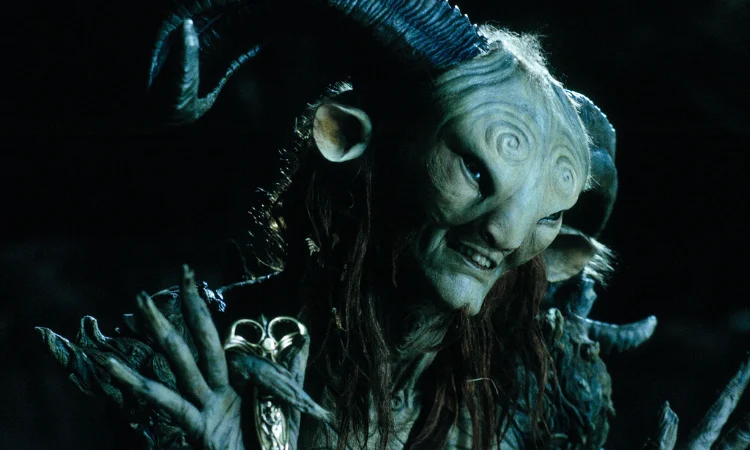
LONDON — Two decades after it first cast its dark, spellbinding shadow over global cinema, Guillermo del Toro’s Academy Award-winning dark fantasy Pan’s Labyrinth is officially returning to the big screen. STUDIOCANAL has announced a major nationwide theatrical re-release for the modern classic, presented in a breathtaking new 4K restoration. UK audiences will have the chance to experience the hauntingly beautiful fairytale anew just in time for Halloween, with screenings scheduled to kick off on October 30.
The milestone cinematic event follows the world premiere of the new 4K restoration at the 2026 Cannes Film Festival—precisely twenty years after the film’s legendary debut at the festival in 2006. With meticulous oversight from visionary director Guillermo del Toro himself, the restoration was sourced directly from the original 35mm camera negative, breathing unprecedented clarity, color fidelity, and haunting depth into one of the 21st century’s most visually arresting motion pictures.
Main Facts
The 20th-anniversary theatrical rollout is designed to be a definitive cinematic celebration. STUDIOCANAL has confirmed that the film will screen nationwide across the UK in stunning 4K resolution. To satisfy cinephiles and purists alike, the release will also feature select original 35mm format screenings alongside rare, special 3D presentations that highlight the intricate depth of the film’s practical effects and CGI integration.
Following its theatrical run, physical media collectors will have something major to look forward to: a definitive 20th Anniversary 4K UHD Collector’s Edition home video release, slated to arrive in 2027.
Set against the grim backdrop of Francoist Spain in 1944, Pan’s Labyrinth (El laberinto del fauno) weaves an unforgettable tapestry where harrowing historical reality collides with pitch-black fantasy. The narrative centers on young Ofelia (played brilliantly by Ivana Baquero), who travels with her ailing, pregnant mother, Carmen, to a remote military outpost. There, they must live with Ofelia’s new stepfather, Captain Vidal (Sergi López)—a ruthless, sadistic fascist officer tasked with hunting down anti-Francoist guerrilla fighters hiding in the nearby mountains.
Isolated and terrified by Vidal’s cruelty, Ofelia finds solace in the ancient, overgrown labyrinth adjacent to the military compound. Within its stone walls, she encounters a mysterious, ancient faun (Doug Jones). The creature informs her that she is none other than Moanna, the long-lost princess of an underground magical kingdom. To reclaim her royal heritage and return to her true home, Ofelia must successfully complete three perilous, morally ambiguous tasks before the full moon.
As Ofelia delves deeper into the labyrinthine underworld, the brutal, unyielding violence of the Spanish Civil War presses ever closer. The film operates on a knife-edge, constantly questioning whether the terrifying monsters and magical trials are real manifestations of a supernatural realm or desperate psychological coping mechanisms invented by a traumatized child trying to survive a nightmare.
Chronology of a Masterpiece: From Cannes Sensation to 4K Restoration
The journey of Pan’s Labyrinth is as cinematic as the film itself. Understanding its enduring legacy requires looking back at the timeline of its creation, release, and ongoing cultural resonance.
- Mid-2000s (Pre-Production & Filming): Guillermo del Toro, already celebrated for films like Cronos, Mimic, and Blade II, opted to turn down several major Hollywood blockbusters to finance and direct an intensely personal, Spanish-language fantasy project. Shot primarily in the forests of Collserola near Barcelona, the production utilized an immense amount of practical creature design, animatronics, and makeup effects, minimizing digital intervention to give the film a tactile, organic weight.
- May 2006 (World Premiere at Cannes): Pan’s Labyrinth holds a storied place in festival history. When it premiered in competition at the 2006 Cannes Film Festival, it stunned audiences and critics alike, earning a historic, emotionally charged 22-minute standing ovation—one of the longest and most passionate in the festival’s modern annals.
- Late 2006 / Early 2007 (Global Theatrical Release & Awards Season): Distributed internationally, the film became a rare crossover phenomenon. It proved that foreign-language dark fantasy could achieve massive commercial success while capturing the highest echelons of critical acclaim.
- February 2007 (Academy Awards Glory): At the 79th Academy Awards, the film secured six nominations—an extraordinary feat for a Spanish-language fantasy film. It walked away with three Oscars: Best Cinematography (Guillermo Navarro), Best Art Direction (Eugenio Caballero and Pilar Revuelta), and Best Makeup (David Martí and Montse Ribé).
- May 2026 (Cannes 20th Anniversary Return): Twenty years after its thunderous debut, the newly minted 4K restoration returned to the Croisette at the Cannes Film Festival, introducing the landmark film to a new generation of moviegoers.
- October 30, 2026 (UK Theatrical Re-Release): STUDIOCANAL brings the 4K restoration to UK cinemas nationwide, offering Halloween audiences a chance to experience the dark fable on the big screen once more.
- 2027 (Upcoming Physical Release): A loaded 20th Anniversary 4K UHD Collector’s Edition is scheduled to hit shelves, cementing the film’s status as a premier physical media artifact.
Supporting Data and Critical Reception
The cultural footprint of Pan’s Labyrinth is backed by staggering statistical and critical metrics. Upon its initial release, it defied conventional market wisdom regarding foreign-language cinema.
- Global Accolades: The film amassed more than 100 major international awards during its theatrical lifecycle. Beyond its three Academy Awards, it earned two prestigious BAFTA Awards (Best Film Not in the English Language and Best Costume Design), three Goyas (Spain’s highest film honors), and the Atlantic Film Festival award, among dozens of critics’ association prizes.
- Box Office Performance: Made on a modest budget of roughly $19 million, Pan’s Labyrinth went on to gross over $83 million worldwide, cementing its status as one of the most profitable and successful Spanish-language arthouse-to-mainstream crossovers in film history.
- Critical Consensus: On the review aggregator website Rotten Tomatoes, the film maintains a staggering 95% "Certified Fresh" rating, with an average critic score of 8.6/10. The site’s consensus reads: "Pan’s Labyrinth is Alice in Wonderland for adults, combining surreal, mesmerizing fantasy with the grim realities of war." Similarly, it holds a stellar score of 98 out of 100 on Metacritic, denoting "universal acclaim."
Official Responses and Creative Vision
The meticulous nature of this 20th-anniversary restoration has been a labor of love. Guillermo del Toro, known for his vocal advocacy of film preservation and the theatrical experience, worked extensively with restoration teams to ensure that the visual and auditory presentation matches—and in some ways surpasses—the original cinematic prints.
In statements surrounding the 4K restoration and its festival run, representatives for STUDIOCANAL emphasized the importance of bringing back masterworks for modern audiences.
"We live in an era where streaming dominates, but certain films demand the shared, communal darkness of a movie theater," a STUDIOCANAL spokesperson shared. "Guillermo del Toro constructed a visual and emotional cathedral with Pan’s Labyrinth. Supervised frame-by-frame by the director himself, this 4K restoration allows viewers to see the texture of the moss on the labyrinth walls, the terrifying intricacies of the Pale Man’s lair, and the gorgeous, devastating contrast between human cruelty and magical wonder with pristine clarity."
Film historians and critics have continually praised del Toro’s ability to use genre filmmaking as a vehicle for profound historical empathy. By framing the atrocities of the Spanish Civil War through the lens of a child’s folklore, Pan’s Labyrinth avoids the dry academic detachment of traditional historical dramas, instead striking at the emotional core of what it means to resist tyranny.
Implications: Why Pan’s Labyrinth Matters More Than Ever in 2026
The re-release of Pan’s Labyrinth is not merely an exercise in nostalgic cash-generation; it arrives at a crucial cultural and industrial juncture.
1. The Revival of Repertory Cinema and 4K Restoration Culture
In recent years, major European studios and boutique distributors have recognized a booming appetite among younger audiences for theatrical repertory screenings. Gen Z and millennial moviegoers—having grown up on digital platforms—are increasingly seeking out physical, communal cinematic events. By rolling out a pristine 4K restoration timed precisely for Halloween, STUDIOCANAL is capitalizing on the "event-izing" of classic cinema, proving that older masterworks can compete at the box office alongside contemporary studio tentpoles.
2. Timeless Political and Human Themes
The socio-political backdrop of Pan’s Labyrinth remains chillingly relevant. Captain Vidal represents the absolute banality and sadism of fascism—an ideology obsessed with order, bloodlines, and the total annihilation of dissent. Conversely, characters like Mercedes and the nameless maquis fighters embody the dangerous, necessary cost of resistance. In a contemporary global climate marked by rising authoritarianism, political polarization, and civil conflicts, Ofelia’s struggle against oppressive figures and her desperate yearning for freedom resonate just as powerfully today as they did in 2006.
3. A Masterclass in Practical Effects and Authorial Vision
In an era where modern blockbuster filmmaking is increasingly dominated by green screens, uninspired CGI workflows, and homogenized studio notes, Pan’s Labyrinth stands as a monumental monument to uncompromising auteur-driven fantasy. The physical performances of Doug Jones (who played both the Faun and the iconic, eye-in-the-hands Pale Man under layers of punishing prosthetic makeup) remind contemporary audiences of the unmatched power of practical design. Returning this film to the big screen serves as a masterclass for up-and-coming filmmakers on how to blend gritty historical realism with unbridled imagination.
Conclusion
As October 30 approaches, cinemas across the UK are preparing to open their doors to the haunting, beautiful, and terrifying world of Ofelia and the Faun. Whether you are a lifelong devotee who saw the film during its original 2006 run or a younger cinephile experiencing its dark majesty for the very first time, the 20th-anniversary 4K re-release of Pan’s Labyrinth promises to be one of the cinematic highlights of the year.
Step into the labyrinth, test your courage against the three tasks, and witness one of the undisputed masterpieces of modern cinema restored to its full, glorious, and terrifying life on the big screen.
