
Decades-Old Lobbying Battle Reignites as Lawmaker Pushes for Terrestrial Radio Performance Rights
WASHINGTON — The long-standing, high-stakes war between the American music industry and traditional terrestrial broadcasters is heating up once again. Decades of contentious debate over whether recording artists and musicians deserve financial compensation when their songs are played on traditional AM/FM radio stations have returned to the forefront of Capitol Hill.
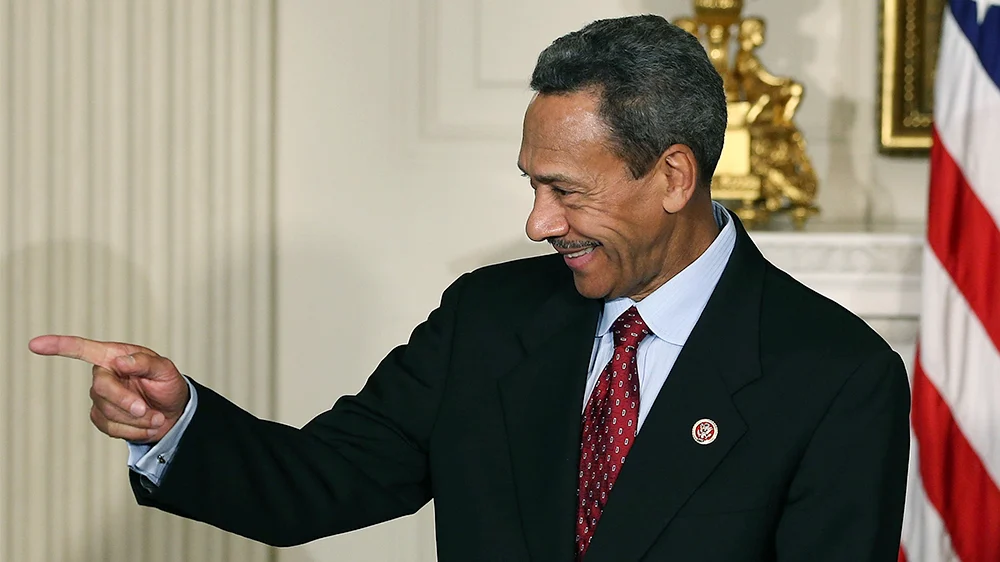
Rep. Mel Watt (D-N.C.), serving as the ranking member of the House Judiciary’s Subcommittee on Intellectual Property, Competition and the Internet, announced a renewed legislative push. Watt declared his intention to introduce a bill establishing a formal performance right for sound recordings, setting the stage for yet another major legislative showdown between two powerful media lobbies.
Main Facts: The Proposed Legislation and the Core Dispute
At the heart of the impending legislative battle is a fundamental discrepancy in American copyright law. While songwriters and music publishers receive public performance royalties when their compositions are broadcast over terrestrial radio, the actual performing artists—the singers, session musicians, and record labels who bring the tracks to life—receive nothing from traditional AM/FM broadcasters.
Under current U.S. law, terrestrial radio stations are exempt from paying performance royalties for sound recordings. However, digital platforms, internet streaming services, and satellite radio are legally mandated to pay these royalties under separate frameworks.
Rep. Watt’s upcoming legislation aims to close this gap, though with a strategic twist designed to encourage compromise. Unlike previous attempts that sought to impose a statutory royalty rate directly through Congress, Watt’s proposed bill would strictly establish the legal performance right itself. By creating this right without a congressionally mandated fee structure, the legislation is intended to force broadcasters and music creators to sit at the negotiating table and bargain in good faith.
"We have been talking about this for a while, but it is time for us to act on it," Watt stated during a House Judiciary hearing dedicated to comprehensive copyright reform. Watt indicated he plans to officially drop the bill into the legislative hopper before Congress departs for its upcoming summer recess.
Chronology: A History of Legislative Stalls and Escalating Tensions
The fight over the terrestrial performance right is far from new; it is the latest chapter in a multi-decade legislative saga characterized by repeated deadlocks.
- The Pre-Digital Era: For nearly a century, traditional radio broadcasters enjoyed a blanket exemption from paying performance royalties on sound recordings, arguing that airplay served as irreplaceable, free promotion that ultimately drove physical record sales and concert attendance.
- The Digital Shift: As technology evolved, Congress enacted laws requiring satellite and digital radio services to pay performance royalties, creating a glaring double standard where traditional AM/FM radio remained the sole audio medium exempt from artist compensation.
- 2009 Legislative Push: A robust bipartisan effort was mounted in Congress to establish a terrestrial performance right. Backed by key figures such as Rep. Darrell Issa (R-Calif.) and Rep. Marsha Blackburn (R-Tenn.), the legislation successfully cleared both the House and Senate Judiciary committees. Despite this momentum, the bill ultimately stalled on the floor due to fierce, well-funded opposition from the broadcast lobby.
- Present Day: With Rep. Watt’s announcement, lawmakers are dusting off the blueprints of past legislative battles, attempting to navigate a deeply polarized political landscape to finally resolve the issue.
Supporting Data: The Global Disconnect and Legislative Counter-Measures
The debate is underpinned by stark economic arguments and international discrepancies cited by both sides of the aisle.
The Pro-Artist Perspective
Advocates for the performance right point to the global stage as a primary reason for legislative action. The musicFIRST Coalition, an influential organization representing recording artists, musicians, and major labels, notes that the United States is one of the few developed nations in the world—alongside historically anomalous jurisdictions—that fails to recognize a terrestrial performance right for sound recordings.
Ted Kalo, executive director of the musicFIRST Coalition, underscored the absurdity of the current system. "AM/FM radio stands alone among all forms of radio in refusing to pay music creators for airing their performances," Kalo said. He further explained that because the U.S. domestic market refuses to recognize this right, American artists miss out on millions of dollars in international royalties. Under reciprocal agreements, foreign nations collect performance royalties when American music is played on their airwaves, but because the U.S. does not reciprocate, American creators are barred from collecting those funds overseas.
The Broadcasters’ Counter-Offensive
Conversely, the National Association of Broadcasters (NAB) and its allies rely on robust legislative defensive strategies. Broadcasters point to the Local Radio Freedom Act, a symbolic and proactive measure currently introduced in Congress. This act explicitly urges lawmakers to reject the implementation of any "performance fee, tax, royalty, or other charge" on local broadcast stations. The measure has garnered substantial congressional backing, boasting 143 co-sponsors in the House of Representatives and 11 in the Senate, highlighting the deep well of support broadcasters command on Capitol Hill.
Official Responses: Industry Titans Clash Over "Taxes" and "Fairness"
As expected, the stakeholders involved reacted swiftly and sharply to Representative Watt’s announcement, drawing battle lines that mirror past legislative clashes.
The National Association of Broadcasters (NAB) mobilized immediately following the House Judiciary hearing. Dennis Wharton, speaking on behalf of the NAB, pulled no punches in condemning Watt’s proposal, framing it as a direct threat to local communities and working-class citizens.
Wharton characterized the measure as a "performance tax" and warned of dire economic consequences. "This proposal would kill jobs at America’s hometown radio stations while diverting millions of dollars to offshore record labels," Wharton asserted. Broadcasters maintain that local radio stations are engines of community engagement, emergency communication, and grassroots music discovery, and that imposing new financial burdens would force cutbacks in newsroom staffing, public service programming, and local air talent.
On the other side of the debate, the music community argues that the broadcasters’ rhetoric about "hometown stations" obscures a corporate business model built on exploiting uncompensated labor. Artists and major-label representatives argue that while promotional value was a valid argument in the analog era of the 20th century, modern radio conglomerates operate massive commercial enterprises that generate billions in advertising revenue off the backs of artists who see zero financial return from terrestrial broadcasts.
Furthermore, proponents of the bill point to changing market realities. Outside of congressional mandates, private enterprise has occasionally demonstrated that compensation is possible. Notably, digital media and broadcast giant Clear Channel (now iHeartMedia) previously struck direct licensing deals with independent labels to compensate them for terrestrial airplay, proving that commercial viability and artist compensation can coexist without destroying the radio industry.
Implications: Navigating the Path Forward in Congress
Looking ahead, the viability of Rep. Watt’s legislation faces steep political hurdles and structural uncertainties.
First, the path to legislative success requires robust bipartisan support. While the 2009 effort successfully drew conservative co-sponsors like Rep. Issa and Rep. Blackburn, the current hyper-partisan political climate in Washington makes consensus-building significantly more difficult. Broadcasters maintain a deeply entrenched and active lobbying apparatus that has historically succeeded in convincing lawmakers—particularly those representing rural districts reliant on local AM/FM stations—that performance fees spell economic doom for local media.
Second, looming personnel changes in Washington could directly impact the bill’s momentum. Questions remain regarding how much political capital and time Rep. Watt can dedicate to the legislation, given that his nomination to direct the Housing Finance Agency hangs in the balance. If the Senate confirms his nomination, Watt’s departure from the House Judiciary Committee could leave the legislation without its primary congressional champion, forcing other lawmakers to step up and steer the bill through the legislative process.
If the bill manages to survive committee scrutiny and reach the House and Senate floors, it will trigger a titanic lobbying war. A victory for the music industry would permanently alter the economic landscape of American audio entertainment, forcing traditional broadcasters to negotiate payouts for every track spun on the air. Conversely, a victory for the NAB would reaffirm a decades-old exemption, cementing AM/FM radio’s unique status in copyright law and leaving performers dependent solely on digital platforms and touring revenue for their recorded works.
As Congress marches toward its summer recess, the coming weeks will reveal whether Rep. Watt can successfully bridge the partisan divide or if this latest push for performance rights will suffer the same fate as its predecessors, stalling out against the formidable wall of broadcast industry opposition.
