
The Mirror and the Myth: Elizabeth Holmes Confronts Her On-Screen Reflection in ‘You Can See Everything’

In the annals of corporate malfeasance, few figures have loomed as large or as enigmatically as Elizabeth Holmes, the former CEO of Theranos whose meteoric rise and catastrophic fall captivated the global consciousness. Now, years after her conviction and subsequent incarceration, the disgraced entrepreneur finds herself once again at the center of a media firestorm—not through a new scandal, but through an unconventional documentary project that forces her to confront her own pop-culture effigy.
The documentary You Can See Everything, directed by Lance Oppenheim and featuring the distinct, meta-narrative imprint of Nathan Fielder, provides an unprecedented—if deeply disorienting—look at the life of Holmes in the twilight of her freedom. Among the most surreal moments in the film is a sequence where Fielder compels Holmes to watch Amanda Seyfried’s Emmy-winning portrayal of her in the Hulu miniseries The Dropout. The result is a profound, uncomfortable exploration of how the subject of a true-crime saga reacts when confronted with the dramatized version of their own moral decay.
The Collision of Reality and Dramatization
To understand the weight of this encounter, one must first look at the cultural impact of The Dropout. Based on the definitive investigative work of The Wall Street Journal reporter John Carreyrou—specifically his book Bad Blood: Secrets and Lies in a Silicon Valley Startup—the series painted a devastating, nuanced portrait of Holmes. It traced her trajectory from a young, ambitious Stanford dropout with a vision to change blood diagnostics, to a corner-office autocrat presiding over a house of cards built on fraud and intimidation.
For Holmes, the miniseries is not merely entertainment; it is an unwanted mirror. In You Can See Everything, Fielder, who lived with Holmes and her partner, Billy Evans, in the months preceding her eleven-year prison sentence, serves as a relentless interlocutor. By presenting Holmes with a laptop to view Seyfried’s performance, Fielder creates a vacuum where the "real" Elizabeth and the "fictional" Elizabeth collide.
The Specifics of the Breakdown
The documentary captures a visceral reaction. When watching a scene in which Seyfried’s version of Holmes dances in front of a poster of Steve Jobs, the real-life Holmes offers a bemused, almost detached chuckle. She denies that the specific act of dancing occurred, even as she acknowledges her well-documented, almost messianic obsession with the Apple co-founder.

However, the levity vanishes when the onscreen narrative shifts to her professional and personal dynamic with Ramesh "Sunny" Balwani, the former Theranos COO and Holmes’ ex-boyfriend. As Seyfried’s Holmes endures Balwani’s controlling behavior—specifically his critique of her appearance—followed by a scene in which the character aggressively demands funding from Oracle’s Larry Ellison, the real Holmes reaches a breaking point. She becomes visibly distressed, eventually halting the viewing entirely, unable or unwilling to process the aggressive, cold-blooded iteration of herself projected on the screen.
A Chronology of the Theranos Saga
To place these reactions in context, one must revisit the timeline that led to the creation of the The Dropout and the subsequent documentary:
- 2003–2014: The Rise of Theranos. Holmes establishes the company, promises a revolution in blood testing, and secures massive funding, reaching a peak valuation of $9 billion.
- 2015: The Collapse Begins. John Carreyrou publishes his exposé in The Wall Street Journal, revealing that the company’s proprietary technology does not function as claimed.
- 2018: The SEC and federal prosecutors charge Holmes and Balwani with massive fraud.
- 2022: The debut of The Dropout on Hulu, which garners widespread critical acclaim and an Emmy for Amanda Seyfried.
- 2023: Elizabeth Holmes begins serving her 11-year sentence at a federal prison camp in Texas.
- 2026: The release of You Can See Everything, featuring footage of Holmes captured by Fielder during the period of her home confinement before she reported to prison.
The Meta-Narrative: Fielder’s Investigative Theater
You Can See Everything is not a traditional documentary. It is a work of "mind-melting manipulation," as critics have called it, characterized by Fielder’s trademark use of elaborate reenactments. The project’s methodology reaches a fever pitch when Fielder decides to take the footage of his conversations with Holmes—and her reactions to the media coverage—directly to Amanda Seyfried.
In a staggering narrative turn, Seyfried effectively becomes Fielder’s investigative sidekick. Because Fielder was prohibited from bringing recording equipment into the prison during his visits to see Holmes, he opted to reconstruct the prison visiting room on a soundstage. He then had Seyfried portray Holmes, reciting lines that Fielder recalled from his genuine conversations with her.
During these reenacted prison visits, the "Seyfried-as-Holmes" character complains of poor treatment by prison guards who have watched The Dropout and have consequently developed a deep animosity toward her. Holmes, through this proxy, suggests that the Hulu series is directly responsible for the public vitriol she faces. It is a hall of mirrors: an actor playing a convict who is complaining about a show in which the same actor played that same convict.

Official Responses and the Dispute Over Truth
The central tension of You Can See Everything lies in the validity of Holmes’ claims. Throughout the documentary, both Holmes and Billy Evans maintain a consistent defense: that the media, and specifically The Dropout, created an exaggerated, caricatured version of a person who does not exist.
However, this defense faces an insurmountable hurdle: the court of law. Holmes was found guilty on multiple counts of fraud and conspiracy. The evidence presented during her trial—including internal communications, testimony from former employees, and financial documents—paints a picture of a calculated deception that far exceeds the "artistic license" used in television dramatizations.
Experts and legal commentators have noted that Holmes’ desire to distance herself from the "character" of the Theranos CEO is a psychological defense mechanism. By dismissing The Dropout as fiction, she attempts to retain a semblance of her own narrative agency. Yet, as the documentary illustrates, the public, the judicial system, and even the filmmakers themselves find it difficult to reconcile her claims of innocence or misunderstanding with the cold, hard facts of the Theranos collapse.
Implications: The Ethics of Documenting the Disgraced
The existence of You Can See Everything raises profound ethical questions about the nature of modern documentary filmmaking. When a filmmaker like Fielder—known for his ability to blur the lines between reality and artifice—engages with a subject as controversial as Elizabeth Holmes, the audience is left to wonder: whose truth are we actually seeing?
Is the documentary capturing the "real" Holmes, or is it merely providing her with another stage to perform a version of herself? By involving Seyfried in the reenactments, Fielder acknowledges the performative nature of the subject’s life. Holmes, after all, spent years crafting a specific image—the black turtlenecks, the deep, forced voice, the Silicon Valley visionary persona.
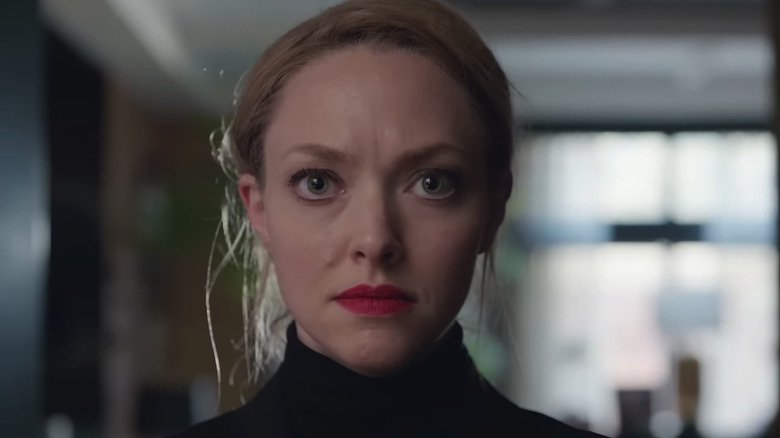
The documentary suggests that the "real" Elizabeth Holmes may have become so lost in the artifice of her own making that she can no longer distinguish between her actions and the dramatic recreations of them. As the series progresses, the documentary becomes less about the crimes of Theranos and more about the existential dread of being a public figure who has been stripped of their own narrative.
Conclusion
As You Can See Everything concludes, the viewer is left with a lingering sense of unease. Elizabeth Holmes remains a figure of intense fascination, not because of the validity of her defenses, but because of the sheer scale of the deception she orchestrated. By confronting the fictionalized version of her life, Holmes unwittingly highlights the gap between how she wants to be perceived and the reality of the damage she caused.
Whether or not one believes her criticisms of The Dropout, the documentary stands as a testament to the power of media to define history. For Holmes, the screen is a source of pain; for the audience, it is a reminder that the truth of the Theranos saga remains as stark and unforgiving as the court records that sealed her fate. In this meta-documentary, the ultimate revelation is not a new secret about the company, but a look at the woman behind the mask—who, even when confronted with the truth, seems unable to step out from behind it.
