
Punching Above Their Weight: How Impossible Objects Redefines High-End VFX with Custom AI Workflows and HP ZGX AI Stations
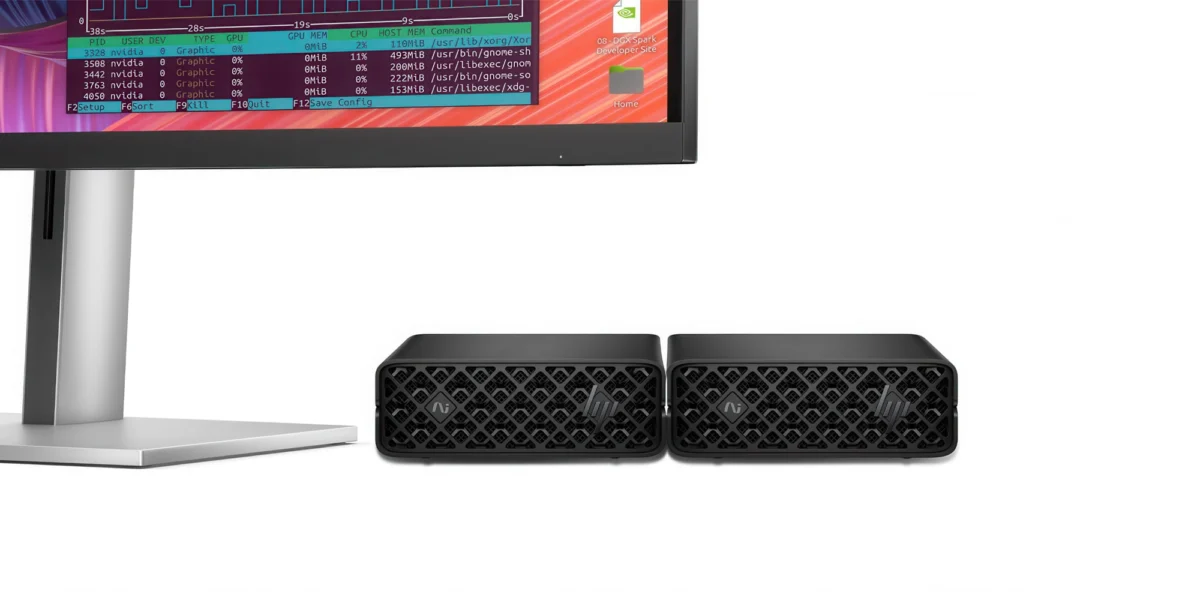
LOS ANGELES — In the hyper-competitive realm of high-end visual effects (VFX) and commercial advertising, boutique studios are constantly searching for ways to scale their operational capacity without sacrificing the meticulous craft demanded by elite global brands. Los Angeles-based visual effects innovator Impossible Objects (IO) has found a transformative answer. By pairing custom-tailored ComfyUI pipelines with enterprise-grade local compute infrastructure—specifically, the HP ZGX Nano AI stations powered by NVIDIA GB10 Grace Blackwell Superchips—Impossible Objects has bridged the gap between raw generative AI speed and the uncompromising photorealism required for tier-one automotive, athletic, and tech campaigns.
While many production facilities remain hesitant to embrace generative AI due to issues surrounding asset ownership, resolution limits, and color fidelity, Impossible Objects has forged a hybrid production model. This approach grants the lean studio the "superpowers" necessary to deliver cinematic-grade outputs for brands like Porsche, Cadillac, Subaru, Nike, and Google, rivaling the throughput of facilities many times its size.
1. Main Facts
Impossible Objects is a Los Angeles-based creative production and visual effects studio servicing the advertising, film, and television industries. Operating at the intersection of traditional CG pipelines and custom-trained generative AI models, the boutique studio has redefined what is possible for small teams tackling massive workloads.
- The Core Technology Stack: IO leverages a specialized, artist-driven visual effects pipeline built on custom workflows within ComfyUI, combined with industry-standard 2D compositing and 3D software suites such as Foundry Nuke, Adobe After Effects, and SideFX Houdini.
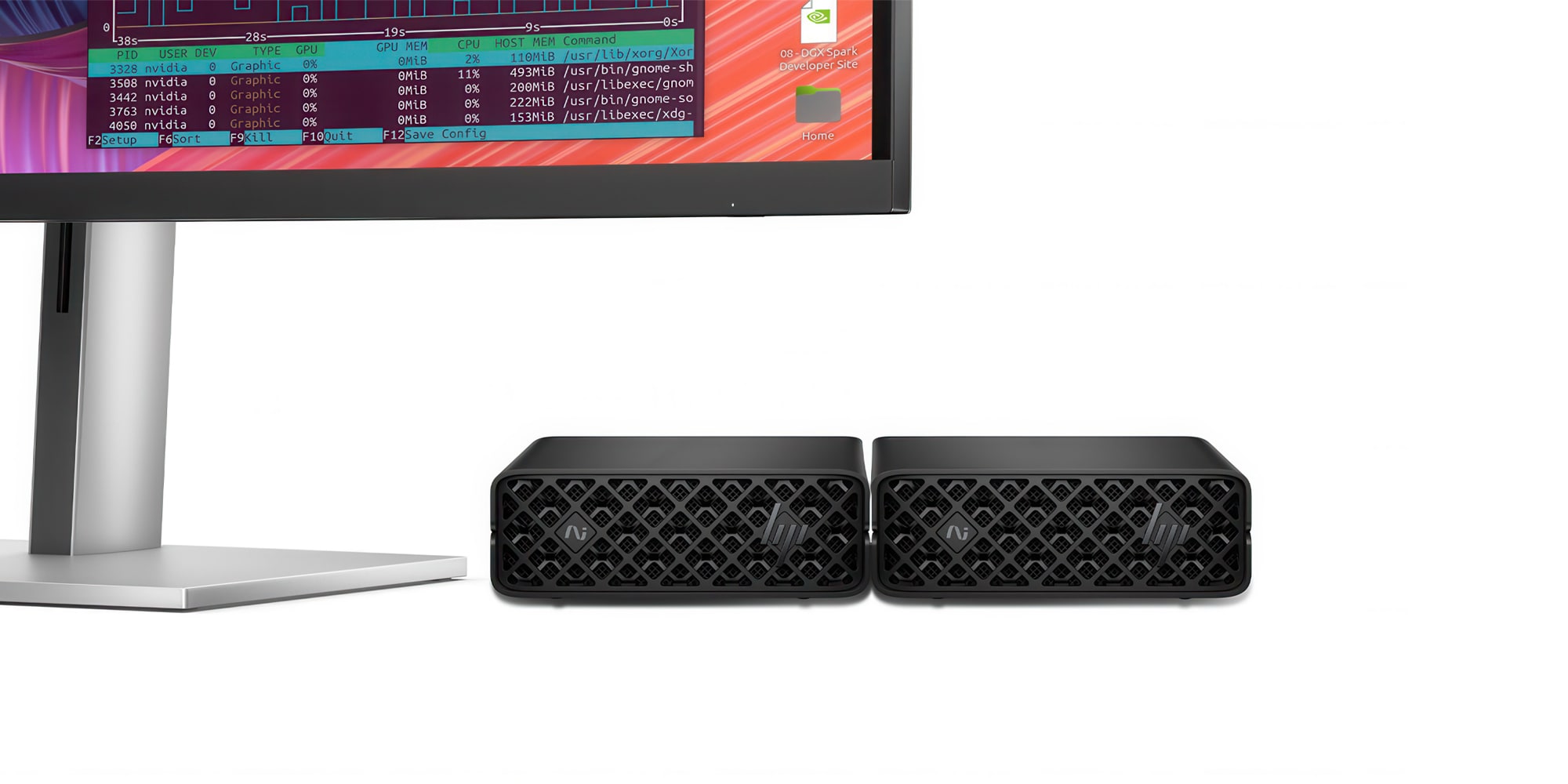
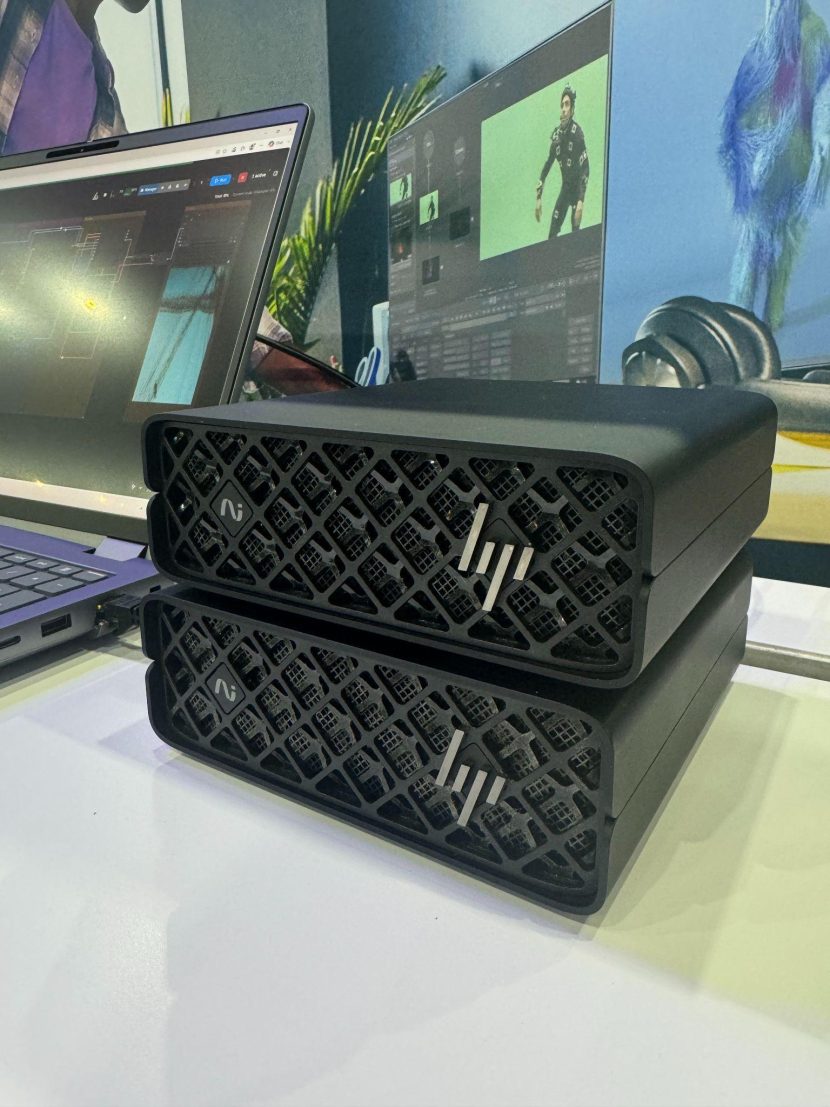
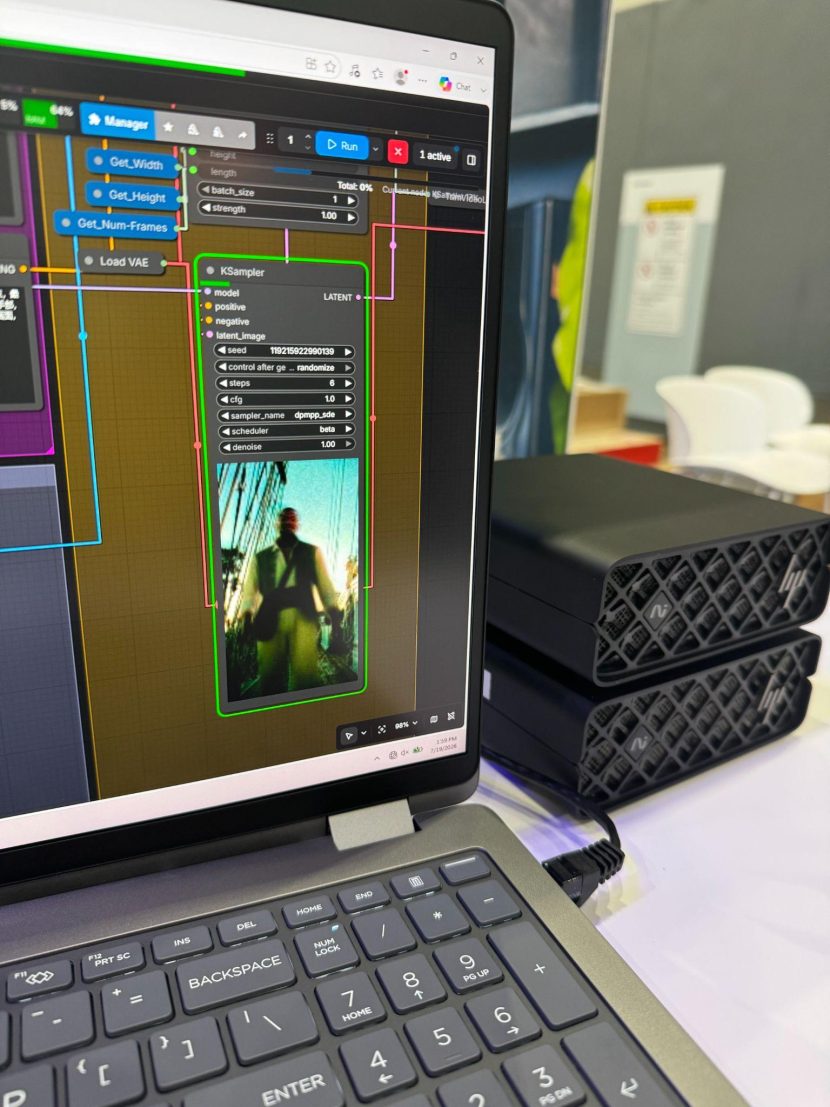
- The Hardware Backbone: To support its rigorous computational demands, the studio recently integrated two HP ZGX Nano G1n AI stations, accelerated by integrated NVIDIA GB10 Grace Blackwell Superchips and connected via high-speed 200 Gbps ConnectX-7 ports.
- Client Portfolio: The studio’s commercial roster includes elite global automotive and lifestyle brands, such as Porsche, Cadillac, Subaru, Nike, and Google.
- Key Innovation: Rather than relying entirely on cloud-based, black-box text-to-video tools, IO trains open-source generative models exclusively on in-house captured source footage and proprietary brand IP, preserving asset provenance, color accuracy, and local data security.
2. Chronology: The Journey to AI Integration
The integration of artificial intelligence into Impossible Objects’ daily pipeline did not happen overnight; it is the result of years of rigorous research, development, and strategic adaptation.
Phase 1: Two Years of R&D and Foundation Building (2024–2025)
Long before deploying their current hardware infrastructure, Impossible Objects’ leadership and engineering teams—spearheaded by AI Lead Nhan Le and co-founders like Jerad Anderson alongside creative engineer Aiden Silver—embarked on a multi-year research and development initiative. Rather than adopting off-the-shelf generative video tools that lacked predictability, the team focused on building a repeatable, sovereign workflow. They engineered modular systems capable of ingesting original video capture and training custom models to retain latent memory, ensuring that intricate details (such as the shifting reflections on a car’s body panels) remained consistent across shots.
Phase 2: Identifying the Photorealism Threshold
As commercial clients escalated their demands for pixel-perfect fidelity, IO recognized the inherent flaws in pure text-to-video generation, which often suffers from resolution bottlenecks, color degradation, and temporal flickering. The studio established a hybrid protocol: use traditional 2D and 3D compositing for structural integrity and photorealism, while utilizing localized generative AI on the backend to automate tedious tasks like lighting matching, rotoscoping, and set extensions.
Phase 3: Hardware Expansion with HP ZGX Nano (2026)
To eliminate cloud latency, mitigate soaring cloud-compute expenses, and resolve strict client data security mandates, IO brought its AI processing entirely on-premises. The studio deployed the HP ZGX Nano G1n AI stations. Utilizing the built-in ZGX Toolkit, the engineering team instantly connected, configured, and integrated the systems into their server room. By linking two ZGX Nano units via 200 Gbps ConnectX-7 ports, IO effectively doubled their available system memory, unlocking the capacity to process ultra-high-resolution models and extended-length 4K video clips without dropping frames.
3. Supporting Data & Technical Architecture
The technical architecture at Impossible Objects is designed around absolute control, localized data security, and seamless hardware scalability.
Overcoming the Photorealism Gap
Car commercials are subjected to intense scrutiny by agency executives, directors, and brand custodians. Every curve, highlight, and reflection on a vehicle must look authentic.
- Resolution and Color Integrity: Fully generative shots often fall short of these thresholds. IO bypasses this limitation by treating AI as an intelligent backend layer.
- Automated Lighting Matching: Instead of forcing artists to manually match lighting changes frame-by-frame across a sequence, IO’s custom AI modules dynamically react to shifting environmental lighting conditions by reading directly from the source footage. This guarantees physically accurate integration between live-action plates and digital elements.
Solving the LED Virtual Production Bottleneck
Virtual production volumes utilizing LED walls have transformed modern filmmaking, but they come with significant post-production friction. Traditionally, artists had to painstakingly extract tracking data from live-action volume shoots and manually apply it back into 3D environments—a process that could consume days or weeks, often resulting in tracking errors.
- Inferred Tracking Data: IO’s AI-powered workflows analyze source footage to directly infer and calculate the geometry of 3D environments on LED walls.
- Frictionless Cleanup: By automating set extensions and LED wall cleanup, the studio accepts incoming client plates as is, liberating productions from the rigid constraints of on-set tracking data capture.
Hardware Specifications of the HP ZGX Nano
The HP ZGX Nano G1n is a purpose-built, small form factor workstation engineered specifically for demanding AI development and deployment.
- NVIDIA GB10 Grace Blackwell Superchip: Delivers extreme enterprise-grade local compute performance, enabling rapid local inference and model fine-tuning.
- ZGX Toolkit: Allowed IO engineers to rapidly discover, connect, and push ComfyUI workflows to the system with minimal friction.
- High-Speed Networking: Dual 200 Gbps ConnectX-7 ports enabled the clustering of multiple ZGX Nano stations, pooling memory resources to handle larger 4K video clips and dense foundational models locally.
4. Official Responses and Industry Perspectives
The philosophy driving Impossible Objects centers on empowering human artists rather than replacing them. Studio leadership emphasizes that technology should serve craft, not dictate it.
"The spots we do for car brands are highly scrutinized, and generally AI video models can’t deliver the level of photorealism demanded of this kind of work," explained Nhan Le, AI Lead at Impossible Objects. "However, we have found a sweet spot when we combine traditional 2D compositing and VFX with custom trained models and workflows to take advantage of the time- and resource-saving benefits of generative AI. The HP ZGX Nano boxes give us the speed, power, and scalability that we need to support that workflow on our network."
Addressing the security and data privacy concerns plaguing modern enterprise media pipelines, Le added:
"With the ZGX Nanos, we’re also able to keep everything local and on-prem, which is a massive security consideration for our clients who don’t want to take the risk of working with vendors who upload footage and files to LLMs in the cloud."
Co-founder Jerad Anderson highlighted the unique contributions of the studio’s engineering team:
"People like Nhan and his counterpart Aiden Silver are really amazing creative engineers. They have paved a way with this new workflow that marries AI into production in a way that firmly plants a flag in craft and the human element, while embracing the time-saving elements of generative AI. The company has been doing R&D for two years straight to devise an approach that generates assets from original capture so that once we’ve solved a production problem, the solution is repeatable and we can solve it faster the next time."
Reflecting on the philosophical shift in project execution, Le noted:
"Because we’re able to integrate this AI backend, we get to focus on the work that’s important, which is the creative work, and all the scalability is handled by the infrastructure that we have set up. Every time we start a job now, we actually think of scalability instead of just whatever it takes to get the job done. How can we empower the artist to unlock backend shortcuts so they can focus on making the final work look amazing?"
5. Broader Implications for the VFX Industry
The successful operational model established by Impossible Objects signals a major paradigm shift for the visual effects and advertising industries. For years, the prevailing industry narrative surrounding generative AI has been polarized: either absolute rejection by traditionalists or wholesale replacement of human labor by tech evangelists. IO’s hybrid methodology charts a third, highly sustainable middle path.
1. Data Sovereignty and IP Protection
As major corporations, automotive manufacturers, and entertainment studios grow increasingly protective of their proprietary designs and unreleased intellectual property, sending raw assets to third-party, cloud-hosted large language models has become an unacceptable security risk. By investing in on-premises enterprise workstations like the HP ZGX Nano, studios can guarantee total data containment. This localized approach satisfies the rigorous security audits mandated by Hollywood studios and global brands alike.
2. Democratizing Scale for Boutique Facilities
Historically, only massive tier-one facilities with sprawling render farms and hundreds of artists could handle high-volume, multi-deliverable global advertising campaigns. By leveraging multi-agent AI operations, unified hardware clustering, and automated backend shortcuts, boutique studios like Impossible Objects can effectively multiply their throughput. IO’s upcoming roadmap—which includes establishing an in-house smart render farm managed by multi-agent AI linked via network-attached storage (NAS) to their HP ZGX cluster—demonstrates how small teams can execute studio-level workloads with unprecedented efficiency.
3. Preserving Human Artistry
By automating repetitive, mathematically intensive tasks such as lighting matching, rotoscoping cleanup, and basic LED wall tracking, generative AI acts as a force multiplier for human artists. Rather than spending days wrestling with technical tracking discrepancies, compositors and CG generalists can redirect their energy toward higher-level creative execution, storytelling, and aesthetic refinement.
Ultimately, Impossible Objects has proven that the future of visual effects does not belong to unguided automation, but to the symbiotic relationship between human craftsmanship and powerful, secure, locally controlled artificial intelligence.
