
The Sound of Survival: How Reservation Dogs Crafted the Haunting Reality of ‘Deer Lady’
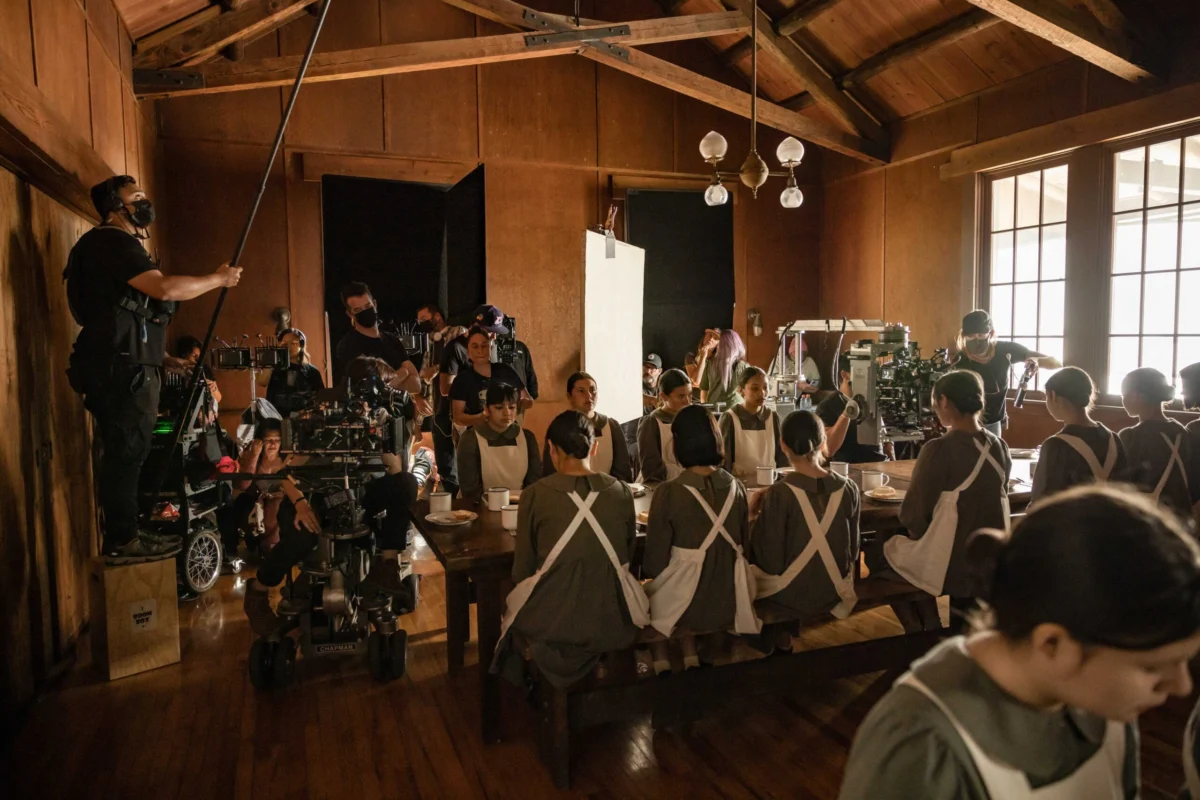
As Reservation Dogs reaches its final chapter, the FX series has solidified its reputation as a masterclass in storytelling—not merely through its sharp, poignant scripts, but through a level of technical ambition rarely seen on television. In the third episode of its final season, titled "Deer Lady," showrunner Sterlin Harjo and his creative team delivered an episode that transcends the traditional "origin story" format. By blending visceral sound design, a haunting, evocative score, and historical weight, the show offers a profound exploration of the trauma embedded within the American Indian boarding school system.
The Genesis of an Origin Story
"Deer Lady" focuses on the titular recurring character, played with fierce gravitas by Kaniehtiio Horn. Known to fans as the enigmatic figure cruising Oklahoma byways in search of "bad men," the character is revealed here in her most vulnerable state: as a young girl, Georgeanne Growingthunder, thrust into the harrowing environment of a residential boarding school.
The episode does not shy away from the brutality of this history. While the federal government’s policy of forced assimilation—characterized by the kidnapping of children to "civilize" them—is a dark chapter of the past, the showrunners recognized that depicting it required more than visual accuracy. It required a sonic landscape that could translate the terror of that experience for the modern viewer.
The Mechanics of Disorientation: A Sound Engineering Odyssey
To convey the profound isolation felt by the young protagonists, the sound department, led by supervisor Patrick Hogan, faced a unique challenge: how to represent the linguistic barrier and the overwhelming, predatory presence of the school’s authorities.

Trials and Errors in Dialogue
The script mandated that the children, including young Deer Lady, arrive at the school only to be confronted by nuns shouting in English—a language the children could not understand. Initially, director Danis Goulet experimented with having actors speak "gibberish." However, the results were inconsistent.
"The problem with the gibberish version was that it sounded like a weird German-Dutch hybrid," Hogan explained to IndieWire. "It raised the question of whether these were Dutch missionaries. It didn’t capture the specific feeling of a child being confronted by a language that is fundamentally alien and hostile."
The team moved on to ADR (Automated Dialogue Replacement) sessions, where actors attempted to recite lines in scrambled, stilted English. While conceptually sound, the execution felt too close to a parody—or, as Hogan noted, too much like Yoda. The breakthrough finally arrived when the team pivoted to manipulating the audio quality itself. By pitching down the voices of the adults, the sound team transformed human speech into something primordial and terrifying—a "dragon’s bellow" that perfectly captured how a small child perceives an abusive, towering authority figure.
To finalize the effect, the team reversed the audio. This final layer added the necessary texture of disorientation, ensuring the dialogue remained unintelligible while maintaining a menacing, visceral quality that standard post-production techniques could not achieve.

The Lyrical Spirit: Blending Worlds
The episode also features a Deer Spirit who acts as a guide for the protagonist after she flees the school following the brutal treatment of her friend, Koda (Michael Podemski). Here, the approach was fundamentally different. Rather than seeking to terrorize, the sound design had to represent a deep, ancestral connection.
The dialogue for the Spirit was recorded in Kiowa, an endangered language with fewer than 20 native speakers remaining. With the help of language consultant Warren C. Queton and native speaker Aykeemah, the production ensured linguistic authenticity. Hogan and his team then blended this dialogue with musical elements, treating the speech not as a cold communication, but as a "lyrical quality" that the child could understand on a spiritual level. It was a conscious choice to portray power not as a tool of oppression, but as a source of protection and resonance.
Musical Verisimilitude: Mato Wayuhi’s Score
Composer Mato Wayuhi has long treated each season of Reservation Dogs as a "mini-movie," assigning specific motifs to characters to track their growth. However, scoring "Deer Lady" demanded a shift into a darker, more somber register.
Wayuhi described the experience of scoring this episode as an intense, almost physically taxing endeavor. "I needed therapy after—not real therapy, but just in terms of self-care," Wayuhi admitted. "I had an urgency to pay respect to the sacrifices of my ancestors."

To achieve a sense of verisimilitude, the production team went to extraordinary lengths, even shooting in the remains of an actual former boarding school. The atmosphere on set was one of deep reverence, with smudging ceremonies and prayers held to honor the history of the site. Musically, Wayuhi avoided sensationalism, opting instead for a "discordant" soundscape that mirrored the feeling of being an Indigenous person forced into a predominantly white institution.
The crowning achievement of the score is the episode’s final sequence, which bridges the gap between the past and the present. As the narrative transitions from a flashback of children planning a fishing trip to a modern-day shot of Koda’s grave, Wayuhi’s composition—delicate keys and rising, breathing-like swells—captures the impossible tension between hope and grief.
Implications for Indigenous Representation
The success of "Deer Lady" lies in its ability to do more than just tell a historical story; it reclaims the narrative power that has historically been denied to Indigenous peoples in cinema.
Wayuhi notes that the standard Hollywood framework for storytelling is often built in direct opposition to Indigenous identity, frequently relying on tropes that dehumanize or subjugate Native characters. Reservation Dogs, by contrast, serves as a revolutionary act of humanization.

"This show is so revolutionary in its humanization of who we are and also when we are, too," Wayuhi said. "I think it brought us to the modern era."
Conclusion: A Legacy of Honesty
The technical precision behind "Deer Lady" is not just for the sake of prestige; it is a manifestation of the show’s core philosophy: that Indigenous stories deserve the same level of craft, care, and budget as any other epic. By treating the trauma of the past with unflinching honesty and using every tool in the sound and music engineer’s arsenal to evoke the reality of that experience, Reservation Dogs has ensured its place in television history.
As the series concludes, the "Deer Lady" episode stands as a testament to the power of collaborative, culturally grounded filmmaking. It reminds audiences that behind the characters we love—the ones cruising through life with bravado and humor—there are histories, traumas, and ancestors that shape every frame of the screen.
New episodes of Reservation Dogs premiere Wednesdays on Hulu.
