
Box Office Report: A Documentary Phenomenon Challenges the Superhero Status Quo
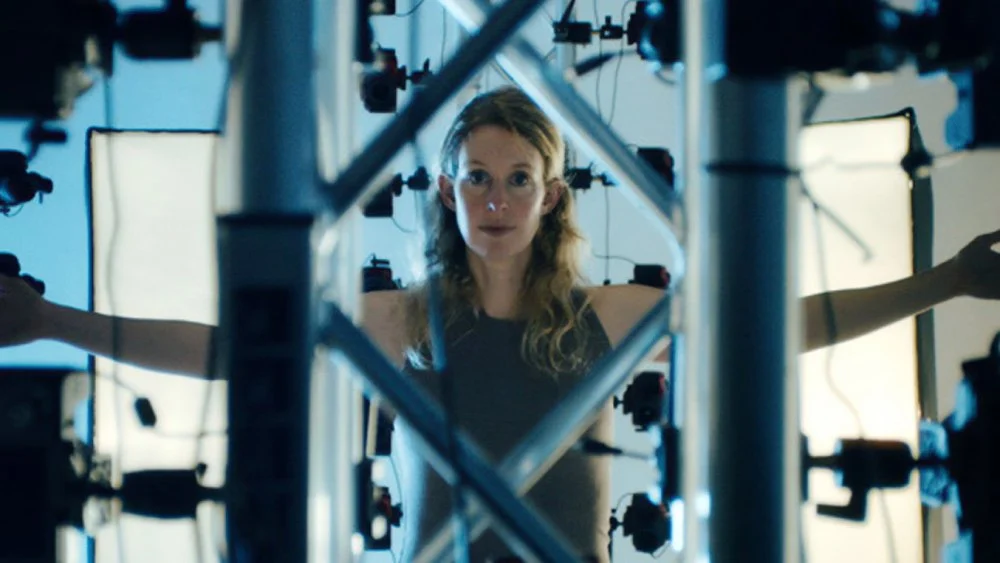
The North American box office landscape is undergoing a tectonic shift. In a development that has stunned industry analysts and studio executives alike, the documentary You Can See Everything—a sprawling, three-hour deep dive into the life of Elizabeth Holmes—has emerged as a genuine commercial juggernaut, nearly toppling a major studio comic-book adaptation in its second weekend.
While the traditional blockbuster model continues to struggle with consistency, the success of this A24 project signals a profound change in audience appetites, proving that "event cinema" is no longer the sole province of capes, masks, and massive CGI spectacles.
The Battle at the Top: Clayface vs. The Zeitgeist
Warner Bros. and DC’s latest R-rated venture, Clayface, successfully claimed the top spot at the domestic box office this weekend, raking in $24 million across 3,458 theaters. Directed by James Watkins, the film offers a gritty, dark exploration of the titular Batman villain—a struggling actor who undergoes a radical, disfiguring medical procedure. While the debut is a win for the studio, the victory feels somewhat hollow given the breathing room enjoyed by its closest competitor.
A24’s You Can See Everything, directed by Nathan Fielder and Lance Oppenheim, defied conventional logic by pulling in a staggering $19.5 million in its sophomore outing. Expanding into 2,655 venues, the film saw an incredible 28% increase in ticket sales from its already successful $15.6 million launch. With a domestic total of $45.1 million against a modest $7 million production budget, the documentary is not just a hit—it is a cultural phenomenon.
Chronology of a Surprise Hit
The trajectory of You Can See Everything has been nothing short of meteoric:
- The Launch: Opening in a limited run of 855 theaters, the film set a 20-year record for the best start for a non-musical documentary.
- Word-of-Mouth: Following a wave of sold-out screenings across both coasts, the film transitioned into a wider release, effectively capturing the zeitgeist.
- The Sophomore Surge: Unlike most films that see a steep decline in their second weekend, You Can See Everything grew its audience by nearly a third, moving closer to the No. 1 spot.
The Financial Reality of Modern Blockbusters
The contrast between Clayface and other recent DC output highlights a pivot in strategy. With a production budget of $44 million, Clayface is a lean, mean, and significantly more profitable venture than the studio’s recent tentpoles. Compare this to the 2025 Superman project, which cost $225 million, or the disappointing Supergirl, which cratered with $126 million in global receipts against a $170 million budget.
"This picture was wisely conceived as something different," notes David A. Gross, publisher of the box office newsletter FranchiseRe. "It cost a fraction of what Joker, Venom, or Kraven the Hunter cost. It should be profitable once all ancillary business is accounted for."
However, not all high-budget gambles are paying off. Laika Studios’ Wildwood, a beautiful but labor-intensive stop-motion project, debuted at No. 3 with $11.2 million. Despite stellar reviews—including a rare 100% rating on Rotten Tomatoes—the $100 million price tag makes a theatrical profit unlikely. The film serves as a reminder that artistic triumph and commercial viability are two very different metrics in the current climate.
The State of the Slate: A Weekend of Extremes
Beyond the top three, the weekend was defined by a mix of mid-tier success and high-profile failures:
- The Mid-Budget Win: Black Bear’s offbeat romantic comedy Wicker secured fifth place with $5.75 million. Acquired for just $2.5 million after its Sundance premiere, the film—starring Olivia Colman and Alexander Skarsgård—is a success story for independent distribution.
- The Critical Collapse: Sony’s Klara and the Sun, directed by Taika Waititi and starring Jenna Ortega, essentially evaporated, landing at No. 15 with a mere $720,000. Following scathing reviews labeling it "calamitous," the studio preemptively scaled back the theatrical footprint to mitigate losses on the $20 million production.
- The Sophomore Slump: Paramount’s Street Fighter reboot faced a brutal 72% drop in its second weekend, earning $8.6 million and highlighting the volatility of video-game adaptations. Similarly, the survival thriller Whalefall from 20th Century continued to slide, earning only $3.2 million.
Official Responses and Industry Sentiment
The industry reaction to the success of You Can See Everything has been one of calculated observation. Paul Dergarabedian, Rentrak’s head of marketplace trends, lauded the release strategy. "Opening the film in 855 theaters was a really smart move," he noted. "It allowed the film to establish itself and build momentum before going much wider. The fact that we’re seeing a documentary deliver such a significant second-weekend increase is remarkable."
Conversely, Black Bear’s head of domestic theatrical distribution, David Spitz, expressed pride in the reception of Wicker. "It is fantastic to see that the film is truly resonating with audiences," he stated. "This is a testament to the filmmakers, cast, and our innovative marketing. It proves that these types of films are what audiences want in their mix of movie-going experiences."
Future Implications: The "Oscars" Effect
Perhaps the most significant takeaway from this weekend is the growing narrative that You Can See Everything could become the first documentary to ever score a Best Picture nomination at the Academy Awards.
Awards sages are already positioning the film as a heavyweight contender. If it maintains its current momentum, it will not only rewrite the box office rules for documentary features but potentially change the way the Academy views non-fiction storytelling.
What This Means for Theaters
- Diversification is Key: The success of Wicker and You Can See Everything suggests that audiences are starving for mid-budget, high-concept, or non-fiction narratives that break the superhero cycle.
- The "Slow Burn" Strategy: The success of the A24 release proves that a platform-style, wide-expansion release strategy can create more "event" energy than a traditional saturated wide-release model.
- The End of the "Mega-Budget" Guarantee: With projects like Supergirl and Whalefall underperforming, studios are likely to continue pulling back on $150M+ budgets for experimental or mid-tier intellectual properties.
As the industry looks toward the upcoming holiday season, the lesson from this weekend is clear: the audience is not tired of going to the movies; they are tired of seeing the same thing. Whether it is a dark body-horror thriller or a deep dive into the psyche of a disgraced CEO, the theatrical experience is thriving—provided the content is as daring as the marketing.
The box office is no longer just about the biggest explosion; it is increasingly about the biggest story. And right now, the story of Elizabeth Holmes is outperforming the story of the DC Universe.
