
A Cinematic Call to Action: Pegah Ahangarani’s ‘Rehearsals for a Revolution’ Named U.K.’s Oscar Hopeful
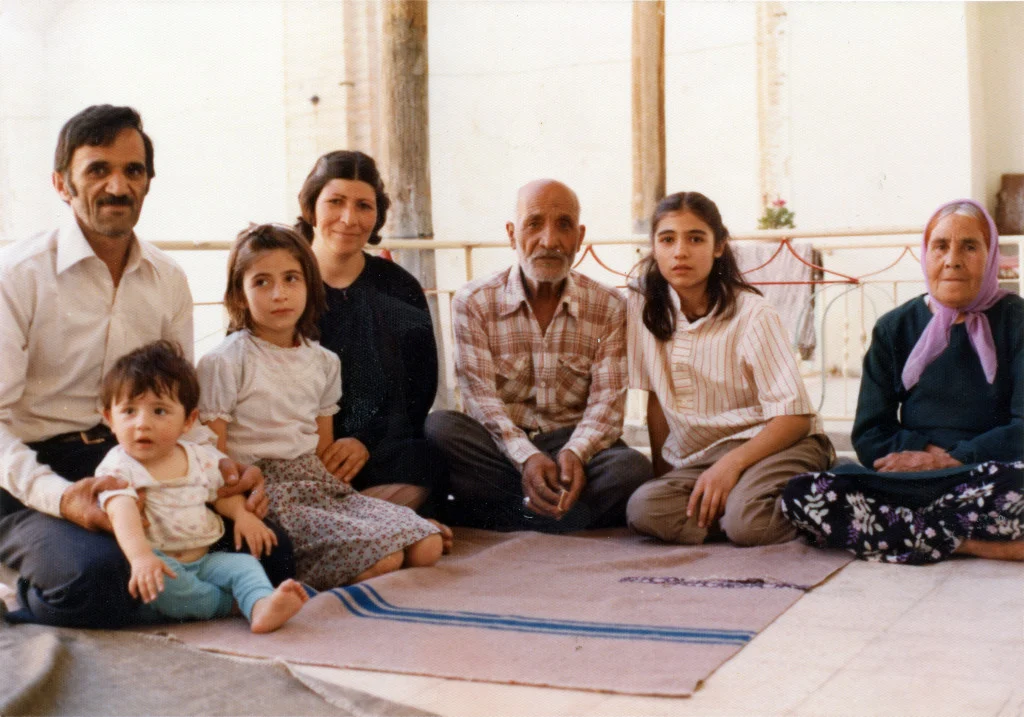
In a move that has sent ripples of excitement through the independent film community, Pegah Ahangarani’s critically acclaimed documentary Rehearsals for a Revolution has been officially selected as the United Kingdom’s entry for the Best International Feature Film category at the upcoming 99th Academy Awards. This selection represents a monumental milestone for the filmmaker, whose deeply personal exploration of exile, identity, and political upheaval has captivated global audiences since its debut.
For Sony Pictures Classics, the film’s distributor, this designation serves as a strategic boost. Having already positioned the project as a major player in the Best Documentary Feature race, the studio now eyes the possibility of securing nominations in both categories. Such a dual-category achievement—while rare—has been successfully navigated by a select few visionary films in the past, including the Romanian investigative powerhouse Collective, the visually stunning Honeyland from North Macedonia, and the genre-bending animated masterpiece Flee from Denmark.
A Legacy of Exile and Memory: The Anatomy of the Film
Rehearsals for a Revolution is far more than a standard historical account; it is an intimate, visceral tapestry woven from the fragments of a life interrupted. Emerging from Ahangarani’s own experience of living in exile from Iran, the film serves as both a private memoir and a public chronicle. As she works to reestablish her life and creative practice in London, Ahangarani turns her gaze backward, attempting to reconcile her personal evolution with the shifting landscape of her homeland.
To construct this narrative, Ahangarani employs a sophisticated collage of media. She synthesizes personal archives and intimate home videos with the raw, chaotic energy of street protest footage, historical newspaper clippings, and hauntingly preserved audio recordings. The result is a four-decade-long journey through the history of Iran, told through the prism of a filmmaker caught between two worlds. By grounding sweeping geopolitical shifts in the lived experience of an individual, the film achieves a rare resonance, transforming the political into something profoundly human.
A New Era for the Academy: Shifting Rules in the International Race
The road to an Oscar nomination for Rehearsals for a Revolution is complicated by the fact that the International Feature category has never been more competitive. Earlier this year, the Academy of Motion Picture Arts & Sciences introduced a seismic shift in its eligibility criteria. The institution, in an effort to broaden the scope of global cinema representation, no longer strictly requires nominees to be submitted by a specific country’s governing body.
While countries will continue to put forward their official selections, the category is now open to foreign-language films that have achieved success at qualifying international film festivals. This change theoretically expands the pool of potential contenders, creating a more crowded and unpredictable field. Ahangarani’s film, however, enters the fray with a distinct advantage: the prestige of a successful festival circuit run, which has provided the necessary momentum to compete against both national submissions and high-profile independent entries.

Chronology of a Breakthrough
The trajectory of Rehearsals for a Revolution has been nothing short of meteoric. The film’s journey to the Oscars began with a triumphant premiere at the Cannes Film Festival, where it was awarded the prestigious L’Oeil d’Or (Golden Eye), a prize dedicated to the best documentary at the festival. This victory acted as an immediate catalyst, establishing the film as a must-see for critics and programmers alike.
Following its Cannes success, the film solidified its reputation at the Telluride Film Festival and the Toronto International Film Festival (TIFF), where it received multiple standing ovations. Most recently, the Maysles Documentary Center honored the film with an Albie Award, further cementing its status as one of the most vital non-fiction works of the year.
The film’s commercial rollout has been carefully calibrated. After its initial release in the United Kingdom this past September, Sony Pictures Classics scheduled a series of qualifying runs in New York and Los Angeles throughout December. The film is slated for an exclusive theatrical opening at the Nuart Theatre in Los Angeles and the Film Forum in New York on January 8, 2027, followed by a wider national expansion in the subsequent weeks.
Industry Perspectives: The Weight of Recognition
The decision to choose Rehearsals for a Revolution was made by a specialized selection committee comprised of senior members of the BAFTA (British Academy of Film and Television Arts) film committee. By selecting a film that explores the Iranian experience through the lens of a U.K.-based filmmaker, the committee has highlighted the increasingly fluid nature of national identity in modern cinema.
Sony Pictures Classics, which is currently managing an impressive slate of award-season contenders—including the buzz-worthy The Only Living Pickpocket in New York featuring a career-defining performance by John Turturro—has been effusive in its praise for Ahangarani’s work.
"How extraordinary to see Pegah’s remarkable film recognized in this category," the studio stated in a formal release. "From winning the L’Oeil d’Or at Cannes to the standing ovations at TIFF and now this recognition, Rehearsals for a Revolution is building incredible momentum. It marks a significant moment for a formidable female filmmaker creating in exile from her home country."

The studio emphasized the potential for this nomination to serve as a bridge for the film. "This selection in the Best International Feature category has the potential to be truly transformative for the film, opening doors to audiences around the world while shining a spotlight on Pegah’s extraordinary talent and her vital voice. It is a recognition that will have a lasting impact not only on the life of this film, but on Pegah’s future career as a filmmaker."
Implications: The Power of the "Voice in Exile"
The nomination of a film by an Iranian director in exile as the U.K.’s representative is a significant cultural statement. In an era where political censorship and the suppression of dissident voices have become central topics in global discourse, Rehearsals for a Revolution acts as a vital document of resistance.
For the Academy, the film offers an opportunity to lean into its stated mission of supporting international voices that might otherwise be silenced. If the film earns a nomination—and potentially a win—it would be a testament to the power of the documentary form to act as a witness to history. The film does not merely observe the Iranian revolution; it interrogates the very nature of memory and the psychological toll of being permanently displaced from the place one calls "home."
As the industry looks toward the 99th Oscars, the narrative surrounding Rehearsals for a Revolution is becoming increasingly clear: this is not just a film about a country, but a film about the universal struggle to maintain one’s truth in the face of erasure. Whether or not it takes home the gold, the inclusion of Ahangarani’s work in the international race ensures that the stories of those in exile will be front and center on the world’s biggest cinematic stage.
With the awards ceremony approaching, the anticipation continues to build. For film enthusiasts, the race in the International Feature category is now defined by the tension between established national industries and the powerful, grassroots storytelling exemplified by Ahangarani’s masterpiece. As the Academy voters prepare their ballots, Rehearsals for a Revolution stands as a frontrunner not just because of its technical prowess, but because of the sheer courage required to tell a story that is, in every sense of the word, a revolution.
