
Descent Into Psychological Rot: A Comprehensive Review of Remothered: Red Nun’s Legacy
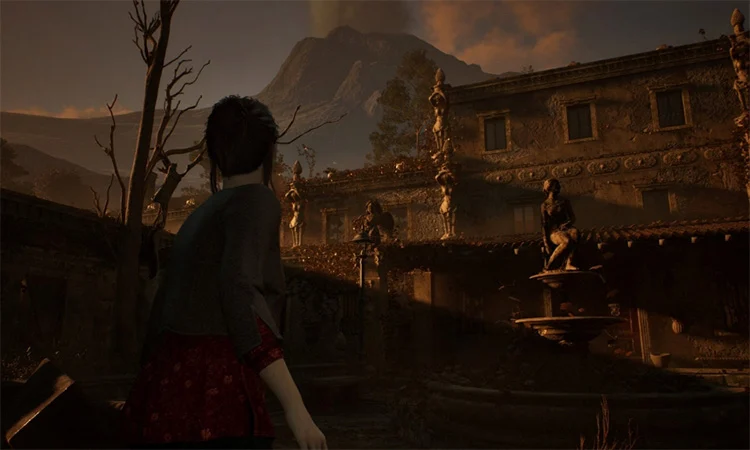
Fourteen months after her daughter Agata disappears without a trace, Susan is beginning to lose hope when she anonymously receives an unnerving lo-fi video pointing her towards an apparently abandoned mansion near Mount Etna, Italy. On arrival, she finds the place crawling with creepy shamblers who aren’t exactly what you might call welcoming. A mum’s frantic search for her missing child soon spirals into a desperate game of cat-and-mouse, interwoven with a disturbing tale of family trauma, obsession, and psychological rot that wears its neo-giallo inspirations proudly on its sleeve.
As the third and final installment in the acclaimed Remothered saga, Remothered: Red Nun’s Legacy promises to bring closure to a trilogy defined by terror. While newcomers can jump straight into the fray, series veterans will undoubtedly extract an extra layer of appreciation as familiar faces, lingering plot threads, and dark secrets resurface within the shadows of the Ashmann estate.
Main Facts and Core Premise
Remothered: Red Nun’s Legacy drops players straight into a harrowing narrative framework that prioritizes psychological unease over cheap thrills. Developed as a modern love letter to Italy’s highly stylised murder thrillers—the neo-giallo genre—the game trades traditional action-shooter mechanics for a tense, atmospheric survival-horror experience.

The core details of the release are as follows:
- Remothered: Red Nun’s Legacy
- Release Date: October 27th
- Platforms: PC, PlayStation 5, Xbox Series X|S, and Nintendo Switch 2
- Developers/Key Collaborators: Aram Shahbazians and legendary Silent Hill composer Akira Yamaoka on the sound design team.
- Core Gameplay Loop: Stealth-based exploration, environmental puzzle-solving, supernatural investigation, and high-stakes cat-and-mouse avoidance mechanics.
Guiding Susan’s quest for Agata-related clues through the dilapidated, maze-like Ashmann villa and surrounding Sicilian landscapes, players quickly discover that the property’s inhabitants are far from ordinary. The shambling antagonists are corrupted nuns, known locally as “novices” or “stalkers.” They are determined to keep intruders in the dark—both metaphorically and literally. Their movements suggest they are being controlled by an unseen force, characterized by jarring limb spasms and broken-back postures that give them a marionetted, undead appearance. Fans of classic survival horror will immediately recognize similarities to the infamous Silent Hill nurses, setting a terrifying visual tone.
Chronology of Terror: The Gameplay Experience
The pacing of Remothered: Red Nun’s Legacy shifts dynamically between heart-pounding evasion, meticulous puzzle-solving, and mind-bending supernatural investigations.

The Art of Hiding and Retaliation
They seek; you hide. Creeping through darkened hallways, direct combat is largely off the table. Much of Susan’s journey is spent cowering in cabinets, sitting it out under sofas, or wedged between corpses in an eerie crypt, waiting for twitchy novices to abandon their patrol routes so progress can resume. Fans of hide-and-survive horror games such as Outlast or Alien: Isolation will feel right at home.
While hunkered down out of sight, players are treated to the sound of the protagonist’s pounding heartbeat and ragged breathing, which sells Susan’s escalating hysteria. However, tension occasionally gives way to impatience when a babbling adversary refuses to vacate an area.
Hiding is rarely as simple as waiting for danger to pass. If a novice becomes suspicious and starts sniffing around a hiding spot, players are forced into a stress-inducing mini-game requiring them to keep a wobbling cursor within a designated area of the screen to remain concealed.

Fortunately, Susan isn’t entirely helpless. Players can distract novices by tossing fragile crockery or retaliate directly. After leading enemies in frustrating circles, the temptation to use a patterned china plate to the face—or administer an extra-firm whack with a rusted golf club or broken chair-leg—provides a cathartic release. If resources run dry, Susan can run away, though she does so with the gusto of an asthmatic sleepwalker charging through treacle.
Supernatural Mechanics and Puzzles
When the novices grant a moment of peace, players must tackle a series of puzzles. These riddles, rotatable pillars, and pushable buttons shed light on the nuns’ origins while bringing Susan closer to Agata. Progress requires backtracking and the deployment of unlocked supernatural abilities:
- Retrocognition: Viewing past memories tied to specific objects.
- Mirror-Gazing: Exposing hidden details invisible to the naked eye.
- Moth Manipulation: Using actual moths to access previously blocked areas.
These mechanics come with risks. An innocent glance into a mirror to find a hidden clue can be violently interrupted by a novice looming directly over Susan’s shoulder, sparking instantaneous terror.

Supporting Data and Technical Architecture
The true backbone of Red Nun’s Legacy lies in its masterful execution of sound design and environmental pacing. Helmed by Aram Shahbazians and Silent Hill veteran Akira Yamaoka, the audio landscape functions as an active antagonist.
Sound Design as an Antagonist
Even during moments of relative quiet, the soundscape remains relentlessly sinister. Haunting motifs signal approaching enemies, while sudden screeches announce entities manifesting in mirrors. The wet slapping of bare feet, the dragging of heavy chains down stone corridors, and a foreboding low-frequency hum create a constant state of dread.
Deafening silences are punctuated by the creak of opening doors and the rustling of papers, forcing players to freeze mid-stride and check over their shoulders.

Architectural Disorientation
The game continually pulls the rug out from underneath the player. Just as one becomes familiar with a floor plan, the electricity fails, plunging the area into pitch blackness where only a flashlight offers guidance. Later locations ramp up the complexity with restricted pathways and total darkness, maintaining a relentless sense of vulnerability, anxiety, and disorientation.
Official Perspectives and Narrative Themes
Beyond the mechanics, the narrative tackles deeply uncomfortable, mature themes. The storyline avoids relying purely on jump-scares, instead drawing heavily upon themes of abuse, family dysfunction, rape, and incest. Certain harrowing revelations cause players to recoil, establishing an emotional weight that outlasts any physical confrontation.
The Metamorphosis of Susan
The most disturbing aspect of the game is not found in the cat-and-mouse gameplay or the jump-scares, but in Susan herself. As the ordeal progresses and strange forces take hold, her appearance shifts. What begins as subtle exhaustion and a fraying composure devolves into a dark physical and psychological transformation.

By the concluding scenes, she bears little resemblance to the woman who first entered the villa. Her changing reflection acts as a physical manifestation of her inner rot, constantly challenging players to question whether she is still the same person or someone pushed past the point of no return. The monsters ultimately become secondary to the psychological toll inflicted upon the protagonist.
Implications for the Survival Horror Genre
As the credits roll, Remothered: Red Nun’s Legacy leaves a lasting impression. While the title occasionally stumbles beneath the weight of a convoluted narrative and patience-testing stealth mechanics, its commitment to genuine terror sets a high bar.
For the survival horror genre, the game proves that psychological degradation and atmospheric storytelling can outweigh conventional combat mechanics. By focusing on the haunting metamorphosis of its lead character rather than relying solely on monster-design tropes, the title secures its place as a compelling, satisfying, and deeply unsettling conclusion to the Remothered trilogy.
